Beyond Tired All The Time: How Cistanche Tubulosa Restores Adrenal And Mitochondrial Function in Chronic Fatigue
Aug 18, 2026
There is a particular kind of exhaustion that sleep cannot fix. You wake up feeling unrefreshed, drag yourself through the morning, and crash hard in the afternoon. Your brain feels foggy, your body heavy, and the smallest tasks require enormous effort. This is not the acute tiredness of a late night-it is the deep, systemic depletion of chronic fatigue. In conventional medicine, it may be dismissed as stress, depression, or "just getting older." But the underlying biology is real and increasingly well understood: it involves dysregulation of the body's stress axis, mitochondrial dysfunction, oxidative stress, and neuroinflammation. An ancient desert adaptogen, Cistanche tubulosa, is uniquely positioned to address each of these interconnected drivers. Through its active ingredients echinacoside and acteoside, it offers not a stimulant band-aid, but a genuine restoration of the body's energy architecture.

The Biology of Chronic Fatigue: A Systems Failure
Chronic fatigue is not a single entity but a syndrome of systems failure. Three interconnected pathologies converge to produce the experience of unrelenting exhaustion.
HPA Axis Dysregulation is the most fundamental driver. The hypothalamic-pituitary-adrenal axis is the body's central stress response system. Under normal conditions, cortisol follows a diurnal rhythm: highest in the early morning to promote wakefulness, lowest at night to permit sleep. Chronic stress disrupts this rhythm. In the early stages, cortisol may be chronically elevated. Over time, the system exhausts, and cortisol output flattens-a state some practitioners call "adrenal fatigue," though endocrinologists prefer the term HPA axis dysregulation or relative hypocortisolism. The result is the paradoxical state of feeling simultaneously wired and exhausted: unable to generate the morning cortisol surge that gets you out of bed, yet unable to fully relax.
Mitochondrial Dysfunction is the cellular basis of fatigue. Mitochondria are the power plants of every cell, converting nutrients into ATP. When they are damaged by oxidative stress, poisoned by inflammatory cytokines, or depleted by chronic metabolic demand, ATP production falls. The brain, heart, and muscles-the body's biggest energy consumers-are the first to feel the deficit. This is why chronic fatigue affects everything: physical stamina, cognitive clarity, emotional resilience.
Neuroinflammation is the third pillar. Chronic stress and systemic inflammation activate microglia, the brain's immune cells. These activated microglia release pro-inflammatory cytokines that directly suppress mitochondrial function and interfere with neurotransmitter balance. The "brain fog" of chronic fatigue is not psychological-it is neuroinflammatory.
An effective intervention for chronic fatigue must therefore address all three pillars simultaneously: rebalancing the HPA axis, repairing mitochondria, and calming neuroinflammation. Cistanche tubulosa's phenylethanoid glycosides are demonstrating activity at each level.

How Cistanche Tubulosa Breaks the Fatigue Cycle
1. Rebalancing the HPA Axis: Restoring the Cortisol Rhythm
Cistanche is a classic adaptogen, and its adaptogenic action is precisely what a dysregulated HPA axis needs. Adaptogens do not simply stimulate or suppress; they normalize. In animal models of chronic stress, Cistanche extract has been shown to reduce stress-induced corticosterone elevations when levels are excessive, while preventing the drop in cortisol output that characterizes the exhausted stage. This bidirectional regulation helps restore the natural circadian rhythm of cortisol: a healthy morning surge for wakefulness, a gradual decline through the day, and a restful trough at night.
Acteoside's GABA-A receptor modulating activity provides additional support. By enhancing the brain's primary inhibitory signaling, it helps quiet the overactive stress response that keeps the HPA axis in a state of constant alert. The result is not sedation, but a return to a calmer baseline from which the body can rest, repair, and regenerate.
2. Activating AMPK and PGC-1α: Rebuilding the Mitochondrial Engine
Echinacoside activates AMPK, the cell's master energy sensor. When AMPK is activated, it phosphorylates PGC-1α, which drives mitochondrial biogenesis-the creation of new, healthy mitochondria. It also enhances the efficiency of existing mitochondria by promoting fatty acid oxidation and improving electron transport chain function. For the chronically fatigued individual with depleted or dysfunctional mitochondria, this biogenic effect is transformative. Over weeks to months of consistent use, the gradual increase in mitochondrial mass translates into more sustained ATP production, better exercise tolerance, and a reduction in the subjective sense of exhaustion.
The human pilot study supports this: 12 weeks of Cistanche supplementation significantly reduced fatigue scores and improved physical performance, consistent with mitochondrial restoration.
3. Activating Nrf2: Quenching the Oxidative Fire
Oxidative stress is both a cause and consequence of mitochondrial dysfunction. Damaged mitochondria leak ROS, which further damage mitochondrial membranes-a vicious cycle. Echinacoside breaks this cycle by activating Nrf2, which upregulates the body's endogenous antioxidant enzymes: superoxide dismutase, glutathione peroxidase, heme oxygenase-1, and catalase. These enzymes neutralize the ROS before they can inflict further damage, protecting the mitochondria and allowing them to function more efficiently. Acteoside provides additional direct radical scavenging, particularly in the brain, where oxidative stress contributes to the neuroinflammation of brain fog.
4. Suppressing NF-κB: Calming Neuroinflammation and Brain Fog
The cognitive symptoms of chronic fatigue-brain fog, poor concentration, memory lapses-are driven by neuroinflammation. Activated microglia release TNF-α, IL-1β, and IL-6, which suppress mitochondrial function in neurons and interfere with synaptic transmission. Acteoside, through its potent NF-κB inhibition, suppresses this microglial activation. By calming the neuroinflammatory response, it helps restore the clarity of thought that chronic fatigue steals. This anti-inflammatory mechanism also extends systemically, reducing the low-grade inflammation that contributes to the sense of being "sick but without a specific disease."
5. Supporting Neurotransmitter Balance and Mood
Chronic fatigue is frequently accompanied by low mood, irritability, and a loss of motivation-symptoms that overlap significantly with depression. Acteoside's GABAergic effects promote calm, while echinacoside's BDNF upregulation supports the neuroplasticity that underlies emotional resilience. By supporting the neurochemical foundation of mood, Cistanche helps address not just the physical tiredness, but the emotional weight that accompanies it. This is not a replacement for appropriate mental health care, but a complementary support for the biological dimensions of mood and motivation.
A comprehensive 2022 review in Frontiers in Pharmacology catalogs the adaptogenic, mitochondrial protective, antioxidant, and anti-inflammatory properties of Cistanche tubulosa, confirming its multi-mechanism support for the systems that fail in chronic fatigue. (Frontiers in Pharmacology review on Cistanche tubulosa)

The Active Ingredients for Chronic Fatigue
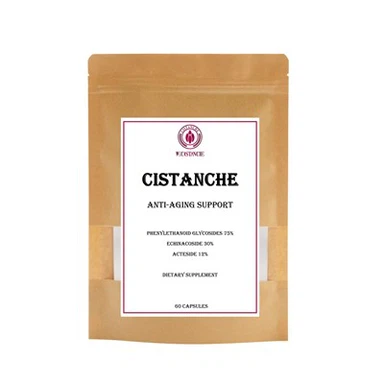
The fatigue-reversing effects are driven by echinacoside and acteoside. Echinacoside is the primary AMPK/PGC-1α activator, Nrf2 stimulator, and mitochondrial biogenesis driver. Acteoside is the primary NF-κB inhibitor, HPA axis modulator, and neuroinflammation suppressor. A standardized extract containing 20–40% total phenylethanoid glycosides is essential. The evidence-informed dose for chronic fatigue is 400–600 mg daily, taken with breakfast.
Integrating Cistanche for Chronic Fatigue Recovery
Chronic fatigue develops over months and years, and recovery takes time. Cistanche should be taken consistently-daily, with a meal-as a long-term restorative. It pairs well with other foundational recovery strategies: sleep optimization (the period during which mitochondrial repair and neurochemical restoration occur), gentle to moderate exercise (which stimulates mitochondrial biogenesis through the same PGC-1α pathway), stress-reduction practices (meditation, deep breathing, nature exposure), and a nutrient-dense diet rich in B vitamins, magnesium, and omega-3 fatty acids. Unlike stimulant-based energy products, Cistanche does not borrow energy from tomorrow. It rebuilds the capacity to generate energy today and every day.
For those seeking reliable support, explore our Cistanche tubulosa extract product line - every batch is standardized and third-party tested to ensure consistent potency of echinacoside and acteoside, the active ingredients behind the anti-fatigue research.
Safety and Medical Context
Cistanche tubulosa is well tolerated with a centuries-long safety record. However, chronic fatigue can sometimes indicate underlying medical conditions-thyroid disorders, autoimmune disease, sleep apnea, anemia, or depression-that require specific evaluation and treatment. Anyone experiencing severe, persistent, or worsening fatigue should undergo a thorough medical workup. This botanical is a supportive tool for stress-related and age-related fatigue, not a substitute for medical diagnosis or treatment.