The Neuroprotective Ability Of Cistanche Tubulosa——A Comprehensive Review Based On Active Ingredients, Molecular Mechanisms, And Clinical Evidence
Aug 18, 2026
Keywords: Cistanche tubulosa; Phenylethanoid glycoside; Pinecone chrysanthemum glycoside; Neuroprotection; Learning and memory; Alzheimer's disease
1, Introduction
Cistanche tubulosa is a dried fleshy stem of the Orobanchaceae plant Cistanche tubulosa or Cistanche tubulosa. It was first recorded in the "Shennong Bencao Jing" and is classified as a top-grade plant, known as the "Desert Ginseng". Its taste is sweet and salty, with a warm nature. It belongs to the kidney and colon meridians, and its traditional effects include tonifying kidney yang, nourishing essence and blood, moistening the intestines and promoting bowel movements.
In recent years, with the increasing aging of the population, the prevalence of neurodegenerative diseases such as Alzheimer's disease (AD) and vascular dementia (VaD) has continued to rise, searching for safe and effective neuroprotective agents a global research hotspot. In this context, the traditional efficacy of Cistanche tubulosa in nourishing the kidneys and improving intelligence has been strongly supported by modern pharmacology - a large number of in vitro and in vivo experiments and clinical studies have confirmed that its active ingredients can exert neuroprotective effects through multiple targets and pathways, significantly improving learning and memory function.

Chinese herb cistanche
2, The main active ingredients of Cistanche tubulosa
Cistanche tubulosa contains various pharmacological active ingredients, among which the ones most closely related to neuroprotection include:
The category of ingredients represents the neuroprotective activity of compounds
PhGs such as Echinacoside and Acteoside have antioxidant and anti-apoptotic properties, promote mitochondrial fusion, inhibit ferroptosis, and regulate synaptic plasticity
A mixture of multiple glycosides from Cistanche tubulosa (GCs) improves learning and memory, upregulates PI3K/Akt signaling, and reduces P-Tau protein in SAMP8 mice
Polysaccharides from Cistanche tubulosa (CDP) protect aging nerve cells and upregulate the cAMP/PKA/CREB/BDNF pathway
Cycloterpenoids such as geniposide assist in antioxidant and anti-inflammatory activities
Synergistic enhancement of other lignans, alkaloids, and volatile components
Among them, phenylethanoid glycosides (especially pineal glycosides) are recognized as the core pharmacological substance basis of Cistanche tubulosa for "tonifying the kidney and improving intelligence", and are also the key direction of current new drug research and development.

Phenylethanol glycoside is the main active component of Cistanche tubulosa
3, Molecular mechanism of neuroprotective effect
3.1 Antioxidant and anti-apoptotic effects
Oxidative stress is the core driving factor of neurodegenerative diseases. Cistanche tubulosa phenylethanolic glycoside and Cistanche tubulosa polysaccharides can significantly increase the activity of superoxide dismutase (SOD) and glutathione peroxidase (GSH Px) in brain tissue, reduce the content of malondialdehyde (MDA), and thus reduce the damage of reactive oxygen species (ROS) to neurons.
At the mechanistic level, phenylethanolic acid can activate the antioxidant system by regulating the GSK3 β/Nrf2/ARE signaling pathway: downregulating GSK3 β expression, while upregulating protein and mRNA levels of Nrf2 and its downstream HO-1, reducing oxidative stress after cerebral ischemia-reperfusion injury. In addition, polysaccharides from Cistanche tubulosa upregulate the cAMP/PKA/CREB signaling pathway, inhibit neuronal apoptosis, and protect PC12 cells and hippocampal neurons in aging models.

Desert living cistanche-Antioxidant
3.2 Inhibition of Tau protein hyperphosphorylation and Aβ deposition
The neurofibrillary tangles formed by excessive phosphorylation of Tau protein and the deposition of β - amyloid protein (Aβ) are the two major pathological markers of AD. Research has found that the total glycosides (GCs) of Cistanche tubulosa can significantly reduce the P-Tau/Tau ratio in the hippocampus of SAMP8 rapidly aging mice, and its mechanism involves the activation of the PI3K/Akt signaling pathway.
Meanwhile, the total glycosides of Cistanche tubulosa can enhance the clearance ability of Aβ, promote the recovery of damaged nerve cells, and improve cognitive dysfunction in A β - induced AD model rats. Phenylethanolic acid can also protect the structure and function of hippocampal neurons by inhibiting the phosphorylation of microtubule-associated protein P-tau and upregulating the expression of CRMP-2.
3.3 Promoting synaptic plasticity and neurotransmitter metabolism
The molecular basis of learning and memory is synaptic plasticity. The total glycosides of Cistanche tubulosa can increase the protein expression of synaptophysin, postsynaptic density protein-95 (PSD-95), and brain-derived neurotrophic factor (BDNF) in the hippocampus of SAMP8 mice, with the 50 mg/kg dose group showing the most significant improvement effect.
At the neurotransmitter level, the extract of Cistanche tubulosa, pineal glycosides, can increase the activity of choline acetyltransferase (ChAT) and acetylcholinesterase (AchE) in the cortex and hippocampus of vascular dementia (VaD) rats, and improve acetylcholine (Ach) metabolism; Simultaneously promoting the secretion of dopamine, norepinephrine, and glutamate in PC12 cells, maintaining the neurochemical environment required for cognitive function from multiple aspects.

Benefits of Cistanche tubulosa: Anti-Alzheimer's disease
3.4 Anti-inflammation and regulation of microglial polarization
Neuroinflammation is an important driver that accelerates neurodegeneration. Network pharmacology combined with experimental verification has shown that Cistanche tubulosa phenylethanolic glycosides (PhGs, ECH, ACT) can inhibit glial cell activation induced by Aβ deposition, regulate M1/M2 polarization types of microglia, and reduce the production of pro-inflammatory factors. The key pathway is to inhibit the TLR4/NF - κ B inflammatory signaling axis and downregulate the transcriptional activation of downstream inflammatory factors (TNF - α, IL-1β, etc.) by NF - κ B p65.
3.5 Promoting mitochondrial fusion and inhibiting ferroptosis
The research conducted by the Tu Pengfei/Zeng Kewu team at Peking University in Signal Transduction and Targeted Therapy has revealed a novel target of phenylethanolic acid in Cistanche tubulosa: Echinochloin (ECH) specifically modifies the 171st lysine of CK2 α 'protein, inducing conformational changes and activating the Wnt signaling pathway to promote mitochondrial fusion without relying on CK2 classical kinase activity, thereby exerting neuroprotective effects against cerebral ischemia.
In addition, a study by a team from Guangdong Pharmaceutical University published in the Journal of Ethnopharmacology in 2024 found that phenylethanolic acid exerts neuroprotection through four iron death-related pathways in low-pressure and hypoxic environments: upregulating the GPX-4/SLC7A11 axis and downregulating the ACSL4/LPCAT3/LOX axis to reduce lipid peroxidation; promoting the efflux of cellular Fe ² ⁺ and regulating mitochondrial Fe ² ⁺ transport. These findings provide a solid modern scientific annotation for the "tonifying kidney and enhancing intelligence" of Cistanche tubulosa.
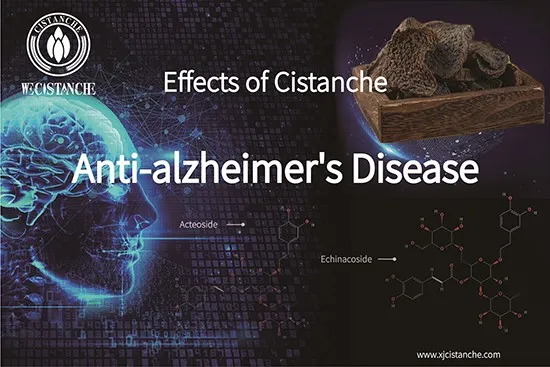
cistanche-prevent Alzheimers disease
Click here to view Cistanche Improving Memory Preventing Alzheimer's Disease products
【Ask for more】 Email:cindy.xue@wecistanche.com / WhatsApp: 0086 18599088692 / WeChat: 18599088692
3.6 Summary of Mechanism of Action
Key effects and functional outcomes of action pathways/targets
GSK3 β/Nrf2/ARE: ↑ Nrf2, HO-1; SOD, GSH Px; ↓ MDA antioxidant stress
PI3K/Akt: ↑p-Akt/Akt; P-Tau/Tau anti-apoptosis and inhibition of neurofibrillary tangles
CAMP/PKA/CREB/BDNF: ↑ p-CREB, BDNF; Promote DA/NE/Glu release, synaptic plasticity, neuroprotection
TLR4/NF - κ B: pro-inflammatory cytokines TNF - α and IL-1 β inhibit neuroinflammation
CK2 α '/Wnt (mitochondrial fusion): ECH modified CK2 α' Lys171; Mitochondrial fusion neuroprotection against cerebral ischemia
Iron death pathway (GPX-4/SLC7A11, etc.): ↑ GPX-4/SLC7A11; ACSL4/LPCAT3/LOX anti lipid peroxidation and protects hypoxic nerves
4, Animal experimental evidence
In various animal models, extracts of Cistanche tubulosa have shown consistent and robust cognitive improvement effects:
SAMP8 rapidly aging mice: Total glycosides of Cistanche tubulosa (50, 100 mg/kg) significantly increased the expression of hippocampal synaptophysin, PSD-95, and BDNF, shortened the Morris water maze escape latency, increased the number of platform crossings, and improved spatial learning and memory.
D-galactose subacute aging model: Cistanche polysaccharides can dose-dependently improve learning and memory abilities in mice, accompanied by increased PKA and cAMP activity and upregulation of BDNF levels.
A β - induced AD model rats: Cistanche glycosides enhance Aβ clearance ability, promote neuronal recovery, and significantly improve cognitive dysfunction.
Middle cerebral artery infarction (MCAO) model: Cistanche tubulosa phenylethanolic acid (150, 300 mg/kg) reduces neurological function scores and the proportion of cerebral infarction, alleviates hippocampal neuron damage, and the mechanism is closely related to the activation of the GSK3 β/Nrf2/ARE pathway.
APP/PS1 transgenic AD mice: Phenylethanoid glycosides (PhGs, ECH, ACT) improve learning and memory impairment, inhibit Aβ deposition and glial cell activation, with ACT showing better upregulation of synaptic-related proteins.
5, Clinical evidence

cistanche supplement near me
The neuroprotective effects of Cistanche tubulosa are not only limited to the laboratory, but have also been validated in multiple human studies
Main results of research/product population and sample intervention plan
Mild AD patients (n=26-63) with Cistanche tubulosa total glycosides capsules had a dose of 1.8 g/d and stable cognitive function after 48 weeks; Hippocampal volume atrophy is inhibited; Decreased levels of TNF - α and IL-1 β in cerebrospinal fluid
Compound Cistanche puzzle capsules vs donepezil mild to moderate AD (n=65): capsule group of 40 cases vs donepezil 25 cases; capsule group showed better ADAS Cog and AVLT-N5; Equivalent safety
Cognitive impairment in middle-aged and elderly individuals (n=100) treated with Cistanche tubulosa and Ginkgo biloba extract. 300 mg Cistanche tubulosa and 120 mg Ginkgo biloba extract showed significant improvement in MMSE, MoCA, and quality of life after 12 weeks; Total Tau and pTau decreased
Cistanche tubulosa+reed (traditional Chinese medicine compound) post-stroke cognitive impairment (n=78) combined with donepezil vs donepezil alone, significantly reduced 28-day TCM syndrome score
Systematic review and meta-analysis (57 RCTs) of AD patients (summary analysis) showed that multiple traditional Chinese medicine preparations (including Cistanche tubulosa) significantly improved MMSE and ADAS-cog; Combining Western medicine is superior to using Western medicine alone
It is worth noting that the 2025 version of the "Chinese Expert Consensus on Multivariate Rehabilitation Intervention for Alzheimer's Disease" clearly states that the Cistanche tubulosa preparation delays the progression of AD disease by preventing hippocampal volume atrophy, and its efficacy is comparable to donepezil, with a recommendation strength of "strongly recommended".
6, Progress in New Drug Development and Industrialization
Cistanche glycosides capsules: developed based on Cistanche glycosides, approved for market in 2005 for the treatment of vascular dementia. It is the first new drug in China to use Cistanche glycosides as the main raw material.
A class of new drugs of Echinochlorin: Tu Pengfei's team has developed Echinochlorin, the main active ingredient of Cistanche tubulosa, into a national first-class new drug. It obtained clinical approval in 2017 and has completed phase I clinical trials, and is currently promoting subsequent clinical research.

cistanche supplement near me
7, Safety and tolerability
Existing clinical studies have shown that the overall safety of Cistanche tubulosa preparations is good. Compared with donepezil (common adverse reactions include dizziness, nausea, loss of appetite, diarrhea, constipation, fatigue, etc., with an incidence rate of about 27%), Cistanche tubulosa preparations have not shown significant adverse reactions to organ function damage such as heart, liver, and kidney in multiple studies, and have good tolerability.
However, as a traditional Chinese medicine extract, its safety data for long-term high-dose use is still limited. It is recommended to use it reasonably under the guidance of a doctor and avoid blindly taking it on one's own.
8, Summary and Prospect
Based on existing evidence, Cistanche tubulosa exerts neuroprotective effects through a synergistic effect of "multi-component multi-target multi-pathway":
• With phenylethanolic acid glycoside (represented by pineal chrysanthemum glycoside) and polysaccharides as the core active substances;
Protecting neurons through multiple mechanisms such as antioxidant, anti-apoptotic, anti-inflammatory, regulating synaptic plasticity, promoting mitochondrial fusion, and inhibiting ferroptosis;
Significantly improved learning and memory abilities in various animal models such as SAMP8, APP/PS1, MCAO, etc;
Multiple clinical studies have confirmed that it can stabilize or improve cognitive function in AD patients, delay hippocampal atrophy, and has efficacy comparable to donepezil and better safety.
Future research should focus on: (1) conducting multicenter randomized controlled trials with larger sample sizes and longer follow-up periods; (2) In depth analysis of the pharmacokinetics and blood-brain barrier permeability of phenylethanoid glycosides in the human body; (3) Explore the combination therapy of Cistanche tubulosa with existing anti AD drugs such as cholinesterase inhibitors and NMDA receptor antagonists; (4) Promote the late stage clinical development and market launch of new drugs such as echinacoside.
It can be foreseen that with the continuous revelation of the modern scientific connotation of the traditional efficacy of "tonifying the kidney and enhancing intelligence", Cistanche tubulosa is expected to become an important natural medicine source for preventing and treating neurodegenerative diseases and improving memory disorders.
References (Part)
Wang Lu, Wu Li'e, Jia Jianxin Pharmacological effects of Cistanche tubulosa and its research progress in central nervous system diseases [J]. Chinese Journal of Traditional Chinese Medicine, 2024, 42 (3): 50-54
Zeng KW, Wang JK, et al. Small molecule induces mitochondrial fusion for neuroprotection via targeting CK2 without affecting its conventional kinase activity[J]. Signal Transduction and Targeted Therapy, 2024.
Gao Y, et al. Ferroptosis pathways: Unveiling the neuroprotective power of Cistanche tubulosa phenylethanoid glycosides[J]. Journal of Ethnopharmacology, 2024.
Clinical study on the treatment of Alzheimer's disease with Cistanche tubulosa total glycosides capsules (multicenter randomized controlled trial)
Clinical efficacy study of compound Cistanche puzzle capsules in the treatment of mild to moderate Alzheimer's disease patients [J]. Journal of Beijing University of Traditional Chinese Medicine, 2024
The 2025 edition of the Chinese expert consensus on diversified rehabilitation interventions for Alzheimer's disease
Xu Qian, wait Regulation of Keap1/Nrf2/HO-1 signaling pathway by Cistanche tubulosa improves oxidative stress in Parkinson's disease model