How To Unlock The Business Potential Of Cistanche in The Market
Jan 09, 2025
In November 2023, the National Health Commission and the State Administration for Market Regulation jointly announced the inclusion of Cistanche deserticola (desert) and nine other substances, such as Codonopsis pilosula and Dendrobium, into the directory of substances that are both food and medicinal materials. This means that Cistanche deserticola has gained a "dual identity" as both a food and a medicinal herb.
Current Status of Cistanche deserticola
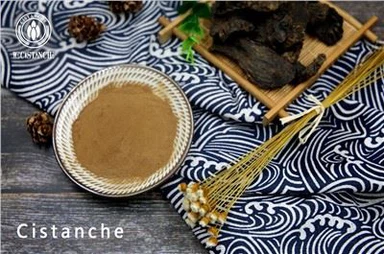
Cistanche deserticola, known as "Desert Gold," is a parasitic herb that grows on the roots of desert plants like the Salsola tree. It primarily thrives in desert and semi-desert areas, such as Inner Mongolia, Ningxia, Gansu, and Xinjiang. Its medicinal value has been recorded in ancient texts like "Compendium of Materia Medica."

Varieties of Cistanche
There are four main varieties of Cistanche in China: Cistanche deserticola, Cistanche salsa, Cistanche tubulosa, and Cistanche sinensis. Prior to the 2000 edition of the "Chinese Pharmacopoeia," only Cistanche deserticola was recognized. From the 2005 edition onwards, Cistanche tubulosa was also included as a source of Cistanche. Due to the depletion of wild resources, Cistanche has been listed in Appendix II of the Convention on International Trade in Endangered Species of Wild Fauna and Flora (CITES), making it a protected species. However, there are no concerns about supply; with 30 years of research and technological promotion, significant achievements have been made in the artificial cultivation of Cistanche and its host plants.
According to data from the 11th International Symposium on Cistanche and Desert Medicinal Plants, by 2021, over six million acres of Salsola and Tamarisk had been planted across deserts in Xinjiang, Inner Mongolia, Gansu, and Qinghai, with Cistanche cultivated on over 2.3 million acres, producing more than 7,500 tons of medicinal materials annually and effectively resolving the shortage of Cistanche resources.

Economic Impact
The annual output value of the Cistanche-related industry has grown from less than 1 billion yuan in the 1990s to over 20 billion yuan in 2020.

Cistanche deserticola
Biological Active Components
Cistanche contains bioactive components including Cistanche glycosides A, B, C, H, echinacoside, and polysaccharides, along with various amino acids. These components play significant roles in multiple physiological functions. Modern research indicates that Cistanche's mechanisms for promoting healthy aging involve various aspects, including theories related to free radicals, telomeres, immunity, the gut-brain axis, cellular repair, caloric restriction, and traditional Chinese medicine.
Cultural Significance
Cistanche has a rich cultural heritage as one of the three major tonic herbs in China, alongside ginseng and deer antler. In ancient times, it was regarded as a miraculous tonic, and its name carries a sense of mystery and nobility. According to legend, in 1190 AD, a brave warrior named Temujin led his troops in battle in the desert. Facing hunger and thirst, a divine horse appeared and unearthed this magical plant, enabling the soldiers to regain strength and achieve victory.
Cistanche, once a tribute in ancient times, symbolizes rarity and status, connecting Chinese culture with those from the Western Regions and witnessing the prosperity of the ancient Silk Road and cultural exchanges.
Market Development and Future Prospects
Xinjiang is the primary production area for Cistanche, leading in both cultivation area and yield, laying a foundation for the development of the Cistanche health industry. In recent years, the processing industry of Cistanche has rapidly developed, with more than 70 domestic and imported health food products containing Cistanche approved by the National Medical Products Administration.

High-Quality Cistanche Supplements For Sexual Dysfunction and Prostatis Treatment
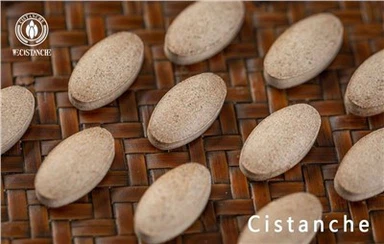
Common forms of health products derived from Cistanche include alcoholic beverages, teas, tablets, granules, capsules, and liquid extracts. Cistanche can be paired with various medicinal and edible ingredients, such as American ginseng, goji berries, and Rehmannia. Traditional formulations often include Cistanche as a key ingredient for addressing health issues related to fatigue and reproductive health.
High-Quality Herbal Cistanche Whiskey

Conclusion
Cistanche has been included in the directory of substances that are both food and medicinal materials, indicating a bright market outlook. As health consciousness continues to grow, the demand for Cistanche is expected to increase. It can be developed into various health products, expanding its market from traditional tonics to everyday foods. With government support for traditional Chinese medicine, the Cistanche industry is poised for significant growth, particularly through the development of deep-processing and high-value-added products.
[Click to learn about the Medicinal and Edible Integration | Nutritional Supplements Development Alliance]
Email: wallence.suen@wecistanche.com
WhatsApp/Tel: +86 15292862950