Can A Desert Herb Help The Brain? What Network Pharmacology Says About Cistanche Herba And Parkinson's Disease
Nov 10, 2026
Disclaimer: This article is provided for general education and informational purposes only. It is not medical advice, and it does not replace diagnosis, treatment, or guidance from a licensed neurologist or physician. Herbal ingredients and dietary supplements should never be used to replace prescribed medication, and no one with a diagnosed neurological condition should start, stop, or change any therapy without consulting their own clinician.
1. Introduction: Why Parkinson's Disease Needs Better Options
Parkinson's disease is one of the most common neurodegenerative disorders of later life, and its burden is growing faster than most public health systems are prepared for. Clinically, it is defined by a constellation of motor symptoms, including tremor at rest, rigidity, bradykinesia, and postural instability, alongside a wide range of non-motor features such as sleep disturbance, impaired olfaction, autonomic dysfunction, cognitive decline, and psychiatric symptoms. These non-motor features are often what patients and families find hardest to live with, and they frequently appear years before the first tremor.
At the tissue level, the disease is characterized by two interlocking pathological features. The first is the progressive loss of dopaminergic neurons in the substantia nigra pars compacta, the small midbrain region that supplies the neurotransmitter dopamine to the striatum. As these neurons die, dopamine availability falls, and the motor control circuits that depend on it degrade. The second is the accumulation of abnormal protein deposits known as Lewy bodies, whose principal component is aggregated alpha-synuclein. The relationship between these two processes is still being worked out: it remains unclear whether alpha-synuclein aggregation drives neuronal death, whether neuronal stress promotes aggregation, or whether both are downstream consequences of a shared upstream failure.
The epidemiological picture is sobering. Prevalence estimates in the Chinese population aged sixty-five and older sit around 1.7 percent, and modeling suggests that by 2030 the country could be managing roughly five million patients, close to half of the global total. Globally, the number of people living with the disease has been rising steadily as populations age, and it is now among the fastest-growing neurological conditions in terms of disability-adjusted life years.
Current pharmacological treatment rests largely on dopamine replacement. Levodopa remains the most effective symptomatic therapy, usually combined with a decarboxylase inhibitor, and dopamine agonists, monoamine oxidase B inhibitors, and catechol-O-methyltransferase inhibitors fill out the toolkit. These drugs genuinely improve quality of life, and nobody should minimize that. But they share a structural limitation: they compensate for missing dopamine rather than protecting the neurons that produce it. Over years of use, patients commonly encounter diminishing responsiveness, fluctuations between on and off states, and troublesome dyskinesias. In other words, the symptomatic benefit erodes precisely because the underlying neurodegeneration continues.
This gap between symptom control and disease modification is the central unmet need in Parkinson's research. Decades of clinical trials targeting single molecular mechanisms have produced largely disappointing results, and that repeated failure has shifted attention toward a different question: whether it is realistic to expect one molecule hitting one target to alter a disease whose pathology is driven by several converging processes at once, including mitochondrial dysfunction, oxidative stress, chronic neuroinflammation, impaired protein clearance, and disturbed autophagy.
That question is where multi-component botanical medicines become scientifically interesting rather than merely traditional. A plant extract contains dozens of chemically distinct molecules that can, in principle, engage different nodes of the same pathological network simultaneously. The obstacle has always been that nobody could say which molecules mattered or which proteins they touched, so the whole category remained scientifically vague. Network pharmacology was developed specifically to close that gap, and a 2022 study applied it to Cistanche Herba in Parkinson's disease. This article translates those findings for general readers, explains what the methodology can and cannot establish, and is deliberate about separating promising leads from proven therapy.
2. Why an Ancient Desert Herb Entered the Conversation
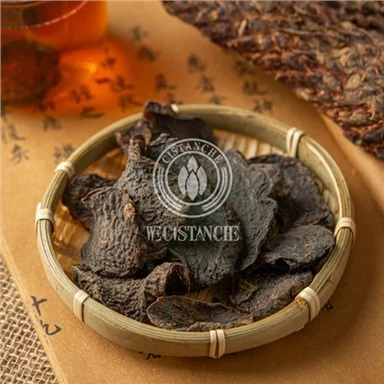
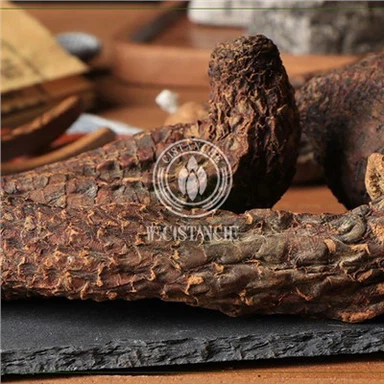
Cistanche Herba is the dried fleshy stem of Cistanche deserticola or Cistanche tubulosa, parasitic desert plants that draw water and nutrients from the root systems of host shrubs. Because wild collection placed pressure on natural populations, most commercial material today is cultivated, which has also made standardized extracts more consistent. In Chinese materia medica the herb has been listed among upper-grade tonics since the earliest classical texts, described as sweet and salty in taste, warm in nature, and entering the kidney and large intestine meridians. Its traditional indications include warming kidney yang, replenishing essence and blood, easing soreness and weakness of the lower back and knees, strengthening sinews and bones, and moistening the intestines.
The traditional vocabulary sounds far removed from neurology, but the connection is not arbitrary. In Chinese medical theory the kidney system is understood to govern marrow and to connect upward to the brain, so herbs that "tonify kidney and fill essence" have historically been associated with cognitive and neurological decline. Modern research has given this a pharmacological footing. Published studies describe Cistanche as antioxidant, anti-aging, and protective in cerebral ischemia-reperfusion models. Its major chemical families include phenylethanoid glycosides such as echinacoside and acteoside, iridoids and their glycosides, lignans and their glycosides, polysaccharides, and monoterpene glycosides, with the phenylethanoid glycosides generally treated as the principal active fraction for quality control.
There is also a quantitative argument. Surveys of herbs used in classical anti-aging formulas consistently place Cistanche near the top in frequency of inclusion, behind only a handful of the most heavily used tonics. That accumulated clinical familiarity matters for a practical reason: a substance with centuries of documented human use carries a different kind of safety prior than a novel synthetic molecule, even though traditional use is never proof of efficacy. Today Cistanche extracts appear widely in supportive and health-maintenance products, yet the mechanistic basis for their reported neurological effects has remained largely unexplained.
That is exactly the kind of question network pharmacology was built to answer. Rather than asking whether the herb "works," the approach asks which molecules in it are likely to reach the brain, which human proteins they plausibly engage, and whether those proteins cluster around the biological processes that Parkinson's disease depends on.
3. Reading the Map: How This Research Was Actually Done
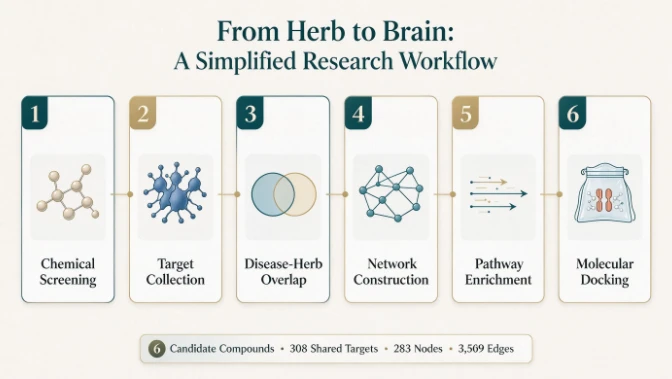
The methodology deserves a plain-language walkthrough, because without it the results look like an arbitrary list of protein names, and with it they become a coherent argument.
Screening the chemistry. The researchers began with the TCMSP database, a curated resource linking traditional Chinese medicines to their constituent compounds and known targets. They applied three filters. Oral bioavailability had to be at least thirty percent, meaning the compound is predicted to reach systemic circulation in meaningful amounts after swallowing. Drug-likeness had to be at least zero point one eight, meaning the molecule resembles established drugs in size, polarity, and permeability. And because this is a brain disease rather than a kidney or bone disease, a third and unusually important filter was added: blood-brain barrier permeability had to be at least minus zero point eight five. That BBB criterion is the single most consequential design choice in the entire study, because a compound that never crosses into the central nervous system cannot directly modulate a neurodegenerative process, no matter how potent it is in a dish.
Collecting the disease side. Parkinson's-associated genes were retrieved from the GeneCards database using the standard disease term, yielding seven thousand eight hundred and forty-six targets. The herb side, after mapping the screened compounds to their protein partners, produced four hundred and thirty-five targets.
Intersecting the two. A Venn analysis of the two lists identified three hundred and eight genes present in both, that is, proteins the herb's compounds could plausibly touch and that are also implicated in Parkinson's disease. These three hundred and eight shared targets are the analytical core of the paper. Everything downstream is built on them.
Building the interaction network. The shared targets were submitted to the STRING database for protein-protein interaction mapping, restricted to Homo sapiens and to the highest confidence tier. The resulting network contained two hundred and eighty-three nodes connected by three thousand five hundred and nine edges. The reduction from three hundred and eight targets to two hundred and eighty-three nodes reflects the confidence filter removing poorly supported proteins, and the density of edges, roughly twelve connections per node on average, indicates a highly interconnected network rather than a loose collection of unrelated proteins.
Finding the key genes. Using a threshold of more than twice the median degree, the researchers filtered the network down to thirty-eight key genes. Degree here simply means the number of connections a protein has; proteins with unusually many partners tend to sit at functionally central positions.
Functional and pathway enrichment. The thirty-eight key genes were analyzed through DAVID, with GO annotation producing three hundred and five biological process entries, twenty-five cellular component entries, and sixty-nine molecular function entries, and with KEGG mapping returning pathway associations. Only statistically significant results were retained.
Constructing the herb-compound-target network. The top twenty KEGG pathways were used to define a therapeutic target set of ninety-one genes, which were then assembled with their corresponding compounds into a visual network showing which molecule connects to which protein. Node size and color intensity scaled with degree, making the most heavily connected entities immediately visible.
Docking as a plausibility check. Finally, the five highest-degree targets were docked against all six screened compounds using AutoDock Vina. Docking estimates whether a small molecule can physically occupy a binding pocket on a protein, returning a computed binding energy. Lower, more negative values indicate a more stable predicted interaction. Conventional interpretation treats values at or below minus four point two five as indicating some binding activity, at or below minus five as good binding, and at or below minus seven as strong binding.
An essential caveat belongs at the end of this section rather than buried later. Every step above is computational. The screening depends on predicted pharmacokinetics, the target lists come from databases that summarize prior literature, and docking is a physics approximation of molecular fit. None of it demonstrates that a real person taking a real extract achieves a real concentration of a specific compound at a specific protein in the brain. Network pharmacology produces prioritized hypotheses. It does not produce evidence of efficacy, and the field's credibility depends on being explicit about that.
4. Six Compounds That Passed the Brain Barrier Filter
The triple screening produced a short and chemically diverse list of six compounds, and the composition of that list is itself informative.
Beta-sitosterol is a plant sterol, one of the most widespread phytochemicals in the plant kingdom, with a favorable profile across all three filters. Published work describes it as antioxidant and anti-apoptotic, and it appears in the broader literature on metabolic and mitochondrial health. Its abundance and its permeability make it a natural candidate for a systemically acting plant constituent.
Arachidonate, or arachidonic acid, is a polyunsaturated fatty acid and a precursor to prostaglandins and related lipid mediators. Its inclusion surprises readers who associate arachidonic acid only with inflammation, but the literature also describes it as a peroxisome proliferator-activated receptor activator that promotes new protein synthesis and strengthens the endogenous antioxidant system, which is a protective rather than a purely inflammatory role.
Suchilactone is a lignan-type compound with moderate drug-likeness. Lignans as a class are well represented in Cistanche and have documented anti-inflammatory and antioxidant activities.
Yangambin is a furofuran lignan, sometimes described as a dimethylated derivative of syringaresinol, with good drug-likeness but very limited blood-brain barrier permeability in the computed model. Its presence in the final network despite that limitation is worth noting, because a compound with poor central nervous system penetration may still act through peripheral mechanisms, including on the gut and on systemic inflammation.
Quercetin is the flavonol most familiar to general readers, abundant in onions, apples, berries, and tea, and one of the most extensively studied polyphenols in existence. Its computed barrier permeability is negative, meaning modest predicted brain entry, but its enormous literature and its broad target engagement give it real analytical weight.
Marckine, a Cistanche-associated alkaloid-type constituent, completes the list with moderate bioavailability and drug-likeness.
Two observations follow from this roster. First, only compounds with favorable predicted permeability dominate the analysis, which is the correct design for a brain disease but also means that compounds excluded by the filter, including some of the phenylethanoid glycosides most often used as marker compounds in commercial extracts, are not represented in the network even though published studies describe neurological activity for them. Second, the roster is chemically heterogeneous: a sterol, a fatty acid, two lignans, a flavonol, and an alkaloid. That heterogeneity is precisely the multi-component premise that makes botanical research attractive in a disease with several converging mechanisms.
5. Three Hundred and Eight Shared Targets, and a Network With a Center
A Venn diagram overlapping the herb's four hundred and thirty-five targets with the disease's seven thousand eight hundred and forty-six produced three hundred and eight shared genes, a modest intersection that nonetheless represents the entire plausible therapeutic surface of the herb in this disease. The proportion is a useful reality check: the great majority of Parkinson's-associated genes have no predicted relationship to any Cistanche constituent, and the great majority of the herb's protein partners have no documented relationship to Parkinson's.
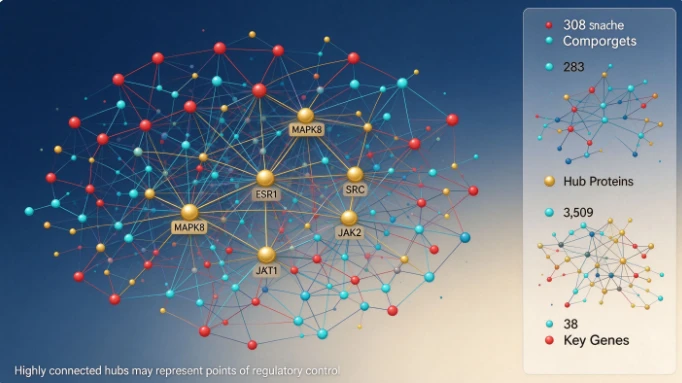
The STRING network built from those shared targets contained two hundred and eighty-three nodes and three thousand five hundred and nine edges. In plain terms, this is a densely connected map. When a biological network has an average of about twelve connections per protein, it usually means the constituent proteins participate in shared functional modules rather than acting independently, and it also means that perturbing a few highly connected nodes can ripple through a large portion of the system. That ripple property is the theoretical justification for multi-target intervention: in a densely coupled network, hitting one isolated node is often futile, whereas hitting several convergent nodes can shift the system's behavior.
Filtering at more than twice the median degree reduced the network to thirty-eight key genes. These thirty-eight, not the full three hundred and eight, became the focus of functional annotation, and this filtering step is where analytical judgment enters. A different threshold would produce a different key gene list, which is one reason results from this field should be read as one plausible interpretation rather than a definitive answer.
GO enrichment across those thirty-eight genes is strikingly consistent with neurodegeneration biology. The dominant biological processes include intracellular signal transduction, negative regulation of the apoptotic process, protein phosphorylation, positive regulation of transcription from RNA polymerase II promoters, response to drug, DNA-templated transcription, peptidyl-serine phosphorylation, phosphatidylinositol-mediated signaling, positive regulation of protein phosphorylation, platelet activation, protein autophosphorylation, positive regulation of gene expression, negative regulation of transcription, regulation of phosphatidylinositol 3-kinase signaling, positive regulation of the ERK1 and ERK2 cascade, angiogenesis, positive regulation of the apoptotic process, and cell proliferation.
Two clusters stand out within that list. One is a phosphorylation and kinase signaling cluster, which speaks to the importance of signaling cascades in dopaminergic neuron survival. The other is an apoptosis-regulation cluster, which speaks to the fact that whether a stressed neuron lives or dies is decided by a balance of pro-survival and pro-death signals, and that balance is exactly where many of the hub proteins operate.
Cellular component annotation placed the targets predominantly in the nucleus, cytosol, nucleoplasm, cytoplasm, and mitochondria, with additional entries for the perinuclear region, membrane, intracellular space, transcription factor complex, protein complex, phosphatidylinositol 3-kinase complex, cyclin-dependent protein kinase holoenzyme complex, mitochondrial outer membrane, nuclear chromatin, nuclear membrane, RNA polymerase II transcription factor complex, caveola, the extrinsic component of the cytoplasmic side of the plasma membrane, synapse, and membrane raft. The inclusion of mitochondria, mitochondrial outer membrane, and synapse is significant: mitochondrial dysfunction and synaptic impairment are both recognized as core features of Parkinson's pathology, and their appearance here suggests the predicted targets are positioned in the right cellular neighborhoods.
Molecular function annotation concentrated on protein binding, ATP binding, protein kinase activity, kinase activity, protein serine/threonine kinase activity, enzyme binding, transcription factor binding, identical protein binding, protein kinase binding, transcription factor binding with sequence-specific DNA binding, phosphatidylinositol-4,5-bisphosphate 3-kinase activity, protein phosphatase binding, chromatin binding, protein heterodimerization activity, MAP kinase activity, histone deacetylase binding, protein tyrosine kinase activity, protein C-terminus binding, protein complex binding, and transcriptional activator activity with RNA polymerase II core promoter proximal region sequence-specific binding.
Taken together, the enrichment output describes a target set whose functional identity is ATP-dependent kinase signaling, transcriptional control, and apoptosis regulation, located substantially at mitochondria and synapses. That is a coherent description of the machinery that governs whether a dopaminergic neuron adapts to stress or dies under it.

6. The Five Hub Proteins That Anchored the Analysis
Ranking nodes by degree identified five proteins as the network's most connected members, and each has a documented role in neuronal survival or neuroinflammation. These five became the focus of docking.
MAPK8, also known as JNK1, is a stress-activated protein kinase. In neurons, JNK signaling is one of the principal routes through which cellular stress translates into apoptosis. Excessive JNK activity phosphorylates anti-apoptotic proteins, disrupts mitochondrial integrity, and tips cells toward death. In the context of Parkinson's disease, JNK activation is repeatedly observed in dopaminergic neurons under oxidative and inflammatory stress, which makes it a plausible protective target rather than merely a marker of stress.
ESR1, the estrogen receptor alpha, is rather unexpectedly central to this network. Estrogen receptor signaling is well documented as neuroprotective. Published work describes estrogen receptor alpha agonists attenuating microglial activation and thereby reducing neuroinflammatory damage. Estrogen also inhibits NADPH oxidase activity, lowering oxidative stress markers in neural tissue. The presence of ESR1 among the top hubs suggests that some Cistanche constituents may engage estrogen receptor signaling, which would place them among the phytoestrogen-like plant compounds studied for neuroprotection. This is a mechanistic hypothesis with obvious experimental implications, and also one that requires care in interpretation given the hormonal sensitivity of estrogen receptor pathways.
SRC, originally identified as a sarcoma oncogene and now understood as a non-receptor tyrosine kinase, is a key node in inflammatory signaling. In Parkinson's models, SRC has been described as a pro-inflammatory factor whose activity damages dopaminergic neurons. Its high connectivity and its documented inflammatory role make it an attractive node for intervention, and it turned out to be the protein with the strongest docking affinity for both quercetin and Marckine in this study.
JAK2, a Janus kinase, sits at the head of the JAK-STAT cascade, one of the primary conduits for cytokine signaling. JAK2 activity transmits inflammatory signals from the extracellular environment into transcriptional programs in the nucleus, and it is heavily implicated in microglial activation. In a disease where chronic neuroinflammation is a recognized contributor to progression, a kinase at the center of cytokine signal transmission is a natural hub.
AKT1, protein kinase B, is the central effector of the phosphatidylinositol 3-kinase pathway and one of the best-characterized pro-survival kinases in biology. AKT activation, achieved through phosphorylation at two critical sites, threonine 308 and serine 473, promotes cell survival, suppresses apoptosis, and influences metabolism and autophagy. The relevance to Parkinson's disease is direct: studies report that total AKT and phosphorylated AKT are both reduced in the substantia nigra of patients, meaning the pro-survival signaling axis is blunted precisely where dopaminergic neurons are dying.
Because these five proteins sit at the intersections of stress signaling, inflammatory signaling, hormonal signaling, and survival signaling, they provide a reasonably coherent account of how a multi-component herb might influence a neurodegenerative network. That coherence is what makes the model interesting. It is not, however, evidence that the herb does influence it.
7. The Pathways: PI3K-AKT, FOXO, HIF-1, TNF, and microRNA Regulation
KEGG enrichment identified twenty significantly associated pathways, and while the list includes several entries that reflect database composition rather than disease biology, such as pathways in cancer, proteoglycans in cancer, viral carcinogenesis, hepatitis B and C, Epstein-Barr virus infection, influenza A, prostate cancer, pancreatic cancer, and choline metabolism in cancer, the biologically meaningful entries cluster around a smaller number of themes.
The most relevant are the PI3K-AKT signaling pathway, the FoxO signaling pathway, the HIF-1 signaling pathway, the TNF signaling pathway, the neurotrophin signaling pathway, the ErbB signaling pathway, focal adhesion, thyroid hormone signaling, and microRNAs in cancer, the latter functioning here mainly as a proxy for microRNA-mediated regulation rather than as an oncology finding.
The PI3K-AKT pathway is the axis through which growth factors and survival signals converge. Activation of PI3K leads to AKT recruitment and phosphorylation, which in turn suppresses apoptotic machinery and supports cell survival. Published experiments in Parkinson's models describe Cistanche raising PI3K and AKT expression in the midbrain, increasing the anti-apoptotic protein Bcl-2 and decreasing the pro-apoptotic protein Bax, thereby raising the Bcl-2-to-Bax ratio and reducing neuronal apoptosis. Whether that reported effect runs through the same nodes identified in this network analysis is an open question, but the directional consistency is notable.
Glycogen synthase kinase 3 beta, a downstream node of this axis, is inhibited when phosphorylated by AKT. Since GSK-3β activity is generally pro-apoptotic in neurons, AKT-mediated inhibition is protective. Published work describes fibroblast growth factor signaling activating PI3K-AKT, phosphorylating GSK-3β, and thereby restraining its activity, which fits the pattern.
The mammalian target of rapamycin, mTOR, sits downstream of AKT and is the central regulator of autophagy. This matters because autophagy is the cell's mechanism for clearing aggregated proteins, including alpha-synuclein. The reasoning runs as follows: activation of PI3K-AKT-mTOR signaling supports autophagy-mediated degradation of alpha-synuclein, whereas its suppression would allow aggregates to persist. This is a mechanistically delicate point, since mTOR activation can also suppress autophagy in some contexts, and the direction of benefit depends on cell type and disease stage.
The FoxO pathway regulates a family of transcription factors that control antioxidant responses, apoptosis, and autophagy. FoxO3a in particular has been reported to reduce alpha-synuclein content and to modulate autophagy in dopaminergic neurons, which suggests that constituents acting on FOXO signaling could reduce alpha-synuclein accumulation.
The HIF-1 pathway, centered on hypoxia-inducible factor 1, responds to low oxygen and to iron availability, and it also regulates autophagy. Published data in MPP+ treated SH-SY5Y cells, a standard in vitro Parkinson's model, show quercetin lowering HIF-1α protein levels, while the iron chelator deferoxamine raises HIF-1α accumulation alongside enhanced autophagy, and HIF-1α-mediated autophagy appears protective in that setting. Related work describes orexin-A acting through HIF-1α and vascular endothelial growth factor to reduce cell damage. The pathway's appearance in the enrichment output thus points to a plausible route by which herb constituents might influence autophagy and hypoxic stress responses.
The TNF pathway is the clearest inflammatory thread. TNF is a central mediator of neuroinflammation; it activates microglia, which in turn release further cytokines that damage dopaminergic neurons. Published animal work describes echinacoside, a principal Cistanche phenylethanoid glycoside, reducing microglial and astrocytic activation, lowering TNF-α levels, raising glial cell-derived neurotrophic factor, and improving behavioral scores in a subacute Parkinson's mouse model. Similarly, verbascoside has been reported to increase striatal dopamine content and improve behavioral performance.
MicroRNA regulation adds another layer. Alpha-synuclein is encoded by SNCA, and abnormal SNCA expression contributes to dopaminergic neuron loss. Published studies report that miR-7 and miR-153 reduce SNCA expression in Parkinson's models and improve behavioral outcomes, and that miR-425 can restore function in dysfunctional dopaminergic neurons. MicroRNAs are small non-coding RNAs that regulate gene expression post-transcriptionally, so a pathway enrichment that flags them suggests herb constituents might act through upstream regulators rather than direct protein binding. This hypothesis remains the least developed, and the original authors themselves describe the microRNA mechanism as requiring further work.

8. What the Docking Results Actually Showed
Docking returned a complete matrix of computed binding energies for six compounds against five hub proteins, and the numbers are informative both in their pattern and in their limits.
Beta-sitosterol scored minus seven point eight against MAPK8, minus six point eight against ESR1, minus eight point one against SRC, minus seven point four against JAK2, and minus six point three against AKT1.
Arachidonate scored minus five point four, minus six point three, minus six point three, minus six point one, and minus five point three against the same five targets in order.
Suchilactone scored minus seven point nine, minus five point nine, minus seven point seven, minus eight point six, and minus five point nine.
Yangambin scored minus seven point four, minus six point two, minus seven point five, minus seven point nine, and minus six point two.
Quercetin scored minus eight point one, minus seven point two, minus nine point two, minus nine point six, and minus six point six.
Marckine scored minus nine point zero, minus seven point nine, minus ten point two, minus ten point zero, and minus seven point two.
Three patterns emerge. First, every compound-target pair fell below the minus five threshold, meaning the model predicts at least good binding across the entire matrix, which is an unusually clean result and should itself invite some caution about how permissive the docking protocol was. Second, quercetin and Marckine produced the strongest scores overall, with Marckine reaching the lowest values in the entire dataset, including minus ten point two against SRC and minus ten point zero against JAK2. Third, binding strength varied by target in a consistent way: the inflammatory kinases SRC and JAK2 tended to score lower, meaning stronger, than the survival kinase AKT1, which scored weakest for every compound.
Visualization of the predicted binding poses identified specific residue contacts. Beta-sitosterol formed hydrogen bonds with asparagine 397 in the SRC pocket. Arachidonate interacted with arginine 394 in ESR1. Suchilactone bonded to serine 936 and arginine 980 in JAK2. Yangambin formed multiple hydrogen bonds at the JAK2 pocket. Quercetin contacted threonine 338, glutamate 339, methionine 341, and aspartate 404 within SRC, a notably multi-point interaction consistent with its high score of minus nine point two. Marckine contacted proline 361, glutamine 362, glutamate 517, phenylalanine 520, and serine 522 in SRC.
The quercetin-SRC interaction deserves a sentence of its own, because it was singled out by the original authors. A predicted binding energy of minus nine point two, supported by four distinct residue contacts, points toward a compound that could plausibly interfere with a pro-inflammatory kinase implicated in dopaminergic neuron damage. That combination, favorable energy plus plausible pose, is what makes a docking result worth testing experimentally. It is still not evidence of activity.
Here the interpretive boundary must be stated plainly. Docking scores are computed from simplified force fields applied to static or semi-flexible structures in a solvent-free approximation. They do not account for compound concentration, membrane crossing in vivo, metabolic conversion, protein conformational dynamics, or the presence of competing ligands. A score of minus ten does not mean a molecule works at a therapeutically achievable dose. It means the geometry is favorable enough to justify spending laboratory resources on the question.

9. Assembling the Mechanistic Picture: Mitochondria, Protein Quality, Autophagy, and Inflammation
The most useful way to read this study is as four converging mechanistic themes rather than as a list of individual findings. Each theme corresponds to a recognized driver of Parkinson's pathology, and each has supporting preclinical literature in which Cistanche constituents were actually tested, which is what gives the computational predictions something to be consistent with.
Mitochondrial function. Mitochondrial dysfunction is among the most firmly established contributors to dopaminergic neurodegeneration. Impaired respiratory chain activity, reduced ATP production, and increased mitochondrial oxidative stress all converge on cell death pathways. The GO enrichment in this study highlighted ATP binding, ATP synthesis-related processes, and mitochondrial localization, and the cellular component results specifically included mitochondrial outer membrane. Published work on the herb describes protection of mitochondrial respiratory function as a mechanism of neuroprotection. The mechanistic logic is straightforward: a neuron with a healthier mitochondrial population has more capacity to withstand the oxidative load that dopamine metabolism itself imposes.
Oxidative stress and antioxidant defense. Dopaminergic neurons are unusually vulnerable to oxidative damage, both because dopamine oxidation generates reactive species and because the substantia nigra has comparatively limited antioxidant capacity. Beta-sitosterol is described as antioxidant and anti-apoptotic in published studies, and arachidonate is described as activating peroxisome proliferator-activated receptors and promoting synthesis of proteins that strengthen the endogenous antioxidant system. Quercetin contributes a further mechanism, acting as an iron chelator; free iron catalyzes Fenton-type reactions that generate highly reactive hydroxyl radicals, and by sequestering iron quercetin reduces that source of oxidative injury.
Protein homeostasis and alpha-synuclein handling. Abnormal protein aggregation that impairs synaptic function and disrupts intracellular signaling is a defining feature of the disease, and impaired ubiquitin-proteasome degradation is part of how those aggregates persist. The herb has been described as influencing protein synthesis and degradation in ways that help maintain proteostasis. Several pathways converge on alpha-synuclein clearance. FOXO signaling has been reported to reduce alpha-synuclein content and modulate autophagy in dopaminergic neurons. The PI3K-AKT-mTOR axis controls autophagy, and autophagy is the route by which aggregated alpha-synuclein can be degraded. MicroRNAs including miR-7, miR-153, and miR-425 regulate SNCA expression. These are three different entry points into the same problem, which is the kind of redundancy that makes multi-component intervention conceptually attractive.
Chronic neuroinflammation. Neuroinflammation is now recognized as a contributor to Parkinson's progression rather than a bystander phenomenon. Activated microglia release cytokines, including TNF-α, that damage dopaminergic neurons, and this creates a self-reinforcing loop in which neuronal injury recruits more immune activation. The TNF pathway enrichment, the JAK2 hub, the SRC hub, and the ESR1 hub all sit within this theme. Published animal data on echinacoside, showing reduced glial activation and lower TNF-α alongside improved behavior, provides direct preclinical support for the inflammation limb of the model. The estrogen receptor connection adds a distinct angle, since estrogen receptor alpha agonists have been reported to attenuate microglial activation and reduce oxidative stress markers.
Apoptosis and autophagy balance. Cutting across all four themes is the question of whether a stressed neuron dies by apoptosis or survives through adaptive autophagy. MAPK8 activation, Bcl-2 phosphorylation, and mitochondrial permeabilization push toward apoptosis. Published work describes echinacoside activating MAPK8 in a way that prevents Bcl-2 phosphorylation, facilitates removal of damaged mitochondria, inhibits apoptosis, and rebalances the apoptosis-autophagy relationship. That finding is mechanistically interesting precisely because it is counterintuitive: a stress kinase that is usually pro-death appears, in this specific context, to support a protective autophagic response. Context and dose matter enormously in kinase biology, and this is a good example of why computational models cannot settle such questions on their own.
Taken together, these themes describe a plausible multi-target mechanism in which different constituents of the herb act on mitochondrial resilience, oxidative defense, protein clearance, inflammatory signaling, and the apoptosis-autophagy balance, with the five hub proteins and the PI3K-AKT, FOXO, HIF-1, and TNF pathways providing the connective structure. That is a coherent story. It is also still a hypothesis assembled from a computational model plus adjacent preclinical literature, and no single experiment has yet demonstrated the whole chain in a living animal, let alone a patient.

10. What This Research Cannot Tell You, and What Should Come Next
Intellectual honesty about limits is what separates useful science communication from marketing, and this study has clear ones.
The most fundamental limitation is that the entire analysis is computational. Oral bioavailability, drug-likeness, and blood-brain barrier permeability are predictions from molecular descriptors, not measurements. Target lists come from databases that summarize existing literature, so the network reflects what has already been studied and systematically underweights what has not. Docking produces binding energies from simplified physics. None of these methods involves a cell, an animal, or a patient. The output is a prioritized hypothesis set.
The second limitation concerns the screening itself, and the original authors acknowledged it directly. Because the filters are tied to predicted absorption and bioavailability, not every constituent of the herb could be included. Compounds with poor computed permeability were excluded even where published evidence describes neurological activity, which means the six-compound roster is a model of what plausibly reaches the brain, not a full inventory of what might matter. A fuller picture would require data on actual in vivo metabolism, distribution across tissues, and the metabolites formed after ingestion, since those metabolites may be the molecules that actually engage targets.
The third limitation concerns the thresholds and filters, all of which involve analyst choices. The degree threshold used to reduce the network to thirty-eight key genes is one reasonable choice among several. The confidence setting in STRING, the significance cutoffs in enrichment, and the docking parameters all shape the result. Reproducible as the workflow is, it is not unique, and a differently parameterized run would produce a partially different key gene list.
The fourth limitation concerns translation to humans. Even if every prediction held in a dish, a patient-level effect depends on dose, extract standardization, duration, disease stage, concomitant medication, and individual variation in absorption and metabolism. Parkinson's disease in particular is heterogeneous, with different rates of progression and different dominant symptom profiles across patients, and a mechanism that matters at one stage may be irrelevant at another.
What would move this from hypothesis toward evidence follows a standard sequence. First, cell-level testing in dopaminergic neuron models and in MPP+ or rotenone exposed SH-SY5Y cells, asking whether specific compounds reproduce the predicted effects on MAPK8, ESR1, SRC, JAK2, and AKT1 phosphorylation at concentrations achievable in vivo. Second, animal testing in established models such as MPTP-treated mice, measuring not only behavioral outcomes but tissue-level pathway readouts, alpha-synuclein burden, glial activation markers, and mitochondrial parameters, so that the computational map can be checked against biological reality. Third, pharmacokinetic work establishing whether the active compounds and their metabolites reach the brain at relevant concentrations after oral dosing of a defined extract. Fourth, and only after those steps, carefully designed human studies with standardized products, defined endpoints, and adequate safety monitoring.
Until that sequence has been completed, the correct conclusion is that Cistanche Herba represents a scientifically interesting candidate for further study in Parkinson's disease, not a treatment.

11. Conclusion
Parkinson's disease remains a condition in which symptomatic relief substantially outpaces disease modification, and the repeated failure of single-target trials has encouraged interest in interventions that engage several mechanisms at once. A 2022 network pharmacology and molecular docking study asked whether Cistanche Herba might be such an intervention, and produced a computationally coherent case for the idea.
The analysis screened the herb's chemistry through bioavailability, drug-likeness, and blood-brain barrier filters to yield six candidate compounds, intersected four hundred and thirty-five herb targets with seven thousand eight hundred and forty-six disease targets to obtain three hundred and eight shared genes, built a two hundred and eighty-three node and three thousand five hundred and nine edge interaction network, and reduced that network to thirty-eight key genes with functional enrichment pointing toward kinase signaling, transcriptional regulation, apoptosis control, mitochondrial function, and synaptic biology.
Five hub proteins anchored the analysis: MAPK8, ESR1, SRC, JAK2, and AKT1. Four pathway themes framed the mechanism: PI3K-AKT signaling, FOXO regulation, HIF-1 mediated autophagy, and TNF driven neuroinflammation. And molecular docking predicted, for every compound-target pair examined, binding energies below the conventional good-binding threshold, with Marckine and quercetin producing the strongest scores and SRC emerging as the most favorable shared docking partner.
None of this constitutes proof of therapeutic benefit. The findings are computational hypotheses, assembled from database mining, structural modeling, and adjacent preclinical literature, and they carry no information about dose, safety, extract standardization, or human outcomes. What they do provide is a structured, testable map: a defined set of compounds, a defined set of protein targets, a defined set of pathways, and a clear experimental path from cell models to animal models to human studies.
For readers interested in herbal approaches to neurological health, the appropriate response to work like this is informed interest rather than action. Parkinson's disease requires neurological management, and no supplement should be substituted for prescribed therapy or added without a clinician's knowledge. What makes this research genuinely valuable is not that it promises a cure, but that it shows how traditional botanical knowledge can be translated into specific, falsifiable molecular questions. That translation is the real contribution, and it is also the step that must happen before any herb can honestly be discussed in the same conversation as evidence-based medicine.