Can Cistanche Tubulosa Nourish The Kidneys? Third Class Doctors Explain in Detail The Scientific Basis For Warming And Tonifying Kidney Yang
Jul 24, 2026
In outpatient clinics, patients often bring various traditional Chinese medicinal herbs to ask, "Doctor, can Cistanche tubulosa really tonify the kidneys? Is it true that what is said online is miraculous?" As a traditional Chinese medicine listed as "top-grade" in the "Shennong Herbal Classic" and used for more than two thousand years, the name "tonifying the kidneys" for Cistanche tubulosa is not groundless.
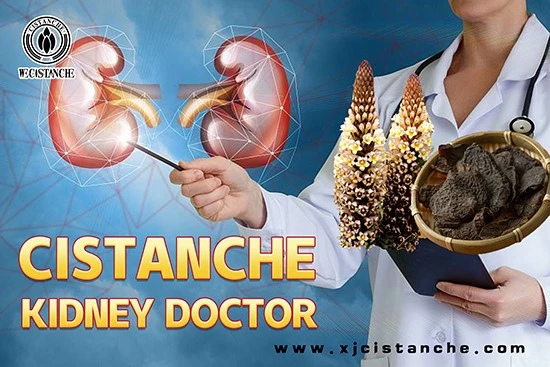
Effects of Cistanche: Improve Kidney Function
Traditional Chinese Medicine Perspective: Why is Cistanche tubulosa called "Desert Ginseng"
1. Sexual taste and core efficacy
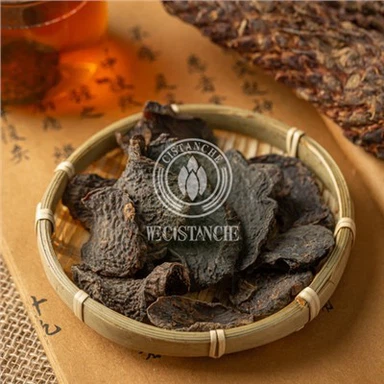
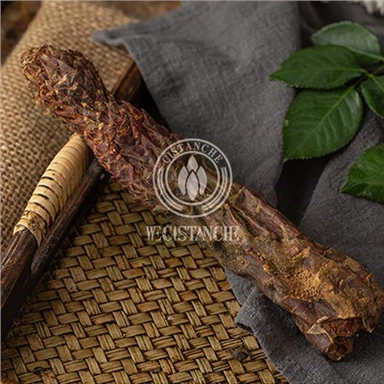
Cistanche tubulosa is a dry fleshy stem with scaly leaves of Cistanche tubulosa or Cistanche tubulosa plants in the family Rhamnaceae. It is mainly produced in the desert regions of Inner Mongolia, Xinjiang, and Gansu, as well as other regions. Wang Lixia, Chief Pharmacist of the Pharmacy Department at Guang'anmen Hospital of the Chinese Academy of Traditional Chinese Medicine, pointed out that Cistanche tubulosa has a sweet and salty taste, a warm nature, and is beneficial to the kidneys and large intestine meridians. It has three core effects of tonifying kidney yang, nourishing essence and blood, and moistening the intestines and promoting bowel movements. It is used to treat diseases such as kidney yang deficiency, essence and blood deficiency, impotence and infertility, soreness and weakness of the waist and knees, muscle and bone weakness, and intestinal dryness and constipation.
Due to its growth in arid and rainless desert environments, it can accumulate abundant vitality and is known as the "Desert Ginseng" among the people. This title is not only a description of its scarcity, but also a vivid summary of its powerful nourishing effects.

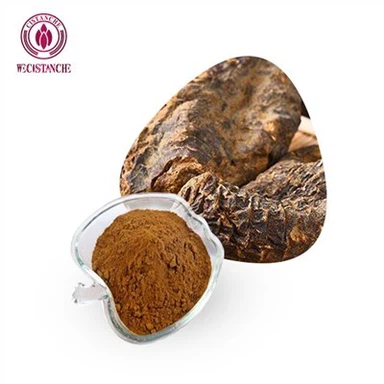
Chinese herb cistanche
2. The unique advantage of "warm but not dry, nourishing but not greasy"
Dr. Hao Weixin, Chief Physician of the Traditional Chinese Medicine Department at Peking Union Medical College Hospital, emphasized that the key to why Cistanche tubulosa stands out among many kidney tonifying and yang tonifying medicines is its characteristics of being sweet, warm, nourishing, and salty to enter the kidneys. Unlike deer antler and aconite, which are warm but not dry, and nourishing but not greasy, Cistanche tubulosa can not only tonify the kidneys and yang, but also benefit the essence and blood. It is suitable for long-term regulation, especially for patients with kidney yang deficiency and both essence and blood deficiency.
Simply put, many medicines that nourish kidney yang are like "raging fire", which can easily alleviate symptoms of excessive internal heat; And Cistanche tubulosa is more like "warm sunshine", slowly and continuously warming the kidneys, making it less prone to adverse reactions such as dry mouth and tongue, sore throat, etc. This is also an important reason why medical practitioners throughout history have praised it as a tonic.

cistanche benefits for men
3. Roles in classic prescriptions
Cistanche tubulosa is widely used in the clinical practice of traditional Chinese medicine. It can be seen in many classic prescriptions and modern traditional Chinese patent medicines and simple preparations:
Jichuan decoction: a combination of Cistanche tubulosa and Angelica sinensis, Fructus Aurantii immaturus, etc. It warms the kidneys, benefits essence, moistens the intestines, and promotes bowel movements. It is mainly used for treating kidney deficiency and constipation.
● Cistanche Pill: Used in combination with Rehmannia glutinosa, Dodder seed, etc., to treat impotence and infertility.
● Traditional Chinese patent medicines and simple preparations: Bushen Pill, Quanlu Pill, Suoyang Gujing Pill, Shengli Capsule, and other traditional Chinese patent medicines and simple preparations all contain Cistanche.
Dr. Xiao Lan, Chief Physician of the Department of Traditional Chinese Medicine at Xiangya Third Hospital of Central South University, pointed out that these formulas, through reasonable compatibility, synergistically enhance the kidney tonifying effect of Cistanche tubulosa, reflecting the wisdom of the traditional Chinese medicine formula of "Jun Chen Zuo Shi".

Modern pharmacology: scientific evidence for the kidney tonifying effect of Cistanche tubulosa
1. Core active ingredients: phenylethanolic glycosides
Since the 1980s, scholars both domestically and internationally have conducted systematic research on the chemical composition of Cistanche tubulosa. According to Baidu Baike, phenylethanoid glycosides, cyclohexene ether terpenes, lignans, polysaccharides, over a dozen amino acids, and various trace elements have been isolated from it. Among them, total phenylethanolic glycosides are the main active ingredients in Cistanche tubulosa, while echinacoside and acteoside are the two representative substances with the highest content and strongest effect.

Phenylethanol glycoside is the main active component of Cistanche tubulosa
2. Regulating the hypothalamic pituitary gonadal axis (HPG axis)
Dr. Huo Zejun, Chief Physician of the Department of Traditional Chinese Medicine at Peking University Third Hospital, introduced that modern pharmacological research has shown that Cistanche tubulosa can increase the weight of seminal vesicles, prostate, and levator ani muscles in Yang-deficient animals, and enhance the activity of acidic mucopolysaccharides in the corpus cavernosum and superoxide dismutase (SOD) in testicular tissue of Yang-deficient rats. Its mechanism of action may be related to the regulation of the hypothalamic pituitary gonadal axis (HPG axis).
Dr. Zhu Xinyi, Deputy Chief Physician of Southeast University Affiliated Zhongda Hospital, further explained that active ingredients such as phenylethanoid glycosides in Cistanche tubulosa can exert their effects by regulating the levels of HPG axis-related hormones. Multiple animal experiments have shown that Cistanche tubulosa can increase the levels of sex hormones such as testosterone in male animals, improve symptoms such as waist and knee soreness, impotence, and nocturnal emissions caused by kidney yang deficiency and deficiency of essence and blood.
In addition, Cistanche tubulosa can enhance the responsiveness of the pituitary gland to luteinizing hormone-releasing hormone (LHRH) and the ovaries to luteinizing hormone (LH), indicating that the core mechanism of its kidney tonifying effect lies in improving the body's own regulatory ability, rather than simply replacing exogenous hormones.

Effects of Cistanche-Improve kidney function
Click here to view Cistanche for Kidney disease products
【Ask for more】 Email:cindy.xue@wecistanche.com / WhatsApp: 0086 18599088692 / Wechat: 18599088692
3. Promote testosterone secretion and improve sexual function
Preclinical trials have found that phenylethanoid glycosides in Cistanche tubulosa can enhance the mating ability of male animals and prolong the latency period of erection. Its "aphrodisiac" effect is mainly achieved through three ways:
① Directly warming and tonifying kidney yang, improving symptoms of kidney yang deficiency such as cold limbs and soreness in the waist and knees;
② Fill the kidney essence; sufficient kidney essence can transform into yang qi, forming a virtuous cycle;
③ Moisturize and smooth the intestines, tonify without dryness, and avoid damaging yin with excessive heat.
Modern research has also found that polysaccharides in Cistanche tubulosa can enhance the function of the hypothalamic pituitary gonadal axis, improve the endothelial function of penile corpus cavernosum blood vessels, and promote local blood flow. These effects together form the material basis for improving sexual function.

The efficacy of Cistanche tubulosa in enhancing sexual function
4. The effects of phytoestrogens and bone protection
A research review published in the Journal Network of Tianjin University of Traditional Chinese Medicine suggests that echinacoside and verbascoside can co-antagonize the upregulation of estrogen response elements (ERE) by estrogen, thereby exhibiting phytoestrogenic activity. This discovery is of great significance for the prevention and treatment of postmenopausal osteoporosis.
Research has shown that echinacoside can significantly promote the expression of osteopontin (OPN) genes in osteoblasts, while verbascoside protects osteoblasts from dexamethasone-induced apoptosis through a p53-dependent pathway. In the ovariectomy (OVX) rat model, verbascoside has been shown to have the ability to promote bone formation and inhibit bone resorption, suggesting its potential effectiveness in postmenopausal osteoporosis.
5. Antioxidant and anti-aging effects
The antioxidant capacity of Cistanche tubulosa is an important support for its "nourishing essence and blood, anti-aging" effects. Research has shown that both echinacoside and verbascoside can scavenge DPPH and hydroxyl radicals, activate the Nrf2 antioxidant pathway, and enhance the activity of antioxidant enzymes such as SOD and catalase (CAT).
According to Baidu Baike, Cistanche tubulosa can significantly enhance the SOD activity of mouse red blood cells, significantly reduce the content of myocardial lipofuscin, and prolong the average lifespan, median lethal days, and maximum lifespan of fruit flies. At the cellular level, extracts of Cistanche tubulosa can prolong cell lifespan; At the molecular level, it can stabilize mitochondrial membrane potential, promote mitochondrial fusion, and protect the continuous and efficient operation of the cell's "energy factory".

Desert living cistanche-Antioxidant
6. Protect kidney tissue and regulate uric acid metabolism
In vitro experiments have confirmed that polysaccharides from Cistanche tubulosa have a protective effect against cisplatin-induced damage to renal tubular epithelial cells, reducing serum creatinine and urea nitrogen levels, and inhibiting the expression of renal fibrosis-related proteins. Its renal protective effect may be closely related to antioxidant stress and inhibition of inflammatory cytokine release.
It is worth noting that verbascoside and pineal glycosides in the extract of Cistanche tubulosa can also exert a uric acid-lowering effect by downregulating serum xanthine oxidase (XOD) levels and regulating the expression of renal urate transporters (URAT1, GLUT9, OAT1, OAT3). This provides a scientific basis for the potential application of Cistanche tubulosa in chronic kidney disease with hyperuricemia.