Chinese Expert Consensus On Perioperative Management Of Chronic ConstipationⅡ
Dec 14, 2023
Preoperative preparation
1. Bowel preparation (recommendation level: strongly recommended)
A good intestinal environment is conducive to reducing the incidence of surgical complications, reducing the proportion of enterostomy, and shortening the length of hospital stay. Patients with chronic constipation have slow colonic motility and a large amount of accumulated contents in the intestine. If routine bowel preparation is performed, a higher proportion of patients with insufficient bowel preparation will often appear [21]. For this reason, patients with slow transit constipation who plan to undergo surgery should adopt a low-residue/low-fiber diet 1 day before surgery, reasonably increase the dosage of compound polyethylene glycol electrolyte powder, or combine it with other drugs to optimize bowel preparation [22 ⁃ twenty-three]. If necessary, extend bowel preparation time or combine it with a cleansing enema.

2. Regulation of intestinal microecology (recommendation level: recommended)
Studies have found that preoperative administration of probiotics can promote the recovery of postoperative gastrointestinal function and reduce the incidence of complications [24]. Therefore, patients with refractory constipation who require surgical treatment should be treated with oral probiotics 2 weeks before surgery. For patients who have been treated with probiotics for a long time, the oral dose can be appropriately increased [25]. Microbiota transplantation is a new treatment for refractory constipation, and patients can be treated selectively before surgery [26]. The short-chain fatty acids produced by the metabolism of prebiotics by bacteria in the colon serve as metabolic substrates and can reduce intestinal pH and improve intestinal function. Synbiotics are an appropriate combination of probiotics and prebiotics that can improve the survival rate of probiotics and regulate the balance of intestinal flora. It is recommended to start taking oral prebiotics or synbiotics 2 weeks before surgery [27⁃28].
3. Nutritional support treatment (recommendation level: strongly recommended)
For hospitalized patients whose preoperative nutritional assessment indicates that they are at nutritional risk, nutritional support treatment should be started as early as possible. Studies have shown that preoperative nutritional support treatment can significantly reduce the incidence of perioperative complications [29⁃31]. Oral enteral nutritional supplementation is the first choice for nutritional support treatment. Due to intestinal dysfunction, patients with constipation can try to use low-residue enteral nutrition formulas to achieve nutritional supplementation while reducing the accumulation of food residues and intestinal feces, such as enteral nutrition powder (TP), enteral nutrition suspension liquid (TPF⁃FOS). If enteral nutrition cannot be implemented, or if enteral nutrition alone is still insufficient, parenteral nutrition support therapy can be used to supplement it [32].
Choice of surgical method
(1) Slow transit constipation
Surgical approaches for slow transit constipation include open surgery and laparoscopic surgery. With the development of minimally invasive surgery, laparoscopic colorectal surgery has become increasingly mature, and its advantages make it an ideal choice for the treatment of chronic constipation. Theoretically, any slow-transit constipation surgery that can be completed transabdominal can be completed laparoscopically [33⁃35].

1. Total colectomy + ileorectal anastomosis (recommendation level: strongly recommended)
This procedure was developed earlier and is widely used at home and abroad. It is one of the classic procedures for the treatment of slow transit constipation [36⁃37]. Total colectomy + ileorectal anastomosis removes the entire colon, significantly shortens the transportation time of intestinal contents, and can significantly improve the patient's constipation symptoms. It has a high efficiency and low recurrence rate, but complications such as diarrhea and anal incontinence may occur. symptoms [38].
2. Subtotal colectomy + cecal or ascending colorectal anastomosis (recommendation level: strongly recommended)
The intestinal tube from the cecum or the beginning of the ascending colon to the upper rectum is surgically removed, and the two broken ends of the intestinal tube are anastomotic end-to-end. Because this surgery preserves the ileocecal valve and its function, it theoretically reduces the incidence of postoperative malabsorption and translocation of colonic bacteria into the small intestine and reduces the incidence of postoperative diarrhea and fecal incontinence [39]. However, there are still some controversies about this surgical procedure, mainly because there is no unified standard for the scope of resection of the cecum and ascending colon [40].
3. Colon exclusion surgery (recommendation level: recommended)
This surgery has the advantages of small damage, quick recovery, and a low perioperative complication rate. The colon was not resected during the operation, and end-to-side anastomosis of the terminal ileum, sigmoid colon, or rectum was performed directly. However, because the colon is left in a blind loop, the symptoms of postoperative abdominal distension and abdominal pain still exist, which affects the surgical effect to a certain extent. It is mostly used in patients who cannot tolerate major surgery and elderly patients [41-42].
4. Ileostomy or cecum (recommendation level: recommended)
This surgery has less trauma and fewer complications. It is suitable for the elderly, malnourished patients, patients with general gastrointestinal motility retardation and severe mental disorders. However, since the stoma brings many inconveniences to patients and affects their quality of life, caution is required. Select [40, 43⁃44].
(2) Outlet obstruction constipation
There are mainly transanal and transabdominal surgeries for rectal prolapse.
1. Transanal surgery (recommendation level: recommended)
Methods include longitudinal folding suturing of the rectal mucosa plus sclerosing agent injection, transanal stapled rectal mucosal circumcision, and stapled transanal rectal resection [45-47]. The advantage of transanal surgery is that it is less invasive and easier for patients to accept.
2. Transabdominal surgery (recommendation level: recommended)
Rectal sling: When transabdominal rectopexy is used, the rectum should be fixed unilaterally first to retain a certain degree of mobility in the rectum and prevent intestinal obstruction. In addition, when performing transabdominal rectopexy, abnormal pelvic floor morphology must be corrected at the same time. For example, pelvic floor elevation can be performed in patients with pelvic floor hernia, round ligament shortening can be performed in patients with retroverted uterus, and sigmoid resection should be performed with caution in patients with long sigmoid colon. technique [48]. Currently, the most popular surgical procedure internationally is laparoscopic ventral mesh rectopexy (LVMR).

Surgery for rectocele via anorectal, transperineal, and transvaginal approaches all have good surgical results (recommendation level: recommended): The key to the success of rectocele surgery lies in the correct positioning of rectocele and a comprehensive understanding of possible coexisting conditions of various pelvic floor abnormalities [49].
(3) Mixed constipation
Patients with mixed constipation have two pathophysiological disorders: slow colonic transit and anorectal defecation disorder. The symptoms of constipation are severe and persistent, and drug treatment is ineffective, seriously affecting the quality of life, accounting for 10% of chronic constipation [50]. Currently, there is no clear and unified surgical treatment for this type of constipation. In addition to selecting an appropriate colectomy for mixed constipation, concurrent or staged surgery should be performed for the associated outlet obstruction lesions that can be treated surgically [51-52].
1. Jinling Technique (Recommended Level: Recommended)
The Jinling operation (subtotal colectomy + ascending colorectal side-to-side anastomosis, or modified Duhamel operation) is used to remove the slow-transmitting colon and at the same time correct the morphological and functional disorders of the outlet obstruction lesions of mixed constipation, thus improving the symptoms of constipation. It is the current treatment A surgical approach for mixed constipation [53–54].
2. Slow transit constipation combined with adult megacolon surgery (recommendation level: recommended)
Slow transit constipation combined with adult megacolon is a special type of refractory mixed constipation. Surgery requires resection of the colon with slow transit constipation and relief of lower rectal obstruction.
Surgical methods: slow-transit colectomy and anastomosis with radical megacolon surgery [44, 55-56]. The determination of the proximal resection margin of the intestinal tube is mainly based on the results of the colon transit test and intraoperative rapid pathological examination. For cases where the stenotic segment is located above the upper rectum, during the operation, the distal colorectal segment distal to the stenotic segment is pre-cut, and the full-thickness intestinal wall is removed and sent for rapid pathological examination until normal ganglion cells are visible. When reconstructing the intestinal anastomosis of the digestive tract, the anastomosis should be as large as possible. Side-to-side anastomosis is often better than end-to-end anastomosis. For patients with low adult megacolon and slow transit constipation, if there is no slow transit in the cecum and the ganglion cells are normal, a modified Duhamel anastomosis between the cecum and the lower end of the rectum can be performed. Otherwise, a modified Duhamel anastomosis between the terminal ileum pouch and the lower end of the rectum can be performed. The anastomosis is The lower end of the posterior wall should be 1.5~2.0cm above the dentate line, otherwise, difficulty in defecation may occur after surgery [1, 34, 56-57].
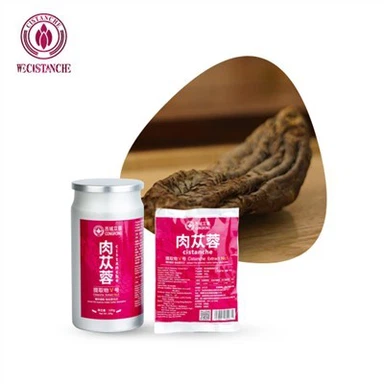
Natural Herbal Medicine For Relieving Constipation-Cistanche
Cistanche is a genus of parasitic plants that belongs to the family Orobanchaceae. These plants are known for their medicinal properties and have been used in Traditional Chinese Medicine (TCM) for centuries. Cistanche species are predominantly found in arid and desert regions of China, Mongolia, and other parts of Central Asia. Cistanche plants are characterized by their fleshy, yellowish stems and are highly valued for their potential health benefits. In TCM, Cistanche is believed to have tonic properties and is commonly used to nourish the kidney, enhance vitality, and support sexual function. It is also used to address issues related to aging, fatigue, and overall well-being. While Cistanche has a long history of use in traditional medicine, scientific research on its efficacy and safety is ongoing and limited. However, it is known to contain various bioactive compounds such as phenylethanoid glycosides, iridoids, lignans, and polysaccharides, which may contribute to its medicinal effects.

Wecistanche's cistanche powder, cistanche tablets, cistanche capsules, and other products are developed using desert cistanche as raw materials, all of which have a good effect on relieving constipation. The specific mechanism is as follows: Cistanche is believed to have potential benefits for relieving constipation based on its traditional use and certain compounds it contains. While scientific research specifically on Cistanche's effect on constipation is limited, it is thought to have multiple mechanisms that may contribute to its potential to relieve constipation. Laxative Effect: Cistanche has long been used in Traditional Chinese Medicine as a remedy for constipation. It is believed to have a mild laxative effect, which can help promote bowel movements and induce constipation. This effect may be attributed to various compounds found in Cistanche, such as phenylethanoid glycosides and polysaccharides. Moistening the Intestines: Based on traditional use, Cistanche is considered to have moisturizing properties, specifically targeting the Intestines. Promoting hydration and lubrication of the Intestines may help soften tools and facilitate easier passage, thereby relieving constipation. Anti-inflammatory Effect: Constipation can sometimes be associated with inflammation in the digestive tract. Cistanche contains certain compounds, including phenylethanoid glycosides and lignans, that are believed to have anti-inflammatory properties. By reducing inflammation in the intestines, it may help improve bowel movement regularity and relieve constipation.