Chronic Renal Failure
Nov 06, 2024
Chronic renal failure (chronic renal failure for short) is the result of serious kidney damage caused by a variety of chronic diseases, showing a chronic development process, uremia is the end stage of progressive chronic renal failure. The main symptoms are polyuria to oliguria, eventually no urine, anemia, bleeding, epistaxis, nausea, vomiting, anorexia, urine odor in the mouth, fatigue, lethargy, apathy, irritability, convulsion, coma, hypertension, left ventricular hypertrophy, pericarditis, dry skin desquamation, itchy feeling, deep breathing, and easy secondary infection. According to the degree of renal impairment, chronic renal failure can be divided into four stages: renal compensation stage, azotemia stage, renal failure (early uremia) and end-stage renal failure (late uremia). In the early stage of renal insufficiency, clinical symptoms are not obvious, with the development of the disease, kidney damage is serious, the late stage will develop into uremia, its symptoms will involve all organs and tissues of the body.

Click to Cistanche for kidney disease
【 Diagnostic points 】
1. Renal function compensation stage, azotemia stage, urine volume increased, there are obvious polyuria, nocturnal urine; Uremic stage, oliguria, even anuria, edema.
2. Hematopoietic system has anemia, bleeding, bleeding;
Digestive system nausea, vomiting, anorexia, mouth urine odor; Cardiovascular system has hypertension, left ventricular hypertrophy, myocarditis, pericarditis, coronary heart disease;
Nervous system weakness, dizziness, headache, apathy, lethargy, irritability, convulsion, coma; The respiratory system has deep breathing; The motor system has bone pain, spontaneous fracture, arthritis and so on.
3. Endogenous creatinine clearance decreased in renal function test, blood creatinine increased, phenol red excretion test and urine concentration and dilution test decreased significantly.
4. Blood electrolyte disturbance.
【 Dialectical classification 】
1. Symptoms of weak temper: nausea, abdominal distension, mouth sticky and tasteless, or bitter mouth, dry stool, facial wilting, god tired. Thick yellow greasy fur, thin and slippery pulse.
Syndrome analysis: spleen deficiency for a long time, wet turbidity does not change, depression and heat turbine lifting disorder, turbidity evil upward reverse, so nausea, vomiting, abdominal distension poor; Turbid evil way on, then the mouth sticky greasy tasteless; Heat knot under, then dry stool knot; Dampness-heat accumulation steaming, burning body fluid, so bitter mouth dry; The temper is weak, the Qingyang can not spread and rise, so the face is weak, the god is tired and the limbs are tired; Thick, yellow and greasy fur and thin, slippery pulse are signs of dampness and heat.
2. Spleen and kidney Yang deficiency symptoms: fatigue, easy to catch a cold, do not eat, vomiting water, urine odor in the mouth, dirty stool, urine clear and long, fear of cold limbs cold, complexion? s white or dull. Light tongue fat body, teeth mark, white and moist fur, pulse sinking or moistening.
Syndrome analysis: spleen and kidney qi deficiency, can not fill the limbs muscles, so fatigue, easy to catch cold; Spleen main health transport, health transport disorders, rot weak, so do not think to eat; Clear turbid rise and fall abnormal dam MAO area spit water, mouth urine odor;
Kidney main water gasification, division of two stool, kidney qi deficiency and gasification less than, so dirty stool, urine clear long; Yang failure, without warmth, is afraid of cold limbs cold, complexion? s white or obscure; Thin tongue fat body, teeth mark, white and moist fur, pulse sink or moisten fine is the spleen kidney Yang deficiency, cold and wet intrinsic image.
3. Symptoms of spleen and kidney Yin deficiency: god fatigue, waist and knees sour and soft, movement is short of breath, dry mouth and lips, hands and feet hot, or afternoon hot flash, dry stool, little yellow urine, small face. Tongue red, thin yellow greasy fur, pulse sinking fine belt number.

Syndrome analysis: dampness and heat persist for a long time, turning dryness and damaging Yin, and eventually the spleen and kidney qi and Yin are insufficient, and the spirit fatigue can be seen; Kidney deficiency causes waist and knees to be weak; Kidney can not carry qi, so the movement is short of breath; The Yin deficiency of the spleen and kidney can not moisten the skin and mouth, so the mouth is dry and the lips are dry; Yin deficiency is internal heat, so there are hands and feet heart heat, afternoon hot;
Yin deficiency bowel dryness, dry stool; Kidney deficiency dampness-heat betting, then less yellow urine;
Spleen and kidney deficiency nihility with transpiration distribution fine on the rong in the face, so the complexion is small;
Red tongue, thin yellow greasy coating, deep pulse with fine number is the spleen kidney Yin deficiency, damp heat internal stagnation signs.
4. Turbidinobiosis symptoms: excessive sputum and saliva, nausea and vomiting, not thinking about diet, edema and less urine, lethargy, touching the bed with clothes, gradually coma, white and stagnant face, warm limbs.
Pale tongue fat body, white greasy fur, slow pulse.
Syndrome analysis: spleen loss of health transport, dampness-heat causes phlegm, so excessive phlegm saliva;
Spleen and stomach fluctuation disorder, so nausea and vomiting, do not want to eat; The spleen deficiency water dampness stops within, the kidney deficiency gasification is unfavorable, then the edema urine is less; Cloudy Yin on the reverse, blind clear, visible lethargy, touch bed, coma; Wet turbid internal resistance, Qingyang does not rise, there is a white stagnant; Wet block Yang qi, lost in the warm, so the limbs are not warm; Weak tongue and fat body, white and greasy fur, slow pulse are signs of weak Yang qi and obstructed Yin.
【 Classification therapy 】
1. The principle of temper weakness: strengthening spleen and dampness, and clearing heat of stomach.
Recipe: Xiangsha Liujunzi Decoction combined with Huanglian Wendan decoction.
12 g Codonopsis 12 g white art 15 g Coix seed 15 g yam 15 g amari 6 g amari 3 g coptis 6 g Poria 12 g pinellia 9 g orange peel 6 g bamboo ru 3 g aurantia 9 g liquorice 6 g with the disease: God tired, add 15 g astragalus to strengthen the work of qi; The mouth is sticky and tasteless, add 12 grams of atractylodes, 3 grams of white cardamom, 9 grams of Lei xiang, to dry humidity; Bitter mouth dry mouth, add scutellaria, gardenia 9 grams each, to clear heat dampness; Dry stool, increase yellow 9 grams, in order to relieve heat and defecation.
2. Spleen and kidney Yang deficiency treatment: warm tonifying spleen and kidney, moistening and reducing turbidity.
Recipe: Wenpi Decoction added and reduced.
Codonopsis 12 g aconitum 6 g dried ginger 9 g Xianling spleen 9 g pinellia 9 g magnolia officinalis 6 g ginger Zhulu 9 g control rhubarb 9 g licorice 6 g with the disease: vomiting water, add 9 g cassia twig, Tuckahoe 12 g, to warm huatan drink; Mouth urine odor, add 3 grams of coptis, 3 grams of Evodia, with xin open bitter fall; For those who do not want to eat, add 6 grams of chicken and 9 grams of divine comedy for appetizer; Loose stool dirt, add yam, coix seed 15 grams each, to strengthen the spleen to stop diarrhea.
3. Treatment of spleen and kidney Yin deficiency: nourishing qi and Yin, clearing away dampness.
Recipe: Zhibai Dihuang Decoction combined with Huanglian Wendan decoction.
Zhi mother 12 g cooked ground 9 g raw ground 9 g dogwood 9 g wolfberry 9 g yam 15 g Danpi 9 g coptis 6 g poria 9 g pinellia 9 g orange peel 6 g bamboo ru 3 g aurantia 9 g licorice 6 g with the disease: God fatigue, add 15 g astragalus, codonopsis 12 g to supplement qi; Hands and feet heart heat, afternoon hot, dry mouth and dry lips, add scrophulina, ophiopogon, Dendrobium, turtle version of 9 grams each, to nourish Yin Qingheat Shengjin; For dry stool, add 9 grams of hemp seed to moisten bowel; Urine color yellow, add 15 grams of psyllium (bag fried), 30 grams of talc, to clear heat and water.
4. Turbid Yin to close orifice.
Treatment principle: Xinwarm turbid, clear phlegm to open the mouth.
Recipe: Ditan Decoction and Suhexiang pill addition and reduction.
Pinellia 9 g tangerine peel 6 g bamboo ru 3 g Codonopsis 9 g Codonopsis 12 g Tuckahoe 12 g bile south star 6 g calamus 9 g Yujin 9 g licorice 6 g Su He xiang pills 1 (warm open water service) with the disease added or reduced: nausea and vomiting, add ginger bamboo ru 9 g, to reduce retching; For those who do not want to eat, add 6 grams of chicken and 9 grams of divine Qu to ease eating; Edema open urine, add 9 grams of old gourd, insect shoots, 15 grams of alisma, to facilitate water retreat; If the God is faint, he can add one piece of precious Dan to relieve the turbid orificum.
【 Proprietary Chinese medicine 】
1. Take 4 capsules each time, 3 times a day.
2. Take 4 capsules of Jinshui Bao 3 times a day.
3. Take 4 capsules of Zhiling capsules 3 times a day.

【 Simple recipe 】
1. 15 grams of Astragalus, 9 grams of cooked aconite, 30 grams of salvia miltiorrhiza, 30 grams of June snow, decocted in water, 1 dose daily.
2. Boil 30 grams of mung beans with water and take with sugar, twice a day.
3. 10g cassia seed, mash, add 500g water, boil for 10 minutes, pour in 1 tablespoon of honey, stir and drink, once a day.
【 Other treatments 】
Acupuncture therapy: Select Shenshu, moisture, Qi sea, Sanjiao Shu, sanyin, etc., 1 times a day, 10 days for a course of treatment.
Diet Therapy:
(1) Black-bone chicken or baby chicken 1, take another 30 grams of astragalus, 60 grams of June snow, wrap with gauze into the chicken belly, add water to stew soup to crisp, go to the medicine bag, eat chicken soup.
(2) 1 turtle, 30 grams of Huai yam, 9 grams of wolfberry, wrapped in gauze, boiled in the pot with water, after the medicine bag, meat and soup.
(3) 15 grams of white fungus, 50 grams of jujube, the fungus bubble open, and jujube together with a pot of water, add sugar after eating.
(4) Eat 1 bottle of milk and 2 apples every morning.
Enema treatment: 30 grams of rhubarb, 30 grams of June snow, 30 grams of dandelion, 30 grams of salvitis, 30 grams of raw oysters, decocted into 200 ml of liquid medicine, retain the enema.
Peritoneal or hemodialysis. Kidney transplantation may be considered if necessary.
【 Note 】
1. The disease should be actively treated to make the kidney function no longer decline; Patients should pay attention to rest, prevent and control infection, control blood pressure; Mouth has urine odor, should gargle many times.
2. Patients should take semi-liquid food and low-protein diet, supplement enough calories and vitamins, eat more fruits and vegetables; Generally do not avoid salt, do not limit water if you enter the oliguria period, to limit salt intake (l ~ 3 grams/day), strict control of water; Avoid seafood and spicy, wine and other irritating things.
3. Although the disease is a serious disease, the prognosis is good after active treatment;
If uremia is present, the prognosis is poor.
How Does Cistanche Treat Kidney Disease?
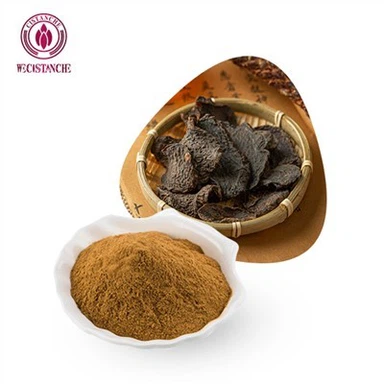
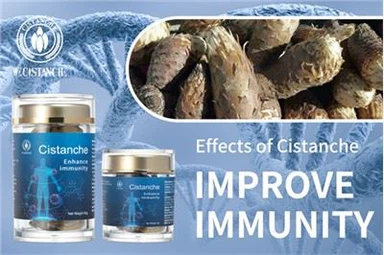
Cistanche is a traditional Chinese herbal medicine used for centuries to treat various health conditions, including kidney disease. It is derived from the dried stems of Cistanche deserticola, a plant native to the deserts of China and Mongolia. The main active components of cistanche are phenylethanoid glycosides, echinacoside, and acteoside, which have been found to have beneficial effects on kidney health.
Kidney disease, also known as renal disease, refers to a condition in which the kidneys are not functioning properly. This can result in a buildup of waste products and toxins in the body, leading to various symptoms and complications. Cistanche may help treat kidney disease ase through several mechanisms.
Firstly, cistanche has been found to have diuretic properties, meaning it can increase urine production and help eliminate waste products from the body. This can help relieve the burden on the kidneys and prevent the buildup of toxins. By promoting diuresis, cistanche may also help Reduce high blood pressure, a common complication of kidney disease.
Moreover, cistanche has been shown to have antioxidant effects. Oxidative stress, caused by an imbalance between the production of free radicals and the body's antioxidant defenses, plays a key role in the progression of kidney disease. ies help neutralize free radicals and reduce Oxidative stress, thereby protecting the kidneys from damage. The phenylethanoid glycosides found in cistanche have been particularly effective in scavenging free radicals and inhibiting lipid peroxidation.
Additionally, cistanche has been found to have anti-inflammatory effects. Inflammation is another key factor in the development and progression of kidney disease. Cistanche's anti-inflammatory properties help reduce the production of pro-inflammatory cytokines and inhibit the activation of inflammation mandatory pathways, thus alleviating inflammation in the kidneys.

Furthermore, cistanche has been shown to have immunomodulatory effects. In kidney disease, the immune system can be dysregulated, leading to excessive inflammation and tissue damage. Cistanche helps regulate the immune response by modulating the production and activity of immune cells, such as T cells and macrophages. This immune regulation helps reduce inflammation and prevent further damage to the kidneys.
Moreover, cistanche has been found to improve renal function by promoting the regeneration of renal tubes with cells. Renal tubular epithelial cells play a crucial role in the filtration and reabsorption of waste products and electrolytes. In kidney disease, these cells can be damaged, leading to damaged renal function. Cistanche's ability to promote the regeneration of these cells helps restore proper renal function and improve overall kidney health.
In addition to these direct effects on the kidneys, cistanche has been found to have beneficial effects on other organs and systems in the body. This holistic approach to health is particularly important in kidney disease, as the condition often affects multiple organs and systems. che has been shown to have protective effects on the liver, heart, and blood vessels, which are commonly affected by kidney disease. By promoting the health of these organs, cistanche helps improve overall kidney function and prevent further complications.
In conclusion, cistanche is a traditional Chinese herbal medicine used for centuries to treat kidney disease. Its active components have diuretic, antioxidant, anti-inflammatory, immunomodulatory, and regenerative effects, which help improve renal function and protect the kidneys from further damage. , cistanche has beneficial effects on other organs and systems, making it a holistic approach to treating kidney disease.