Cistanche And Brain Health: What The Science Says About This Desert Herb
Oct 29, 2026
From protecting neurons after a stroke to supporting memory in aging - the "desert ginseng" is catching the attention of neuroscience.
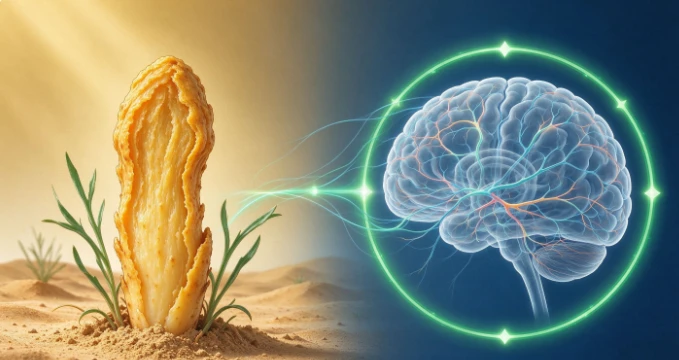
When you think of a plant that could help the brain, your mind probably jumps to ginkgo, bacopa, or maybe green tea. Few people would guess that a golden-brown, rootless plant buried in the desert sand - known for centuries in Chinese tradition as the "desert ginseng" - is now the focus of a growing body of neuroscience research.
Its botanical name is Cistanche deserticola. And while it has long been valued for vitality, energy, and digestive health, recent studies are revealing something far more intriguing: this humble desert herb appears to offer real, measurable support for the central nervous system - from protecting brain cells after injury to potentially slowing the progression of some of the most feared neurological diseases.
This article walks you through what Cistanche is, what it does in the body, and - most importantly - what the current research says about its effects on brain and nervous system health. We'll keep the science honest, the language plain, and the takeaways practical.
Meet the "Desert Ginseng"
Cistanche is a parasitic plant native to the arid deserts of northwestern China and Central Asia. It has no chlorophyll and no true roots - instead, its fleshy golden stem attaches to the roots of desert shrubs, drawing water and nutrients while growing partly buried in the sand.
The dried stem is the part used in traditional herbal medicine. In Chinese tradition it's known by several poetic names - "golden bamboo shoot," "earth essence," and most famously, "desert ginseng." It appears in the ancient pharmacopeia Shennong Ben Cao Jing (circa 200 CE), where it was listed among the highest-grade tonics.
For centuries, Cistanche has been used to:
Strengthen kidney yang and boost vitality
Support energy and combat fatigue
Moisten the intestines and relieve constipation
Nourish and strengthen the body overall
Its chemical profile is rich. The main extracts include total glycosides (GCs), a family of phenylethanoid glycosides (most notably echinacoside and acteoside), iridoids, lignans, polysaccharides, and alkaloids. Modern pharmacology has linked many of these compounds to a surprisingly wide range of effects - antioxidant, anti-inflammatory, anti-apoptotic, autophagy-regulating, anti-fatigue, and cognition-supporting.
It's that last set of properties - the brain-related ones - that has scientists most excited.
Why Researchers Are Looking at the Brain
Neurological and brain-related disorders are among the most pressing health challenges of our time. Conditions like stroke, Alzheimer's disease, Parkinson's disease, and vascular dementia all involve the slow or sudden destruction of neurons - the cells that carry every thought, memory, and movement you make.
What unites many of these diseases is a set of common underlying processes:
Oxidative stress - an overload of damaging free radicals
Neuroinflammation - inflammation within the brain
Neuronal apoptosis - the death of brain cells
Loss of synaptic plasticity - the weakening of connections between neurons
Here's the key insight: Cistanche's active compounds appear to target exactly these processes. That's why a plant once used mainly for energy and digestion is now appearing in studies on stroke recovery, dementia, and Parkinson's disease. Let's look at the evidence, disease by disease.
Cistanche and Stroke Recovery (Cerebral Ischemia-Reperfusion Injury)
Strokes are a leading cause of death and long-term disability worldwide. Most ischemic strokes happen when a blood vessel in the brain gets blocked; the real damage, however, often peaks when blood flow is restored - a process called ischemia-reperfusion injury. This rebound phase triggers a cascade of oxidative stress, inflammation, and brain-cell death that can worsen the initial damage.
Studies in animal models have shown that Cistanche's total glycosides (GCs) offer meaningful protection during this critical window:
They reduced the area of brain infarction (the tissue lost to the stroke).
They improved neurological function scores - animals recovered motor and cognitive function better.
They reduced oxidative damage by lowering MDA (a marker of lipid damage) and boosting the activity of antioxidant enzymes like SOD, CAT, and GSH-Px.
They helped preserve the integrity of the blood-brain barrier, the protective lining that shields the brain from harmful substances.
They promoted neurovascular regeneration - encouraging the growth of new blood vessels and neural connections.
Researchers traced much of this protection to a specific cellular pathway called Nrf2/Keap1 - a master regulator of the body's antioxidant defenses. By activating Nrf2, Cistanche essentially "switched on" the brain's own repair and protection programs. Other studies found it also reduced the expression of inflammatory molecules (NF-κB) and toxic proteins, helping preserve cognitive function after stroke-like injury.
In plain terms: in animal models, Cistanche compounds appear to limit stroke damage, protect brain cells, and support the brain's natural recovery and rewiring.
Cistanche and Alzheimer's Disease
Alzheimer's disease (AD) is the most common form of dementia, characterized by progressive memory loss and cognitive decline. Its hallmarks are the buildup of amyloid-beta (Aβ) plaques, the tangling of tau proteins, the loss of synapses, and the death of neurons in the hippocampus - the brain's memory center.
Several strands of evidence suggest Cistanche may support the aging brain against these processes:
1. It fights oxidative stress. Research on Alzheimer's-model rats found that Cistanche glycosides significantly raised the activity of antioxidant enzymes (SOD and GSH-Px) in the brain while lowering MDA - the chemical footprint of oxidative damage. By clearing excess free radicals, the extract appears to reduce one of the key drivers of cognitive decline.
2. It protects synapses. Synapses are the junctions where neurons communicate, and their health is central to learning and memory. In aging-model mice, Cistanche treatment increased the density of dendritic spines (the tiny branches where synapses form) and boosted the expression of key synaptic proteins like SYN and PSD-95. The result: better learning and memory performance in behavioral tests.
3. It works through the gut-brain axis. A growing frontier in dementia research is the connection between gut bacteria and the brain. Some studies suggest Cistanche polysaccharides help restore a healthy balance of gut microbes, which in turn supports brain function - an indirect but fascinating route of protection.
4. It calms neuroinflammation. Cistanche compounds have been shown to reduce the activation of microglia (the brain's immune cells) and lower inflammatory signaling, helping protect neurons from immune-driven damage.
The takeaway: In animal models of Alzheimer's and age-related cognitive decline, Cistanche consistently supports the mechanisms that keep memory sharp - antioxidant defense, synaptic health, and balanced brain-immune activity.

Cistanche and Parkinson's Disease
Parkinson's disease (PD) is a movement disorder caused by the progressive loss of dopamine-producing neurons in a brain region called the substantia nigra. It produces the hallmark tremors, stiffness, and slowness of movement - and, as it advances, cognitive and emotional changes too.
One of the lead compounds in Cistanche, echinacoside, has shown notable promise in Parkinson's research:
In a classic mouse model of Parkinson's (induced by a neurotoxin called MPTP), echinacoside improved movement abnormalities - animals moved more normally after treatment.
It protected dopamine neurons, the cells whose loss causes the disease.
Mechanistically, it appeared to work by inhibiting an inflammatory pathway (the NLRP3/Caspase-1/IL-1β axis) and by reducing the activation of microglia in the damaged brain region.
It also boosted dopamine and dopamine-transporter levels in the striatum, the area responsible for coordinating movement.
The takeaway: In animal models, echinacoside - a compound abundant in Cistanche - shows genuine potential to protect the dopamine neurons that Parkinson's disease destroys, partly by calming neuroinflammation.
Cistanche and Vascular Dementia
Vascular dementia (VaD) is cognitive decline caused by reduced blood flow to the brain - often the result of small strokes or chronically impaired circulation. It shares features with Alzheimer's, including buildup of toxic proteins and cognitive dysfunction, but its root cause is vascular.
Research on Cistanche in vascular dementia models found:
Cistanche glycosides lowered the levels of toxic proteins (Aβ and phosphorylated tau) in the hippocampus, reducing their neurotoxic effects.
The extract improved cognitive function in behavioral tests.
Echinacoside specifically restored acetylcholine - a neurotransmitter essential for memory - in the hippocampus and striatum, while inhibiting acetylcholinesterase, the enzyme that breaks it down.
Many dementia medications work by boosting acetylcholine, so seeing Cistanche do this naturally is a notable finding.
The takeaway: In animal models, Cistanche supports the cholinergic system that underpins memory and reduces vascular-dementia-related cognitive decline.

Cistanche and ALS (Amyotrophic Lateral Sclerosis)
ALS - sometimes called Lou Gehrig's disease - is a devastating motor neuron disease. The neurons that control voluntary muscles progressively die, leading to paralysis and, eventually, respiratory failure. It's a notoriously difficult disease to treat.
Cistanche research here is earlier-stage but intriguing. Studies focused on a form of ALS linked to a mutant gene called SOD1:
Echinacoside treatment improved the survival of neurons grown in culture.
A key mechanism involved a protein called GLT1, which normally clears excess glutamate - the neurotransmitter that becomes toxic at high levels. In ALS, astrocyte cells fail to produce enough GLT1, allowing glutamate to damage neurons. Echinacoside up-regulated GLT1, restoring the cells' ability to clear glutamate and reducing excitotoxicity.
This suggests Cistanche compounds may help counteract one of the specific molecular failures driving ALS.
The takeaway: Early laboratory evidence suggests Cistanche compounds may help protect motor neurons by restoring glutamate clearance - a promising but still-early line of research.
Beyond the Brain: The Broader Pharmacological Profile
It's worth noting that Cistanche's effects extend well beyond the nervous system, which helps explain its traditional reputation as a general tonic:
Antioxidant and anti-inflammatory - the foundation of most of its benefits.
Anti-fatigue and stamina support - aligning with its traditional use for energy.
Anti-aging and longevity - as covered in related research on lifespan extension in model organisms.
Osteoporosis prevention - by supporting bone-forming cells through the Wnt/β-catenin pathway.
Blood sugar and lipid support - improving insulin sensitivity and metabolic markers in diabetic models.
Immune and anti-tumor potential - including synergy with conventional chemotherapy in some studies.
Digestive health - its traditional use to relieve constipation.
All of these contribute to a picture of a plant that supports the body's defenses broadly - which may be exactly why traditional medicine valued it as a "tonic."
What This Means for You
Here's the balanced reality, and it's important to state it plainly.
What the research genuinely supports: Cistanche contains active compounds with real antioxidant, anti-inflammatory, and neuroprotective activity. Across multiple independent studies and disease models, these compounds consistently protect neurons, support memory, calm brain inflammation, and reduce oxidative damage. This is legitimate, converging evidence.
What it does not yet prove: That Cistanche prevents, treats, or cures any human neurological disease. The studies discussed here were conducted in animal models and cell cultures. While they're scientifically meaningful and point the way for human research, they do not equal clinical proof in people. No one should use Cistanche as a substitute for stroke treatment, dementia care, or Parkinson's medication.
How to think about it: If you're interested in supporting long-term brain health, Cistanche is best viewed as one ingredient in a whole-body strategy - alongside good sleep, regular exercise, a balanced diet rich in antioxidants, and mental engagement. For many people, a standardized Cistanche extract can be a reasonable addition to that routine, but it works in concert with lifestyle, not in isolation.

How to Choose a Quality Product
Because the desert-supply chain can vary widely, product quality matters enormously. A few practical tips:
Look for standardized extracts that clearly state their content of key active compounds - especially echinacoside and acteoside (the phenylethanoid glycosides behind much of the research).
Prefer reputable brands that test for purity and contaminants and publish third-party certificates of analysis.
Follow the recommended dose - don't assume "more is better." As with any botanical, benefit and tolerance both depend on dose.
Check with your healthcare provider if you're pregnant, nursing, take medication (especially for blood pressure, blood sugar, or blood-thinning), or have a medical condition.
Safety and Sensible Precautions
Cistanche is recognized in China as a food-and-medicine substance and is generally considered well-tolerated. Still, sensible caution applies:
Consult a professional for serious or chronic conditions - especially neurological ones. Brain health is not an area for self-medication.
Don't replace prescribed treatment. If you or a loved one is managing stroke recovery, dementia, or Parkinson's disease, follow medical advice; supplements are complementary, not substitutes.
Mind the dose and the source, as noted above.
The Big Picture: A Desert Plant, a Modern Promise
It's a remarkable convergence: a plant that has nourished people across the deserts of Asia for millennia is now yielding compounds that modern neuroscience finds genuinely interesting.
The evidence so far is encouraging and consistent - Cistanche's glycosides and phenylethanoid compounds support the brain's own defenses against oxidative stress, inflammation, and cell death. Stroke models show reduced damage and better recovery; dementia models show preserved memory and synaptic health; Parkinson's models show protected dopamine neurons; ALS models show restored neuron survival.
What's needed next is the hardest step: well-designed human clinical trials to confirm whether these benefits translate from lab animals to people. Until then, the honest summary is that Cistanche is a scientifically promising botanical for brain and nervous system support - worth understanding, worth studying further, and, for many people, a reasonable part of an evidence-informed approach to lifelong health.
Nature, it turns out, may have been hiding one of its oldest secrets in the desert sand all along.

This article is for general informational and educational purposes only and is not a substitute for professional medical advice, diagnosis, or treatment. The studies described were conducted in laboratory animals and cell cultures; their findings do not confirm the same effects in humans. Always consult your physician or another qualified health provider regarding any medical condition or before adding new supplements to your routine.