The protective effect of Cistanche Glycoside on spleen injury in mice exposed to radiation
Mar 08, 2022
For more information:ali.ma@wecitanche.com
Effect of Cistanche Glycosides on spleen injury in mice exposed to radiation
Jiang Xiaoyan, Wang Xiaowen, Shang Xiaoying
Department of Pharmacology, School of Pharmacy, Xinjiang Medical University, Urumqi, Xinjiang
Abstract:
Aim: This research is going to study the protective effect of Cistanche Glycoside on spleen injury in mice exposed to radiation.Methods: To observe the effects of Cistanche Glycosides on the spleen index, the selenium-glutathione-peroxidase (Se-GSH-Px) activity of the spleen, the content of malondialdehyde (MDA), histomorphology, and the effects of radiation damage on mice. According to the impact of 30-day survival rate of mice. Conclusion: After radiation injury, the spleen index of mice decreases. The activity of the spleen Se-GSH-Px decreases. Although the MDA content increases, the morphology of the brand tissue is impaired. The 30-day survival rate of irradiated mice decreases. Cistanche Glycosides can promote the above indicators of Recovery. Results: Cistanche Total Glycosides have a protective effect on spleen injury in irradiated mice. Its mechanism may be related to antioxidant effects.
Keywords: Cistanche Glycosides; spleen injury; radiation; antioxidant effect
Cistanche has the effects of invigorating the kidney, replenishing essence, and aphrodisiac. Its crude preparation can enhance the SOD activity of mouse red blood cells, significantly reduce the content of myocardial lipofuscin, and increase the ability of animal DNA synthesis in yang-deficiency animals. Radiation protection action/use ⑶. However, the protective effect of Cistanche Glycosides on spleen injury in irradiated mice has not been reported. This experiment observes the effects of Cistanche Glycosides on the spleen index, spleen biochemical indexes, and histomorphology of mice damaged by CoY rays, and aims to explore the possible protective mechanism of Cistanche Glycosides on mice spleen damage by 6OCoY rays.

Cistanche
Click to Cistanche NZ products
1 Material and methods
1.1 Drugs and reagents
Cistanche Glycosides was provided by the Department of Phytochemistry of the Department of Pharmacy of our hospital; Huang Zhi (Astragalus Membranaceus, AM) injection was produced by Shanghai Fuda Pharmaceutical Co., Ltd., 1,3,3-tetra ethoxy propane (1,1, 3,3-tetra ethoxy propane, TEP) is a product of Sigma; (2-nitrobenzoic acid) [5, 5-dithiol-bis (2-nitrobenzoic acid), DTNB] is a Fluka Products; Coomassie Brilliant Blue (CBB) G 250 is a Fluka product; reduced glutathione is a product of Dongfeng Biochemical Technology Company, Shanghai Institute of Biochemistry, Chinese Academy of Sciences.
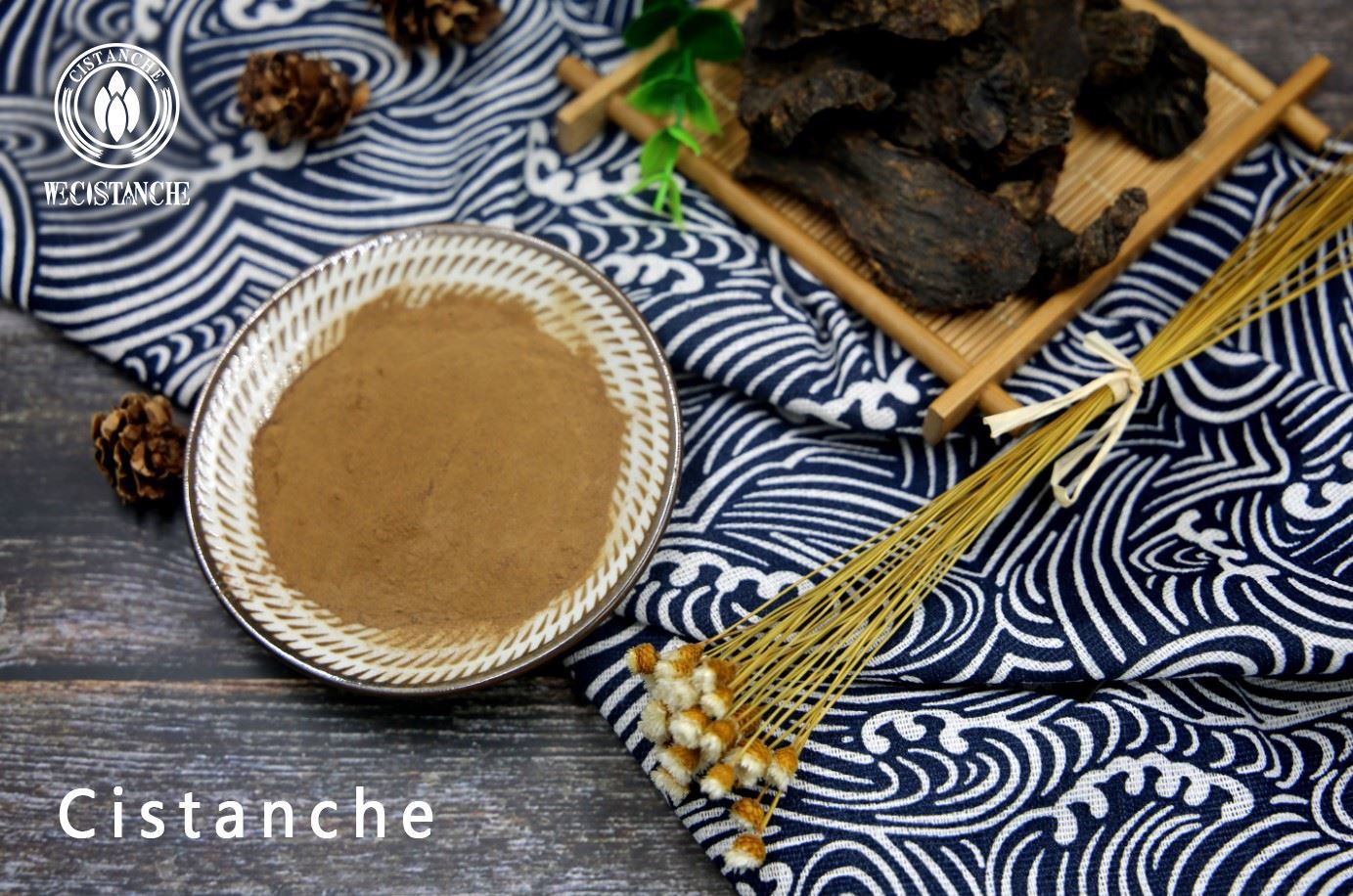
Cistanche Glycosides
1.2 Radiation conditions
The whole body is irradiated uniformly at one time, the radiation dose rate is 3.89X10⁻²Cy/kg, and the mice in the injury group and each administration group at a distance of 0.80 mo receive a dose of 2 Gy, which is used for the observation of the spleen index, 6 Gy It is used to observe the biochemical indicators of the spleen and 8 Gy is used to observe the 30-day survival rate.
1.3 Animals
NIH mice, body weight (20+2) g, both male and female, provided by Xinzhao Epidemiological Research Institute, the production certificate number is Yidongzi No. 16-001, randomly divided into 5 groups: (1) Normal group: Physiology Saline (NS) 20 ml/kg gavage, once a day; (2) Injury group: NS 20 ml/kg gavage, once a day; (3) Cistanche Glycosides group: Cistanche Glycosides 62 respectively. 5.125 mg/kg gavage, once a day; (4) Positive control group: Huangmao injection (crude medicine, AM) 65 g/kg. gavage, once a day.
1.4 Observation indicators and detection methods
1.4.1 Determination of the spleen fingers in each group of mice 5 days before the radiation, once a day, the mice in the injury group and the administration group received 2 Gy, and each group continued to gavage for 6 days after the radiation, after weighing The mice were sacrificed to take the spleen, and the spleen weight was weighed. The spleen weight/body weight was taken as the spleen index (mg/g).
1.4. 2 Determination of spleen biochemical indicators and histomorphological observation The mice in each group were given continuous gastric gavage 7 days before and after radiation, once a day. The exposure dose of mice in the injury group and the administration group was 6 Gy. The mice of each group were sacrificed on the 1, 3, 7, 14, and 21 days after radiation, the spleens were taken, weighed, rinsed with ice NS, dried with filter paper, and made 10% (W/V) in an ice bath The homogenate was centrifuged at 3000 r/min for 30 min, and the supernatant was taken for testing. The mouse spleen was taken for the pathological section on the 7th day after radiation, and histomorphological observation was carried out. The protein content of each test index was corrected, and the Se-GSH-Px activity was determined by the DTNB direct method1]; MDA was used by the TBA colorimetric method⑸; protein quantification was performed by the CBB-SDS method⑹.
1.4.3 Observation of 30-day survival rate of mice after radiation. Mice in each group were given continuous gastric gavage 5 days before and 7 days after radiation, once a day. The mice in the injury group and the administration group received 8 Gy. Observe the survival of the mice within 30 days after radiation, record the state of the mice and the number of deaths daily, and calculate the 30-day survival rate, improvement rate, and protection factor of the mice according to the following formula.
1.5 Statistical methods
The experimental data of measurement data are expressed by G±s), and after the homogeneity test of variance, the F test is used; the comparison of the rate of multiple samples of the count data uses the chi-square test.
2 Results
2.1 The effect of Cistanche Glycosides
The effect of Cistanche Glycosides on the spleen index of mice after exposure, the spleen index of mice decreased after exposure, which was 43.94% lower than that of the Zhengzhou group (P <0.01), while Cistanche Glycosides 62.5 mg/kg group, 125 mg/kg group, and AM group can promote the recovery of spleen index, which were increased by 43.21%, 52.08% and 52.63% (P <0.01) compared with the injury group. The results suggest that Cistanche Glycosides and AM It has a protective effect on reducing the weight of the spleen of the irradiated mice.
2.2 The effects of Cistanche Glycosides on the Se-GSH-Px activity and MDA content in the spleen of irradiated mice
Compared with the normal group, the activity of Se-GSH-Px in the spleen of the mice decreased on the first day after the exposure, the lowest on the seventh day after the exposure, the MDA content increased, and the highest on the seventh day after the exposure (PVO. 05~0.01), at the 21st day The two-dose groups of Cistanche Glycosides and the positive control group were compared with the injury group. The activity of Se-GSH-Px in the spleen increased and the content of MDA decreased on the 7th and 14th day after radiation (P>0.05). P <0. 05-0. 01), the results show that Cistanche Glycosides can improve the antioxidant capacity of spleen cells, reduce lipid peroxidation damage, and promote the recovery of splenic function.
2.3 The effect of Cistanche Glycosides on the histomorphology of irradiated mice
Normal spleen The spleen nodules are structurally complete, the number of spleen nodules is large, and the cells are dense. In the injury group, the structure of the spleen nodules was destroyed, the number was significantly reduced, the cells were sparse, and there were edema and necrosis. The histomorphology of the Cistanche Glycosides administration group was similar to that of the normal group. The spleen nodules were relatively complete in structure, large in number, densely packed cells, mild edema, and no necrosis. The Huangmao group was the same as the Cistanche Glycosides dose group.
2.4 The effect of Cistanche Glycosides on the 30-day survival rate of irradiated mice
The survival rate of the Cistanche Glycosides two-dose group is improved (P<0.05~0.01) than the injury group, and the rate of improvement is respectively 21.21% and 30.30%, and its protection coefficient is all above 1.20, Suggesting that Cistanche Glycosides has a better anti-radiation damage effect on irradiated mice.

cistanche glycoside anti-radiation
3 Discussion
Ionizing radiation can cause all biological molecules in the body to ionize and excite, chemical bonds are broken, and a large number of free radicals are generated, which induces the formation of lipid peroxides. The strong lipid peroxidation reaction caused by a large number of free radicals can damage nucleic acids, proteins, enzymes, etc. Biological macromolecules cause cell and tissue damage. The activity of deoxyribonuclease in the spleen of mice increases sharply after whole-body radiation, which can lead to the cleavage of DNA. The deoxyribonucleic acid in the spleen is severely damaged and the content is drastically reduced. Sensitive tissues (such as thymus, spleen, bone marrow) lipid peroxidation product malondialdehyde increased significantly and increased with the increase of radiation dose. In this experiment, it was observed that the weight of the spleen of the mice was reduced after radiation, the activity of spleen Se-GSH-Px was reduced, the content of MDA was increased, the morphology of the spleen tissue was damaged, and the 30-day survival rate of mice was reduced. Cistanche Glycosides can promote the above indicators of Recovery. Se- GSH-Px can control the level of HQ and reduce the generation of • OH ⑴. Eliminate lipid peroxidation products in the radiation process, indirectly inhibit the damage of lipid peroxidation decomposition products to organs and tissues, and protect the body from radiation The increased force increases the survival rate of the irradiated mice for 30 days. Research by Li Linlin et al. (3) shows that Cistanche Glycosides can promote the recovery of RNA and DNA content in the spleen of irradiated mice. Therefore, the protective effect of Cistanche Glycosides on spleen injury in irradiated mice may be related to the antioxidant effect ofCistanche Glycosides and the promotion of splenic DNA and RNA synthesis.
References:
[1]Zhou Zhijin. Research progress of Cistanche]. Information on Traditional Chinese Medicine, 1995,12(5):28,
[2] Wang Xiaowen, Wang Xuefei, Li Yuqi, et al. Research on the anti-lipid peroxidation effect of Cistanche Glycosides. Northwest Pharmaceutical Journal, 1997, 12 (Supplement), 37.
[3] Li Linlin, Wang Xiaowen, Wang Xuefei, et al. Anti-lipid peroxidation and anti-radiation effects of Cistanche Glycosides. Chinese Journal of Chinese Materia Medica, 1997, 22(6); 364.
[4] Xia Yiming, Zhu Lianzhen. Determination of glutathione peroxidase activity in blood and tissues. DTNB direct method [J]. Hygiene Research, 1987, 16(4): 29.
[5] Chen Shunzhi. Jin Youyu. Comparison of 3 methods of lipid peroxide TBA color development]. Journal of Clinical Laboratory Science, 1984, 2(4); 8.
[6]Macart M, Gerbaut L. An improvement of the coomassie blue dye-binding method allowing an equal sensitivity to various proteins; application to cerebrospinal fluid [J]* Clin. Chem Acta, 1982,112:93.
[7] Quan Hongxun. Zhang Qinxian. Experimental study on the anti-radiation effect of Cistanche [J]. Intermediate Edition and 1993.24(8): 423.
[8] Jiang Tienan, Qi Heling, Li Zhiwang. Study on the ultrastructure of the spleen in mice after whole-body radiation
Chinese Journal of Radiological Medicine and Protection, 1983.3(5): 20.
[9] Zhou Xun Zhong Weiqiang, Fang Yunzhong. Effects of 7-line whole-body radiation on lipid peroxidation in rat tissues [Chinese Journal of Radiological Medicine and Protection, 1985, 5(6): 429;
[10] Chen Wei, Chief Editor Zhou Mei. Free Radical Medicine [M] Beijing: People's Military Medical Publishing House, 1991. 385.