Osteonecrosis Of The Femoral Head: Early Intervention, Joint Preservation & Cistanche Tubulosa For Bone Health
May 12, 2026
Why Early Treatment Is Critical
Without timely and effective care for osteonecrosis of the femoral head (ONFH), up to 80% of patients develop femoral head collapse and end‑stage degenerative joint disease within 20 years, often requiring total hip arthroplasty (THA). While THA relieves pain and improves mobility, it is limited in younger patients-implants are not lifelong, and many will face revision surgery. For younger adults with ONFH, early joint‑preserving (head‑preserving) treatment is essential. Modern joint‑sparing procedures have shown promising clinical results.

Who Is Affected & Key Causes
ONFH most often affects people aged 20–40, with a global prevalence exceeding 20 million; incidence is higher in Asia than in Europe and North America.
Causes fall into two categories:
Direct risk factors: hip fracture, dislocation, sickle cell disease, radiation therapy
Indirect risk factors: corticosteroid use, excessive alcohol, certain metabolic syndromes, smoking
The top three modifiable risks are corticosteroids, alcohol, and trauma. Many cases have no clear identifiable cause.

Staging Systems (Clinically Used Worldwide)
2019 ARCO Staging
Stage 1: Normal X‑ray; positive MRI or bone scan
Stage 2: Abnormal X‑ray (sclerosis, focal osteopenia, cystic changes); no subchondral or necrotic fracture, no flattening
Stage 3: Subchondral or necrotic fracture visible on X‑ray/CT
3A: collapse ≤2 mm
3B: collapse >2 mm
Stage 4: Secondary osteoarthritis, joint space narrowing, acetabular changes, with or without joint destruction
Ficat‑Arlet Classification
Stage 0: Asymptomatic; normal imaging
Stage I: Mild symptoms; normal X‑ray
Stage IIa: Mild symptoms; normal contour, sclerosis, cysts
Stage IIb: Moderate symptoms; flattening of the femoral head
Stage III: Moderate–severe symptoms; collapse, loss of sphericity
Stage IV: Severe symptoms; acetabular damage alongside femoral head changes

Signs & Symptoms
Pain in the groin, gluteal area, and/or knee
Worse pain with hip internal rotation
Markedly reduced hip range of motion (may indicate advanced collapse)
Diagnosis: MRI is highly sensitive (93%) and specific (91%) for early ONFH. Used with X‑ray and CT to rule out impingement, tendinitis, or osteoarthritis.
Joint‑Preserving Treatments for ONFH
Without intervention, 67% of asymptomatic and 85% of symptomatic ONFH lesions progress to collapse.
Non‑Surgical Options
Bisphosphonates, statins, prostaglandins, hyperbaric oxygen, extracorporeal shockwave therapy
Surgical Joint‑Preserving Procedures
Core decompression (CD)
Multiple drilling
Femoral rotational osteotomy
Non‑vascularized bone graft
Vascularized bone graft
Porous tantalum rod implantation
Core decompression is the first‑line surgical option for pre‑collapse ONFH:
Reduces intraosseous pressure and relieves bone marrow edema
Breaks sclerotic bone to improve blood flow and neovascularization
To lower collapse risk, CD is often combined with bone grafting for structural support. Recent research shows added benefits with platelet‑rich plasma (PRP) or mesenchymal stem cells to boost osteogenesis, chondrogenesis, and angiogenesis.

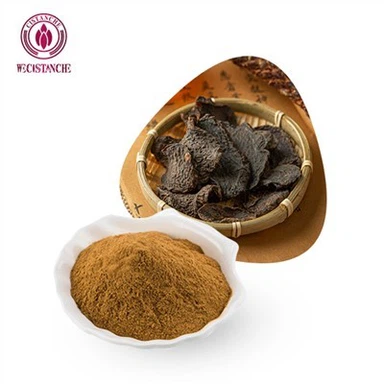
Cistanche Tubulosa: Natural Support for Men's Bone Health
Why Cistanche Tubulosa Benefits Bone Health
Echinacoside and acteoside - key active compounds in Cistanche Tubulosa - help maintain bone health through multiple pathways:
Promote osteoblast proliferation and differentiation
Accelerate bone matrix synthesis and mineralization
Increase bone mineral density and strength
Improve microcirculation
Strongly inhibit osteoclast activity
Reduce oxidative stress–induced bone cell apoptosis
Correct the imbalance between bone resorption and formation
Support bone marrow hematopoiesis and nutrient supply
Alleviate fatty degeneration of bone marrow
Relieve inflammatory responses

This makes Cistanche Tubulosa valuable for:
Supporting bone metabolism
Helping protect against femoral head necrosis, bone atrophy, osteoporosis
Relieving lumbar and knee discomfort
Our Strength: High‑Potency Cistanche Tubulosa Extract
We are Chengdu Wecistanche Bio‑Tech Co., Ltd., the world's largest vertically integrated manufacturer of Cistanche Tubulosa extract with full industrial chain control:
200,000‑mu dedicated Cistanche Tubulosa plantation
20,000‑mu seed breeding base
GMP‑certified production with 100,000‑class cleanroom
Advanced ultrafiltration / nanofiltration purification
14 invention patents including membrane separation technology
Certifications: SC, HACCP, ISO, NOP, Organic, Halal, Kosher
We specialize in Cistanche Tubulosa (not common desert Cistanche), which delivers higher echinacoside and acteoside content - ideal for consistent, research‑aligned bone and men's health support.
Supportive Service Of Wecistanche-For more details about cooperation
Email:Lijianlin@wecistanche.com
This article is for educational and informational purposes only. It is not intended to be medical advice, diagnosis, or treatment. Osteonecrosis of the femoral head is a serious orthopedic condition that requires evaluation and management by a qualified medical professional. Always consult a licensed physician before starting any supplement, herbal product, or new health regimen. Do not disregard professional medical advice or delay seeking care because of information you have read here. Supplements are not intended to replace standard medical treatments.