Osteoporosis Management: Global Best Practices & The Role Of Cistanche Tubulosa In Bone Health
May 09, 2026
Osteoporosis has become a major global public health problem, and its whole‑process management is widely recognized as the core strategy to reduce fracture risk. Most countries advocate starting with fracture risk factor assessment for the general population, covering age, gender, genetics/ethnicity, body weight/BMI, nutritional status, and lifestyle to accurately identify high‑risk individuals. Based on the assessment results, clinicians decide whether further bone mineral density (BMD) testing and fracture risk stratification are needed, then develop personalized prevention and treatment plans. Screening initiation age, frequency, and strategies still vary across countries.
In Europe, the health burden of osteoporosis far exceeds many non‑communicable diseases such as rheumatoid arthritis, Parkinson's disease, breast cancer, and prostate cancer. According to WHO data, approximately 75 million people in the United States, Europe, and Japan combined are living with osteoporosis. However, the clinical reality is challenging: large numbers of people lack standardized prevention guidance, many do not receive targeted testing for diagnosis or fracture risk evaluation, and the proportion of patients receiving evidence‑based anti‑osteoporosis treatment remains low.

Global Status of Osteoporosis Management
European Guidelines
The UK National Osteoporosis Guideline Group (NOGG) recommends fracture risk assessment for postmenopausal women and men aged 50 years and older. Belgian guidelines advise regular risk assessment for postmenopausal women or women over 50, with screening every two years; those with one or more risk factors need further fracture risk evaluation.
The UK recommends the Fracture Risk Assessment Tool (FRAX), while Belgium uses both the Garvan calculator and FRAX. FRAX integrates mortality as a competing risk and accurately predicts 10‑year probability of osteoporotic and hip fractures across countries and ethnic groups, making it the most authoritative and widely used tool worldwide. Risk and intervention thresholds are adjusted by economy, ethnicity, and local guidelines. NOGG classifies risk into low, moderate, high, and very high; inconsistent dual probabilities are resolved by taking the higher category. Moderate‑risk patients may undergo BMD testing, while high/very high patients require BMD by DXA and pharmacotherapy.
North American Guidelines
The American College of Obstetricians and Gynecologists (ACOG) and The Society of Obstetricians and Gynaecologists of Canada (SOGC) suggest FRAX risk assessment for postmenopausal women under 65. Canada's Osteoporosis Society recommends BMD testing for those with >10% fracture risk, related diseases, or bone‑harmful medications; patients with a ≥20% 10‑year absolute fracture risk (by FRAX/CAROC) also need BMD testing. ACOG advises all postmenopausal women over 65 to receive fracture risk assessment and DXA scanning. For patients with initial BMD near treatment thresholds or changing risk factors, rescreening after two years is suggested. Similar to NOGG, SOGC recommends medication for moderate, high, and very high‑risk patients.
Osteoporosis Management in China
China recommends initial screening using the IOF 1‑Minute Osteoporosis Risk Test or the Osteoporosis Self‑assessment Tool for Asians (OSTA). Individuals with positive results or OSTA index < –1.0 should undergo BMD measurement and FRAX evaluation. BMD testing by DXA is recommended for women ≥65, men ≥70, and younger adults with at least one major risk factor.
Pharmacotherapy is indicated for patients with T‑score ≤ –2.5, FRAX high risk, T‑score between –1.0 and –2.5 with fragility fracture, or history of hip/vertebral fracture. Individualized treatment may be considered for moderate‑risk patients.
Long‑term management requires sustained risk screening, care systems, and professional training. Monitoring frequency varies: China suggests annual BMD during treatment, extending to every two years when stable; the US recommends 1–3 years, Belgium 5 years, and the UK 3 years.
Internationally, Fracture Liaison Services (FLS) are widely recommended to improve diagnosis rates and reduce secondary fractures. The UK's integrated care systems (ICS) work with FLS to relieve pain, improve quality of life, and reduce economic burdens. China has established community health management bases and specialized diagnosis‑treatment alliances, launched the "Bone Strength Program" with FLS‑aligned intelligent platforms, and issued expert consensus on managing elderly hip fracture patients using the FLS model.

Cistanche Tubulosa: Natural Support for Bone Health
While standardized screening and treatment form the foundation of osteoporosis care, natural herbal ingredients provide safe, long‑term adjuvant support for bone health-especially Cistanche Tubulosa, a traditional herb widely studied for its skeletal benefits.
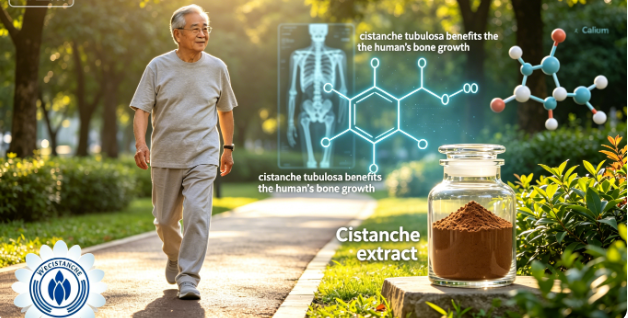
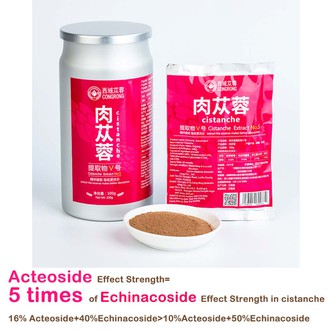
Cistanche tubulosa benefits human bone growth through multiple biological pathways. Its key active compounds, echinacoside and acteoside, promote osteoblast proliferation and differentiation, accelerate bone matrix synthesis and mineralization, increase bone mineral density and mechanical strength, and improve skeletal microcirculation. These components strongly inhibit excessive osteoclast activity, reduce oxidative stress‑related bone cell apoptosis, and correct the imbalance between bone resorption and formation at the source.
This regulatory effect helps maintain overall bone homeostasis, supports bone marrow hematopoiesis and nutrient supply, alleviates bone marrow fatty degeneration, and mitigates inflammatory responses. It offers meaningful support for bone atrophy, femoral head disrepair, lumbar and knee discomfort, and osteoporosis‑related conditions.
As a specialized manufacturer of Cistanche Tubulosa extract, Chengdu Wecistanche Bio‑Tech Co., Ltd. owns the world's largest cistanche processing base and a full industrial chain covering seed breeding, large‑scale cultivation, fresh herb storage, and GMP‑standard production. With over 200,000 acres of Cistanche Tubulosa plantation and a GMP factory capable of processing 20,000 tons of raw material annually, we focus on producing high‑purity extracts with higher echinacoside and acteoside content to deliver consistent, reliable bone‑supporting efficacy.
Our products meet US, EU, and international quality standards, holding Halal, Kosher, organic, and GMP certifications. Supported by top research institutions and a team of leading scientists, we provide OEM/ODM solutions for functional foods, dietary supplements, and skincare products targeting bone health, energy, vitality, and anti‑aging.
Supportive Service Of Wecistanche-For more details about cooperation
Email:Lijianlin@wecistanche.com
Conclusion
Osteoporosis management relies on global standardized screening, risk assessment, BMD monitoring, and long‑term care. Complementing evidence‑based medicine, Cistanche Tubulosa extract offers a natural, sustainable way to support bone formation, inhibit excessive resorption, and maintain skeletal strength. For brands and manufacturers developing bone health products, high‑quality Cistanche Tubulosa extract represents a safe, science‑backed ingredient to meet growing consumer demand for natural wellness solutions.