Cistanche Deserticola, A Journey Of Transformation From A Desert Treasure To A Health Treasure
Dec 24, 2025
Encountering Desert Treasures: First Encounter with Cistanche deserticola
In the vast and boundless desert, filled with yellow sand, there is a mysterious and precious plant - Cistanche deserticola, known as the "desert ginseng." This title aptly conveys the extremely high medicinal value and scarcity of Cistanche deserticola, much like the esteemed status of ginseng in traditional Chinese medicine. Cistanche deserticola also occupies a pivotal position among desert plants. Since ancient times, Cistanche deserticola has been regarded as a nourishing treasure. It grows deep in the desert and struggles against harsh natural environments, silently accumulating the power of life.
Cistanche deserticola is a parasitic plant that cannot grow without host plants such as Haloxylon ammodendron and Salix matsudana. It spends most of its life underground, drawing nutrients from the roots of its host plants. After a long gestation period, it breaks through the soil at specific times and showcases its unique charm to people. So, how did this magical plant that grows deep in the desert go from being a "hermit" in the desert to becoming a common Chinese medicinal herb? Today, let's unveil the mysterious veil of Cistanche deserticola from harvesting to processing into traditional Chinese medicine, and explore the story behind it.

Cistanche deserticola
Parasitic Legend: The Secret of Growth of Cistanche deserticola
The growth process of Cistanche deserticola is full of legendary colors, forming a wonderful and unique symbiotic relationship with its host plants. The seeds of Cistanche deserticola are extremely small, like dust, drifting in the sandstorms of the desert, searching for their fate. When these tiny seeds luckily land near host plants such as shuttle trees, they sense special signaling substances secreted by the host plant's root system, like receiving a mysterious invitation, and the seeds begin to sprout, extending slender buds and striving to grow towards the host plant's root system. Once in contact with the root system of the host plant, Cistanche deserticola quickly binds tightly to it, forming a special suction cup structure that, like a greedy vampire, continuously draws water and nutrients from the host plant's root system through this suction cup.
In the following years, Cistanche deserticola mostly hid underground, silently growing and developing in the dark soil. It does not require photosynthesis and relies entirely on nutrients obtained from host plants to strengthen its body. During this process, Cistanche deserticola continuously accumulates energy and various nutrients, making sufficient preparations for its future breakthrough.

cistanche body building
Until the third spring, when conditions are suitable, Cistanche deserticola will emerge from the ground and grow thick fleshy stems. At this moment, Cistanche deserticola is like a giant that has just woken up, showing great vitality. Its stem is cylindrical in shape and covered with a layer of fleshy scales, ranging in color from light yellow to dark brown. These scales are not unique in appearance, but also help reduce water evaporation and adapt to arid desert environments. Subsequently, Cistanche deserticola will grow rapidly, and in just a few months, it can grow to a height of tens of centimeters or even more than one meter. In May to June, Cistanche deserticola enters its flowering period, with strings of light yellow or purple flowers blooming at its top. The flowers are shaped like small horns and appear particularly delicate in the desert sunshine, adding a bright color to the barren desert. After the flowering period, Cistanche deserticola begins to bear fruit, which is a capsule containing countless small seeds that will embark on a new cycle of life. By understanding the unique growth mode of Cistanche deserticola, we can better understand the precautions to be taken when harvesting it, as well as the importance of protecting this precious plant resource.
Spring harvest and autumn harvest: Embark on a precious journey
(1) Spring: The Best Mining Season
Spring is a beautiful season for the revival of all things in nature, and it is also the golden time for harvesting Cistanche deserticola. Generally, from late March to early May, when the stem of Cistanche deserticola is about 10-15 centimeters above the ground, it is the best time for harvesting. At this moment, the desert, although still carrying a hint of winter chill, has gradually sprouted with vitality under the warm sunshine. Diggers face the first ray of dawn and shuttle through the shuttle forests, carefully searching for the traces of Cistanche deserticola with their rich experience and keen observation. Once they discover their target, they will carefully bend down and use the tools in their hands to gently push away the surrounding sand. Every movement is filled with reverence for this precious plant, afraid of accidentally damaging the integrity of the Cistanche deserticola.

The villagers of Hetian Village in Xinjiang are digging and harvesting Cistanche deserticola
Why is Cistanche deserticola harvested in spring so popular? From a scientific perspective, after a long winter precipitation, Cistanche deserticola accumulates a large amount of medicinal ingredients in spring. During this period, it absorbed sufficient nutrients from the roots of its host plants, which were converted into various beneficial substances for the human body, such as active ingredients like echinacoside and verbascoside. This made the spring-harvested Cistanche deserticola more effective in nourishing kidney yang, nourishing essence and blood, and promoting bowel movements. In addition, the Cistanche deserticola harvested in spring has a full appearance, bright color, tender and juicy meat, like a fairy just awakened, emitting a unique charm. That's why it often has a high price in the market.
(2) Autumn: a unique harvest season
In autumn, when the desert is dyed warm by the golden sunshine, Cistanche deserticola also enters another harvesting period, usually from late September to early October. At this time, the stem of Cistanche deserticola is usually fully mature, with a length of up to 30-50 centimeters. They are like wise men who have experienced the sedimentation of time, calm and introverted. Compared with the spring-harvested Cistanche deserticola, the autumn Cistanche deserticola has slightly lower medicinal properties, but still has higher medicinal value. During this period, the root system of Cistanche deserticola has fully developed, laying a solid foundation for its growth in the following year. Digging and harvesting Cistanche deserticola in autumn not only does not cause significant damage to the host plants, but also promotes the population renewal of Cistanche deserticola.
The Cistanche deserticola harvested in autumn is easier to preserve after natural air drying or sun drying. At this time, the water content of Cistanche deserticola is relatively low, making it less prone to mold and deterioration, and suitable for long-term storage and processing. Moreover, the taste of Cistanche deserticola harvested in autumn is more mellow. In some traditional nourishing formulas, Cistanche deserticola harvested in autumn is often used as an important ingredient to safeguard people's health.

Desert ginseng
Cautious excavation: blending traditional and modern techniques
(1) Traditional mining tools and processes
In the traditional process of harvesting Cistanche deserticola, people mainly use some simple and practical tools, such as small hoes, shovels, etc. These tools may seem ordinary, but they play a huge role in the hands of the digger. When digging, the digger will first carefully observe the condition of the ground and search for the stems of Cistanche deserticola that protrude from the ground. Once they discover the target, they will carefully insert a small hoe or shovel into the soil, moving gently and steadily, trying to avoid damaging the roots of Cistanche deserticola. Then, they will gently push away the surrounding sand and gradually reveal the full picture of the Cistanche deserticola. During this process, the digger needs to remain focused at all times to ensure the integrity of the Cistanche deserticola, as even slight damage can affect its quality and efficacy.
After the Cistanche deserticola is fully exposed, the digger will hold its stem with their hand, gently lift it, and completely remove it from the soil. Subsequently, they will use the small knife they carry with them to clean up the residual soil and impurities at the roots of Cistanche deserticola, and then place it in a specialized container. In the traditional excavation process, excavators also attach great importance to protecting the surrounding environment. They will backfill the excavated area with sand and try to restore it to its original state to reduce damage to the desert ecological environment. This traditional digging method not only reflects people's reverence for the precious plant Cistanche deserticola but also contains profound ecological wisdom, which is a vivid embodiment of the harmonious coexistence between humans and nature.
(2) Standardization and Development of Modern Mining and Excavation
With the development of the times and the continuous improvement of people's awareness of ecological environment protection, the harvesting of Cistanche deserticola has gradually become standardized and scientific. In modern mining, the first emphasis is on the protection of resources and ecology. Many regions have implemented a licensed mining system, and only personnel who have received training from relevant departments and obtained a mining license are qualified to mine Cistanche deserticola. This measure effectively controlled the number of excavation personnel and avoided the damage caused by excessive excavation to the resources of Cistanche deserticola.
At the same time, to protect the sustainable growth of Cistanche deserticola, the excavation quantity has also been strictly controlled. The relevant departments will formulate reasonable mining quotas based on the growth status and resource assessment results of Cistanche deserticola, ensuring that the mining volume does not exceed the natural recovery capacity of Cistanche deserticola. During the excavation process, modern excavators also use advanced technologies and equipment such as Global Positioning System (GPS), drones, etc. GPS can help excavators accurately locate the location of Cistanche deserticola and improve excavation efficiency; Drones can be used to monitor the ecological environment of mining areas, detect and stop illegal mining activities promptly. In addition, modern excavators also receive professional training to learn about the growth knowledge, excavation techniques, and ecological protection awareness of Cistanche deserticola, to ensure that the excavation process is both efficient and environmentally friendly. These modern mining standards and developments provide strong guarantees for the protection and sustainable utilization of Cistanche deserticola resources.

Abundant harvest of Cistanche deserticola
From Sand to Medicine Hall: The Entire Processing Flow
(1) Preliminary cleaning: removing impurities
After the Cistanche deserticola is harvested from the embrace of the desert, the first step to go through is the initial cleaning process. Cleaning Cistanche deserticola is like washing away the dust of a traveler covered in dust, allowing it to embark on a subsequent processing journey in a clean state. When cleaning, flowing water is generally used to gently rinse the surface of Cistanche deserticola, thoroughly removing any sand, impurities, etc. that may have been contaminated during its growth process. This process requires extra caution because the skin of Cistanche deserticola is relatively fragile, and excessive force may cause damage to the skin, affecting its quality.
Cleaning is crucial for the subsequent processing of Cistanche deserticola. On the one hand, clean Cistanche deserticola can ensure the hygiene of subsequent processing, avoid impurities from mixing in, and affect the quality and efficacy of the medicinal materials. On the other hand, cleaning can remove microorganisms and harmful substances that may exist on the surface of Cistanche deserticola, providing protection for people's health. Just as we need to clean the ingredients before cooking, cleaning Cistanche deserticola is a fundamental step in ensuring that it becomes a high-quality Chinese medicinal herb.
(2) Drying treatment: lock essence
After cleaning, the Cistanche deserticola needs to be dried immediately to remove moisture from it, making it easier to store and further process. There are various drying methods for Cistanche deserticola, each with its own unique characteristics.
The traditional drying methods mainly include shade drying and sun drying. Yin drying refers to placing Cistanche deserticola in a well-ventilated, cool, and dry place to allow it to air dry naturally. The advantage of this method is that it can preserve the original components and color of Cistanche deserticola to the greatest extent possible, so that it will not be damaged by ultraviolet rays and high temperatures in sunlight during the drying process. However, it takes a long time to dry in the shade, usually several weeks or even months, and has high environmental requirements. If the humidity is high, Cistanche deserticola is prone to mold and deterioration. Sun drying is the direct exposure of Cistanche deserticola to sunlight for drying. This method has a relatively fast drying speed and can remove water from Cistanche deserticola in a short period of time. However, prolonged exposure to sunlight may cause some of the active ingredients in Cistanche deserticola to decompose, affecting its medicinal efficacy, and the color of the dried Cistanche deserticola may become dull, and its appearance may also be inferior.

Superman herbs cistanche
With the continuous advancement of technology, modern drying techniques have gradually been applied in the processing of Cistanche deserticola, among which drying and freeze-drying are more common. Drying is the use of specialized drying equipment to achieve the drying of Cistanche deserticola in a relatively short period of time by controlling temperature and humidity. The drying temperature is generally controlled between 40-60 ℃ to ensure rapid drying of Cistanche deserticola while maximizing the retention of its active ingredients. Freeze drying is the process of first freezing Cistanche deserticola to freeze its moisture into ice, and then directly converting the ice into water vapor through sublimation in a vacuum environment to achieve drying. This method can maximize the retention of the nutritional components and biological activity of Cistanche deserticola. The dried Cistanche deserticola has high quality and good rehydration ability, but the high equipment and operating costs of freeze-drying limit its large-scale application. Different drying methods have different effects on the quality and efficacy of Cistanche deserticola. In the actual processing, it is necessary to choose the appropriate drying method based on factors such as the variety, quantity, and market demand of Cistanche deserticola.
(3) Slicing and processing: Fine processing
After drying, the Cistanche deserticola can be processed into slices and processed into fine pieces. Slicing is the process of cutting dried Cistanche deserticola into uniform thin slices. Generally, the thickness of the slices is required to be around 2-3 millimeters. This thickness ensures that the active ingredients of Cistanche deserticola are fully dissolved during subsequent boiling or brewing processes, and is also convenient for storage and use. When slicing, sharp knives such as ceramic knives or stainless steel knives are usually used to ensure the uniformity and completeness of the slicing. During the slicing process, it is important to maintain the integrity of the texture of Cistanche deserticola to avoid fragmentation or uneven thickness of the slices.
Processing is a key step in the processing of Cistanche deserticola, which can further enhance its medicinal value. There are various ways to prepare Cistanche deserticola, commonly including steaming with wine and salt roasting. Wine steaming is the process of slicing Cistanche deserticola, adding an appropriate amount of yellow wine, and steaming it over water for a certain period of time. Huangjiu has the effects of warming the blood vessels and promoting medicinal properties. Through steaming, it can enhance the effects of Cistanche deserticola on tonifying kidney yang and nourishing essence and blood, making its medicinal properties milder and easier for the human body to absorb. Salt roasting is the process of mixing Cistanche deserticola with salt water, moistening it until the salt water is completely absorbed, and then stir-frying over low heat to a certain degree. Salt can introduce medicine into the kidney meridian, and salt-roasted Cistanche deserticola can better play a role in nourishing the kidneys and consolidating essence. It has a significant effect on treating symptoms such as soreness and weakness of the waist and knees, impotence, and premature ejaculation. Different processing methods have different effects on the medicinal properties and enhancement of Cistanche deserticola. During the processing, it is necessary to strictly follow traditional processing techniques and standards to ensure the processing quality of Cistanche deserticola.

Cistanche deserticola slice
Click here to view Cistanche for Kidney disease products
【Ask for more】 Email:cindy.xue@wecistanche.com / WhatsApp: 0086 18599088692 / Wechat: 18599088692
Diverse products: meeting diverse needs
After a series of careful processing, Cistanche deserticola is finally presented in various forms to meet the diverse needs of different populations.
Firstly, there is the raw material of Cistanche deserticola, which maintains its original form after harvesting. After initial processing, such as cleaning and drying, it is directly introduced into the market as a traditional Chinese medicine. The original medicine of Cistanche deserticola retains all the nutritional components and medicinal value of Cistanche deserticola, making it suitable for professional Chinese medicine practitioners to use personalized formulas based on the specific condition of patients. In some traditional Chinese medicine formulas, Cistanche deserticola raw material is often used as an important medicinal herb, which is combined with other Chinese medicinal herbs to achieve synergistic effects. For example, in the treatment of erectile dysfunction, premature ejaculation, infertility and other diseases caused by insufficient kidney yang and deficiency of essence and blood, traditional Chinese medicine practitioners may combine the raw material of Cistanche deserticola with Chinese medicinal herbs such as Rehmannia glutinosa, Cornus officinalis, and Goji berries to achieve the goal of tonifying the kidneys, strengthening yang, nourishing essence and blood.
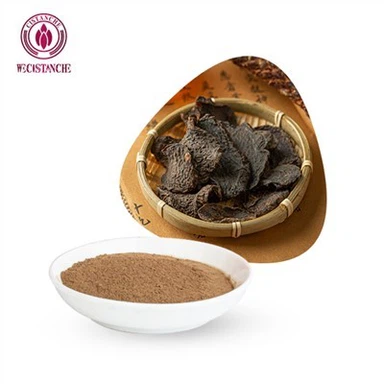
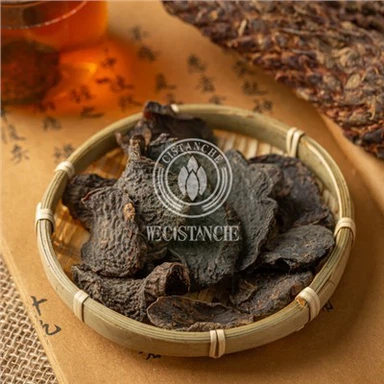
Sliced Cistanche deserticola is also a common form of finished product in the market. It cuts the dried Cistanche deserticola into uniform, thin slices for easy storage, use, and measurement. The thickness of sliced Cistanche deserticola is generally around 2-3 millimeters, which ensures that the effective ingredients can be fully dissolved during boiling or brewing, without causing rapid loss of nutrients due to being too thin. The use of sliced Cistanche deserticola is very flexible. It can be directly brewed with boiling water to make Cistanche deserticola tea for consumption, or added to various nourishing soups and stews to increase the nutritional value and medicinal efficacy of food. For busy office workers and health-conscious individuals, sliced Cistanche deserticola is a very convenient health option. Simply prepare some sliced Cistanche deserticola in the office or at home, and you can always enjoy a delicious and healthy cup of Cistanche tea.
Cistanche tea is a more convenient and efficient health drink. It is a bagged tea or loose tea made by processing Cistanche through drying, crushing, and other processing steps. Cistanche tea not only retains the main nutritional components and medicinal effects of Cistanche but also has the characteristics of easy portability and simple brewing, making it very suitable for the fast-paced lifestyle of modern people. During work breaks or leisure time, simply brew a packet of Cistanche deserticola tea with a cup of hot water to enjoy the nourishing and health benefits brought by Cistanche deserticola. Cistanche tea can also be paired with other Chinese medicinal herbs or ingredients according to different needs and tastes, such as goji berries and chrysanthemums, to make a health tea with the effects of clearing the liver, improving vision, nourishing the kidneys and nourishing essence; Paired with red dates and longan, it is made into a health tea with the effects of nourishing blood, skin, yin, and kidney. These different combinations of Cistanche deserticola tea meet the health needs and taste preferences of different populations.