Cistanche Extract Is Not Just A “Kidney Tonic”: It Is A Gut–Brain Ecosystem Modulator
Oct 28, 2026
Cistanche, the parasitic plant that grows in the deserts of Northwest China and Mongolia, has been labeled as an aphrodisiac for far too long. But modern pharmacological research is redefining it: It doesn't directly "boost the brain"-it remotely dispatches the brain through the gut.
I. The Misunderstood "Desert Ginseng"
Cistanche deserticola and Cistanche tubulosa (Orobanchaceae family) are parasitic plants traditionally used in Chinese medicine to "tonify kidney yang, replenish essence and blood, and moisten the intestines to relieve constipation."
For the past century, the market has reduced it to two words: aphrodisiac.
But the research community discovered something else decades ago:
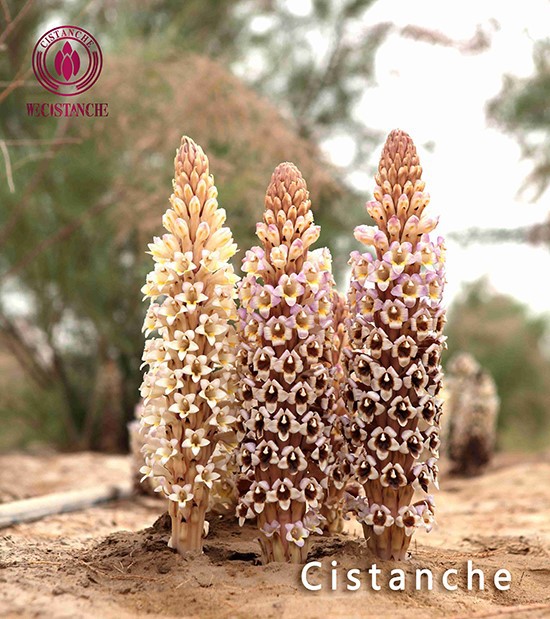
desert ginseng
Phenylethanoid glycosides (echinacoside, acteoside/verbascoside) can cross or bypass the blood–brain barrier to protect neurons.
Cistanche polysaccharides and total glycosides remodel the gut microbiota before they change the brain.
In models of depression, Alzheimer's disease, vascular dementia, and hypoxic cognitive impairment, Cistanche doesn't act like a stimulant-it performs a systemic reset.
In other words: Cistanche is not a brain drug disguised as a kidney tonic. It is a gut–brain drug disguised as a supplement.
II. The Gut–Brain Axis: Your Body's Remote Dispatch System
The gut is not just a digestive tube-it is the body's second nervous system.
Trillions of microbes in your intestines produce:
|
Metabolite Type |
Representative Molecules |
Effect on Brain |
|
Short-chain fatty acids (SCFAs) |
Acetate, butyrate, propionate |
Anti-inflammatory, promote BDNF, repair gut barrier |
|
Tryptophan metabolites |
Serotonin precursors, kynurenine |
Mood regulation, neurotoxicity control |
|
Neurotransmitter precursors |
Tyrosine, 5-HTP |
Direct raw materials for dopamine and serotonin |
|
Neuroactive small molecules |
Hydroxytyrosol, β-hydroxybutyrate |
Neuroprotection, microglial inhibition |
These molecules communicate with the brain through three pathways:
Vagus nerve (electrical signals directly to brainstem)
Immune channels (inflammatory cytokines acting on brain via circulation)
Blood circulation (metabolites crossing the BBB)
When gut microbiota are dysregulated:
Serotonin drops → low mood, anxiety
Neuroinflammation rises → brain fog, memory decline
Gut barrier "leaks" → endotoxins enter blood → microglia go rogue → chronic neuronal damage
So many "brain problems" actually have their roots in the gut.
Cistanche's brilliance lies here-it doesn't force its way into the brain; it goes to the gut first to "reprogram the communication protocol."
III. Cistanche's Hidden Skillset: Three Steps to Dispatch Gut and Brain
Step 1: Remodel the Gut Microbiota
Studies show that total glycosides from Cistanche tubulosa (GCT) in Alzheimer's disease model mice:

Phenylethanol glycoside is the main active component of Cistanche tubulosa
Rapidly enriches Akkermansia muciniphila
Suppresses over-proliferation of pro-inflammatory Firmicutes
Restore microbial diversity balance
Akkermansia acts like a "gut border guard":
Consumes mucus and repairs the intestinal lining
Reduces endotoxin leakage (lowers LPS entry into blood)
Decreases systemic low-grade inflammation
When the gut wall is stable, the brain stops taking "friendly fire."
Meanwhile, Cistanche polysaccharides act as prebiotics, selectively promoting Bifidobacterium and Lactobacillus proliferation while suppressing opportunistic pathogens-creating a positive loop: "beneficial bacteria ↑ → SCFAs ↑ → gut barrier ↑ → inflammation ↓."
Step 2: Produce Neuro-Friendly Metabolites
Cistanche itself has low oral bioavailability, but its glycosides are biotransformed by gut microbiota.
Metabolic products include:
Hydroxytyrosol (HT) - potent antioxidant, crosses the BBB
3-Hydroxyphenylpropionic acid (3-HPP) - neuroprotective metabolite
Acetate and other SCFAs - anti-inflammatory, BDNF-promoting
β-Hydroxybutyrate (BHB) - ketone body with neuroprotective properties
These are not waste products-they are the "brain dispatchers":

|
Metabolite |
Brain Action |
|
BHB |
Enters brain → inhibits microglial overactivation → reduces neuroinflammation |
|
Acetate/Butyrate |
HDAC inhibition → promotes neurotrophic factor expression |
|
Hydroxytyrosol |
Modulates HPA axis (hypothalamic–pituitary–adrenal), lowers stress response |
|
3-HPP |
Antioxidant stress, protects hippocampal neurons |
Key insight: Cistanche's low bioavailability is actually evidence that it may be a "microbiota-mediated drug"-it doesn't act directly; it relies on gut flora to convert it into active metabolites. This is a "host–microbiota co-metabolism" model, similar to ginsenosides and soy isoflavones.
Step 3: Recalibrate Neurotransmitters and Neuroinflammation
In Depression Models
In chronic unpredictable mild stress (CUMS) models, Cistanche extract:
Restores hippocampal 5-HT (serotonin) levels
Elevates BDNF (brain-derived neurotrophic factor)
Inhibits IDO1 enzyme → blocks tryptophan from diverting into the neurotoxic kynurenine pathway
Reduces HPA axis hyperactivity (downgrades cortisol stress system)
Decreases hippocampal neuronal apoptosis
This means: not a "happy pill," but a systemic reset that pulls the brain out of "high stress + low nutrition + chronic inflammation" mode.

Effects of cistanche on constipation
Click here to view Cistanche constipation-relieving products
【Ask for more】 Email:cindy.xue@wecistanche.com / WhatsApp: 0086 18599088692 / WeChat: 18599088692
In Alzheimer's Disease Models
Reduced Aβ plaque burden (inhibits β-secretase, promotes Aβ clearance)
Improved spatial memory (Morris water maze)
Decreased neuroinflammation (microglial M1→M2 phenotype shift)
Enhanced hippocampal synaptic plasticity (LTP augmentation)
Improved mitochondrial function (ATP production ↑, ROS ↓)
In Vascular Dementia / Hypoxic Brain Injury
Improved cerebral microcirculation (promotes endothelial NO release)
Anti-hypoxic protection (HIF-1α pathway modulation)
Preserved blood–brain barrier integrity
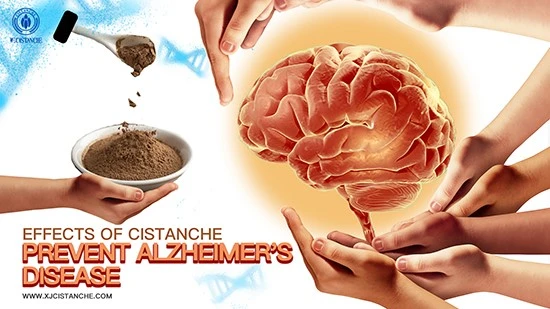
Cistanche-prevents Alzheimer's disease
IV. Why This Approach Is Smarter Than "Direct-to-Brain" Strategies
Modern brain disorders share a common feature:
They don't lack one molecule-they suffer from systemic dysregulation.
|
Disorder |
Dimensions of Dysregulation |
|
Depression |
Neurotransmitters + inflammation + microbiota + HPA axis |
|
Alzheimer's |
Aβ + mitochondria + inflammation + metabolism + synapses |
|
Brain fog / cognitive decline |
Oxidative stress + leaky gut + synaptic degeneration + microcirculation |
Cistanche's advantage is multi-touchpoint, low toxicity, systemic regulation:
|
Component |
Level of Action |
Core Function |
|
Phenylethanoid glycosides (echinacoside, acteoside) |
Neurons + mitochondria |
Anti-apoptosis, antioxidant, replenish neurotransmitter pools |
|
Polysaccharides/oligosaccharides |
Gut microbiota |
Prebiotic effect, gut barrier repair |
|
Microbiota metabolites (HT, BHB, etc.) |
Remote neuroprotection |
Anti-inflammatory, modulate neuroplasticity |
|
Echinacoside targets CK2α′ |
Signaling pathways |
Wnt/β-catenin and neurogenesis pathways |
It's not "one key for one lock"-it's one set of keys for one system of locks.
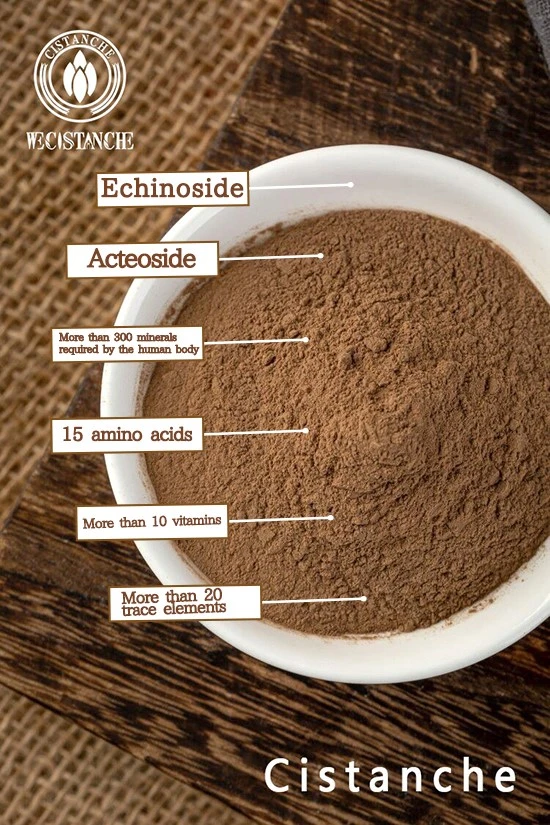
Main Chemical Constituents of Cistanche tubulosa
V. Active Compounds Profile: Who's Doing the Work?
1. Echinacoside
Highest phenylethanoid glycoside content in Cistanche
Extremely strong in vitro antioxidant capacity
Crosses the BBB (or its metabolites do after gut transformation)
Protects dopaminergic neurons (neuroprotective in Parkinson's models)
Promotes neural stem cell proliferation and differentiation
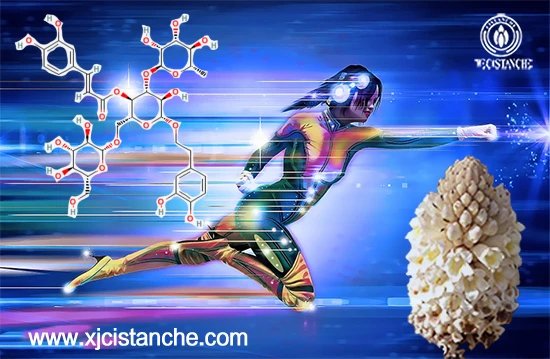
Echinacoside, the main chemical component of Cistanche tubulosa
2. Acteoside (Verbascoside)
Structurally similar to echinacoside
Potent free radical scavenger
Inhibits Aβ aggregation and tau hyperphosphorylation
Protects hippocampal CA1 neurons
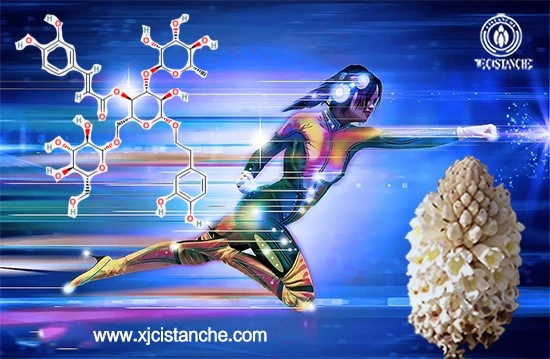
Acteoside is the main chemical component of Cistanche tubulosa
3. Cistanche Polysaccharides (CDPS)
Wide molecular weight range (several kDa to hundreds of kDa)
Clear prebiotic activity
Bidirectional immune modulation (doesn't blindly boost immunity)
Promotes SCFA production
4. Others
Betaine: methyl donor, supports neurotransmitter synthesis
Mannitol: osmotic regulation, improves cerebral microcirculation
Various amino acids and trace elements: synergistic effects
VI. "Translation Table": Traditional Claims vs. Modern Mechanisms
|
Traditional Claim |
Modern Translation |
|
Tonifies kidney yang |
Regulates HPA axis + gonadal axis + mitochondrial energy metabolism |
|
Replenishes essence and blood |
Promotes hematopoiesis + antioxidant + neurotrophic support |
|
Moistens intestines, relieves constipation |
Modulates gut microbiota + increases intestinal motility + repairs gut mucosa |
|
Anti-fatigue |
Improves mitochondrial function + reduces oxidative stress + regulates neurotransmitters |
|
Prolongs life |
Anti-aging (telomerase, SIRT1, autophagy, multiple pathways) |
Notice how "moistens intestines" and "tonifies kidney yang" are connected through the gut–brain axis:
Good gut → good microbiota → good metabolites → good brain → stable HPA axis → good systemic energy metabolism → "kidney yang" sufficient.
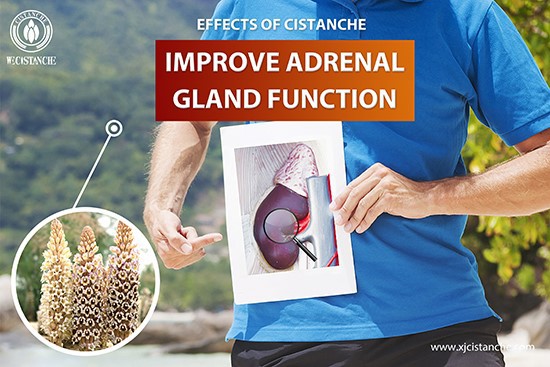
Cistanche tubulosa efficacy: Tonifying the kidney
This isn't mysticism. It's pathway biology.
VII. Safety and Precautions
Safety Data
Cistanche is well-tolerated at standard doses (extract 300–600 mg/day, echinacoside-standardized)
Extremely low acute toxicity (LD₅₀ far exceeds clinical doses)
Long-term toxicity studies show no significant organ damage
Less "heating" than other yang-tonifying herbs (unlike deer antler or epimedium)
Precautions
|
Population |
Recommendation |
|
Pregnant women |
Avoid (insufficient safety data) |
|
Autoimmune disease patients |
Use with caution (polysaccharides have immunomodulatory effects) |
|
During diarrhea |
Discontinue (laxative effect may worsen) |
|
Taking antidepressants / anti-dementia drugs |
Consult physician (theoretical synergy, monitor needed) |
|
Hypotensive patients |
Monitor blood pressure (mild hypotensive effect) |
Dosage Reference (based on existing research)

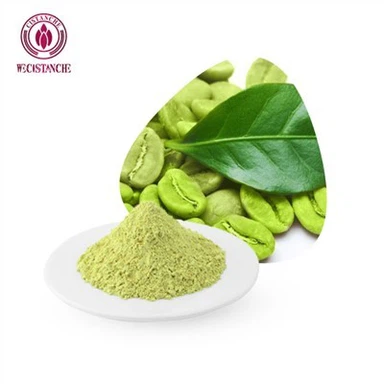
cistanche powder
Echinacoside-standardized extract: 300–600 mg/day, divided into two doses
Cistanche powder (crude herb): 3–6 g/day
Total glycosides of C. tubulosa: animal studies commonly use 50–200 mg/kg/day (human equivalent requires adjustment)
VIII. Future Directions: From "Tonic" to "Precision Gut–Brain Modulator"
Cistanche research is undergoing three shifts:
From crude extracts to monomer + microbiota metabolism networks: No longer looking at echinacoside alone, but tracing the full chain of "echinacoside → microbiota → metabolites → brain."
From animal models to human clinical trials: Human RCTs are still limited, but small-scale clinical studies already show adjunctive benefits for mild cognitive impairment and depression/anxiety.
From single herbs to combination gut–brain axis formulations: Cistanche + probiotics + prebiotics + other neuroprotective botanicals (curcumin, Bacopa monnieri) may represent the next generation of "cognitive health formulas."