The types and distribution of Cistanche
Mar 07, 2022
For more information:ali.ma@wecistanche.com
What is Cistanche?
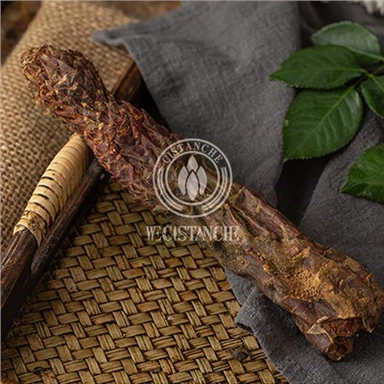
Cistanche deserticola(scientific name: Cistanche deserticola), also known as Jiangyun, Cunyun, Cistanche, Chagangaoya(Mongolian), is an endangered species. The tall herb,40-160 cm high, is a parasitic plant parasitic on the roots of desert trees Haloxylon ammodendron. Its hosts are sand-proof and sand-fixing plants Haloxylon ammodendron and Tamarix.

Click to Cistanche stem products
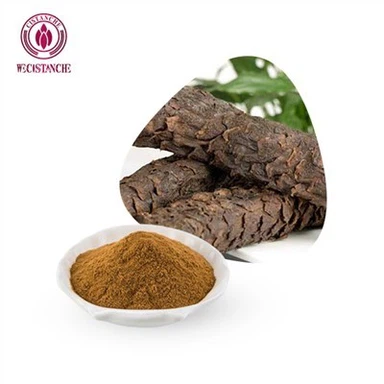
Cistanche is the fleshy stem of Cistanche or Cistanche tubulosa.The medicinal part is the fleshy stem with scaly leaves underground. The fleshy stems are excavated when the seedlings are just unearthed in the spring or before the frozen soil in the autumn and then dried as medicinal materials.

The types and distribution of Cistanche
Cistanche plants are distributed in warm deserts, deserts, and other dry areas. China is the world's largest Chinese herbal medicine country and the main producer of Cistanche.
The types of Cistanche in China are:
1. Cistanche tubulosa: mainly produced in Xinjiang, Gansu, and other places;
2. Desert Cistanche: mainly produced in Inner Mongolia, Ningxia, and Qinghai;
3. Salt raw Cistanche: mainly produced in Inner Mongolia, Shaanxi, and other places;
4. Bossica sativus is mainly produced in Inner Mongolia, Ningxia, and Gansu.
Cistanche and desert cistanche are the original Chinese medicinal materials included in the Chinese Pharmacopoeia.

Cistanche is known as the"desert ginseng" and has extremely high medicinal value. It is one of the top ten rare Chinese medicinal materials in China. Cistanche or Cistanche tubulosa has been regarded as a treasure of tribute to the court in the Western Regions in history, and it is also one of the most frequently used tonic drugs in the prescriptions for kidney and yang in the past.