Cistanche Polysaccharides: A Desert Treasure With Potential To Protect The Kidneys From Diabetic Damage
Oct 21, 2026
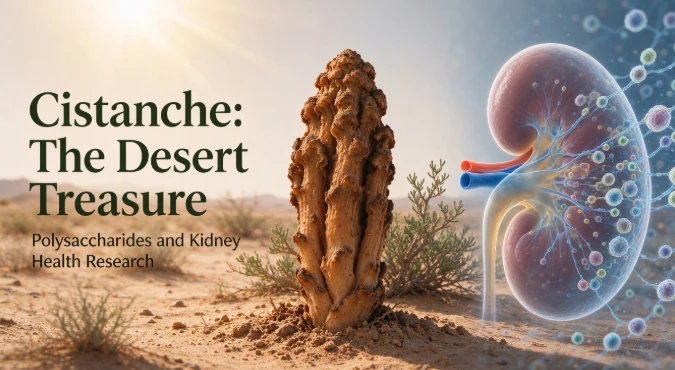
In the vast deserts of northwestern China, a remarkable plant has been quietly thriving for centuries. Known in traditional Chinese medicine as Rou Cong Rong, and in English as Cistanche or the "desert ginseng," this parasitic plant has been treasured as a tonic for restoring vitality, supporting kidney health, and promoting longevity. Today, modern science is beginning to unlock the secrets behind this ancient reputation - and one of the most promising pieces of the puzzle is a family of natural compounds called polysaccharides.
Recent laboratory research has shed new light on how these polysaccharides may help protect one of the body's most vulnerable organs under the stress of diabetes: the kidney. This article walks through what Cistanche polysaccharides are, how scientists characterized their structure, and what the latest cell-based studies reveal about their potential to shield the kidneys from the damage caused by high blood sugar.
The Ancient Plant, the Modern Question
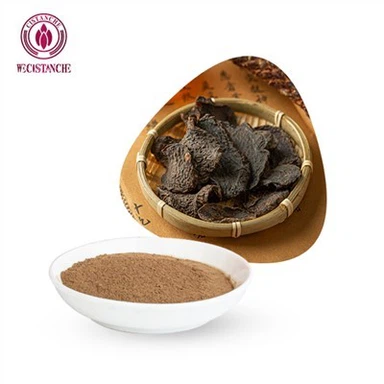
Cistanche belongs to a family of flowering parasitic plants known as the Orobanchaceae. It has no chlorophyll and draws its nutrients by attaching its roots to host plants, most famously the desert shrub Haloxylon ammodendron. Two species are most commonly used in medicine: Cistanche deserticola and Cistanche tubulosa. The fleshy stems of these plants are harvested, dried, and used both as a medicinal herb and as a food ingredient - a status that Chinese tradition describes as "medicine and food sharing the same origin."
For hundreds of years, traditional healers have praised Cistanche for its warming, tonifying qualities. It has been used to support kidney yang, nourish blood and essence, and ease constipation. But "kidney" in traditional Chinese medicine is a broader concept than the anatomical organ alone; it encompasses energy, vitality, and the body's overall balance. The intriguing question for modern researchers is whether Cistanche's effects extend to the physical kidney - the organ that filters waste, balances fluids, and regulates blood pressure.
This is where the science gets interesting. Cistanche is rich in a variety of bioactive compounds, including phenylethanoid glycosides, iridoids, and lignans. Among these, polysaccharides stand out as one of the most abundant and most actively studied groups. These are large carbohydrate molecules built from long chains of sugar units, and in the plant's water extracts they have been measured at concentrations ranging from roughly 29 to 40 milligrams per gram.
Over the past two decades, studies have linked Cistanche polysaccharides with a wide range of biological activities: supporting immune function, counteracting aging, improving memory and learning, protecting nerve cells, defending the liver, fighting viruses, and even showing anti-tumor potential. But one of the most compelling and clinically relevant directions of research involves diabetes - and specifically, one of diabetes' most serious complications.
Diabetes and the Silent Threat to the Kidneys
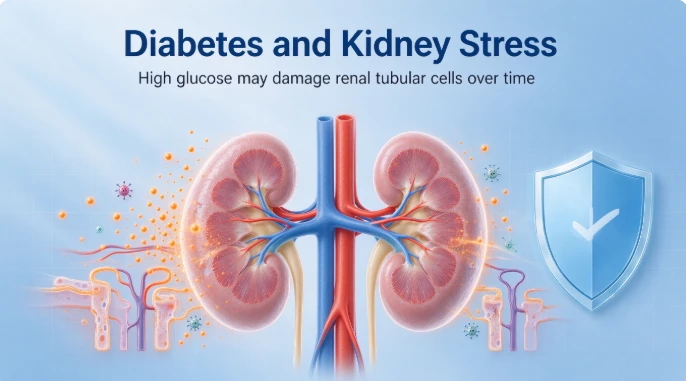
Diabetes is a metabolic disorder in which the body cannot properly regulate blood sugar (glucose). Over time, chronically high glucose takes a heavy toll on blood vessels and organs throughout the body. Among the most serious consequences is diabetic nephropathy - kidney damage caused by diabetes - which has become one of the leading causes of end-stage kidney disease worldwide.
To understand why the kidneys suffer, it helps to know what they do. Each kidney contains roughly a million microscopic filtering units called nephrons. Blood flows through these filters, where waste products and excess fluid are removed while valuable substances are retained. Central to this filtration system are the renal tubular epithelial cells - the cells lining the tiny tubes that reabsorb water and nutrients and help concentrate the urine.
When blood sugar stays high for extended periods, several damaging processes kick in within the kidney:
Oxidative stress - high glucose triggers an overproduction of reactive oxygen species (ROS), unstable molecules that damage cell membranes, proteins, and DNA.
Inflammation - damaged cells send out distress signals that recruit immune responses, which, if uncontrolled, further harm kidney tissue.
Mitochondrial dysfunction - the energy-producing powerhouses of cells become impaired, disrupting the delicate balance of life and death within cells.
Cell death (apoptosis) - kidney cells begin to undergo programmed death at an abnormal rate, progressively degrading kidney function.
The tubular epithelial cells are especially vulnerable. As the workhorses of reabsorption, they are constantly exposed to the high concentrations of glucose being filtered through the kidney. When they become injured and die, the kidney's ability to filter blood declines - and this damage can progress silently for years before symptoms appear.
This is why researchers have been searching for natural compounds that can protect these fragile cells. And it is precisely here that Cistanche polysaccharides have caught the attention of scientists.
Meet the Polysaccharides: Nature's Complex Sugars
Before diving into the research, it is worth understanding what polysaccharides actually are. Imagine building a chain from individual sugar beads - glucose, galactose, and others. A single bead is a monosaccharide, a small chain is an oligosaccharide, and a long, branching chain of ten or more sugar units is a polysaccharide. Starch and cellulose are familiar examples, but plants produce an astonishing variety of these complex carbohydrates, each with a unique architecture.
The structure of a polysaccharide matters enormously for its biological activity. Key features include:
Which monosaccharides make up the chain
In what proportions they occur
How long the chains are (molecular weight)
How the sugar units are linked together (the type of glycosidic bonds)
Scientists have come to realize that two polysaccharides from different plants - even different batches of the same plant - can behave very differently simply because their sugar "blueprints" differ. This is why structural characterization is the essential first step in understanding what a polysaccharide can do.
Peering Into the Structure of Cistanche Polysaccharides
In the study at the heart of this article, researchers set out to characterize the structure of polysaccharides isolated from Cistanche deserticola (abbreviated as CDPs). They employed a battery of analytical techniques, each answering a different question about the molecule's identity.
Composition: What Is It Made Of?
Using classical colorimetric methods, the researchers first measured the overall makeup of the sample. They found that the polysaccharide preparation was roughly 79.55% total sugar, with about 4.59% uronic acid (a sugar acid that often imparts acidic, gelling properties) and 4.74% protein - likely a tightly bound glycoprotein complex. This high sugar content confirmed that polysaccharides were the dominant component.
Molecular Weight: How Big Are the Chains?
Size matters in the world of polysaccharides. Larger molecules may carry more active sites, but they also struggle to cross cell membranes and be absorbed; smaller molecules enter cells more easily but may lack the complex structure needed for full activity. There is often a "sweet spot" in between.
Using high-performance gel permeation chromatography, the researchers found that CDPs are not a single uniform molecule but rather a heterogeneous mixture of smaller polysaccharides. Three main components were resolved, with weight-average molecular weights of approximately 8,031 Da, 4,198 Da, and 3,444 Da, and the overall size distribution spanning roughly 300 to 8,000 daltons. These are relatively small polysaccharides - a feature that may actually be advantageous, since smaller chains are more readily taken up by cells.
Monosaccharide Composition: The Sugar Building Blocks
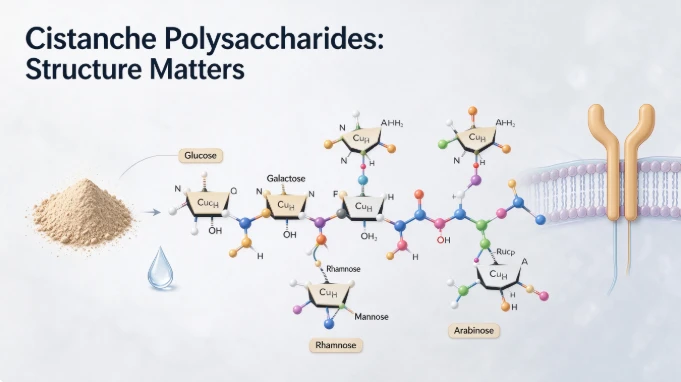
Using ion chromatography, the team separated and identified the individual sugars that make up the chains. They detected five monosaccharides: glucose, galactose, rhamnose, mannose, and arabinose. The proportions were highly skewed, with glucose dominating at about 73.4%, followed by galactose (5.4%) and rhamnose (5.0%), with mannose and arabinose present in smaller amounts. In simple terms, CDPs are predominantly glucose-based chains with a sprinkling of other sugars - a composition broadly consistent with findings reported in earlier studies of Cistanche polysaccharides.
Glycosidic Linkages: How the Sugars Connect
Finally, infrared spectroscopy offered clues about how the sugar units are bonded. The spectra revealed characteristic absorption patterns suggesting the presence of hydroxyl groups, methyl groups, and carboxyl groups - the latter consistent with the uronic acid content. Importantly, absorption bands near 870 and 930 cm⁻¹ hinted that the chains contain both alpha- and beta-type glycosidic linkages. This detail is more than academic: the type of linkage influences how the immune system's receptors recognize the molecule. Some research suggests that polysaccharides rich in alpha-linked glucose are more readily recognized by certain immune receptors, which may partly explain their activity.
Taken together, these findings paint a picture of CDPs as a family of relatively small, glucose-dominant, heterogeneous polysaccharides - a structural profile that scientists believe may be favorable for biological activity and cellular uptake.
The Experiment: Simulating Diabetic Kidney Injury in a Dish
Having characterized the polysaccharides, the researchers turned to the more functional question: could CDPs actually protect kidney cells under the stress of high glucose?
To test this, they used a well-established laboratory model based on HK-2 cells - a line of human renal proximal tubular epithelial cells. These are essentially "kidney tube cells" grown in the lab, and they serve as a convenient stand-in for studying how the human kidney responds to injury.
The experimental design was methodical. First, the researchers established the conditions under which high glucose causes damage. They exposed HK-2 cells to increasing concentrations of glucose (from 10 to 80 mmol/L) for 24 and 48 hours, measuring cell survival at each step. They found that 60 mmol/L glucose for 48 hours produced a consistent, reproducible drop in cell viability - enough to serve as a reliable "injury model" without killing all the cells outright. This became the standard stress condition for the rest of the study.
They also carefully screened the polysaccharide for any inherent toxicity. At moderate concentrations (up to 400 µg/mL), CDPs had no harmful effect on healthy cells and even slightly enhanced their survival. Only at very high concentrations (1,000 µg/mL and above) did the polysaccharides begin to impair cell viability - likely due to the osmotic and membrane stress of a highly concentrated sugar solution. This screening established a safe, effective working range for the protection experiments.
The Protective Effects: A Multi-Layered Defense
With the model in place, the researchers then asked whether CDPs could rescue the kidney cells. They divided the cells into several groups: a healthy control, a "model" group exposed to high glucose alone, and groups exposed to high glucose plus different concentrations of CDPs. For comparison, they also included a group treated with dapagliflozin, an approved diabetes drug that acts on the kidneys.
The results were encouraging and revealed multiple layers of protection.
Keeping the Cells Alive
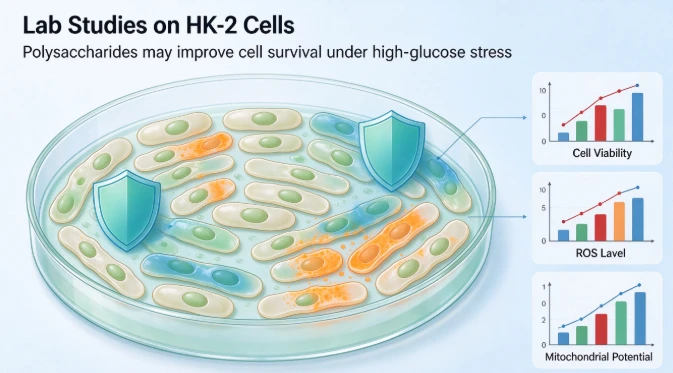
When HK-2 cells were exposed to high glucose for 48 hours, their survival rate fell to roughly half of normal - confirming the damage. But when CDPs were added, cell survival improved significantly. Notably, the effect was dose-dependent: 100, 200, and 400 µg/mL of CDPs all significantly boosted cell viability compared to the injured group, with the higher doses showing the strongest effect.
Interestingly, very high doses (600–800 µg/mL) reversed the benefit and were actually harmful - a reminder that for these natural compounds, "more is not always better." The optimal protective window sat in the middle range.
Calming the Oxidative Storm
One of the clearest findings involved oxidative stress - the cellular chaos caused by excess reactive oxygen species (ROS). In the injured cells, high glucose sharply increased ROS production. It also tipped the balance of the cell's antioxidant defense system: the activity of two key protective enzymes, superoxide dismutase (SOD) and glutathione peroxidase (GSH-Px), dropped significantly, while levels of malondialdehyde (MDA) - a marker of oxidative damage to fats in cell membranes - rose.
Treatment with CDPs reversed this trend. The polysaccharides reduced ROS levels, restored SOD and GSH-Px activity, and lowered MDA. In other words, CDPs helped the cells re-establish their antioxidant defenses and quench the oxidative storm triggered by high glucose. This "rebalancing" is considered a cornerstone of their protective effect.
Preserving the Powerhouses: Mitochondrial Health
The mitochondria are the cell's energy factories, and they are also central players in the decision to survive or die. One indicator of mitochondrial health is the membrane potential - the electrical charge difference across the mitochondrial inner membrane that powers energy production. When cells are stressed, this potential collapses, and the mitochondria begin leaking signals that push the cell toward death.
Using a fluorescent dye (JC-1) that changes color depending on mitochondrial health, the researchers found that high glucose caused a dramatic loss of mitochondrial membrane potential. CDPs treatment restored this potential in a dose-dependent manner, with the higher dose nearly returning it to healthy levels. This suggests the polysaccharides help keep the cells' powerhouses running - and, by extension, keep the cells alive.
Reducing Programmed Cell Death
The ultimate consequence of oxidative stress and mitochondrial failure is apoptosis - programmed cell death. Using a nuclear-staining technique (Hoechst), the researchers visualized and quantified apoptosis in the cells. The high-glucose group showed the classic signs of apoptosis: shrunken, fragmented, brightly stained nuclei. In contrast, cells treated with CDPs showed much healthier, more uniform nuclear morphology and significantly lower apoptosis levels - again in a dose-dependent fashion.
Taken together, these results tell a coherent story: CDPs protect kidney tubular cells from high-glucose injury by fighting oxidative stress, preserving mitochondrial function, and preventing cell death.
Uncovering the Mechanism: The TLR4/NF-κB Pathway
The most scientifically intriguing part of the study concerned why CDPs have these effects. The researchers focused on a specific signaling pathway known as the TLR4/NF-κB pathway - a molecular switchboard that links stress and inflammation to cell damage.
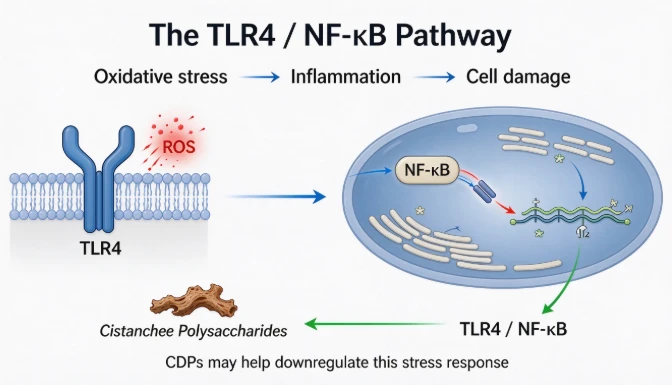
Here is how it works, in simple terms. TLR4 (Toll-like receptor 4) is a protein on the cell surface that acts like an alarm sensor. When it detects danger signals - including excess reactive oxygen species - it sets off a chain reaction inside the cell. This cascade ultimately activates NF-κB, a master protein that travels into the cell nucleus and switches on a host of inflammatory and stress-response genes. In a healthy cell, this response is tightly controlled. But under chronic stress like high glucose, the pathway becomes overactive, driving inflammation, more oxidative damage, and ultimately cell death.
The researchers measured the levels of key players in this pathway. In the high-glucose group, they found significantly elevated levels of TLR4, along with phosphorylated (activated) forms of NF-κB p65 and its regulator IκBα - clear signs that the alarm pathway was switched on. When CDPs were added, all of these markers were significantly reduced, particularly at the higher doses.
This is a crucial finding. It suggests that CDPs act, at least in part, by turning down the volume of this inflammatory alarm system. By lowering TLR4 activation and blocking NF-κB's nuclear entry, the polysaccharides interrupt the vicious cycle in which oxidative stress fuels inflammation, which in turn worsens oxidative stress and drives cells toward death.
In essence, the study proposes a coordinated mechanism:
CDPs boost the cell's antioxidant capacity, lowering ROS levels.
Lower ROS means less activation of the TLR4 alarm sensor.
Reduced TLR4 signaling keeps NF-κB inactive, dampening inflammation.
With less stress and inflammation, mitochondrial function is preserved.
Healthy mitochondria mean fewer death signals, and kidney cells survive.
This multi-target, multi-layered action is precisely why natural polysaccharides are so attractive to researchers - unlike a single-target drug, they engage several protective pathways at once.
What This Means for Health and for the Supplement Industry
It is important to be clear about what this research does - and does not - establish. The findings come from laboratory experiments on cultured cells, not from human clinical trials. Cell-based studies are a valuable first step in the scientific process: they identify promising compounds, reveal plausible mechanisms, and guide the design of future animal and human studies. But they cannot, on their own, prove that a compound works in the human body.
What this study does provide is a solid scientific rationale for continued research. It shows that:
Cistanche polysaccharides have a defined, characterizable structure with properties favorable for absorption.
They are non-toxic at moderate doses and can protect kidney cells under laboratory conditions that mimic diabetic stress.
Their protective effect appears to work through a well-understood anti-inflammatory and antioxidant pathway.
For people living with diabetes, the takeaway is caution tempered with hope. Cistanche polysaccharides are not a treatment for diabetes or kidney disease, and no one should stop or replace prescribed medication based on cell studies. But the growing body of research helps explain why Cistanche has been valued for so long, and it supports the ongoing investigation of these natural compounds as potential complementary approaches to metabolic and kidney health.
For the supplement and botanical-extract industry, the research has clear practical value. Understanding the structure of the polysaccharides allows manufacturers to standardize their extracts - ensuring consistent quality, reproducible composition, and traceable science. When a product can point to well-designed studies characterizing its active ingredients, it builds credibility with consumers and regulators alike. As the demand for natural, evidence-informed wellness products grows, high-quality research like this becomes an essential foundation for responsible product development.
Beyond the Cells: What Research Holds Next
The study's authors are explicit that their work is a beginning, not an end. They outline several important directions for future research:
Refining the structure using more advanced techniques such as nuclear magnetic resonance (NMR), X-ray diffraction, and gas chromatography-mass spectrometry, to determine the exact arrangements of the sugar chains.
Isolating pure, uniform polysaccharides from the current heterogeneous mixture, since different components may have different activities.
Clarifying the structure-activity relationship - determining precisely which structural features produce which biological effects.
Moving from cells to animals to humans, to test whether the protective effects observed in the lab translate to real organisms.
Earlier work in this same research group has already shown that Cistanche polysaccharides can improve diabetic kidney disease in mice, with visible reductions in kidney tubular fibrosis. Combined with the current cell-level evidence, this paints a progressively more complete picture of the compound's therapeutic promise.
Conclusion: An Ancient Herb, a Modern Promise
Cistanche is a plant with deep roots in tradition, but its relevance to modern health is only now being fully explored. This study adds a meaningful piece to that exploration. It demonstrates that polysaccharides from Cistanche deserticola possess a well-defined chemical structure and, in laboratory models, can protect kidney tubular cells from the damaging effects of high glucose.
The proposed mechanism is elegant and plausible: by enhancing antioxidant defenses, calming the TLR4/NF-κB inflammatory pathway, preserving mitochondrial health, and preventing cell death, CDPs appear to mount a coordinated defense against one of diabetes' most serious complications.
None of this is a cure, and much work remains before these findings can be translated into practical guidance. But for anyone curious about the science behind the "desert ginseng," the message is hopeful: an ancient plant, studied with modern tools, is revealing a genuine capacity to support one of the body's most vital and hard-working organs.
As research continues to untangle the structure-activity relationships of these complex sugars, the desert's treasure may yet prove to be a gift not just to tradition, but to the future of kidney health.