Don't Tonic Up Recklessly in Autumn: Cistanche Tubulosa Is The Gentle, Moistening Tonic You Actually Want
Oct 21, 2026
When autumn arrives, social media feeds become saturated with advice about sticking on autumn fat, starting one's tonification regimen, drinking ginseng soup, and eating more lamb. Many people rush headlong into heavy supplementation, convinced that deer antler, red ginseng, gelatin, and sea cucumber must be consumed in rotation if one is to make proper use of the season. Yet the reality rarely matches the expectation. Dry throat, mouth ulcers, restless sleep, worsening constipation, and sudden breakouts are far more common than the glowing vitality people hope for. The traditional Chinese medicine principle of nourishing yin, moistening the lung, and storing essence in autumn and winter has been crudely misinterpreted by many as an invitation to supplement aggressively, expensively, and with fiery heat. The truth is that what autumn fears most is not a lack of tonification, but tonification in the wrong direction and for the wrong constitution.
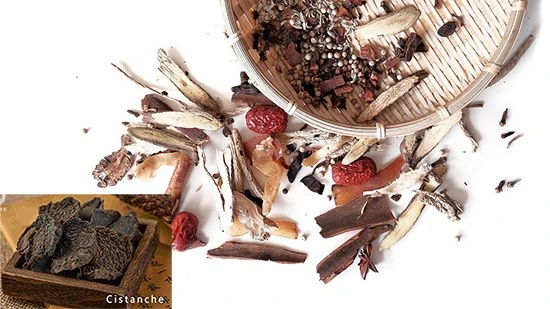
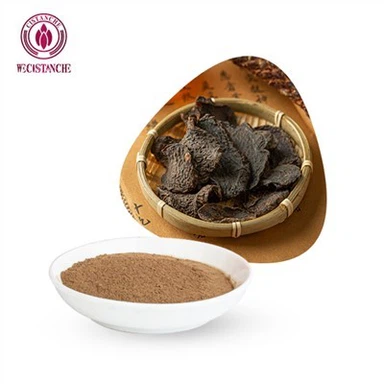
Chinese medicinal materials such as Cistanche tubulosa
Among the vast array of tonic herbs, one stands out for its remarkable balance. Growing in the deserts of Northwest China, it is known as desert ginseng. It warms and tonifies kidney yang without scorching the body, nourishes essence and blood without clogging the stomach, and moistens the intestines without causing diarrhea. It is particularly well suited to those who suffer from a combination of autumn dryness and underlying deficiency. That herb is Cistanche tubulosa, known in Chinese as Rou Cong Rong.
1. Why Reckless Tonification in Autumn Backfires
After a summer of sweating, late nights, air conditioning, and excessive cold drinks, most people enter autumn with some degree of depletion in their qi, blood, and body fluids. Once autumn arrives and dryness becomes the dominant climatic influence, the body begins to show a range of familiar complaints: a dry mouth, throat, lips, and nose; rough skin, brittle hair, and dry eyes; hard stools; restlessness at night and poor sleep; and a peculiar combination of daytime fatigue with an immediate tendency to overheat the moment any supplement is taken. Under these circumstances, pouring deer antler, red ginseng, aconite, or large bowls of rich lamb broth into the body is rather like pouring boiling water onto already cracked soil. Something appears to be happening on the surface, but the roots beneath are only suffering further damage.
This is why autumn tonification must follow a clear sequence. One moistens first and supplements slowly. One regulates the spleen and stomach before attempting to nourish kidney essence. Warmth should never tip into burning, and tonic richness should never become stagnation. It is precisely this rhythm that Cistanche tubulosa follows so naturally, and that is the fundamental reason for its enduring popularity in autumn wellness.
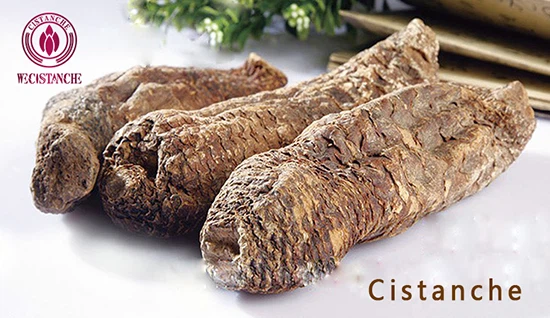
superman herbs cistanche
2. What Exactly Is Cistanche tubulosa
Cistanche tubulosa is the dried, fleshy, scale-bearing stem of plants in the broomrape family, primarily Cistanche tubulosa deserticola and Cistanche tubulosa tubulosa. It grows mainly in the arid desert regions of Inner Mongolia, Xinjiang, Gansu, and Ningxia, where it parasitizes the roots of saxaul and other desert shrubs. Surviving extreme drought, relentless wind, and poor soil, it draws sustenance from the very earth that seems least capable of giving it, making it one of the most distinctly desert-born herbs in the entire Chinese pharmacopeia. It was classified among the superior herbs in the Shennong Ben Cao Jing, and physicians across the dynasties have consistently held it in high regard. The Ben Cao Hui Yan describes it as a medicine that nourishes the gate of life, enriches kidney qi, and supplements essence-blood, noting that it is warm but not hot, tonic but not harsh, heating but not drying, and lubricating but not leaking. In contemporary language, this means that Cistanche tubulosa supplements the body with composure rather than force, warms without inflaming, and moistens without purging. This is also why it earned the nickname desert ginseng, a title that reflects not its price but its extraordinary ability to sustain life in the harshest of environments.

Desert living cistanche
3. The Three Core Actions of Cistanche tubulosa
The value of Cistanche tubulosa in health preservation can be summarized as warming yang, nourishing essence, and moistening dryness. What makes it truly exceptional is that these three actions are not isolated from one another but work in quiet coordination.
First, it warms kidney yang without being harsh. For many people, the phrase kidney yang tonic immediately brings to mind overheating, irritability, nosebleeds, and insomnia. Cistanche tubulosa could not be more different in character. It is sweet and salty in flavor, warm in nature, and it enters the kidney and large intestine channels. Its warmth resembles the steady heat of a low-burning fireplace rather than the violence of an open flame. It is especially suitable for those with sore, cold lower backs and knees, heavy legs, cold hands and feet that nevertheless cannot tolerate deer antler or red ginseng, frequent nighttime urination, declining stamina, reduced libido, and the particular kind of hollow, depleted weakness that comes with age rather than the blazing excess of true fire. Unlike more aggressive tonics that force the body into artificial stimulation, Cistanche tubulosa works slowly, lifting kidney vitality one quiet layer at a time.

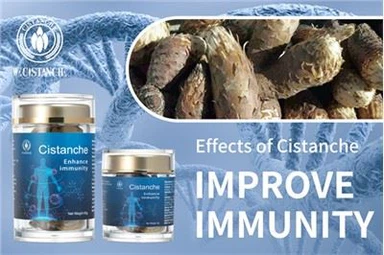
Effects of cistanche-Improve Kidney Function
Second, it nourishes essence and blood to relieve dryness at its root. Traditional Chinese medicine holds that essence, blood, and body fluids share a common origin, and autumn dryness is never merely a matter of dry lungs or rough skin. At a deeper level, it often reflects a deficiency of essence, blood, and fluids. Cistanche tubulosa enters the kidney, where essence is stored. When essence is enriched, it transforms into blood, and blood in turn generates fluids. Once fluids become abundant, the mouth, skin, eyes, and intestines all cease their complaints. This also explains why Cistanche tubulosa can ease constipation through an entirely different mechanism. Rhubarb and senna rely on brute force, driving the intestines onward at the cost of healthy energy. Cistanche tubulosa, by contrast, works through moisture and nourishment, restoring the intestine's own natural lubrication. This is particularly valuable for the elderly, for women recovering from childbirth, for those with chronic illness, and for people who are tired but wired after years of overwork.

Effects of cistanche-improve kidney function
Click here to view Cistanche for Kidney disease products
【Ask for more】 Email:cindy.xue@wecistanche.com / WhatsApp: 0086 18599088692 / WeChat: 18599088692
Third, it moistens the intestines to treat deficient constipation. Autumn constipation is remarkably common, but not all constipation is created equal. Excess-heat constipation presents with rock-hard stools, foul breath, a thick yellow tongue coating, and dark urine. Deficient constipation, on the other hand, may not involve particularly hard stools at all, yet evacuation remains difficult, with small dry pellets, accompanied by weak knees and back, generalized fatigue, and an intolerance of cold. Cistanche tubulosa is most precisely indicated for the latter pattern, in which kidney deficiency, intestinal dryness, and essence-blood insufficiency are combined. The classical formula Ji Chuan Jian uses Cistanche tubulosa as its principal ingredient for kidney-deficiency constipation with clear urine and a cold back. It is not a laxative in the conventional sense, but follows the logic of adding water to a canal so that the boat may move freely once more.

effects of cistanche-treat constipation
4. Why Autumn Is the Ideal Season for Cistanche tubulosa
Autumn in the language of health preservation is governed by two key concepts: dryness and storage. Dryness calls for moisture, while storage demands that essence be conserved rather than scattered. Cistanche tubulosa embodies both principles, combining moistening with tonification and tonification with storage. Its moistening action relieves the dry intestines, dry skin, and dry throat that autumn so readily produces. Its tonic action supports kidney yang and replenishes essence. Its storing action aligns with autumn's natural rhythm, in which essence should be gathered inward rather than dissipated outward. Compared with spring, which favors upward movement, summer, which calls for clearing heat, and deep winter, which permits heavy warming, autumn has little tolerance for aggressive or violent tonics. The greatest strength of Cistanche tubulosa lies precisely in its restraint, its steadiness, and its refusal to impose itself on the body.
It is particularly well suited to modern urban dwellers who want to tonify but overheat the moment they try. Those who sit for long hours, work late into the night, live under relentless stress, exercise little, have indifferent digestion, and display obvious signs of autumn dryness will generally find Cistanche tubulosa far more comfortable and far more sustainable than deer antler or ginseng.

5. Everyday Ways to Use Cistanche tubulosa
Cistanche tubulosa is not difficult to incorporate into daily life, and a number of straightforward home preparations can be made without specialist equipment. Three of the most common approaches are described here.
The first is Cistanche tubulosa and goji berry tea, which is by far the easiest. Take six to ten grams of sliced Cistanche tubulosa and ten goji berries, steep them in hot water for twenty minutes, and refill the cup as needed. This preparation is ideal for office workers and for anyone experiencing dry eyes, a sore lower back, or autumn fatigue. Goji berries gently nourish the liver and kidney, while Cistanche tubulosa warms and moistens, and the two together capture the very spirit of the season.
The second is Cistanche tubulosa, yam, and pork rib soup, a dish the whole family can enjoy. Combine ten to fifteen grams of Cistanche tubulosa, two hundred grams of fresh yam, three hundred grams of pork ribs, two slices of ginger, and a little salt, then simmer everything gently for about ninety minutes. The yam strengthens the spleen, the ribs nourish yin, and the Cistanche tubulosa warms the kidney and moistens the gut, the three working in quiet harmony. There is also an important principle embedded in this recipe. Autumn tonification should never bypass the step of regulating the spleen and stomach. If digestion is sluggish, even the finest tonic will only turn into damp turbidity and create more problems than it solves.
The third is Cistanche tubulosa lamb congee, a preparation that leans more heavily toward warming. Take ten grams of Cistanche tubulosa and decoct it first to make an herbal liquid, then cook it with fifty grams of white rice, fifty to eighty grams of minced lamb, a few ginger threads, and salt to taste. This congee suits those who are sensitive to cold, urinate frequently at night, and suffer from cold lower back and knees. It should be noted, however, that anyone with obvious autumn dryness, a red tongue, a dry mouth, a bitter taste, or hard stools accompanied by heat signs would do well to avoid this particular dish.
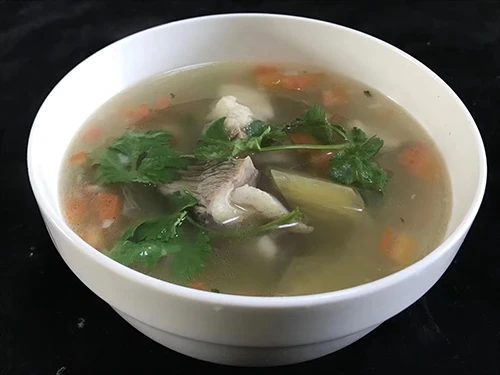
Stewed Cistanche tubulosa soup
6. The Correct Sequence for Autumn Tonification
There is no need to begin stuffing supplements into the body on the very first day of autumn. A sensible approach unfolds in three deliberate stages. The first is to clear and moisten, using lily bulb, tremella, pear, ophiopogon, yam, and lotus seed to settle the dryness that has taken hold. The second is to regulate the spleen, using poria, yam, tangerine peel, coix seed, and millet congee to restore the digestive system's capacity to transform what it receives, because once the spleen is blocked, no tonic can be properly absorbed. Only the third stage involves gentle warming and storage, at which point goji, black sesame, mulberry, walnut, Cistanche tubulosa, and polygonatum can be introduced, ensuring that good steel is truly used on the cutting edge.