Cistanche And The Gut: Could The Desert Ginseng Help Protect The Intestine During Sepsis?
Oct 21, 2026
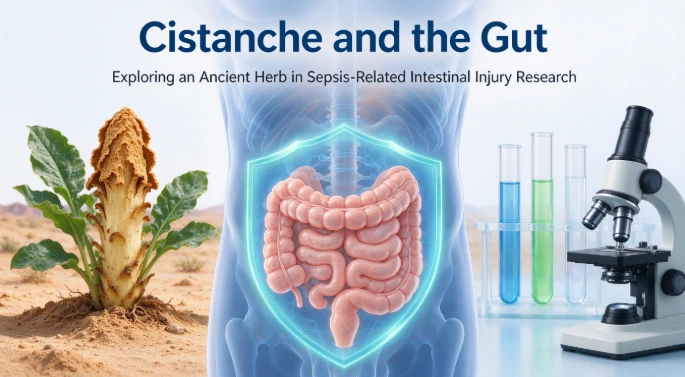
Every plant has a story, but few stories stretch as far back - or reach as far forward - as that of Cistanche. Known for centuries in China as the "desert ginseng," this remarkable parasitic plant was first described in the Shennong Bencao Jing, one of the oldest pharmacological texts in the world. For over two thousand years, traditional healers have turned to it to support vitality, nourish the kidney, and ease the bowels. Today, scientists are asking a bold new question: could the active compounds in this ancient herb help one of the most vulnerable patients in modern medicine - the critically ill person with sepsis, whose intestines are under siege?
This article explores that question. We will look at what sepsis does to the gut, how the intestine connects to the rest of the body, what Cistanche actually contains, and why researchers believe its multi-target properties might offer a fresh angle for protecting the gut during serious infection.
Sepsis: When the Whole Body Turns Against Itself
To understand why the intestine matters so much in sepsis, we first need to understand what sepsis is. In simple terms, sepsis is a life-threatening condition in which the body's response to an infection spirals out of control. Instead of fighting the infection in a contained, balanced way, the immune system becomes hyperactivated and starts damaging the body's own tissues. Blood flow becomes erratic, organs begin to fail, and without rapid intervention, the condition can be fatal.
Sepsis is rarely a "first disease." It typically emerges at a later stage of an infection, when inflammatory molecules - released by invading pathogens - reach high enough levels to disturb the function of multiple organs at once. This is why sepsis is so often described as a multi-organ dysfunction syndrome: the lungs, liver, kidneys, brain, heart, and gut may all begin to fail together.
This is where the intestine comes into the picture. Of all the organs affected by sepsis, the gut is one of the first and most consistently injured. In fact, studies suggest that intestinal injury occurs in a strikingly high proportion of sepsis cases - in some reports, over half of patients with sepsis-related complications show signs of gut damage.
The Gut: The Body's Largest Immune Frontier
Most people think of the intestine simply as a tube that digests food and absorbs nutrients. But that view is far too narrow. The intestine is, in fact, one of the most sophisticated organs in the human body - a vast, intelligent interface between the outside world and the internal environment.
Consider these numbers. The surface area of the human gut lining is enormous - roughly 200 to 300 square meters - far larger than the respiratory tract's 70 to 100 square meters and the skin's 1.5 to 2 square meters. This immense surface is not just for absorbing food; it is the body's largest immune barrier, constantly deciding what to let in and what to keep out.
The intestine also consumes a surprisingly large share of the body's blood flow. At rest, it receives about 20 to 25 percent of cardiac output; during digestion, that can rise to 30 to 35 percent. But when the body is under stress - during exercise, inflammation, or shock - blood flow to the gut can collapse to as little as 5 percent of cardiac output. This dramatic reduction makes the intestine exceptionally vulnerable during critical illness. When blood supply falls, the gut lining suffers, and the consequences ripple through the entire body.
The "Axes" That Connect the Gut to Every Organ
Modern research has revealed something traditional medicine intuited long ago: the gut does not work in isolation. It is connected to nearly every major organ through what scientists call "gut-organ axes" - bidirectional communication highways that link the intestine to the rest of the body through immune cells, nerves, hormones, and the trillions of microbes living inside us.
The gut-lung axis. Immune cells and bacteria from the gut influence how the lungs respond to injury. This connection affects conditions ranging from pneumonia to acute lung injury.
The gut-liver axis. The liver and intestine are physically linked through the portal vein and bile ducts, allowing microbes, metabolites, and immune signals to travel back and forth between them.
The gut-kidney axis. Beneficial metabolites produced by gut bacteria can improve kidney health, while kidney failure in turn disrupts the gut's microbial balance.
The gut-brain axis. During sepsis, disruption of the gut flora can disturb amino acid metabolism, deprive brain cells of energy, and worsen brain swelling.
The gut-heart axis. Restoring beneficial gut bacteria can help repair barrier function and improve heart muscle function, inflammation, and oxidative stress.
Each of these connections reinforces the same conclusion: a healthy gut is a cornerstone of whole-body health, and a damaged gut drags down every other organ with it. This is precisely why researchers are so interested in protecting the intestine during sepsis.
The Ancient Herb With a Modern Chemistry Set
So where does Cistanche fit in? The answer begins with the herb's remarkable chemistry.
Cistanche belongs to the Orobanchaceae family - parasitic plants that attach their roots to desert shrubs such as tamarisk and saxaul. It thrives in the arid regions of northwestern China, including Xinjiang, Gansu, Ningxia, Inner Mongolia, and Qinghai. In Chinese medicine, it is described as warm in nature, sweet and salty in taste, and gentle enough to be used both as medicine and as food.
Over the past decades, modern analytical chemistry has identified a rich and diverse cast of active compounds in Cistanche. These fall into several major families:
Phenylethanoid Glycosides (PhGs): The Star Players
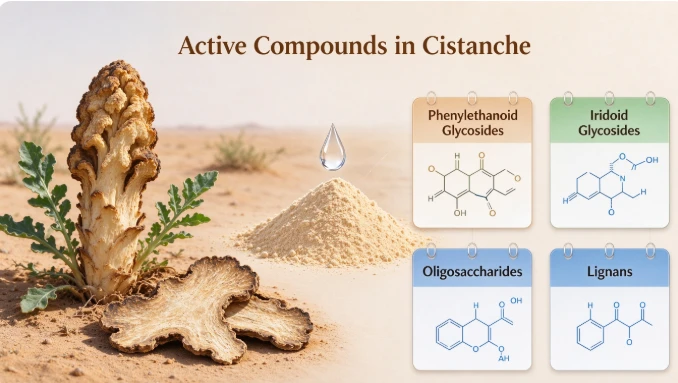
The most extensively studied group is the phenylethanoid glycosides (PhGs), a family of natural compounds found throughout the plant's fleshy stem. More than 80 different PhGs have been identified, but two stand out:
Echinacoside - the most abundant and frequently studied PhG in Cistanche, widely regarded as a core marker of quality.
Acteoside (verbascoside) - the second major PhG, which often works synergistically with echinacoside.
These compounds have been linked to antioxidant, anti-inflammatory, immune-modulating, and intestinal-protective activities. Studies suggest PhGs can help maintain the gut barrier, support the growth of beneficial bacteria, and even influence gut motility - properties that make them especially relevant to the intestine.
Iridoid Glycosides: The Understated Helpers
A second family, the iridoids, includes compounds such as geniposide and 8-epiloganic acid. Though present in smaller amounts, these molecules have shown antibacterial, antiviral, and antioxidant activity. Geniposide, in particular, has drawn attention for its ability to inhibit the growth of various tumor cell lines in laboratory studies - a reminder that even minor constituents of a plant can carry meaningful biological activity.
Polysaccharides and Oligosaccharides: The Structural Workhorses
A third group, the polysaccharides, are large, complex carbohydrate molecules built from long chains of sugar units, with molecular weights ranging from about 10,000 to 500,000 daltons. Alongside them are smaller oligosaccharides, chains of two to ten sugar units.
Polysaccharides are among the most abundant active components of Cistanche, and they are linked to an impressive range of effects: immune regulation, promotion of gut movement, relief of constipation, bone protection, nerve support, liver protection, and anti-inflammatory activity. Because they work through multiple targets and pathways, they are often considered central to the herb's therapeutic versatility.
Lignans and Other Compounds
Finally, Cistanche contains a variety of other bioactive substances - lignans such as pinoresinol and lariciresinol, along with flavonoids, sterols, and polyphenols. These compounds support antioxidant defenses, help regulate the microbial balance of the gut, and have been studied for their potential to slow neurodegenerative disease. Their concentrations are relatively low, which makes them harder to isolate and study, but they contribute to the herb's overall complexity.
What the Science Says: Cistanche and the Intestine
The question now is whether these compounds actually do anything meaningful for the gut. Over the past two decades, researchers have accumulated a growing body of evidence - much of it from cell cultures and animal studies - suggesting that Cistanche's active ingredients can influence the intestine in several important ways.
Supporting a Healthy Microbial Community
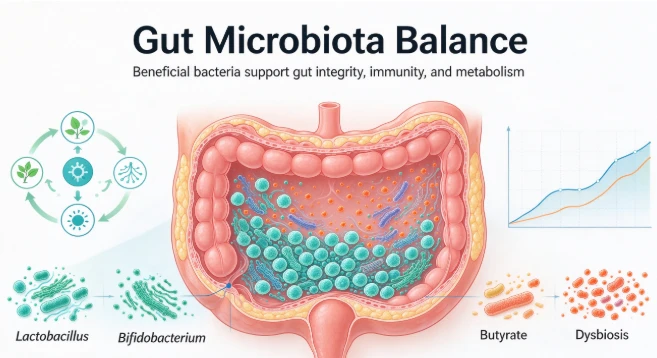
The human gut is home to trillions of bacteria - a community collectively known as the gut microbiota. This community is not a passive passenger; it helps digest food, produces essential nutrients, trains the immune system, and protects against harmful pathogens. When the balance of this community is disrupted - a state called dysbiosis - disease can follow.
Studies with Cistanche extracts have shown promising effects on this microbial ecosystem. In mice, high doses of Cistanche extract improved the length of intestinal villi, the depth of crypts, and the overall shape of the intestine - structural improvements that reflect a healthier gut lining. The extract also increased microbial diversity and promoted the growth of beneficial bacteria such as Lactobacillus. Remarkably, it even appeared to help repair the microbial disruption caused by cephalosporin antibiotics.
More detailed analysis revealed that Cistanche's compounds can shift the composition of the gut community in favorable directions - increasing beneficial genera while reducing potentially harmful ones. This rebalancing is accompanied by an increase in short-chain fatty acids (SCFAs), particularly butyrate, which are important energy sources for gut cells and powerful regulators of immune function.
Strengthening the Gut Barrier
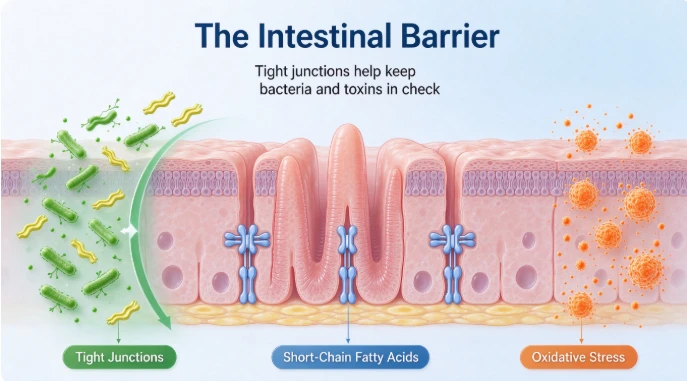
The gut lining is more than just a wall - it is a carefully controlled gatekeeper. Cells are joined together by tight junctions, protein seals that prevent bacteria and toxins from leaking into the bloodstream while allowing nutrients to pass. When these junctions weaken, the gut becomes "leaky," and harmful substances escape into the circulation - a condition called increased intestinal permeability.
Cistanche's active compounds, particularly the PhGs and polysaccharides, have been shown to help maintain the integrity of these tight junctions. By strengthening the gut barrier, they reduce the risk of bacteria and endotoxins crossing into the blood - a process that can otherwise amplify systemic inflammation.
Regulating Gut Motility
The intestine is also a mover. Coordinated waves of muscle contraction - gut motility - push food and waste through the digestive tract. When motility is disrupted, problems arise: constipation when movement slows, diarrhea when it speeds up, or a painful and irregular pattern in conditions like irritable bowel syndrome.
Cistanche has a long traditional reputation as a laxative, and modern research supports this. Its compounds appear to promote gut movement through several pathways, including signaling systems that regulate the interstitial cells responsible for generating rhythmic contractions. Studies in animal models of age-related constipation have shown that Cistanche can significantly improve defecation - evidence that the herb's traditional use has a real physiological basis.
Calming Inflammation
Finally, Cistanche's components are notable for their anti-inflammatory activity. They can dampen the production of pro-inflammatory molecules, reduce oxidative stress, and modulate the activity of immune cells. Some research suggests that Cistanche extracts can increase the numbers and activity of natural killer (NK) cells and macrophages - the frontline cells of the immune system - while simultaneously reducing inflammation-related tissue damage.
Collectively, these four properties - microbial support, barrier strengthening, motility regulation, and inflammation control - form a coherent picture of Cistanche as a multi-faceted "gut tonic." And it is precisely this combination that makes researchers curious about its potential in sepsis.
Sepsis and the Intestine: A Perfect Storm
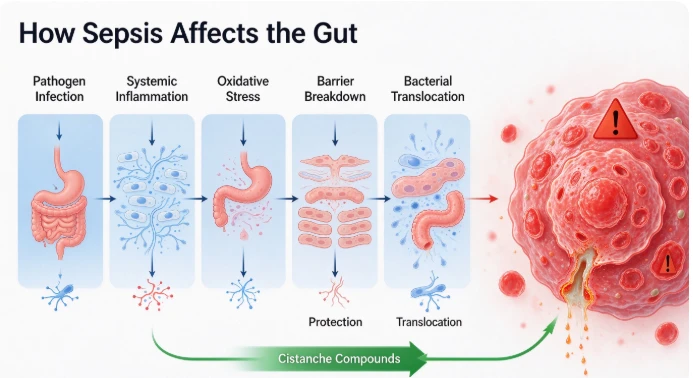
To understand why Cistanche might help in sepsis, we need to look at exactly what happens to the intestine during this condition. The damage unfolds through three intertwined processes.
The Barrier Breaks Down
During sepsis, blood flow to the gut plummets, depriving intestinal cells of oxygen. This triggers a cascade of damage: ischemia and reperfusion injury, oxidative stress, and disrupted energy metabolism. The weakened gut lining becomes unable to hold back the trillions of bacteria living within it. Bacteria and endotoxins begin to leak across the damaged barrier into the bloodstream, where they amplify the already-overwhelming systemic inflammation. This creates a vicious cycle: the more the barrier fails, the more inflammation rises, and the more the barrier fails.
The Microbial Community Collapses
Sepsis also devastates the gut's microbial community. Patients in intensive care typically show a dramatic loss of bacterial diversity - one of the hallmarks of a fragile, unhealthy microbiome. Protective bacteria such as Lactobacillus and Bifidobacterium decline, while the microbial composition shifts in ways that impair immune function. Research has even found causal links - confirmed through genetic studies - between gut microbes and the risk of sepsis and sepsis-related death. In the later stages of recovery, critically ill patients may also experience an overgrowth of fungi such as Candida, further complicating treatment.
Gut Motility Falters
Finally, sepsis disrupts the intestine's ability to move. The mechanisms are complex. High levels of inflammation can paralyze the nerves that regulate gut movement. Damage to the muscle layers of the intestine, along with disturbances in the microbial community, further impair motility. The result is a sluggish, dysfunctional gut - one that struggles to digest food, absorb nutrients, and clear waste, prolonging the patient's illness.
Why Cistanche Might Be a Good Fit
This is where Cistanche's multi-target profile becomes genuinely interesting. Sepsis is not caused by a single problem but by an interlocking network of failures - inflammation, barrier breakdown, microbial collapse, and motility disruption. A compound that addresses only one of these is unlikely to make a meaningful difference. Cistanche, by contrast, has shown potential on all four fronts at once.
Its PhGs and polysaccharides have been linked to barrier protection and anti-inflammatory activity.
Its extracts have been shown to support beneficial gut bacteria and boost short-chain fatty acid production.
Its traditional and modern use supports a role in promoting gut motility.
Its immune-modulating properties may help restore the balance of immune cells that sepsis depletes.
Moreover, Cistanche has two practical advantages that make it attractive for clinical development. First, it is "medicine and food in one" - recognized as both a traditional medicine and a food ingredient - which simplifies the regulatory path. Second, it has a wide safety margin. Toxicity studies in mice found the maximum tolerated oral dose to exceed 20 grams per kilogram of body weight - more than 600 times the recommended human dose - suggesting a high degree of safety at reasonable doses.
None of this means Cistanche is a treatment for sepsis. It is not. But as a theoretical foundation for future research, the logic is compelling: a multi-target herb, with a strong traditional record in gut health, a rich chemistry, and a wide safety window, deserves serious investigation in a condition as complex as sepsis-induced intestinal injury.
An Honest Look at the Challenges
Science moves cautiously, and there are important reasons to temper the enthusiasm.
First, bioavailability is a challenge. Cistanche's active compounds have relatively low oral bioavailability, in part because they are heavily metabolized in the intestine. Much of what is absorbed is transformed by gut bacteria, which complicates our understanding of which molecules actually reach the body and how they work. Interestingly, human gut bacteria appear to convert these compounds more efficiently than the bacteria of rats - a reminder that results from animal studies do not always translate directly to humans.
Second, the active ingredients likely work together. The PhGs, polysaccharides, and iridoids probably exert their effects through synergy rather than in isolation. This makes the science more realistic but also more difficult - it is hard to isolate a single "magic ingredient" when the magic lies in the combination.
Third, quality varies. The content of active compounds in Cistanche depends heavily on the plant's species, growing environment, harvest time, and processing method. For example, Cistanche tubulosa is richer in PhGs, while Cistanche deserticola contains more polysaccharides. Standardization - ensuring every batch is consistent - is essential for any serious clinical or commercial application.
Fourth, sustainability and regulation remain open questions. Cistanche, a root parasite, was once driven to the brink of extinction by overharvesting. Although cultivation techniques have improved, they still face challenges of low parasitism rates and long growth cycles. The plant was only added to China's "medicine and food" catalog in recent years, and regulations around its use are still evolving. Much of the current commercial market focuses on traditional functions like tonifying and easing constipation; high-value innovations - in infection, oncology, neuroprotection, and more - have been slower to develop.
What This Means for the Future
Where does all of this leave us? The answer is one of cautious, evidence-based optimism.
For researchers, Cistanche presents a promising but unfinished story. The next steps are clear: isolate and purify individual active components, define their precise mechanisms, standardize extraction and quality control, and - crucially - move from cells and animals to well-designed human studies. Only then can the theoretical potential be translated into practical benefit.
For industry, the message is about responsible development. A natural product with a two-thousand-year history, a documented safety profile, and a growing body of mechanistic science is a valuable asset - but only if it is developed with rigorous standardization, honest labeling, and evidence-informed claims. Consumers and regulators alike respond better to products that point to real research than to those that rely on vague tradition alone.
For patients and the public, the takeaway is measured. Cistanche is a fascinating plant with genuine scientific interest, but it is not a cure for sepsis or any other critical condition. Anyone considering it as a supplement should do so with realistic expectations, ideally under professional guidance, and should never replace prescribed medical care with it.
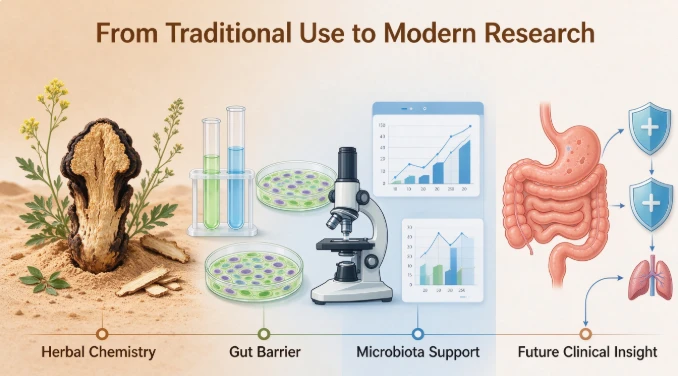
Conclusion: An Ancient Herb Meets the Intensive Care Unit
The intestine, long seen as a humble digestive tube, has revealed itself to be one of the body's most important organs - the largest immune barrier, a vast microbial ecosystem, and a communications hub connecting every major system. When sepsis strikes, the gut is among the first casualties, and its damage ripples outward to threaten the whole body.
It is in this context that Cistanche - the "desert ginseng" of ancient Chinese medicine - has captured the attention of modern critical-care researchers. Its unique combination of active compounds appears to touch every element of the problem: protecting the barrier, supporting beneficial microbes, promoting gut movement, and calming inflammation. Its multi-target nature aligns with the multi-faceted nature of sepsis itself, and its long history of safe use makes it an unusually appealing candidate for further study.
The science is not yet complete. Bioavailability, standardization, and translation from bench to bedside all remain challenges. But the direction is clear and the potential is real. As researchers continue to untangle the complex chemistry of this desert treasure, they may find that an herb praised for two millennia for its ability to strengthen and nourish could one day play a supporting role in one of modern medicine's most demanding arenas - the fight to protect the gut, and the whole body, from the ravages of sepsis.
For now, Cistanche stands as a powerful reminder of a truth that both ancient healers and modern scientists are coming to appreciate: that the path to whole-body health may run, quite literally, through the gut - and that sometimes, the oldest plants hold the most promising answers to the newest questions.