Cistanche Tubulosa As A Traditional Chinese Medicine,Its Potential in The Treatment And Prevention Of Parkinson's Disease Cannot Be Ignored
Jul 21, 2026
Introduction
Parkinson's disease (PD) is the second largest neurodegenerative disease worldwide, characterized by progressive loss of dopaminergic neurons in the substantia nigra pars compacta of the midbrain, abnormal aggregation of alpha-synuclein, and motor symptoms (tremor, rigidity, bradykinesia) and non-motor symptoms (constipation, depression, sleep disorders). It is estimated that there are over 10 million PD patients worldwide, and existing drugs (such as levodopa, dopamine receptor agonists, MAO-B inhibitors, etc.) can only alleviate symptoms and cannot prevent disease progression. Long-term use often accompanies complications such as dyskinesia and symptom fluctuations. Therefore, the search for natural medicines that can modify disease progression, provide neuroprotection, and improve symptoms has become a current research hotspot.
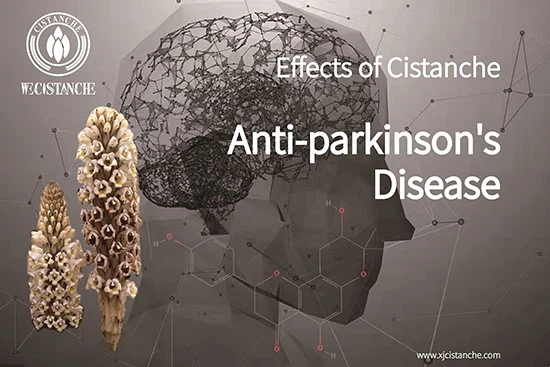
Superman herbs cistanche-Anti Parkinson's disease
Cistanches Herba, a perennial parasitic herbaceous plant in the family Rhamnaceae, is a dry fleshy stem with scaled leaves of Cistanche tubulosa Y. C. Ma or C. tubulosa (Schrenk) Wight. It is mainly produced in desert areas such as Xinjiang, Inner Mongolia, and Gansu in China, and is known as the "desert ginseng". Its nature is sweet, salty, and warm, and it belongs to the kidney and large intestine meridians. Its traditional effects are "tonifying kidney yang, nourishing essence and blood, moistening the intestines and promoting bowel movements". The "Shennong Bencao Jing" classifies it as a top-grade product, stating that it is "responsible for the five stresses and seven injuries, tonifying the middle, removing cold, heat, and pain from the stem, nourishing the five organs, strengthening yin, and nourishing essence and qi". Modern pharmacological research has revealed that Cistanche tubulosa is rich in phenylethanolic glycosides (such as echinacroside and verbascoside), iridoids, polysaccharides, and various trace elements. It has multiple activities such as antioxidant, anti-inflammatory, neuroprotective, cognitive improvement, and regulation of gut microbiota. In recent years, an increasing number of in vitro and in vivo experiments and preliminary clinical studies have shown that Cistanche tubulosa and its active ingredients have remarkable potential in the prevention and treatment of Parkinson's disease. This article aims to systematically review its mechanism of action and clinical evidence, providing a reference for subsequent research and translation.

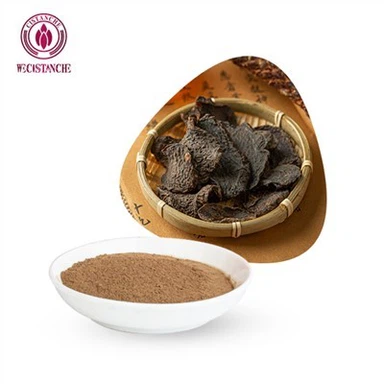
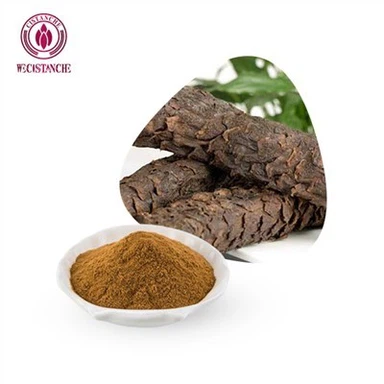
cistanche powder
1, The main active ingredients of Cistanche tubulosa
The material basis for the multi-target neuroprotective effect of Cistanche tubulosa is its complex and unique chemical composition spectrum. A research team from Peking University School of Medicine has developed a full component analysis strategy, identifying 513 compounds from Cistanche tubulosa and systematically comparing the differences in composition, quality, and efficacy between desert Cistanche tubulosa and tube flower Cistanche tubulosa, providing a scientific basis for precise clinical medication. Among them, the components most closely related to anti Parkinson's disease activity mainly include the following categories:
1. Phenylethanoid Glycosides (PhGs): This is the most representative group of medicinal substances in Cistanche tubulosa, with a content of up to 5% to 10% of the dry weight of the medicinal material. The core members include Echinacoside (ECH) and Acteoside/Verbascoside. The Peking University team first found that phenylethanoid glycosides have anti Alzheimer's disease, anti Parkinson's disease, and anti depression effects, and revealed that their targets are protein kinase CK2 α and a novel mechanism of supplementing the neurotransmitter pool through metabolites. Pinecone chrysanthemum glycoside can increase neuronal survival by about 30% in a 6-OHDA induced cell model, and is recognized as a "pioneer molecule" for the neuroprotective effect of Cistanche tubulosa.

Phenylethanol glycoside is the main active component of Cistanche tubulosa
2. Iridoids, such as Catalpol, mainly charge-damaged dopaminergic neurons by increasing the expression of glial cell-derived neurotrophic factor (GDNF), and improve motor function by about 28% in MPTP model mice.
3. Polysaccharides: Polysaccharides from Cistanche tubulosa are important regulators of gut microbiota, which can significantly increase the abundance of beneficial bacteria in the gut (such as Rossella, Bifidobacterium, and Lactobacillus) and indirectly exert central nervous system protection through the gut-brain axis.
4. Other ingredients: including flavonoids (such as quercetin), phenylpropanoids, alkaloids, and various amino acids and trace elements, synergistically enhancing the main active ingredients, forming the basis of the "multi-component multi-target" pharmacological characteristics of Cistanche tubulosa.
2, The core mechanism of Cistanche tubulosa in preventing and treating Parkinson's disease
2.1 Antioxidant stress and Nrf2 pathway activation
Oxidative stress is one of the core driving factors for the onset of Parkinson's disease. The high concentration of dopamine metabolism, iron ion deposition, and mitochondrial dysfunction in the substantia nigra of the midbrain collectively lead to the accumulation of reactive oxygen species (ROS), ultimately triggering apoptosis of dopaminergic neurons. A study published in the Journal of Toxicology and Environmental Health in 2025 clearly confirmed that the total glycosides of Cistanche tubulosa can exert neuroprotective effects in MPTP induced PD mouse models by activating the Nrf2 signaling pathway: after treatment, the mouse's rod turning and climbing behavior significantly improved, the number of tyrosine hydroxylase (TH) positive neurons in the substantia nigra increased significantly, the activities of superoxide dismutase (SOD) and glutathione peroxidase (GSH Px) increased, the levels of malondialdehyde (MDA) decreased, and the levels of pro-inflammatory cytokines IL-1 β and TNF - α decreased.
Mechanistically, as an activator of the Nrf2 pathway, echinacoside can promote the release and translocation of Nrf2 from Keap1 binding to the nucleus, initiating the transcription of downstream antioxidant response element (ARE) - driven genes such as SOD, HO-1, NQO1, etc., thereby systematically clearing free radicals and providing neurons with a "radiation protective suit". This pathway is considered one of the most important molecular switches for neuroprotection in Cistanche tubulosa.
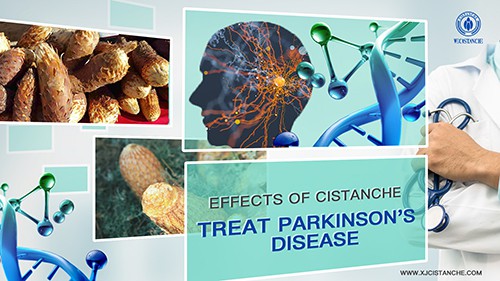
Superman herbs cistanche-Anti Parkinson's disease
2.2 Inhibition of neuroinflammation: NLRP3/NF - κ B dual pathway
Chronic neuroinflammation plays a key role in the occurrence and development of PD. Activated microglia continuously release pro-inflammatory factors such as IL-1 β, IL-6, TNF - α through pathways such as NLRP3 inflammasome and NF - κ B, forming a vicious cycle of "inflammatory neuronal damage". A study published in Brain Research Bulletin in 2020 found that pineal glycoside can significantly improve MPTP-induced motor deficits in PD mice, inhibit the activation of microglia in the substantia nigra, and downregulate the expression of NLRP3 inflammasome and its downstream Caspase-1 and IL-1 β. In vitro experiments further confirmed that in N9 microglia cells damaged by MPP+, pineal glycoside can reduce NLRP3/CASP-1/IL-1 β signaling activity, and this effect can be synergistically enhanced by NLRP3-specific inhibitor MCC950, indicating that both act on the same pathway.
At the same time, echinacoside can also inhibit the upregulation of p38 MAPK and NF - κ B p52 in the MPTP model, reducing the activation of astrocytes. Further network pharmacology studies have revealed that the key target MAPK8 of Cistanche tubulosa can indirectly inhibit cell apoptosis by promoting the phosphorylation of anti-apoptotic protein Bcl-2 and clearing damaged mitochondria; The activation of the estrogen receptor ESR1 target can inhibit the activity of microglia and NADPH oxidase, reducing neuroinflammation. Cistanche thus achieved "multi-node simultaneous suppression" of neuroinflammation.

The efficacy of Cistanche tubulosa in preventing Parkinsons disease
2.3 Regulating the IL-6/JAK2/STAT3 pathway and neurotrophic factors
In addition to anti-inflammatory effects, Cistanche tubulosa also has neurotrophic functions. Research has found that pineal glycoside can downregulate the increase in IL-6 caused by overactivation of microglia in PD models, inhibit abnormal activation of the JAK2/STAT3 pathway (reduce STAT3 Tyr705 phosphorylation), and promote STAT3 Ser727 phosphorylation and brain-derived neurotrophic factor (BDNF) expression. This "bidirectional regulation" enables pineal glycoside to control inflammatory storms while promoting the survival of dopaminergic neurons, reflecting the unique advantage of natural medicine's "one drug, multiple effects".
2.4 Mitochondrial protection, anti-apoptosis, and autophagy regulation
Mitochondrial dysfunction is the final common pathway for neuronal death in PD. Pinecone chrysanthemum glycoside can effectively inhibit 6-OHDA induced ROS burst, ATP level decrease, mitochondrial membrane potential loss, and other damages in PC12 cells, and inhibit the ATF3/p53/CHOP apoptotic axis, reducing cell apoptosis. In SH-SY5Y cells damaged by MPP+, naringin can also inhibit the excessive production of ROS and the expression of related oxidative stress genes. In addition, Cistanche tubulosa can also exert neuroprotective effects by regulating autophagy apoptosis rebalancing: on the one hand, it clears damaged mitochondria (mitochondrial autophagy), and on the other hand, it inhibits neuronal death caused by excessive autophagy, maintaining cellular homeostasis.

The efficacy of Cistanche tubulosa in preventing Parkinsons disease
Click here to view the products of Cistanche for preventing Parkinson's disease
【Ask for more】 Email:cindy.xue@wecistanche.com / WhatsApp: 0086 18599088692 / WeChat: 18599088692
2.5 gut brain axis and gut microbiota remodeling
The gut-brain axis is a cutting-edge field in PD research in recent years. About 80% of PD patients experience constipation, and dysbiosis of the gut microbiota can accelerate central nervous system degeneration by promoting misfolding of alpha-synuclein, increasing intestinal wall permeability ("intestinal leakage"), and systemic inflammation. As a "microbiota commander", polysaccharides from Cistanche tubulosa can significantly increase the number of beneficial bacteria in the intestine and promote the production of short-chain fatty acids such as butyric acid in constipation models. Butyric acid transmits signals through the gut-brain axis: on one hand, it repairs the intestinal barrier and reduces the entry of endotoxins into the bloodstream; On the other hand, it inhibits midbrain inflammation and reduces alpha-synuclein deposition by about 22%. Clinical observations have also found that patients taking extracts of Cistanche tubulosa have an increased frequency of bowel movements and a decrease in UPDRS scores, suggesting that gut-brain axis regulation may be an important pivot point for improving the overall course of PD.
3, Clinical research and practical application
3.1 Randomized controlled study on constipation
Constipation is one of the most common and earliest non-motor symptoms of PD, which seriously affects the quality of life of patients. Nanjing Traditional Chinese Medicine Hospital conducted a randomized controlled clinical trial, including 40 patients with PD constipation. In addition to conventional anti-PD drugs, the treatment group was treated with Cistanche granules (10g, twice daily), while the control group was treated as a blank control. There were 20 patients in each group, and the evaluation was conducted after 4 weeks of treatment. The results showed that the Cistanche tubulosa group was significantly better than the control group in terms of chronic constipation severity score (CSS), indicating that it can effectively improve constipation symptoms in PD patients. This result provides modern evidence-based medicine evidence for the traditional efficacy of "moistening the intestines and promoting bowel movements" of Cistanche tubulosa.
3.2 Combination of levodopa and gut microbiota regulation
A prospective study conducted by Guangdong Sanjiu Brain Hospital randomly divided 80 PD patients into a control group (compound levodopa) and an observation group (levodopa+Cistanche tubulosa). Non-motor symptom scale (NMSS) and CSS scores were evaluated at 2 and 4 months after treatment, respectively. The results showed that the NMSS and CSS scores of the observation group were significantly lower than those of the control group, and there were favorable changes in the gut microbiota structure - the levels of Bifidobacterium, Lactobacillus, and Clostridium perfringens increased, while the levels of Escherichia coli decreased. This suggests that the combination of Cistanche tubulosa and conventional treatment can not only improve non-motor symptoms such as constipation, but may also indirectly delay the progression of PD by optimizing the gut microbiota.
3.3 New drug conversion: Cistanche total glycosides capsules

cistanche supplement near me
Based on the clear pharmacological effects of phenylethanoid glycosides, Peking University School of Medicine has led the invention of high-quality extract production technology and successfully created the national new drug "Cistanche Total Glycosides and Capsules" (launched in 2005), providing urgently needed drugs for diseases such as vascular dementia and laying an industrial foundation for the expansion of PD indications. In addition, synthetic biology research has established a highly efficient heterologous synthesis system, which can produce key components such as pineal glycoside on a large scale, providing stable raw material guarantees for subsequent clinical trials and precision medicine.
Conclusion
From the ancient records in the "Shennong Bencao Jing" to the systematic analysis of modern molecular pharmacology, the "desert ginseng" Cistanche tubulosa is entering the field of prevention and treatment of neurodegenerative diseases with a new scientific outlook. Its outstanding performance in multiple dimensions, such as antioxidant, anti-inflammatory, mitochondrial protection, neurotrophic, and gut-brain axis regulation, makes it a highly promising natural candidate drug in the comprehensive treatment strategy of Parkinson's disease. Although multiple hurdles such as clinical trials, standardized production, and quality control still need to be overcome from the laboratory to the hospital bed, Cistanche tubulosa undoubtedly lights up a beacon of hope for PD patients from the desert. With the continuous deepening of research and the accelerated advancement of translational medicine, a cup of Cistanche tubulosa tea and a capsule of Cistanche total glycosides may become a "green shield" for daily protection and disease modification for millions of PD patients in the future.
References
[1] Neuroprotective effect of Cistanche tubulosa glycosides in the MPTP-induced Parkinson's disease mouse model involves Nrf2 activation. J Toxicol Environ Health A, 2025. PMID: 40056093.
[2] Echinacoside protects dopaminergic neurons by inhibiting the NLRP3/Caspase-1/IL-1β signaling pathway in the MPTP-induced Parkinson's disease model. Brain Res Bull, 2020. PMID: 32846198.
[3] Echinacoside Protects Dopaminergic Neurons Through Regulating the IL-6/JAK2/STAT3 Pathway in a Parkinson's Disease Model. PMC, 2022. PMC8914071.
[4] Exploring the mechanism of action of Cistanche tubulosa in treating Parkinson's disease based on network pharmacology and molecular docking. Food Industry Technology, 2022
[5] Research progress on the mechanism of action of Cistanche tubulosa on Parkinson's disease VIP Information
[6] Research progress on pharmacological mechanisms of traditional Chinese medicine Cistanche tubulosa in the treatment of Parkinson's disease VIP Information
[7] Clinical study on the treatment of constipation in Parkinson's disease with Cistanche granules, Master's thesis from Nanjing Hospital of Traditional Chinese Medicine
[8] Observation on the effect of Cistanche tubulosa combined with compound levodopa on improving constipation and gut microbiota, China National Knowledge Infrastructure
[9] Medicinal and food plant: Cistanches Herba, a potential therapeutic hope for Parkinson's disease and related complications. J Agric Food Res, 2025.
[10] Cistanche tubulosa - from an endangered plant to a wide variety of traditional Chinese medicine, Peking University School of Medicine