Research Status Of Biological Activities And Application Prospect Of Cistanche Polysaccharides
Jul 21, 2026
Abstract
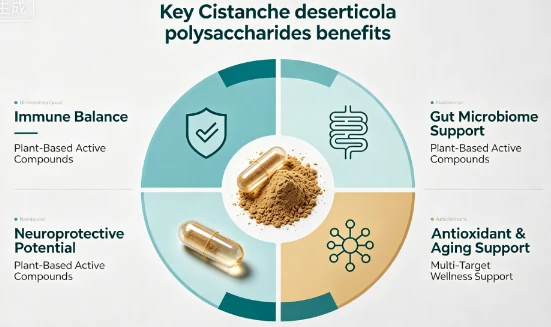
Cistanche deserticola Y. C. Ma is a time-honored homologous medicinal and edible Chinese herbal material abundant in polysaccharide bioactive ingredients. In recent years, Cistanche deserticola polysaccharides benefits have drawn extensive research attention owing to their diverse biological functions. Featuring intricate molecular structures and superior water solubility, Cistanche deserticola polysaccharides exert remarkable pharmacological effects including immune regulation, anti-aging, neuroprotection, intestinal flora balance modulation and liver protection. Their functional mechanisms rely on synergistic multi-target pathways such as anti-oxidation, anti-inflammation, signal cascade regulation and the gut-brain axis.
With the advancement of novel extraction and purification technologies including ultrasonic-enzymatic synergy, microwave-assisted extraction and ultrafiltration grading separation, the yield and structural integrity of Cistanche deserticola polysaccharides have been drastically upgraded, laying a solid foundation for systematic structure-activity relationship analysis. This paper comprehensively reviews the extraction & purification workflows, chemical structural characteristics, biological activity mechanisms of Cistanche deserticola polysaccharides, as well as their application prospects in pharmaceutical and functional food sectors. The review aims to deliver theoretical references and practical guidance for high-value industrial development and clinical transformation of Cistanche deserticola polysaccharides.
Keywords: Cistanche deserticola; polysaccharides; extraction and purification; structural characterization; biological activity; Cistanche deserticola polysaccharides benefits
1. Introduction
Cistanche deserticola Y. C. Ma, a perennial parasitic herb from the Orobanchaceae family, mainly parasitizes the root systems of Chenopodiaceae plants such as Haloxylon ammodendron and Haloxylon persicum growing in desert regions. Lacking independent photosynthetic capacity, the herb fully absorbs water and nutrients from its host, restricting its natural habitats to arid and semi-arid northwest China, including western Inner Mongolia, Xinjiang, Gansu, Ningxia, Qinghai and other desert and Gobi terrains [1].
Five species of the genus Cistanche are distributed across China. Among them, four varieties possess medicinal and edible development value: Cistanche deserticola Y. C. Ma, C. tubulosa (Schenk) R. Wight, C. salsa (C. A. Mey.) G. Beck and C. sinensis G. Beck. Table 1 summarizes the primary species, host plants and geographical distribution of Cistanche.
Recorded as a top-grade medicinal herb in Shennong's Classic of Materia Medica, the earliest Chinese herbal monograph, Cistanche deserticola boasts a thousands-year-long application history in traditional Chinese medicine (TCM). Ancient records document its therapeutic efficacy: "Treats five consumptions and seven injuries, tonifies the middle energizer, relieves cold and heat pain in the genital tract, nourishes five internal organs, strengthens kidney essence, boosts fertility, and eliminates abdominal masses in women" [2].
TCM theory defines Cistanche deserticola as warm, sweet and salty in nature, acting on the kidney and large intestine meridians. It warms kidney yang, nourishes essence and moisturizes intestines to relieve constipation. Clinically, it addresses impotence, infertility, cold lumbus and knee pain caused by kidney yang deficiency, as well as dry intestinal constipation triggered by essence and blood depletion. Known as "Ginseng of the Desert" for its mild tonifying property (warm without dryness, nourishing without excess), it occupies a core position among tonic herbal medicines.
According to the Catalogue of Substances Both Used as Food and Medicine per Traditional Usage released by China's National Health Commission in 2023, Cistanche deserticola is the sole Cistanche species officially categorized as medicinal-edible homologous raw material. This policy breakthrough not only inherits its traditional medicinal value but also unlocks huge market potential in functional foods, nutritional supplements and broader wellness industries, aligning with modern preventive healthcare concepts for chronic disease intervention.
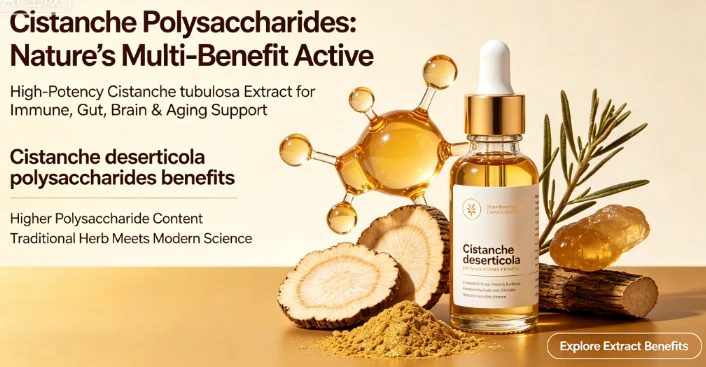
Modern phytochemical research confirms that Cistanche deserticola contains abundant bioactive compounds, primarily phenylethanoid glycosides, iridoids, lignans, polysaccharides, amino acids and flavonoids [3]. Phenylethanoid glycosides have long been the mainstream research focus due to their potent antioxidant and neuroprotective effects. Nevertheless, Cistanche deserticola polysaccharides, another high-content ingredient with diverse biological functions, have gained surging research momentum in recent decades. Massive in vitro and in vivo trials validate wide-ranging Cistanche deserticola polysaccharides benefits covering immune balance, anti-aging, neuroprotection and gut microbiota regulation.
This review systematically sorts out the extraction and purification techniques, structural features, biological activity mechanisms of Cistanche deserticola polysaccharides, analyzes core bottlenecks in current research, and puts forward scientific outlooks on its industrial development. It intends to provide clear theoretical basis and operational guidance for deep research and high-value comprehensive utilization of Cistanche deserticola polysaccharides.
Cistanche Extract Supplements With 75% Polysaccharides For Sale


Supportive Service of Wecistanche- For more details about cooperation
Email:wallence.suen@wecistanche.com
Factory Advantage Highlight for Global Buyers: Our factory specializes in premium Cistanche tubulosa extracts. Compared with ordinary desert cistanche raw materials, our tubulosa cistanche extract features significantly higher contents of polysaccharides and other active components via optimized industrial processing. You can learn more about our production capacity and quality control standards via our official site: https://www.xjcistanche.com/about-us. Our refined extraction crafts maximize the retention of intact Cistanche deserticola polysaccharides, amplifying all Cistanche deserticola polysaccharides benefits for finished functional food, dietary supplement and pharmaceutical product development targeting European and American consumers.
2. Extraction, Separation and Purification of Cistanche Deserticola Polysaccharides
Cistanche deserticola polysaccharides (CDP) are characterized by complex branched structures, broad molecular weight distribution and excellent water solubility. Different Cistanche varieties differ drastically in cellular tissue structure, polysaccharide content and hydrophilicity, leading to distinct extraction parameters and final yields. Extraction efficiency and natural structural integrity are entirely determined by separation and purification workflows, while molecular weight and monosaccharide composition directly dominate Cistanche deserticola polysaccharides benefits.
2.1 Extraction Technologies of CDP
Traditional extraction methods rely on solvent leaching, mainly hot water extraction and alkaline extraction [4]. Benefiting from innovations in natural product separation technology, modern auxiliary extraction approaches have been integrated into conventional workflows, including microwave-ultrasonic synergistic extraction [5], single ultrasonic-assisted extraction [6], microwave-assisted extraction [7] and compound enzymatic extraction [8]. Different extraction protocols deliver variable CDP yields and purity, with optimized crafts capable of preserving native molecular conformation and biological activity to the maximum extent.
Hot water extraction remains the most widely adopted industrial method. It breaks plant cell walls via high-temperature water to dissolve intracellular polysaccharides into aqueous solution, featuring simple operation, low equipment investment and mild reaction conditions. Sui et al. [9] adopted 90 °C water bath extraction for 4 hours and obtained CDP composed of glucose, galactose, rhamnose, arabinose and fructose with an average molecular weight of 385 kDa. Wu et al. [10] also utilized hot water reflux to isolate CDP mainly containing arabinose, galactose and glucose, with trace rhamnose and mannose, averaging 561 kDa molecular weight.
Alkaline extraction can recover CDP from cistanche biomass yet suffers from low recovery rate, high residual protein impurities and irreversible destruction of polysaccharide glycosidic linkages. CDP yield is highly sensitive to extraction temperature, duration and solid-liquid ratio. Aladan Mamatali et al. [11] optimized extraction parameters for C. tubulosa polysaccharides, identifying optimal conditions: 90 °C extraction temperature, solid-liquid ratio 1:50 (g/mL), 2-hour extraction duration, achieving a 5.76% polysaccharide extraction rate.
Though traditional hot water extraction preserves crude polysaccharide native chemical composition, it has obvious drawbacks: prolonged heating time causes polysaccharide browning, simultaneous dissolution of miscellaneous water-soluble substances reduces purity, and overall extraction efficiency is limited.
To address these limitations, researchers have developed composite auxiliary extraction technologies. Yang et al. [12] optimized enzyme compound ratio and ultrasonic parameters, boosting CDP yield by 1.33 times versus traditional hot water methods. Li Shenheng [13] compared multiple extraction crafts and confirmed ultrasonic-assisted extraction delivers the highest polysaccharide recovery rate and antioxidant activity of extracts. Emerging technologies including flash extraction and surfactant-aided extraction have also been applied for CDP preparation. Response surface methodology research on flash extraction indicated a maximum polysaccharide yield of 12.35% under conditions: solid-liquid ratio 1:53 g/mL, rotation speed 5,387 r/min, 1-minute extraction time.
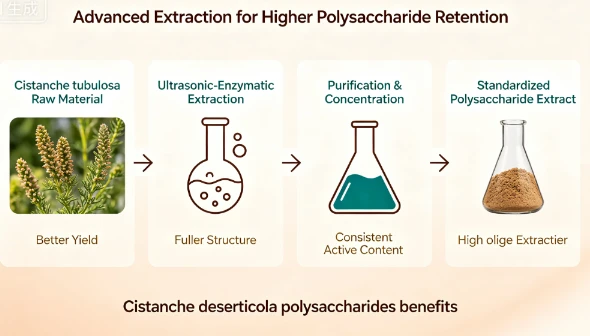
Our Factory Processing Superiority: Our production line adopts integrated ultrasonic-enzymatic synergistic continuous extraction for C. tubulosa. This green composite craft shortens extraction time, avoids long-term high-temperature degradation of polysaccharide chains, increases total CDP yield far above conventional hot water processing, and fully retains complete polysaccharide molecular structures to guarantee full-spectrum Cistanche deserticola polysaccharides benefits for downstream product formulation.
2.2 Separation and Purification of CDP
Crude polysaccharides acquired after primary extraction contain abundant impurities. Purification aims to remove pigments, proteins, lipids and small molecule heterologous substances to obtain homogeneous CDP fractions for subsequent structural identification and activity verification. Standard purification pipelines include degreasing, decolorization, deproteinization and alcohol precipitation, separating target polysaccharides based on molecular size, polarity and charge properties to acquire low-dispersity uniform polysaccharide components ideal for functional research [14].
DEAE cellulose ion exchange chromatography serves as the mainstream purification medium for CDP. It efficiently separates neutral/acidic polysaccharides, proteins and nucleic acids with stable adsorption performance, fast elution speed and outstanding resolution. Standard purification workflow: raw material degreasing, hot water reflux extraction, ethanol precipitation, Sevag method deproteinization, followed by DEAE-Sephadex A-50 ion exchange chromatography and Sephacryl S-200 gel filtration to obtain highly purified CDP, which is further characterized via infrared and ultraviolet spectroscopy [15].
Table 2 summarizes mainstream extraction & purification technologies, structural characterization tools, molecular weight ranges and monosaccharide profiles of CDP reported in recent studies. These structural diversities lay the material foundation for the versatile Cistanche deserticola polysaccharides benefits observed in pharmacological trials.
2.3 Structural Characteristics of CDP
CDP belongs to heterogeneous polysaccharides with highly diversified backbone structures, dominated by neutral arabinogalactan (AG) and acidic rhamnogalacturonan I (RG-I), plus minor fructan fragments. Most sugar units are α-pyranose linked via 1,4- and 1,6-glycosidic bonds, with molecular weight ranging from 10⁴ to 10⁶ Da and weight-average molecular weight (Mw) distributed between 300–600 kDa. Acidic CDP contains galacturonic acid (GalA) and glucuronic acid (GlcA), with uronic acid content reaching 8%–15%, bringing negative electrical charge and stronger immune-regulating Cistanche deserticola polysaccharides benefits.
Crucially, origin, harvest season and processing methods (wine steaming, direct steaming) significantly alter CDP molecular weight and monosaccharide composition [13], leading to inconsistent activity performance across raw material sources. The schematic molecular structure of typical CDP is shown in Figure 1.
3. Biological Activities and Functional Mechanisms of Cistanche Deserticola Polysaccharides
As core bioactive ingredients of Cistanche, CDP exhibits prominent pharmacological effects covering immune regulation, anti-oxidation & anti-aging, neuroprotection, intestinal flora modulation, hepatoprotection, anti-tumor and anti-osteoporosis. In vitro cellular assays and in vivo animal models consistently prove CDP features excellent biocompatibility and low systemic toxicity, exerting synergistic multi-target, multi-pathway regulatory effects-especially unique modulatory capacity via the gut-brain axis and gut-liver axis. Core research findings are organized in Table 3 and Figure 2.
3.1 Bidirectional Immune Modulation
Immune regulation is the most extensively studied of all Cistanche deserticola polysaccharides benefits. CDP delivers bidirectional immune balancing effects, restoring normal immune function under hyperactive or immunosuppressed conditions [49]. Mechanisms include promoting lymphocyte proliferation, activating innate immune cells, enhancing phagocytosis and cytokine secretion of RAW264.7 macrophages (illustrated in Figure 3) [50].
Lymphocyte proliferation is a marker of non-specific cellular immunity. Wu et al. [10] verified CDP stimulates mouse lymphocyte proliferation in a dose-dependent manner. Yao Jinqian et al. [24] demonstrated CDP balances T cell subsets, elevates IL-2 secretion to boost immunity and suppresses excessive IL-6 release to alleviate pulmonary inflammation. Zhang et al. [25] confirmed water-soluble CDP accelerates maturation and functional activation of mouse bone marrow dendritic cells through the TLR4 signaling pathway. Feng et al. [51] further illustrated CDP triggers dendritic cell activation via TLR2/TLR4-mediated MAPK and NF-κB cascades, amplifying humoral and cellular immune responses, validating CDP as a safe, natural plant-derived vaccine adjuvant [52].
CDP activates RAW264.7 macrophages to boost NO release, upregulate TNF-α and IL-6 expression, increase phosphorylation of IKKβ, IκBα and NF-κB p65, and strengthen cellular phagocytosis via NF-κB pathway activation [26]. Additional research reports CDP polarizes tumor-associated macrophages from pro-tumor M2 phenotype to anti-tumor M1 phenotype [27]. Zhang Tao et al. [28] also verified CDP enhances phagocytosis and cytokine release of THP-1 monocytes to mediate immune homeostasis.
3.2 Antioxidation and Anti-Aging Effects
Oxidative stress is the core driver of bodily senescence and degenerative disorders. Powerful antioxidant capacity endows CDP remarkable anti-aging Cistanche deserticola polysaccharides benefits [53,54]. Dual-action mechanisms include direct free radical scavenging and indirect modulation of antioxidant signaling pathways to delay cellular and organismal aging [55].
In vitro trials show CDP improves proliferative capacity of senescent fibroblasts, reduces positive senescence-associated β-galactosidase cells [32], and eliminates intracellular ROS through activating the NRF2/HO-1 antioxidant pathway [33]. In premature ovarian failure (POF) animal models established by Qiu et al. [36], CDP maintains stemness and facilitates differentiation of female germline stem cells via the BMP4/SMAD1/5/9 signaling cascade.
Mitochondria are the primary source of intracellular reactive oxygen species. In D-galactose induced aging rat models, Xu Hui et al. [37] found CDP elevates hepatic Ca²⁺-ATPase activity, improves liver mitochondrial membrane fluidity and respiratory chain complex activity, while lowering hepatic mitochondrial MDA concentration and PLA2 activity to mitigate oxidative mitochondrial damage.
Declined anti-fatigue performance is a typical aging symptom; serum urea, lactic acid, hepatic and muscle glycogen serve as key fatigue biomarkers [56,57]. Yan Lei et al. [38] proved CDP extends exercise endurance in aging mice, reduces serum urea and lactic acid accumulation, and elevates glycogen storage in liver and muscle tissue.
Concurrent degenerative lesions occur in respiratory tissues alongside systemic aging. Sun Yun et al. [34,40] reported CDP significantly increases SOD activity in serum and lung tissue, reduces nitric oxide levels, inhibits pulmonary cell apoptosis, elevates collagen content and decreases elastin deposition in aging mice, delivering protective and repairing effects on lung parenchyma. Fang et al. [58] also validated CDP activates antioxidant defense systems in Caenorhabditis elegans, improving locomotor function and slowing senescence progression.

3.3 Neuroprotective Activity
While phenylethanoid glycosides were long recognized as primary neuroactive components [59,60], emerging research highlights outstanding neuroprotective Cistanche deserticola polysaccharides benefits, especially in Alzheimer's disease (AD) and Parkinson's disease (PD) animal models. CDP protects neurons and ameliorates cognitive impairment through multi-target mechanisms: anti-oxidation, anti-apoptosis, gut microbiota remodeling and signal pathway regulation.
In vivo studies confirm CDP alleviates cognitive dysfunction in APP/PS1 transgenic AD mice and D-galactose aging mice, inhibits cerebral Aβ plaque deposition and abnormal Tau protein hyperphosphorylation, and reshapes gut microbiota and amino acid metabolic profiles [61,62]. CDP suppresses neuroinflammation and shields neurons by modulating TLR4 and NF-κB signaling axes [25,51].
Sun et al. [63] and Yin Gang et al. [64] reported CDP elevates AChE and ChAT activity in cerebral cortex and hippocampus of AD rats, shortens water maze escape latency and improves learning and memory capacity [41]. Xing Haiyan et al. [35] confirmed direct protective effects on senescent nerve cells via NRF2 antioxidant, anti-apoptosis and cAMP/PKA/CREB signal upregulation. Yin Ruoxi et al. [65] demonstrated CDP upregulates SYP and GAP-43 expression in scopolamine-induced memory impairment mice, restores synaptic quantity and plasticity to reverse cognitive deficits. CDP reduces neuronal apoptosis, increases anti-apoptotic Bcl-2 expression and enhances DNA damage repair in aging brain tissue [39].
Jiang et al. [66] reported CDP improves cerebral antioxidant capacity by raising SOD and GSH levels while lowering MDA content. For PD rat models, Yin Shuailing et al. [43] found CDP activates the Wnt/β-catenin pathway and inhibits GSK-3β activity to protect dopaminergic neurons. Additional neuroprotective effects include alleviating spinal cord injury via suppressing NLRP3 inflammasome activation [67] and promoting neurovascular regeneration and neurological recovery in MCAO/R stroke rats through the Nrf2/Keap-1 pathway [68].
3.4 Intestinal Microbiota Regulation
CDP optimizes intestinal microecological balance by remodeling flora composition, reinforcing intestinal mucosal barrier integrity and suppressing inflammatory response, alongside positive regulation of gut microbial metabolites [69]. Oral CDP strengthens intestinal tight junctions, enriches beneficial genera including Prevotellaceae UCG-001, Odoribacter, Clostridiales vadin BB60 group, Alistipes and Lactobacillaceae, while reducing pathogenic Parabacteroides and Proteobacteria abundance and stimulating short-chain fatty acid (SCFA) biosynthesis [70,71].
Lian et al. [72] compared raw and processed CDP, discovering both alleviate antibiotic-induced gut dysbiosis and boost in vivo absorption of echinacoside, with processed CDP showing superior flora-regulating potency to promote proliferation of beneficial microbes and nutrient uptake. CDP also protects colonic myenteric plexus mitochondrial function against oxidative damage [66].
Inflammatory bowel disease (IBD) is closely associated with gut flora imbalance. Qiao et al. [73] evaluated CDP therapeutic potential for IBD: CDP downregulates pro-inflammatory IL-6, IL-1β, TNF-α and MPO activity, elevates anti-inflammatory IL-10 in colon tissue, suppresses SRC/EGFR/PI3K/AKT signaling and reduces pathogenic microbial diversity and abundance. Ma Guangli et al. [74] further revealed CDP treats ulcerative colitis via inhibiting NLRP3/GSDMD pyroptosis pathways.
CDP prevents alcoholic fatty liver by modulating lipid metabolism, enriching SCFA-producing bacteria, activating AMPK signaling to accelerate fatty acid β-oxidation and restrict lipid synthesis [75]. Multiple studies confirm CDP reverses antibiotic-triggered gut dysbiosis [76]. Wang Xiaoqin et al. [77] verified CDP exerts broad-spectrum antibacterial activity against Escherichia coli, Tetracoccus, Bacillus subtilis, with stronger inhibitory effects on bacteria than fungi such as Saccharomyces cerevisiae and Penicillium citrinum.
3.5 Hepatoprotective Effects
CDP possesses potent liver-protective Cistanche deserticola polysaccharides benefits [78]. In CCl₄-induced acute liver injury mice, CDP reduces hepatic MDA levels, elevates antioxidant SOD activity, alleviates lipid peroxidation damage and preserves hepatocellular membrane integrity [48].
From a gut-liver axis perspective, Wang et al. [79] explored CDP's protective effects against alcoholic liver disease: CDP improves intestinal permeability, upregulates tight junction protein expression, lowers serum ALT/AST and hepatic pro-inflammatory cytokines, enhances liver antioxidant enzymes and activates Nrf2 antioxidant signaling by inhibiting Keap1 expression. 16S rDNA sequencing confirmed CDP restores balanced gut microbiota composition in alcohol-damaged mice. Guo et al. [78] also validated CDP reduces hepatic MDA and triglyceride levels and modulates metabolic enzyme activity to mitigate chronic alcohol-induced liver damage.
3.6 Anti-Tumor Activity
CDP delivers anti-tumor effects indirectly through immune system modulation and tumor cell signal pathway interference, rather than direct cytotoxicity against cancer cells. Trials demonstrate CDP elevates natural killer cell activity and IL-2 concentrations, suppressing tumor growth in Lewis lung carcinoma and S180 sarcoma mouse models [80].
Xing et al. [81] reported CDP inhibits proliferation, colony formation, migration and invasion of A549 non-small cell lung cancer cells and induces tumor cell apoptosis by regulating ERK signaling and downregulating LINC01410 mRNA expression [82]. Cui Yongsheng [83] clarified CDP mediates anti-tumor activity by reprogramming tumor-associated macrophage polarization, confirming its immunomodulatory anti-cancer mechanism without direct toxicity to healthy cells.
3.7 Other Biological Functions
Beyond the above core activities, CDP delivers multiple supplementary Cistanche deserticola polysaccharides benefits including anti-osteoporosis, anti-depression, anti-glycation, UV photodamage protection, anti-radiation and wound healing promotion.
Wang et al. [45] confirmed CDP prevents osteoporosis via activating the Wnt/β-catenin pathway. Gu et al. [44] illustrated CDP alleviates postmenopausal osteoporosis inflammation by regulating the gut microbiota-SCFA-Th17/Treg axis. Song et al. [84] found CDP suppresses osteoclast formation and bone resorption through inhibiting RANKL signaling and ROS generation.
Multi-omics research by Liu et al. [85] uncovered CDP anti-depression effects mediated by gut homeostasis and microbiome-metabolite interactions. Liu Yuanyuan et al. [86] validated CDP protects HaCaT keratinocytes and mouse skin against acute UVB photodamage. Gao Hui et al. [87] reported appropriate CDP concentrations stimulate human fibroblast proliferation to accelerate wound tissue repair. Additional research proves CDP relieves menopausal symptoms by regulating hypothalamic-pituitary-ovarian axis function, correcting neurotransmitter imbalance, stabilizing endocrine secretion and boosting systemic metabolism [88].
4. Industrial Application and Product Development Prospects
Driven by the official inclusion of Cistanche deserticola into the medicinal-edible homologous catalogue in 2023, CDP has unlocked enormous commercial potential across pharmaceutical formulations, functional dietary supplements and wellness raw material markets, with full-spectrum Cistanche deserticola polysaccharides benefits catering to European and American consumers' demand for natural plant-based health products.
4.1 Pharmaceutical Industry Applications
CDP's bidirectional immune balancing capacity positions it as a novel natural immunostimulant and plant-derived vaccine adjuvant. Abundant data confirm CDP activates TLR4/MAPK/NF-κB cascades to accelerate dendritic cell maturation, enhance macrophage phagocytosis and cytokine secretion, amplifying both humoral and cellular immune responses. Its low toxicity and excellent biocompatibility further support adjuvant development.
Recently, CDP-functionalized nano-carriers have been developed as oral vaccine delivery platforms, simultaneously triggering systemic and mucosal immune responses and innovating novel oral vaccine design solutions [31,89,90].
For neurodegenerative disease intervention, CDP's multi-target neuroprotective Cistanche deserticola polysaccharides benefits stand out for AD and PD auxiliary treatment. Beyond direct antioxidant and anti-apoptotic effects, CDP remodels gut microbiota and metabolite profiles via the gut-brain axis to suppress neuroinflammation and Aβ aggregation. Such synergistic multi-organ regulatory mechanisms make CDP a promising candidate adjuvant therapeutic agent to slow cognitive decline and neurodegenerative disease progression.

4.2 Functional Food & Dietary Supplement Market
CDP's gut-regulating, antioxidant and anti-fatigue properties create broad opportunities in functional food development, perfectly matching Western consumers' preference for clean-label, plant-based prebiotic supplements. Oral CDP enriches beneficial intestinal microbes (Lactobacillaceae, Prevotellaceae, Alistipes), inhibits opportunistic pathogens from Proteobacteria, strengthens intestinal barrier integrity and stimulates SCFA generation, qualifying CDP as a premium natural prebiotic raw material for gut health supplements, constipation relief formulas and mild IBD supportive products.
Meanwhile, CDP represents a breakthrough ingredient for anti-aging and anti-fatigue functional foods. Animal trials verify CDP improves exercise endurance, reduces serum lactic acid and urea buildup, elevates muscle and hepatic glycogen reserves, and activates NRF2/HO-1 antioxidant pathways to mitigate systemic oxidative aging-ideal for formulating anti-aging, energy-boosting dietary supplements targeting middle-aged and elderly European and American consumers.
4.3 Current Industrial Challenges & Future Development Outlook
Despite substantial progress in CDP extraction, structural characterization and pharmacological verification, multiple bottlenecks restrict large-scale standardized commercialization:
Structural Heterogeneity Barriers: CDP molecular structure varies drastically based on raw material species, growing origin, processing and extraction crafts, leading to inconsistent activity potency across batches. Uniform structure-activity correlation models remain absent, hindering standardized raw material production for food and pharmaceutical manufacturing. Our factory's advantage: we exclusively use high-polysaccharide C. tubulosa raw materials and implement fixed standardized ultrasonic-enzymatic extraction pipelines to stabilize CDP content and molecular structure, ensuring consistent Cistanche deserticola polysaccharides benefits in finished products.
Insufficient Clinical Evidence: Most activity research relies on in vitro cell and rodent animal models; large-scale human clinical trials are scarce. CDP's in vivo metabolic pathways, gut flora interaction mechanisms, specific metabolite targets and cross-organ regulation via gut-brain/gut-liver axes require deeper multi-omics investigation.
Scale-Up Production Limitations: Traditional extraction crafts consume high energy with low recovery; modern composite auxiliary technologies yield high-purity CDP yet face elevated production costs and unstable continuous processing for mass manufacturing. Our factory's optimized integrated continuous extraction line reduces unit production costs while maximizing polysaccharide retention, solving the cost-yield trade-off for bulk industrial supply.
Incomplete Quality Control Standards: Lack of rapid, specific qualitative and quantitative detection methodologies for CDP impedes uniform batch quality supervision across the industry.
Future Research & Industrial Directions
High-precision structural profiling: Integrate NMR, high-resolution mass spectrometry and molecular simulation to systematically analyze structural differences of CDP from various sources, establish definitive structure-activity relationships to guide screening of high-potency CDP fractions.
Green, low-cost industrial extraction innovation: Develop novel compound enzyme preparations and optimized continuous ultrasonic-microwave synergistic extraction workflows to lower production expenses while improving CDP purity and structural integrity.
Multi-omics systematic mechanism research: Combine gut microbiome metabolomics, transcriptomics and immunomics to decode CDP in vivo metabolic routes, molecular targets and multi-organ regulatory networks, clarifying gut-brain and gut-liver axis regulatory mechanisms.
Synergistic compound formula development: Explore synergistic activity between CDP and other cistanche bioactive components (phenylethanoid glycosides) to develop multi-ingredient high-efficiency wellness raw materials.
5. Conclusion
The classification of Cistanche deserticola as a medicinal-edible homologous herb in 2023 unlocks massive industrial prospects for CDP, whose versatile Cistanche deserticola polysaccharides benefits cover anti-aging, neuroprotection, gut health and immune modulation. CDP is poised to become a flagship natural functional raw material driving innovation across pharmaceuticals, functional food and broader wellness industries.
Overall, research and commercialization of CDP face both challenges and unprecedented opportunities. With continuous advances in separation technology, molecular pharmacology and industrial processing, Cistanche deserticola polysaccharides will occupy an increasingly critical position in global pharmaceutical, nutritional food and skincare wellness product development.

Factory Supplementary Marketing Note for Western Buyers
Our manufacturing facility focuses on high-quality Cistanche tubulosa extracts. Compared with conventional desert cistanche raw materials, tubulosa cistanche accumulates higher concentrations of polysaccharides and other core active ingredients naturally. Coupled with our proprietary ultrasonic-enzymatic integrated extraction workflow, our finished extract delivers maximized CDP content and intact polysaccharide molecular chains, fully unlocking all Cistanche deserticola polysaccharides benefits for your finished supplement, food additive and pharmaceutical formulations. Visit our official page to check our production scale, quality testing system and bulk supply capacity: . We provide standardized, stable high-polysaccharide cistanche extract raw materials customized for European and American market regulatory requirements.
CLICK PITURE TO VISIT OUR FACTORY AND LEARN MORE ABOUT ORGIN OF CISTANCHE

References
[1] Tu P F, Jiang Y. Textual Research on Materia Medica of Traditional Chinese Medicine Cistanche deserticola[J]. Chinese Journal of Natural Medicines, 2022, 47(20): 5670-5679. [2] Bi L C, Zhong P S, Tian Y M, et al. Pharmacological Effects and Quality Influencing Factors of Active Ingredients in Homologous Medicinal and Edible Cistanche deserticola[J]. Food Science, 2026(2): 307-321. [3] Ding Y, Zhang K M, Cang X X, et al. Research Progress on Chemical Constituents and Biological Activities of Genus Cistanche[J]. Journal of Dalian Polytechnic University, 2016, 35(6): 395-402. [4] Zhao Y. Comprehensive Quality Evaluation of Cistanche, Extraction, Purification and Structural Identification of Its Polysaccharides[D]. Tarim University, 2022. [5] Liu Y, Xiu X Y, Wang W Y. Optimization of Phenylethanoid Glycosides Extraction from Cistanche by Response Surface Methodology and Its Antioxidant Activity[J]. Journal of Anhui Agricultural University, 2015, 42(2): 294-298. [6] Li Q Q, Chen G Y. Research Progress on Separation, Extraction and Content Determination of Lilii Radix Polysaccharides[J]. Agricultural Science and Technology Information, 2022(15): 104-106. [7] Huo D, Zhang J N, Ma W, et al. Optimization of Polysaccharide Extraction from Inner Mongolia Cistanche by Response Surface Method[J]. World Journal of Traditional Chinese Medicine, 2023, 18(12): 1667-1671. [8] Gao J D, Liu X, Zhu X Y, et al. Process Optimization and Kinetic Analysis of Compound Enzymatic Extraction of Cistanche Polysaccharides[J]. Journal of Gansu University of Chinese Medicine, 2017, 34(5): 26-30. [9] Sui Z, Gu T, Liu B, et al. Water-soluble carbohydrate compound from the bodies of Herba Cistanches: isolation and its scavenging effect on free radical in skin[J]. Carbohydrate Polymers, 2011, 85(1): 75-79. [10] Wu X M, Gao X M, Tsim K W K, et al. An arabinogalactan isolated from the stems of Cistanche deserticola induces the proliferation of cultured lymphocytes[J]. International Journal of Biological Macromolecules, 2005, 37(5): 278-282. [11] Aladan Mamatali, Yang T, Yuan J, et al. Polysaccharide Extraction Process and In Vitro Antioxidant Activity from Cistanche tubulosa Herb Residue[J]. Chemical & Bioengineering, 2020, 37(2): 36-41. [12] Yang M, Li X, Li F, et al. Ultrasound-assisted enzymatic extraction optimization of Cistanche deserticola polysaccharides, and combined analysis of the relationship between polysaccharide structure and activity by liquid chromatography and GC-MS[J]. Journal of Chromatography A, 2025, 1761: 466331. [13] Li S H. Study on Polysaccharide Substances and Antioxidant Activity Extracted by Different Processes from Cistanche[J]. China Condiment, 2025, 50(7): 218-222. [14] Tang X S, Fang R Z, Wu H M, et al. Research Progress on Extraction, Purification Technology and Structural Characterization of Bletilla striata Polysaccharides[J]. Chemical Reagents, 2024, 46(9): 41-52. [15] Zeng Q L, Huo Y N, Mao J H. Isolation, Purification and Identification of Cistanche deserticola Polysaccharides[J]. Chinese Herbal Medicines, 2002(12): 4-6. [16] Zhao W, Yan H, Liang Z Y, et al. Structural Analysis of Water-Soluble Polysaccharide SPA from Cistanche deserticola Stems[J]. Chemical Journal of Chinese Universities, 2005(3): 461-463. [17] Wu X M, Tu P F. Chemical Structure of CDP-4 Polysaccharide from Cistanche deserticola[J]. Journal of Peking University (Health Sciences), 2004(1): 24-26. [18] Dong Q, Yao J, Fang J, et al. Structural characterization and immunological activity of two cold-water extractable polysaccharides from Cistanche deserticola Y. C. Ma[J]. Carbohydrate Research, 2007, 342(10): 1343-1349. [19] Zhang W, Huang J, Wang W, et al. Extraction, purification, characterization and antioxidant activities of polysaccharides from Cistanche tubulosa[J]. International Journal of Biological Macromolecules, 2016, 93: 448-458. [20] Yang W, Yu H Y, Wang D, et al. Optimization of Polysaccharide Extraction Process and Average Molecular Weight Distribution of Cistanche Medicinal Materials[J]. Acta Pharmaceutica Sinica, 2021, 56(11): 3112-3117. [21] Zhang X F, Deng M M, Luo G H. Flash Extraction Process and Anti-Glycation Activity of Cistanche Polysaccharides[J]. Journal of Gansu Agricultural University, 2019, 54(2): 193-198. [22] Gao J D, Liu X, Zhu X Y. Process Optimization and Kinetic Analysis of Compound Enzymatic Extraction of Cistanche Polysaccharides[J]. Journal of Gansu University of Chinese Medicine, 2017, 34(5): 26-30. [23] Tao J, Zhong X, Lin H, et al. The potential, challenges, and prospects of polysaccharides from the genus Cistanche as therapeutic agents for aging-related diseases: a review[J]. International Journal of Biological Macromolecules, 2025, 312: 144144. [24] Yao J Q, Wang X M, Ju J, et al. Interventional Effect of Cistanche Polysaccharides on Pulmonary Immune Function in Tracheotomy Intubation Rats[J]. Lishizhen Medicine and Materia Medica Research, 2019, 30(2): 275-277. [25] Zhang A, Yang X, Li Q, et al. Immunostimulatory activity of water-extractable polysaccharides from Cistanche deserticola as a plant adjuvant in vitro and in vivo[J]. PLoS One, 2018, 13(1): e0191356. [26] Wang L C, Liu D, Jiang Y, et al. Target Group Identification and Mechanism Analysis of Macrophage Activation by Low-Molecular-Weight Cistanche Polysaccharides Based on Molecular Affinity Chromatography[J]. Chinese Journal of Natural Medicines, 2017, 42(19): 3666-3671. [27] Jiang S, Cui Y, Wang B, et al. Acidic polysaccharides from Cistanche deserticola and their effects on the polarization of tumor-associated macrophages[J]. International Journal of Biological Macromolecules, 2024, 282: 137207. [28] Zhang T, Xu W S, Jia Y B. The effects and mechanism of Cistanche deserticola polysaccharide on the THP-1 Cell's Phagocytosis[J]. Life Science Research, 2013, 17(2): 148-150. [29] Zeng Q L, Zheng Y F, Lü Z L. Immunological Activity and Mechanism of Cistanche Polysaccharides[J]. Journal of Zhejiang University (Medical Sciences), 2002(4): 60-63. [30] Wang X Y, Qi Y, Cai R L. Macrophage Activation Effect of Cistanche Polysaccharides[J]. Chinese Pharmacological Bulletin, 2009, 25(6): 787-790. [31] He J, Lu X, Mao N, et al. Cistanche deserticola polysaccharide-functionalized dendritic fibrous nano-silica-based adjuvant for H9N2 oral vaccine enhance systemic and mucosal immunity in chickens[J]. International Journal of Pharmaceutics, 2024, 660: 124318. [32] Takaya K, Asou T, Kishi K. Cistanche deserticola polysaccharide reduces inflammation and aging phenotypes in the dermal fibroblasts through the activation of the NRF2/HO-1 pathway[J]. Int J Mol Sci, 2023, 24(21): 15704. [33] Hu Y, Huang J, Li Y, et al. Cistanche deserticola polysaccharide induces melanogenesis in melanocytes and reduces oxidative stress via activating NRF2/HO-1 pathway[J]. J Cell Mol Med, 2020, 24(7): 4023-4035. [34] Sun Y, Wang D J, Zhu J. Effects of Cistanche Polysaccharides on Pulmonary Protein Content and Antioxidant Function in Aging Mice[J]. Chinese Pharmacological Bulletin, 2001(1): 101-103. [35] Xing H Y, Zhao L L, Wang S N, et al. In Vivo and In Vitro Effects of Cistanche Polysaccharides on Learning and Memory During Aging[J]. Chinese Journal of Pharmacology and Toxicology, 2019, 33(6): 453. [36] Qiu Y, Li J, Zhang Y, et al. Cistanche deserticola polysaccharides enhance female germline stem cell differentiation through BMP/SMAD signaling to mitigate premature ovarian failure[J]. International Journal of Biological Macromolecules, 2025, 304: 140848. [37] Xu H, Wei X D, Zhang P X. Protective Effect of Cistanche Polysaccharides on Liver Mitochondria in Aging Rats[J]. Chinese Journal of Gerontology, 2008(9): 866-867. [38] Yan L, Hu J P, Sun X D. Anti-Fatigue Effect and Mechanism of Cistanche Polysaccharides on D-Galactose-Induced Aging Mice[J]. Hebei Journal of Traditional Chinese Medicine, 2019, 41(1): 96-100. [39] Cai K R, Liu Z X, Sun X D. Protective Effect and Mechanism of Cistanche Polysaccharides on Brain Nerve Cells in D-Galactose Aging Mice[J]. Chinese Journal of Gerontology, 2018, 38(19): 4732-4734. [40] Sun Y, Xu F, Yang X X. Effects of Cistanche Polysaccharides on Pulmonary Nitric Oxide and Cell Apoptosis in Aging Mice[J]. Chinese Pharmacological Bulletin, 2003(6): 683-686. [41] Yin G, Gong D K, Liu B H, et al. Effects of Cistanche Polysaccharides on Learning and Memory and Cerebral Cholinergic System in Alzheimer's Disease Rats[J]. Neural Injury and Functional Reconstruction, 2014, 9(5): 426-427. [42] Wu Y, Liu D D, Ma Z X. Regulatory Effect of Cistanche Polysaccharides on BDNF Gene Epigenetics in Aβ25-35-Induced PC12 Cell Injury[J]. Chinese New Drugs Journal, 2018, 27(12): 1393-1400. [43] Yin S L, Wang H B, Yang S. Neuroprotective Effect of Cistanche Polysaccharides on 6-HODA-Induced Parkinson's Disease Rats by Activating Wnt/β-catenin Signaling Pathway[J]. Journal of Integrative Cardiovascular and Cerebrovascular Diseases, 2020, 18(8): 1227-1230. [44] Gu J, Zheng Y, Yang H, et al. Cistanche deserticola polysaccharide regulated the gut microbiota-SCFAs-Th17/Treg cell axis and ameliorated the inflammation of postmenopausal osteoporosis[J]. Journal of Functional Foods, 2023, 109: 105811. [45] Wang F, Tu P, Zeng K, et al. Total glycosides and polysaccharides of Cistanche deserticola prevent osteoporosis by activating Wnt/β-catenin signaling pathway in SAMP6 mice[J]. Journal of Ethnopharmacology, 2021, 271: 113899. [46] Liu X, Jian C, Li M, et al. Microbiome-metabolomics deciphers the effects of Cistanche deserticola polysaccharides on aged constipated rats[J]. Food Funct, 2022, 13(7): 3993-4008. [47] Liu Y Z, Jia X M, Guo H Z. Effects of Cistanche Polysaccharides on Irritable Bowel Syndrome with Constipation in Rats[J]. China Pharmacy, 2023, 34(18): 2208-2212. [48] Wang Y F, Zhao J J, Li M H. Protective Effect of Cistanche Polysaccharides on CCl4-Induced Acute Liver Injury in Mice[J]. Journal of Baotou Medical College, 2014, 30(6): 3-5. [49] Wang W, Liu C, Zhao Y, et al. Preparation, physicochemical properties of Cistanche deserticola polysaccharides and their bidirectional immunomodulatory activity analysis using Caco-2 cell models[J]. Food Research International, 2025, 221: 117343. [50] Zheng Q, Zheng Y, Lu Z. Immunomodulatory effects of polysaccharide of Cistanche deserticola Y C Ma[J]. Journal of Zhejiang University (Medical Sciences), 2002, 31(4): 284-287. [51] Feng S, Yang X, Weng X, et al. Aqueous extracts from cultivated Cistanche deserticola Y.C. Ma as polysaccharide adjuvant promote immune responses via facilitating dendritic cell activation[J]. Journal of Ethnopharmacology, 2021, 277: 114256. [52] Li Q, Ba X, Cao H, et al. Crude polysaccharides from Cistanche deserticola Y.C. Ma as an immunoregulator and an adjuvant for foot-and-mouth disease vaccine[J]. Journal of Functional Foods, 2021, 87: 104800. [53] Xiao L X, Su Y. Component Analysis and Antioxidant Activity Research of Polysaccharides in Cistanche deserticola[J]. China Condiment, 2023, 48(5): 71-74. [54] Tao J, Zhong X, Lin H, et al. The potential, challenges, and prospects of polysaccharides from the genus Cistanche as therapeutic agents for aging-related diseases: a review[J]. International Journal of Biological Macromolecules, 2025, 312: 144144. [55] Cheng N, Wang H, Hao H, et al. Research progress on polysaccharide components of Cistanche deserticola as potential pharmaceutical agents[J]. European Journal of Medicinal Chemistry, 2023, 245: 114892. [56] Sun C, Fan S, Wang X, et al. Purple sweet potato color inhibits endothelial premature senescence by blocking the NLRP3 inflammasome[J]. The Journal of Nutritional Biochemistry, 2015, 26(10): 1029-1040. [57] Anand T, Phani kumar G, Pandareesh M D, et al. Effect of bacoside extract from Bacopa monniera on physical fatigue induced by forced swimming[J]. Phytother Res, 2012, 26(4): 587-593. [58] Fang Z, Liu N, Fan Z, et al. Cistanche deserticola polysaccharides-Companilactobacillus crustorum LBK 1001 complex relieves aging in Caenorhabditis elegans[J]. Food Bioscience, 2025, 68: 106486. [59] Liu J, Wang Y, Li Q, et al. Phenylethanoid glycosides derived from Cistanche deserticola promote neurological functions and the proliferation of neural stem cells for improving ischemic stroke[J]. Biomedicine & Pharmacotherapy, 2023, 167: 115507. [60] Wang M, Xing S, Liu Y, et al. 2-Acetylacteoside improves recovery after ischemic stroke by promoting neurogenesis via the PI3K/Akt pathway[J]. Free Radical Biology and Medicine, 2024, 225: 415-429. [61] Gao Y, Zhang C, Liang Y, et al. Cistanche deserticola polysaccharides mitigate Alzheimer's disease progression by dynamic regulation of gut microbiota composition and metabolites[J]. Am J Chin Med, 2025, 53(6): 1785-1812. [62] Gao Y, Li B, Liu H, et al. Cistanche deserticola polysaccharides alleviate cognitive decline in aging model mice by restoring the gut microbiota-brain axis[J]. Aging (Albany NY), 2021, 13(11): 15320-15335. [63] Sun Y, Deng Y, Wang D, et al. Effect of Cistanche desertica polysaccharides on learning and memory functions and infrastructure of cerebral neurons in experimental aging mice[J]. Chinese Journal of Integrated Traditional and Western Medicine, 2001, 7(4): 288-292. [64] Yin G, Gong D K, Liu B H, et al. Effects of Cistanche Polysaccharides on Learning and Memory Ability and Expression of Bcl-2 and Caspase-3 in Hippocampal Neurons of Alzheimer's Disease Model Rats[J]. Lishizhen Medicine and Materia Medica Research, 2013, 24(5): 1091-1092. [65] Yin R X, Li G, Yu T F. Protective Effect of Cistanche Polysaccharides on Synaptic Plasticity in Scopolamine-Induced Learning and Memory Impairment Mice[J]. Chinese Pharmacological Bulletin, 2014, 30(6): 801-807. [66] Jiang H, Ma R, Ji F, et al. Structure characterization of polysaccharides from Cistanche deserticola and their neuroprotective effects against oxidative stress in slow transit constipation mice[J]. International Journal of Biological Macromolecules, 2024, 260: 129527. [67] Zhang C, Shen J, Lian H, et al. Cistanche deserticola polysaccharide alleviates spinal cord injury in mice by inhibiting NLRP3 inflammasome activation[J]. Nutr Res Pract, 2025, 19(4): 525-536. [68] Wang F, Li R, Tu P, et al. Total glycosides of Cistanche deserticola promote neurological function recovery by inducing neurovascular regeneration via Nrf-2/Keap-1 pathway in MCAO/R rats[J]. Front Pharmacol, 2020, 11: 236. [69] Zeng H, Huang L, Zhou L, et al. A galactoglucan isolated from of Cistanche deserticola Y. C. Ma. and its bioactivity on intestinal bacteria strains[J]. Carbohydrate Polymers, 2019, 223: 115038. [70] Yu Z, Zhang Z, Hu C, et al. Cistanche deserticola polysaccharide alleviates constipation by regulating intestinal barrier function and intestinal microbiota and their metabolites[J]. Am J Transl Res, 2024, 16(11): 7036-7053. [71] Fu Z, Han L, Zhang P, et al. Cistanche polysaccharides enhance echinacoside absorption in vivo and affect the gut microbiota[J]. International Journal of Biological Macromolecules, 2020, 149: 732-740. [72] Lian J, Zhang Y, Dong K, et al. Enhanced oral bioavailability of two Cistanche polysaccharides in acteoside: an in-depth analysis of intestinal flora, short-chain fatty acids, and pharmacokinetic regulation[J]. Front Nutr, 2025, 12: 1509734. [73] Qiao M, Xue T, Zhu Y, et al. Polysaccharides from Cistanche deserticola mitigate inflammatory bowel disease via modulating intestinal microbiota and SRC/EGFR/PI3K/AKT signaling pathways[J]. International Journal of Biological Macromolecules, 2025, 308: 142452. [74] Ma G L, Li Q. Cistanche Polysaccharides Treat Ulcerative Colitis in Mice by Regulating Pyroptosis via NLRP3/GSDMD Signaling Pathway[J]. Science and Technology of Food Industry, 2025, 46(16): 427-438. [75] Wang K, Wang H, Sun Q, et al. Polysaccharides from Cistanche deserticola Ma prevent alcoholic fatty liver disease by regulating hepatic lipid metabolism and gut microbiota in mice[J]. International Immunopharmacology, 2025, 156: 114707. [76] Han T, Yang D, Zhou S, et al. Regulative effect of active components of Cistanche deserticola on intestinal dysbacteriosis induced by antibiotics in mice[J]. Zhongguo Ying Yong Sheng Li Xue Za Zhi, 2022, 38(6): 766-770. [77] Wang X Q, Cao L, Zhu Y. Study on Extraction Technology and Bacteriostatic Effect of Cistanche Polysaccharides[J]. Journal of Anhui Agricultural Sciences, 2009, 37(32): 15855-15856. [78] Guo Y, Cao L, Zhao Q, et al. Preliminary characterizations, antioxidant and hepatoprotective activity of polysaccharide from Cistanche deserticola[J]. International Journal of Biological Macromolecules, 2016, 93: 678-685. [79] Wang H, Yan J, Wang K, et al. The gut-liver axis perspective: Exploring the protective potential of polysaccharides from Cistanche deserticola against alcoholic liver disease[J]. International Journal of Biological Macromolecules, 2024, 256: 128394. [80] Zhang H Q, Xu A H, Li D D. Pharmacological Effects of Cistanche Polysaccharides on Tumor and Tumor-Bearing Mice[J]. Chinese Journal of Integrated Traditional and Western Medicine, 1997(S1): 155-156. [81] Xing L, Zhang C, Yuan J, et al. Progress of ERK pathway-modulated natural products for anti-non-small-cell lung cancer activity[J]. Pharmaceuticals (Basel), 2025, 18(9): 1371. [82] Fan L L, Meng Y, Zhao R Y, et al. Effects of Cistanche Polysaccharides on Biological Behaviors of Lung Cancer A549 Cells