Defending The Aging Brain: Cistanche Tubulosa As A Comprehensive Neuroprotective Agent
Jul 22, 2026
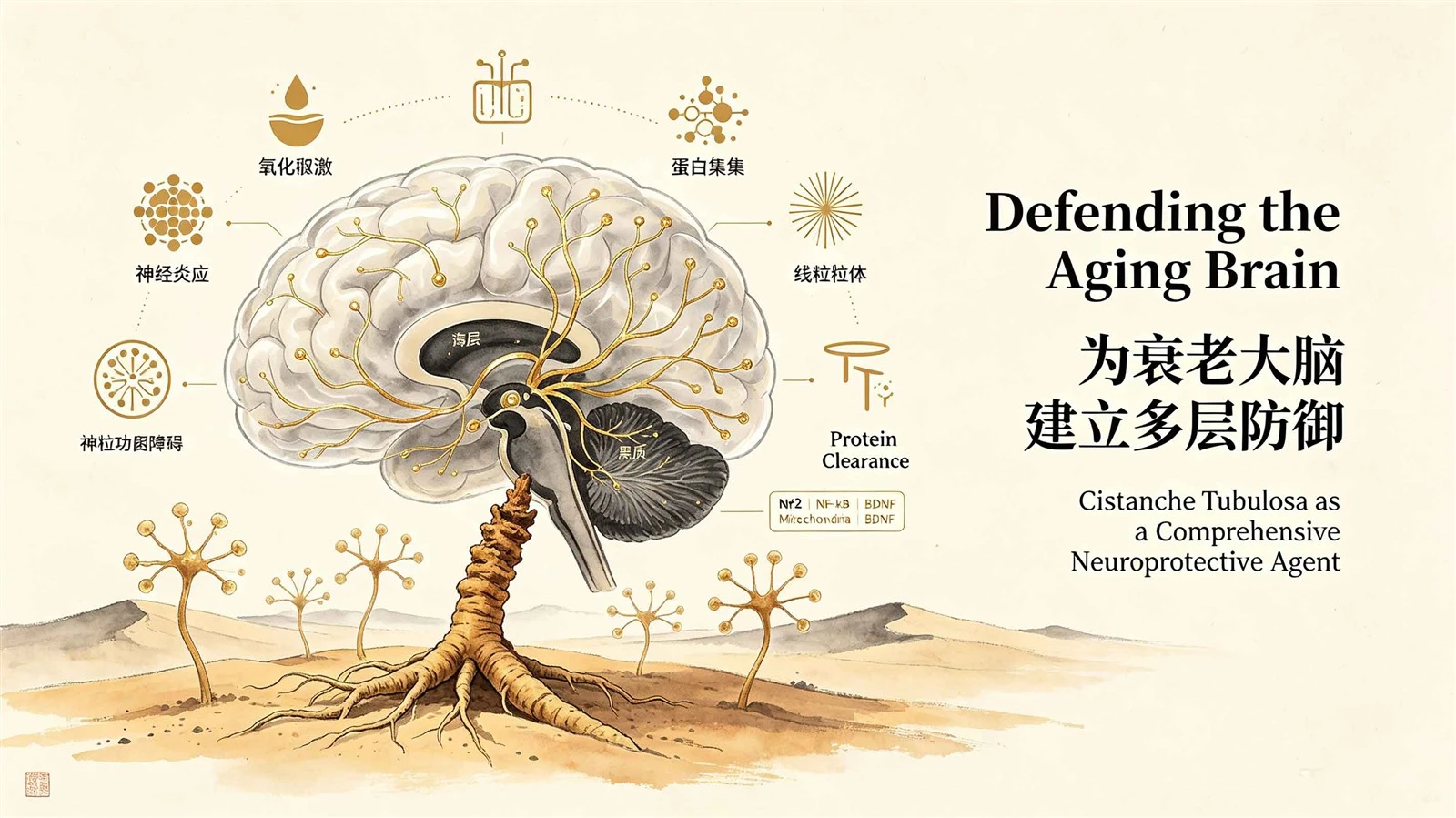
The human brain contains approximately 86 billion neurons, each forming thousands of connections, creating a network of staggering complexity. This network is not built to last forever. From midlife onward, neurons begin to die at an accelerating rate-a process that, in some, remains within the bounds of "normal cognitive aging," and in others, spirals into the devastation of Alzheimer's disease, Parkinson's disease, or other neurodegenerative disorders. The difference between these trajectories is determined by the brain's ability to defend itself against oxidative stress, inflammation, protein aggregation, and mitochondrial failure. Neuroprotection is the strategy of supporting these defense systems. And Cistanche tubulosa, through its active ingredients echinacoside and acteoside, is emerging as one of the most comprehensively neuroprotective botanicals identified to date.

What Is Neuroprotection?
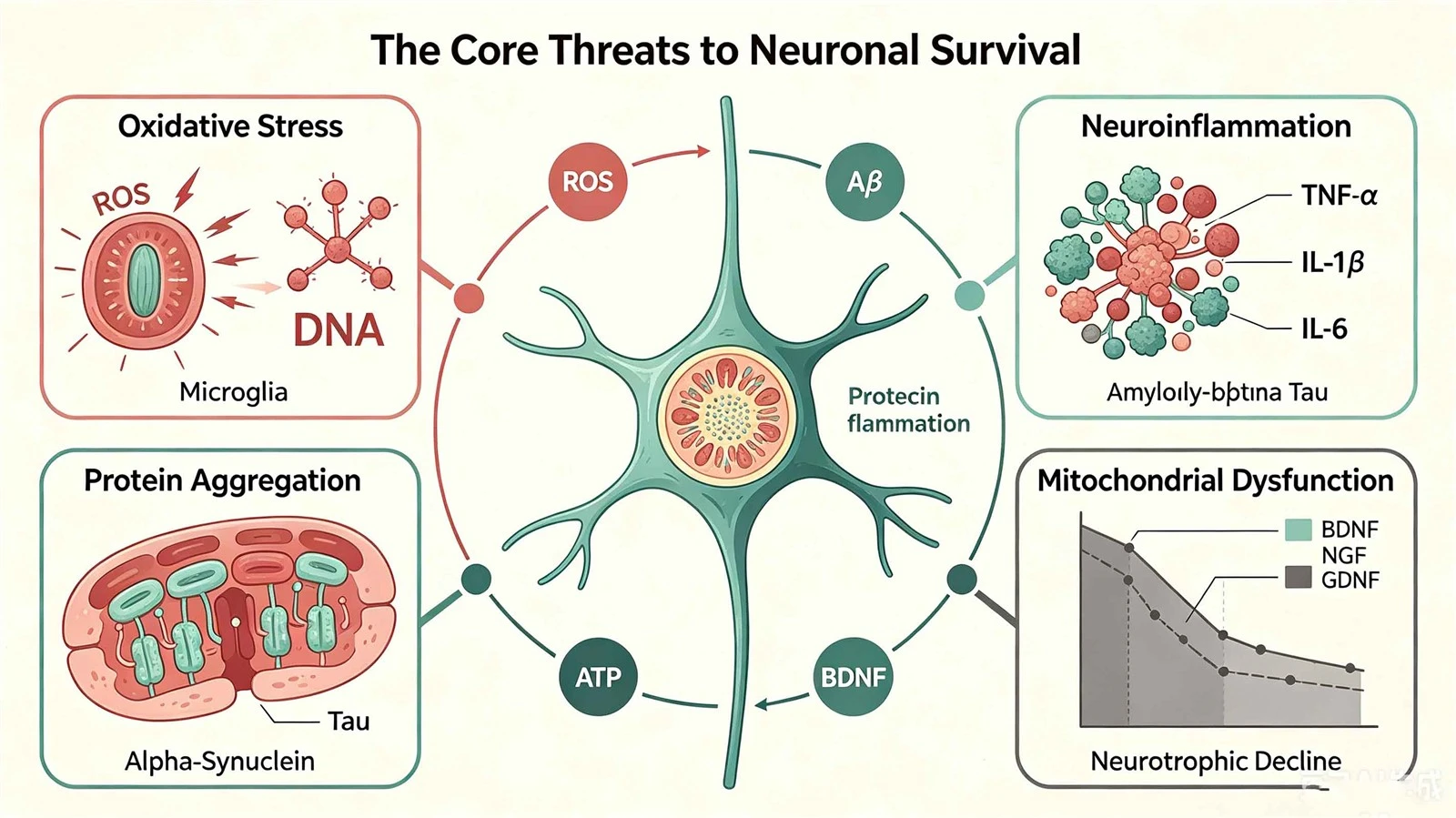
Neuroprotection refers to strategies that protect neurons from damage, degeneration, and death. Unlike symptomatic treatments-which address the consequences of neuronal loss (like replacing dopamine in Parkinson's or boosting acetylcholine in Alzheimer's)-neuroprotective interventions aim to keep neurons alive and functional in the first place. Effective neuroprotection typically requires addressing multiple pathological processes simultaneously, because neurodegenerative diseases are rarely driven by a single mechanism. The core threats to neuronal survival include:
Oxidative stress: Neurons have extraordinarily high metabolic rates, consuming 20% of the body's oxygen despite representing only 2% of body weight. This metabolic activity generates abundant reactive oxygen species (ROS). When antioxidant defenses falter with age, ROS damage neuronal membranes, mitochondrial DNA, and synaptic proteins-eroding the very structures that support cognition.
Neuroinflammation: Microglia, the brain's immune cells, become chronically activated with age and in response to protein aggregates. They release pro-inflammatory cytokines (TNF-α, IL-1β, IL-6) and reactive oxygen species that damage surrounding neurons. This neuroinflammatory state is now recognized as a driver of Alzheimer's disease, Parkinson's disease, and age-related cognitive decline.
Protein aggregation: Misfolded proteins accumulate in the aging brain. In Alzheimer's, amyloid-beta forms extracellular plaques and tau forms intracellular tangles. In Parkinson's, alpha-synuclein aggregates into Lewy bodies. These protein aggregates are directly toxic to neurons and trigger both oxidative stress and inflammation.
Mitochondrial dysfunction: Mitochondria are the energy factories of neurons. When they fail-due to oxidative damage, genetic mutations, or aging-ATP production drops, calcium handling becomes dysregulated, and neurons lose the energy required to maintain their extensive axonal and dendritic networks.
Neurotrophic factor decline: Brain-derived neurotrophic factor (BDNF), nerve growth factor (NGF), and glial cell-derived neurotrophic factor (GDNF) are proteins that support neuronal survival, synaptic plasticity, and repair. Their levels decline with age, leaving neurons vulnerable.
A comprehensive neuroprotective agent would address all five threats. Cistanche tubulosa's phenylethanoid glycosides are showing activity against each one.
How Cistanche Tubulosa Protects Neurons
1. Activating Nrf2: The Brain's Own Antioxidant Shield
Echinacoside is a potent activator of Nrf2, the transcription factor that controls over 200 protective genes. In neurons, Nrf2 activation upregulates superoxide dismutase, glutathione peroxidase, heme oxygenase-1, catalase, and NAD(P)H quinone oxidoreductase 1. These enzymes form a comprehensive antioxidant network that neutralizes ROS before they can damage neuronal structures. Importantly, echinacoside crosses the blood-brain barrier, allowing it to activate Nrf2 directly in brain tissue. In animal models of oxidative brain injury, echinacoside pretreatment significantly reduced markers of lipid peroxidation, protein oxidation, and DNA damage, while preserving synaptic density and cognitive function.
This endogenous antioxidant strategy is fundamentally different from taking direct antioxidants like vitamin C. Vitamin C neutralizes one free radical per molecule. Nrf2-driven enzymes are catalytic-each enzyme molecule can neutralize thousands of free radicals. By activating the brain's own defense network, echinacoside provides a more comprehensive, sustained, and physiologically appropriate neuroprotection.
2. Suppressing NF-κB: Calming Neuroinflammation
Acteoside inhibits NF-κB activation in microglial cells by preventing the degradation of IκBα, the inhibitor that keeps NF-κB sequestered in the cytoplasm. When NF-κB is blocked, microglia produce significantly less TNF-α, IL-1β, and IL-6. This matters because microglial inflammation is not a passive bystander in neurodegeneration-it actively drives neuronal death. In Alzheimer's models, acteoside-treated microglia exposed to amyloid-beta release far fewer inflammatory cytokines, protecting co-cultured neurons from death. In Parkinson's models, acteoside reduces the microglial activation that contributes to dopaminergic neuron loss in the substantia nigra.
The anti-inflammatory effect of acteoside is particularly valuable because it breaks a vicious cycle: dying neurons release factors that activate microglia, and activated microglia release factors that kill more neurons. By calming microglia, acteoside may help interrupt this self-amplifying loop of neurodegeneration.
3. Boosting Neurotrophic Factors: Fertilizer for the Brain
Echinacoside upregulates BDNF expression through activation of the cAMP-CREB signaling pathway. BDNF is essential for synaptic plasticity-the ability of synapses to strengthen or weaken in response to experience, which is the cellular basis of learning and memory. High BDNF levels are associated with preserved cognitive function in old age; low BDNF is a hallmark of depression and dementia. In cell models, echinacoside not only increases BDNF production but also protects neurons from the BDNF-suppressing effects of cortisol and other stress hormones.
GDNF, which specifically supports dopaminergic neurons, is also upregulated by Cistanche phenylethanoid glycosides. This is directly relevant to Parkinson's disease, where GDNF has been investigated as a therapeutic agent to protect the dopamine-producing neurons that degenerate. By supporting both BDNF and GDNF, Cistanche nurtures multiple neuronal populations.
4. Inhibiting Pathological Protein Aggregation
Both echinacoside and acteoside have demonstrated the ability to interfere with abnormal protein aggregation. Echinacoside inhibits the fibrillization of amyloid-beta peptides, stabilizing them in a non-toxic conformation and preventing the formation of the β-sheet-rich oligomers that are synaptotoxic. Acteoside inhibits the aggregation of alpha-synuclein, the protein that forms Lewy bodies in Parkinson's disease. Additionally, both compounds enhance autophagy-the cell's internal recycling system that clears aggregated proteins. By upregulating autophagy markers like LC3-II and Beclin-1, they help neurons clear toxic protein accumulations before they can cause damage. This dual action-preventing aggregation and promoting clearance-addresses the proteinopathy that is central to both Alzheimer's and Parkinson's diseases.
5. Protecting Mitochondria: Preserving the Neuronal Power Supply
Neurons are uniquely dependent on mitochondrial ATP production to maintain ion gradients, fire action potentials, and transport proteins along axons. Mitochondrial dysfunction is a shared feature of virtually all neurodegenerative diseases. Echinacoside protects mitochondrial membranes from oxidative damage, preserves mitochondrial membrane potential, and promotes mitochondrial biogenesis-the creation of new, healthy mitochondria-through activation of the SIRT1/PGC-1α pathway. By maintaining a healthy mitochondrial pool, echinacoside helps ensure that neurons have the energy required to sustain their structure and function over decades.
Why Multi-Target Neuroprotection Matters
The failure of single-target drugs in neurodegenerative disease-anti-amyloid antibodies that don't stop cognitive decline, dopamine replacement that doesn't slow Parkinson's progression-has taught a hard lesson: these diseases are too complex for a one-drug, one-target approach. The brain under siege needs a multi-layered defense. Cistanche tubulosa provides this: antioxidant enzymes that quench ROS, anti-inflammatory signals that calm microglia, neurotrophic factors that nourish synapses, autophagy that clears toxic proteins, and mitochondrial protection that sustains energy. This is not a magic bullet. It is a comprehensive shield.
A 2022 comprehensive review in Frontiers in Pharmacology systematically catalogs these neuroprotective mechanisms, confirming that Cistanche tubulosa phenylethanoid glycosides act on oxidative stress, neuroinflammation, neurotrophic support, protein aggregation, and mitochondrial function-providing a foundation for its application across the spectrum of neurodegenerative conditions. (Frontiers in Pharmacology review on Cistanche tubulosa)
The Active Ingredients: Echinacoside and Acteoside
All of the neuroprotective mechanisms described above trace back to two compounds: echinacoside and acteoside (verbascoside). Echinacoside is the primary Nrf2 activator, BDNF upregulator, and mitochondrial protectant. Acteoside is the primary NF-κB inhibitor and protein aggregation suppressor. Both cross the blood-brain barrier and have been detected in brain tissue following oral administration. This bioavailability is what makes Cistanche a genuine neuroprotective agent-not just an antioxidant that works in a test tube, but a botanical that delivers its active ingredients to the brain.
Integrating Cistanche for Lifelong Brain Health
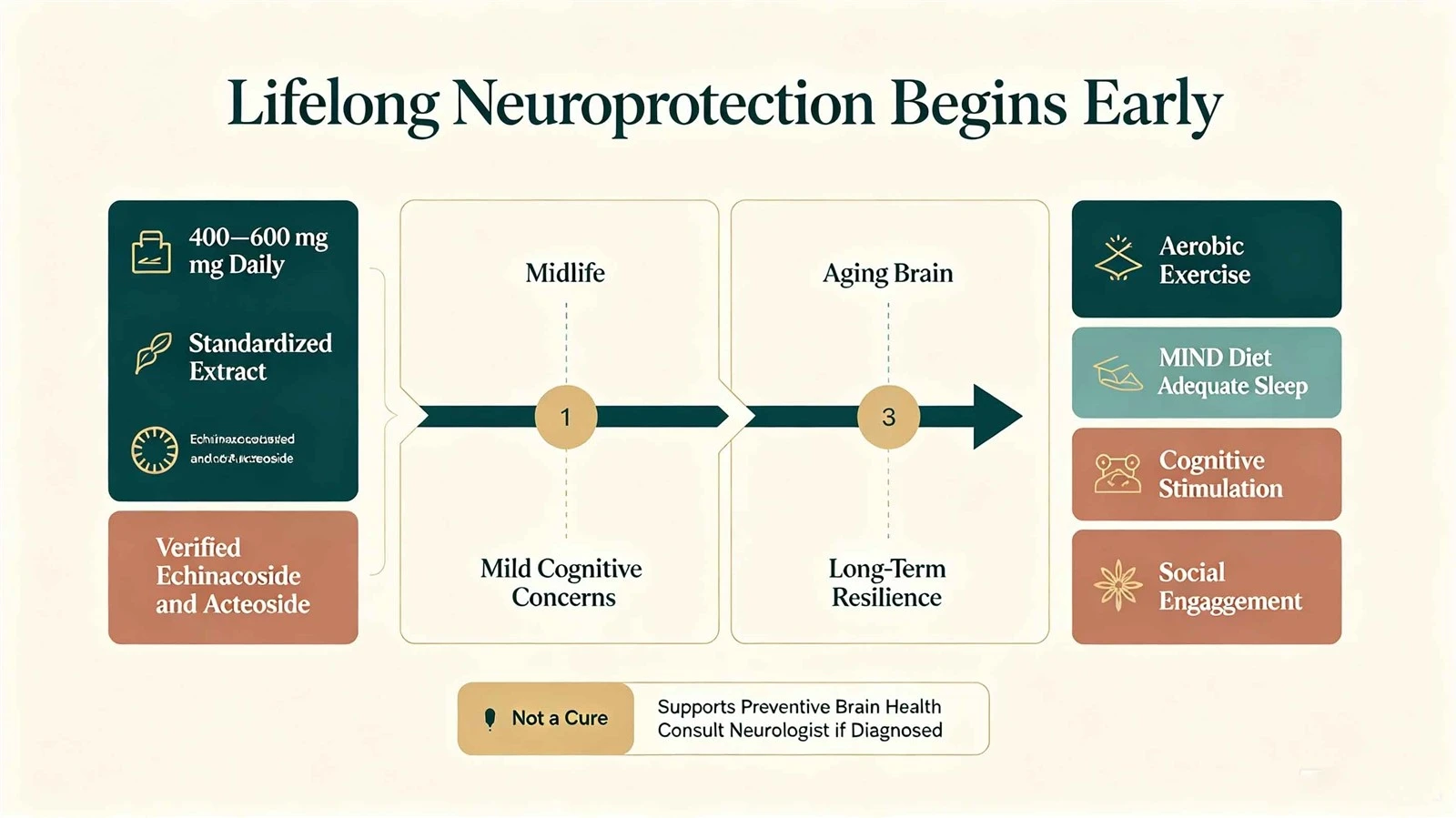
Neuroprotection is not a late-life intervention. The pathological processes that culminate in Alzheimer's or Parkinson's begin decades before symptoms appear. Amyloid plaques accumulate silently for 15–20 years before the first memory lapses. Dopaminergic neurons are already 50–70% lost by the time Parkinson's tremor manifests. This means neuroprotection must begin early-in midlife, or earlier for those with strong family histories-and be sustained.
A daily dose of 400–600 mg of a standardized Cistanche tubulosa extract, providing consistent and verified levels of echinacoside and acteoside, is the evidence-informed range for neuroprotection. It pairs powerfully with other brain-protective practices: regular aerobic exercise (the most potent natural BDNF booster), a Mediterranean or MIND diet rich in polyphenols and omega-3s, adequate sleep (during which the glymphatic system clears protein waste from the brain), cognitive stimulation, and social engagement. Cistanche is not a substitute for these lifestyle foundations, but an amplifier-supporting the brain's own defense and repair systems so that those lifestyle efforts yield greater returns.
Our NeuroShield Cistanche Extract is sourced from authentic Cistanche tubulosa and standardized for a high concentration of echinacoside and acteoside-the active ingredients that research links to comprehensive, multi-target neuroprotection. Each batch is independently tested for purity and potency.
Safety and a Lifelong Perspective
Cistanche tubulosa has a two-thousand-year safety record and is well tolerated for long-term daily use. It does not cause the side effects associated with many neuroactive drugs-no sedation, no cognitive dulling, no motor impairment. It is an ally for the long game of brain health. While it is not a cure for Alzheimer's or Parkinson's, and anyone with a diagnosed neurodegenerative condition should be under the care of a neurologist, the scientific rationale for its preventive use is strong and growing. In the quiet, decades-long battle to keep our neurons alive and our minds sharp, this desert root offers a uniquely broad shield.
Supportive Service Of Wecistanche-For more details about cooperation
Business contact: goujinsong@wecistanche.com