Common Drugs For Treating Functional Constipation Using Integrated Traditional Chinese And Western Medicine
Dec 25, 2023
Functional constipation is a type of functional bowel disease, which is mainly characterized by difficulty in defecation, reduced defecation frequency, or a feeling of incomplete defecation, and does not meet the diagnostic criteria for constipation-predominant irritable bowel syndrome (IBS-C). It belongs to the categories of "constipation", "defecation difficulty", "difficulty in defecation", "spleen knot", "secret knot" and other categories in traditional Chinese medicine.

Click to immediate constipation relief adults
Diagnostic criteria
The diagnosis of functional constipation is based on the Rome IV criteria. It is necessary to exclude constipation caused by intestinal and systemic factors, drugs, and other causes and meet the following standards.
(1) Must meet 2 or more of the following symptoms:
① It feels laborious to defecate at least 25% of the time;
② Defecation is lumpy or hard at least 25% of the time (refer to Bristol Stool Scale Type 1-2);
③Feeling of incomplete defecation at least 25% of the time;
④Have anorectal obstruction or feeling of obstruction during defecation at least 25% of the time;
⑤ At least 25% of the time defecation requires manual assistance (such as using fingers to assist defecation, pelvic floor support);
⑥ Spontaneous bowel movements less than 3 times per week.
(2) Loose stools rarely occur when laxatives are not used. (
3) Does not meet the diagnostic criteria for IBS-C.
Symptoms have appeared for at least 6 months before diagnosis, and symptoms have met the above diagnostic criteria for the past 3 months. If the patient meets the diagnostic criteria for drug-induced constipation (OIC), he should not be diagnosed with FC, but clinicians should note that FC and drug-induced constipation can overlap.
Types
According to the Rome IV criteria, it is divided into normal transit constipation (NTC), slow transit constipation (STC), and defecation disorder constipation according to the pathophysiological mechanism. Clinical classification of functional defecation disorders: insufficient defecation propulsion and uncoordinated defecation.
① Diagnostic criteria for insufficient defecation propulsion: pressure measurement shows insufficient rectal propulsion, with or without uncoordinated contraction of the anal sphincter and/or pelvic floor muscles.
②Diagnostic criteria for uncoordinated defecation: Perianal surface electromyography or pressure measurement shows that the pelvic floor contracts uncoordinatedly during the attempt to defecate, but with sufficient propulsion. Symptoms appeared for at least 6 months before diagnosis, and symptoms for the past 3 months met the above diagnostic criteria.
Traditional Chinese Medicine classification
There are many traditional classification methods of functional constipation in traditional Chinese medicine. The classification method that combines etiology and pathogenesis is used to classify FC into heat accumulation secret, cold accumulation secret, gas stagnation secret, gas deficiency secret, blood deficiency secret, and yin deficiency. Secret, Yang deficiency secret, seven syndrome types for syndrome differentiation and treatment. Various syndrome types can also be seen clinically.
1. Heat accumulation secret
Main symptoms: ① constitutive stool; ② foul-smelling stool and/or stinky stool and/or short urine. Secondary symptoms: ① abdominal distension or pain; ② flushed face and troubled heart; ③ or fever. Pulse: red, yellow coating, slippery and rapid pulse. Determination of syndrome type: The main symptoms are required, and 1 to 2 secondary symptoms can be added to make the diagnosis. Refer to the pulse and physical and chemical examinations.
2. The secret of cold accumulation
Main symptoms: ① Hard and astringent bowel movements; ② Abdominal pain that is tense and relieved by warming, or a full abdomen that refuses to be pressed. Secondary symptoms: ① The hands are not warm; ② Aversion to cold. Pulse: light and dark texture, thin and greasy fur, stringy and tight pulse. Determination of syndrome type: The main symptoms are required, and 1 to 2 secondary symptoms can be added to make the diagnosis. Refer to the pulse and physical and chemical examinations.
3. The secret of qi stagnation
Main symptoms: ① Constituent or not very constipated stools, and unpleasant defecation; ② Abdominal distension or abdominal pain. Secondary symptoms: ① Intestinal borborygmus and non-stop breathing; ② Aggravation when the mood is unsatisfactory; ③ Fullness in the chest and flanks, and frequent belching. Pulse: red, thin fur, stringy pulse. Determination of syndrome type: The main symptoms are required, and 1 to 2 secondary symptoms can be added to make the diagnosis. Refer to the pulse and physical and chemical examinations.
4. The secret of gas deficiency
Main symptoms: ① The stool is not hard, and although the urge to defecate is felt, defecation is laborious; ② Sweating and shortness of breath occur when exerting force. Secondary symptoms: ① Lack of energy after defecation; ② Mental fatigue and laziness. Coat pulse: pale, white fur, weak pulse. Determination of syndrome type: **The main symptoms are required, and 1 to 2 secondary symptoms can be added to make the diagnosis. Please refer to the pulse and physical and chemical examinations.
5. Blood deficiency and mystery
Main symptoms: ① constipation; ② discoloration and dizziness. Secondary symptoms: ① palpitations and shortness of breath; ② pale lips. Pulse: The texture is light and the pulse is thin and weak. Determination of syndrome type: **The main symptoms are required, and 1 to 2 secondary symptoms can be added to make the diagnosis. Please refer to the pulse and physical and chemical examinations.

6. Secret of Yin deficiency
Main symptoms: ① stool-like constipation; ② hot flashes, night sweats, and/or hot palms and/or red cheekbones. Secondary symptoms: ① <⼼ Less fluid; ② thin body, dizziness, and tinnitus; ③ irritability and lack of sleep; ④ soreness and weakness in the waist and knees. Bone veins: red in texture, with cracks, less moss, and thready and rapid pulses. Determination of syndrome type: The main symptoms are required, and 1 to 2 secondary symptoms can be added to make the diagnosis. Refer to the pulse and physical and chemical examinations.
7. Yang deficiency secret
Main symptoms: ① Constipation or difficulty in passing stool; ② Facial discoloration and whitish color, long and clear stool. Secondary symptoms: ① Cold and pain in the abdomen; ② Soreness and coldness in the waist and knees; ③ The limbs are not warm or are afraid of cold. Pulse: pale, white fur, deep and slow pulse. Determination of syndrome type: The main symptoms are required, and 1 to 2 secondary symptoms can be added to make the diagnosis. Refer to the pulse and physical and chemical examinations.
treat
General treatment
1. Ensure adequate fluid intake and adequate dietary fiber
2. Moderate exercise can improve constipation
3. Establish good bowel habits
medical treatment
2. Traditional Chinese Medicine Treatment
(1) Heat accumulation secret
Treatment Principles: Clear away heat and moisturize the intestines.
Prescription: Modification of ⿇⼼Pan ("Treatise on Febrile Diseases"); medicinal ⿇ren, peony, almond, rhubarb, Magnolia officinalis, citrus aurantium, etc.
(2) Cold accumulated secrets
Treatment principle: Wen Tong dissipates accumulation.
Prescriptions: Modified Wenpi Decoction ("Essential Preparation for Emergency"); medicinal aconite, rhubarb, sodium salt, angelica, ginger, ginseng, herb, etc.
(3) Air stagnation secret
Treatment Principle: Smooth Qi and guide stagnation.
Prescriptions: Liumo Decoction (Shiyi Dehui Prescription), Sini Powder (Treatise on Febrile Diseases) plus or minus; medicines include Bupleurum root, White peony root, fried Citrus aurantium husk, cornstarch powder, rhubarb root, black root root, ⽠Lou Ren et al.
(4) Qi Xu Mi
Treatment principle: Yiqi and moisturizing the intestines.
Prescription: Huangqi Decoction ("Golden Guiyi") addition and subtraction; medicines include Astragalus, Shengbaishu, Huiren, Chenpi, Baimi, etc.
(5) Blood deficiency and mystery
Treatment principles: nourish yin and nourish the blood, moisturize dryness, and relieve constipation.
Prescriptions: Runchang Pills ("Shen Zunshengshu") plus or minus; medicinal Angelica sinensis, Radix Rehmanniae, Wuren, peach kernels, Citrus aurantium husk, etc.
(6) Yin deficiency secret
Treatment principle: Nourish yin and moisturize dryness.
Prescription: Zengye Decoction ("Febrile Disease Treatise") plus or minus; medicinal ginseng, Ophiopogon japonicus, Radix Rehmanniae, Radix Semen, Angelicae Sinensis, Adenophora adenophora, Dendrobium, etc.
(7) Yang deficiency secret
Treatment Principle: Warm and laxative.
Prescriptions: Jichuan Jian ("Jingyue Complete Book") plus or minus medicinal uses; Angelicae Sinensis, Radix Gentilens, Aconite, Cistanche, Alisma, Sheng⿇, Citrus Aurantii, etc.

Appropriate additions and subtractions can be made according to the main symptoms. For those with bleeding after defecation, add Sophora japonica, Sanguisorba, Agrimony, Trichosanthes, and Trichosanthes rhizome; for those with constipation, touching feces, and abdominal pain that makes it difficult to pass, add rhubarb and Glauber's salt. , senna, firewood, and cypress kernels; for those with gastrointestinal stagnation, add radish seeds, betel nut, Jiao Shenqu, Magnolia officinalis, and other gastrointestinal stagnation; for those with cough, asthma, and constipation, add persimmon, coriander seeds, and almonds. ; For those who are melancholic and lack appetite, add Bupleurum, White Peony, and Albizia Julibrissin; for those who have a strong liver and stagnation turns into fire, add Wenzi and Gentian; for those with constipation and prolapse of the anus due to deficiencies, add Sheng, Bupleurum, Astragalus, Baishu, ginseng, platycodon.
4. Single drug
High-dose whitening surgery has certain clinical efficacy in treating functional constipation. Based on the treatment of Zhizhu decoction, a large dose of Zhizhu decoction is used as the king medicine, combined with the Zhishi fruit, to treat patients with deficiency syndrome according to syndrome differentiation in FC, which has a certain clinical effect.
5. Special treatment of traditional Chinese medicine
①Acupuncture treatment
Acupuncture is an optional treatment for FC. FC's acupuncture treatment often adopts the idea of mainstream therapy plus syndrome differentiation. Commonly used acupuncture treatments for FC include: Tianshu, Dachangshu, Sanli, Jigou, Shangjuxu, Abdominal Knot, and Qingliao;
②Embedded wire in ② position
Lateral catgut embedding is an optional treatment for FC. Commonly used methods are Tianshu, Dachangshu, Sanli, Qihai, Guanyuan, Qiliu, etc. Catgut embedding is performed once every 15 days;
③position application
Positional application is an optional treatment for FC. Positional application is to grind the drug into powder and use a certain solvent to make it into a paste or paste or decoct the drug to extract the juice and concentrate it, then add excipients to make a paste ointment, which is applied and fixed on the selected surface. Fixed position or navel. At the same time, external treatment methods such as traditional Chinese medicine, ironing, and abdominal massage can be considered based on the evidence. Clinically, traditional Chinese medicine compound preparations with laxative or gastrointestinal effects can be selected based on syndrome differentiation;
④Chinese medicine enema
Enema therapy with traditional Chinese medicine is an optional treatment for FC. Enema with a compound decoction of traditional Chinese medicine can be used based on syndrome differentiation.
Natural Herbal Medicine For Relieving Constipation-Cistanche
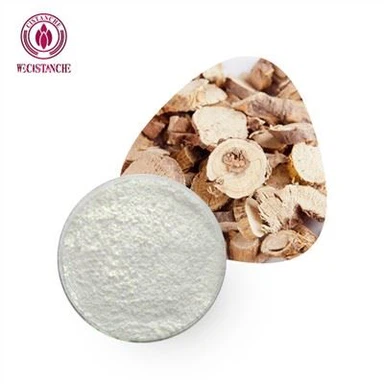
Cistanche is a genus of parasitic plants that belongs to the family Orobanchaceae. These plants are known for their medicinal properties and have been used in Traditional Chinese Medicine (TCM) for centuries. Cistanche species are predominantly found in arid and desert regions of China, Mongolia, and other parts of Central Asia. Cistanche plants are characterized by their fleshy, yellowish stems and are highly valued for their potential health benefits. In TCM, Cistanche is believed to have tonic properties and is commonly used to nourish the kidney, enhance vitality, and support sexual function. It is also used to address aging, fatigue, and overall well-being issues. While Cistanche has a long history of use in traditional medicine, scientific research on its efficacy and safety is ongoing and limited. However, it contains various bioactive compounds such as phenylethanoid glycosides, iridoids, lignans, and polysaccharides, which may contribute to its medicinal effects.

Wecistanche's cistanche powder, cistanche tablets, cistanche capsules, and other products are developed using desert cistanche as raw materials, all of which have a good effect on relieving constipation. The specific mechanism is as follows: Cistanche is believed to have potential benefits for relieving constipation based on its traditional use and certain compounds it contains. While scientific research specifically on Cistanche's effect on constipation is limited, it is thought to have multiple mechanisms that may contribute to its potential to relieve constipation. Laxative Effect: Cistanche has long been used in Traditional Chinese Medicine as a remedy for constipation. It is believed to have a mild laxative effect, which can help promote bowel movements and induce constipation. This effect may be attributed to various compounds found in Cistanche, such as phenylethanoid glycosides and polysaccharides. Moistening the Intestines: Based on traditional use, Cistanche is considered to have moisturizing properties, specifically targeting the Intestines. Promoting hydration and lubrication of the Intestines may help soften tools and facilitate easier passage, thereby relieving constipation. Anti-inflammatory Effect: Constipation can sometimes be associated with inflammation in the digestive tract. Cistanche contains certain compounds, including phenylethanoid glycosides and lignans, that are believed to have anti-inflammatory properties. By reducing inflammation in the intestines, it may help improve bowel movement regularity and relieve constipation.