Comparison Between Cistanche Deserticola And Cistanche Tubulosa
Nov 18, 2024
Cistanche deserticola, also known as Golden Sunflower, Earth Spirit, and Dayun, has the effects of nourishing kidney yang, benefiting menstrual blood, and moistening the intestines and facilitating bowel movements. It is listed as a top-grade medicine in the Shennong's Herbal Classic. "It tastes sweet, slightly warm, and non-toxic. It can treat the five kinds of fatigue and seven kinds of injuries, nourish the middle, eliminate cold and heat pain in the stems, nourish the five internal organs, strengthen yin, benefit essence and qi, and increase fertility. It has the effect of lightening the body if taken for a long time." The Materia Medica Collection states: "This is a mild tonic, warm but not hot, tonic but not harsh, warm but not dry, smooth but not laxative, so it is named calm" [1].
There are about 22 species of Cistanche plants in the world, mainly distributed in the warm and dry areas of the northern hemisphere, and grow in deserts and wasteland areas [2]. Cistanche deserticola is distributed in the Iberian Peninsula in Europe, northern Africa, the Arabian Peninsula in Asia, Iran, Afghanistan, Mongolia, and northwest China [3]. In 2003, Professor Liu Guojun and others classified domestic Cistanche deserticola into eight varieties, namely, Cistanche deserticola, Cistanche salsa, Cistanche tubulosa, Cistanche lanzhouensis, Cistanche ningxiaensis, Cistanche tubulosa, and Cistanche sandalis [4]. Among them, Cistanche deserticola and Cistanche tubulosa have been included in the Chinese Pharmacopoeia since 2005 as Cistanche deserticola medicinal materials.
In recent years, the market demand for Cistanche deserticola has increased year by year. Japan, South Korea and Southeast Asia have imported a large amount of Cistanche deserticola from China, while the United States has extracted the active ingredients from it and used it as an additive for food and health products. The development prospects are very broad. Therefore, this paper compares the research status of these two Cistanche deserticola medicinal materials in order to better utilize the Cistanche deserticola medicinal material resources.
Medicinal parts
According to the 2015 edition of the Chinese Pharmacopoeia, the medicinal material of Cistanche deserticola is the dried fleshy stem with scaly leaves of Cistanche deserticola Y. C. Ma or Cistanche tubulosa (Schenko) Wight [5]. Traditionally, Cistanche deserticola can be harvested in spring and autumn. When Cistanche deserticola is about to emerge from the ground or has just emerged from the ground, dig out the fleshy stems with scales, cut off the formed inflorescences in time, and dry them on the ground, or half-bury them in the sand. Dried and used medicinally.
Regarding the non-traditional medicinal parts, Liu Wenjing [6] and others studied the chemical composition analysis of the lignified stems and flowers of Cistanche deserticola and found that there was a significant difference in the chemical composition between the cistanche deserticola and the fleshy stems. Cistanche deserticola flowers and lignified stems contain less phenylethanol glycosides, while more iridoid glycosides and lignin glycosides. Moreover, the flowers and lignified stems contain multiple unique chemical components, so the non-medicinal parts of desert Cistanche deserticola may exhibit therapeutic effects that are different from the traditional medicinal effects of Cistanche deserticola.
2 Origin
Cistanches tubulosa, also known as tamarisk and tubulosa, is parasitic on the roots of Tamarix plants, but its distribution is not completely synchronized with its host. Domestically, Cistanches tubulosa is distributed around the Taklimakan Desert in southern Xinjiang, but in northern Xinjiang, Qinghai, Ningxia, Gansu, Inner Mongolia, Shaanxi and other places.
Salix plants are not parasitic.

Cistanches tubulosa
In recent years, due to the increasing market demand for Cistanche deserticola, Gansu, Inner Mongolia, Ningxia and other places have also successively introduced and tested Cistanche deserticola tuberculata. However, it has been found in practice that the Cistanche deserticola tuberculata introduced and inoculated in these areas can germinate and grow in the same year, but cannot survive the winter. Therefore, For the introduction of Cistanche deserticola tubulosa, it should be Be cautious[7].
The growing areas of Cistanche deserticola include the southern slopes of the Tianshan Mountains, the basins on the northern slopes of the Kunlun Mountains and the Altun Mountains, and around the inland river impact plains, fan edge lowlands and spring overflow zones. Among them, Minfeng County and Yutian County in Hotan Prefecture have the largest output. [8].
Desert Cistanche deserticola mainly parasitizes the roots of Haloxylon ammodendron and Haloxylon ammodendron of Chenopodiaceae. Compared with Cistanche tuberosum, it is more widely distributed and has larger wild resources [9]. According to the descriptions of Materia Medica in the past, its main production areas are Shanxi, Shaanxi, western Inner Mongolia, Ningxia, Gansu and northeastern Qinghai. Many Materia Medica mention Gansu as a high-quality production area of Cistanche deserticola. The "Compendium of Materia Medica" points out that Inner Mongolia has a large production of Cistanche deserticola [10 ]. At the same time, desert Cistanche deserticola was also the first species to be successfully cultivated artificially. The book "Desert Cistanche deserticola and its host Haloxylon ammodendron Cultivation Technology" edited by Tu Pengfei and Guo Yuhai mentioned that large-scale artificial cultivation of desert Cistanche deserticola can be achieved.
3 Comparison of traits
Li Jiawei [11] distinguished Cistanche tubulosa from Cistanche deserticola based on the plant shape, length, diameter, scale leaves, mass, cross-section vascular bundle, inflorescence and other information. The distribution characteristics of the cross-section vascular bundle are an important difference between the three. Li Shuifu et al. [12] summarized the traits of Cistanche tubulosa and Cistanche tubulosa. For details, see Table 1.

Cistanche deserticola
Table 1 Comparison of the properties of Cistanche deserticola and Cistanche tubulosa
Here's the table translated into English, presented as a Markdown table for easy readability:
| Feature | Sub-feature | Cistanche deserticola | Cistanche tubulosa |
|---|---|---|---|
| General | Shape | Mostly flat cylindrical | Some spindle-shaped, flat oval, or taro-shaped; irregular shapes |
| Surface Color | Dark brown or blackish-brown | Some dark red, grayish-yellow | |
| Texture | Hard and tough | Hard, not tough | |
| Cross-section | Dark brown or blackish-brown, mostly with yellowish-brown dotted vascular bundles arranged in wavy rings or radially | Light grayish-brown, sometimes with dark brown gelatinous edges; many dark brown dotted vascular bundles scattered irregularly | |
| Microscopic | Cross-section | Vascular bundles arranged in wavy rings | Scattered irregularly, sometimes with gaps between bundles; occasional phloem fibers |
| Characteristics | Scale | Star-shaped, large medullary cells, prominent medullary rays | Absent |
| Vascular Bundle | Usually 5 bundles, no lateral branches | 6-13 bundles, with lateral branches | |
| Powder | Starch Granules | Very few compound granules, composed of 2 parts | More compound granules, composed of 2-3 (sometimes 5) parts |
| Fibers | Absent | Occasionally present |
This table compares the characteristics of Cistanche deserticola and Cistanche tubulosa. The information provided details their physical attributes, microscopic features, and powder characteristics, which are useful for identification and differentiation.
4 Comparison of ingredients and efficacy
4.1 Comparison of ingredients
The chemical components of Cistanche deserticola that have been isolated and identified so far mainly include phenylethanoid glycosides, iridoid glycosides, lignans, amino acids, sugar alcohols and other components. The main components of Cistanche tubulosa include phenylethanoid glycosides, iridoid glycosides and their glycosides, lignans and their glycosides, sugars and volatile components [13]. In terms of compound types, the types of compounds contained in the two are generally similar. In order to better control the quality of Cistanche deserticola medicinal materials and qualitatively identify medicinal materials, Zhu Nailiang et al. [14] established high-performance liquid chromatography fingerprints for Cistanche deserticola and Cistanche tubulosa, and marked 15 common peaks respectively. After comparison, the latter two medicinal materials had 10 common peaks. In general, the content of phenylethanoid glycosides and iridoid glycosides in Cistanche deserticola is relatively uniform, while the content of phenylethanoid glycosides in Cistanche tubulosa is significantly higher than that of iridoid glycosides. At the same time, the content of phenylethanoid glycosides is significantly higher than that in Cistanche deserticola. Echinacoside and verbascoside account for the majority of phenylethanoid glycosides, and the content of other phenylethanoid glycosides is relatively low. The study by Li Jiawei et al. [11] showed that the total content of echinacoside and verbascoside in Cistanche tubulosa was 2.26%, which was higher than 0.73% in Cistanche deserticola.
Among them, the echinacoside in Cistanche tubulosa is almost 6 times that in Cistanche deserticola. This is consistent with the Chinese Pharmacopoeia, which stipulates that the total amount of echinacoside and verbascoside in Cistanche deserticola shall not be less than 0. 30% and the total amount of echinacoside and verbascoside in Cistanche tubulosa should not be less than 1.5%. In addition, Jiang Yong et al. [15] found through research that there are 12 phenylethanol glycosides in Cistanche deserticola and 19 phenylethanol glycosides in Cistanche tubulosa. Therefore, the research on artificial cultivation of Cistanche tubulosa has become a hot topic among scholars. The main laxative ingredients in Cistanche deserticola are sugar alcohols, among which galactitol is the main component of sugar alcohols. Zhao Kuijun et al. [16] used HPLC-ELSD method to determine the galactitol content in the two medicinal materials. The results showed that the galactitol content in Cistanche deserticola was slightly higher than that in Cistanche tubulosa.

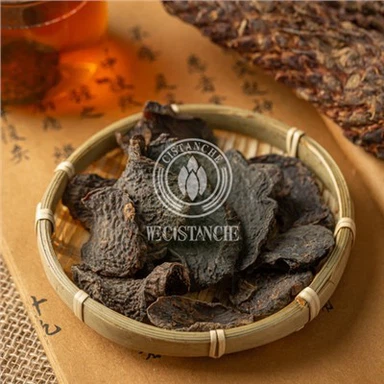
cistanche Fresh Raw Materials
4.2 Comparison of drug effects
Cistanche deserticola is a traditional medicinal material with a wide range of pharmacological effects and high clinical application value. Modern pharmacological studies have also shown that in addition to its kidney-tonifying and yang-strengthening effects, and its laxative effects, Cistanche deserticola also has anti-fatigue, anti-aging, immunity-enhancing and memory-enhancing effects, and no adverse reactions have been found [17]. The production of these pharmacological effects is inseparable from the effects of its active ingredients. The ingredients in Cistanche deserticola that have the effects of tonifying the kidney and strengthening yang are mainly phenylethanoid glycosides, which can increase the levels of serum estradiol and testosterone in rats and also have an up-regulating effect on the hypothalamus-pituitary-adrenal axis; the laxative effect can mainly be exerted through total oligosaccharides and galactitol; the protective effect on the nervous system may also be exerted through phenylethanoid glycosides. Clinical studies have shown that Cistanche deserticola has a certain effect in combating Alzheimer's disease and Parkinson's disease.
Yu Peizhong et al. [18, 19, 20] found that the n-butanol and water parts of the ethanol extract of Cistanche deserticola have anti-aging effects on nerve cells. The polysaccharides in Cistanche deserticola can enhance immune function [21]. D-mannitol, polysaccharides, phenylethanol glycosides, etc. can all play an anti-aging role [22, 23]. Among them, ergosterol and betaine have androgen-like effects [24]. Some scholars have also studied the comparison of the efficacy of the two medicinal materials. Wu Bo [25] studied the laxative and kidney-tonifying and yang-strengthening pharmacological effects of Cistanche deserticola and Cistanche tubulosa. The results showed that the water extracts of the two varieties of Cistanche deserticola have a certain laxative and moisturizing effect, and can significantly shorten the defecation time of animals. For mice with kidney yang deficiency, both can prolong the cold tolerance of mice, but no significant difference in the intensity of the effects was found between the two. Shi Dawen et al. [26] conducted immunopharmacology tests on ethyl acetate extracts of different species of Cistanche deserticola. The results showed that the ethyl acetate extracts of various species of Cistanche deserticola had the effect of activating lymphocytes to kill K562 cells at a certain concentration. Among them, the ethyl acetate extract of Cistanche tubulosa had the strongest effect, that is, it had the most obvious immune function enhancement. Zhang Yuequan et al. [27] studied the effect of Cistanche deserticola on the expression of BMP-2 protein in osteoporotic mice. The results also confirmed that Cistanche deserticola could increase the content of BMP-2 in mouse chondrocytes, which may indirectly promote the proliferation of osteoblasts, strengthen tendons and bones, and treat osteoporosis.

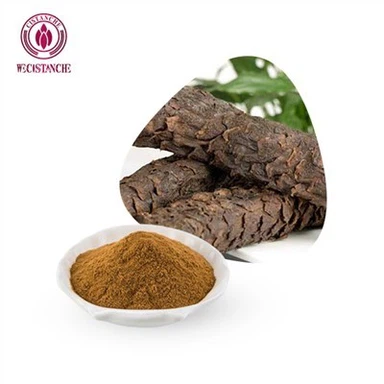
cistanche Dried whole Root
Click the Picture To Get More Details
5 Planting
5.1 Planting of Cistanche tubulosa
The natural distribution area of Cistanche tubulosa is very limited, and its wild resources are limited to the surrounding areas of the Taklimakan Desert south of the Tianshan Mountains in China. Cistanche tubulosa parasitizes on the roots of Tamarix plants, but its distribution is not parallel to that of the host plant and is greatly affected by cold temperatures. Therefore, many students have set up projects to try to cultivate Cistanche tubulosa outside southern Xinjiang. In the spring of 2002, Li Tianran et al. [28] inoculated Cistanche tubulosa on the roots of Tamarix longissima on the northeastern edge of the Ulan Buh Desert in western Inner Mongolia. On September 28 of the same year, they found that the seeds of Cistanche tubulosa had connected to the roots of the host Tamarix longissima and developed into young Cistanche plants. This was the first time that Cistanche tubulosa was successfully cultivated artificially outside Xinjiang. However, the inoculation rate in the field is still low. In 2003-2004, Yang Taixin [29] conducted an experimental study on the effects of seed size, inoculation medium and inoculation time on the inoculation rate of Cistanche tubulosa at the Wuqiao Experimental Station of China Agricultural University in Hebei Province. In the second year, some Cistanche tubulosa parasitized in the seedbed, a few emerged from the soil, and most emerged within 2-4 years after sowing, flowering and bearing fruit. However, through long-term practice, it was found that Cistanche tubulosa often suffered from frost damage in winter after introduction and inoculation. This phenomenon is very common. Therefore, caution should be exercised when introducing and inoculating Cistanche tubulosa to avoid causing economic losses.
5.2 Cultivation of Cistanche Tubulosa
The artificial cultivation of desert Cistanche tubulosa has now developed to a relatively mature stage and can be cultivated on a large scale. Tu Pengfei and Guo Yuhai published the book "Cultivation Technology of Desert Cistanche and Its Host Haloxylon ammodendron" in 2012, providing technical guidance for the large-scale artificial cultivation of Desert Cistanche and its ecological industry development. Xu Xiaoying et al. [30] published an article introducing the cultivation method of Desert Cistanche. A ditch 50-80 cm deep and 1 m wide was dug 20 cm away from the Haloxylon ammodendron plant. The seeds were sown on the seedbed, and decomposed cattle and sheep manure (manure and soil ratio 1:3) was applied. The soil was covered 30-50 cm deep, and a watering ditch or seedbed pit was left on the top for watering. After sowing, the seedbed was kept moist to induce the host roots to extend to the seedbed. Sowing can be done in spring and autumn. In the second year, some Cistanche parasitized in the seedbed, a few emerged from the soil, and most emerged from the soil within 2-4 years after sowing, and bloomed and bore. In addition to artificial inoculation and planting, tissue culture is an effective method to rationally utilize Cistanche deserticola and prevent its resources from being depleted. Liu Dehua, Xu Liangsheng et al. [31, 32] conducted tissue culture experiments using stem fragments and flowers of Cistanche deserticola as explants and studied the tissue culture of Cistanche deserticola.
6 Outlook
Cistanche is an important medicinal resource in China. It is a precious tonic Chinese medicine with high medicinal value. However, due to long-term unreasonable mining and utilization, its resources are on the verge of exhaustion and has been listed as a national second-level protected plant.
Currently, the market demand for Cistanche is showing a trend of being higher than its production. After research on the artificial planting system of Cistanche deserticola, the production of Cistanche deserticola in China has increased significantly. In Hotan, Xinjiang, the production of Cistanche deserticola has been achieved by grafting Cistanche tubulosa on the roots of Tamarix chinensis. Currently, the area of grafted Tamarix chinensis has reached more than 300,000 mu. In Alxa and Dengkou areas of Inner Mongolia, the artificial planting of Cistanche deserticola has been achieved by grafting Cistanche deserticola on the roots of Haloxylon ammodendron. Currently, the area of grafted Haloxylon ammodendron has reached more than 300,000 mu [33]. The realization of artificial planting technology of Cistanche deserticola has greatly promoted the process of desert greening in western China and promoted the development of the ethnic economy in western China.
In 2017, Cistanche deserticola was included in the food and drug substance catalog for trial production, which will greatly extend the Cistanche deserticola industry chain and bring great opportunities for industrial development. Therefore, conducting more in-depth and detailed research on Cistanche deserticola, developing its medicinal and health value, and increasing the value of Cistanche deserticola products are new opportunities for Cistanche deserticola production and research institutions.
References
[1] Zhang Ruixia. A brief discussion on the research and application of Cistanche tubulosa [J]. World Latest Medical Information Abstracts, 2017, 17(69): 132-133.
[2] Flora of China Committee. Flora of China Vol. 69 [M]. Beijing: Science Press, 1990: 83.
[3] Gu Caimei, Liu Dewang, Wang Zenghui, et al. Study on the quality evaluation of Cistanche deserticola seeds and the primary processing of medicinal materials [J]. World Science and Technology - Modernization of Traditional Chinese Medicine, 2017, 19
(2): 306-312.