Consequences Of Predictable Temporal Structure in Multi-task Situations Part 2
Jan 16, 2024
The offset of the intervening item was followed by a second delay period (1250 ms or 2500 ms) before the fixation cross changed to match the color of one of the two memory items, to indicate which memorized tilt should be reported.
In recent years, an increasing number of studies have shown a strong relationship between intervention programs and memory. These intervention projects can include daily exercise, cognitive training, artistic performances, and a series of activities. These activities not only enhance people's physical and mental health but also improve memory.
First, daily exercise stimulates the body and brain. Studies have found that moderate exercise can improve blood circulation and oxygen supply, and promote the growth and development of nerve cells. By cultivating good living habits, people can enhance their physical fitness, improve their cognitive and learning abilities, and thus improve their memory.
Secondly, cognitive training is also an effective intervention program. These trainings include math problems, word games, intelligence tests, etc. Through these activities, people can reduce their risk of diseases such as Alzheimer's disease, as well as enhance their thinking skills, and strengthen their working memory, short-term memory, and long-term memory.
Finally, artistic performance is also an effective way to improve people's memory. Art performances such as music, dance, and drama can help people develop creative thinking, perception, and expression skills. Research shows that these abilities play an important role in people's ability to improve their memory. Additionally, they help enhance people's emotional experiences and social interactions.
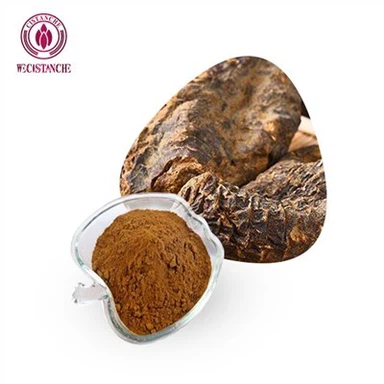
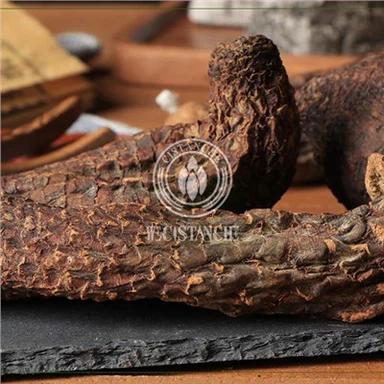
Taken together, there is a strong connection between intervention programs and memory. Through daily exercise, cognitive training, artistic performances, and other activities, people can enhance their physical and mental health, improve their cognitive abilities, and strengthen their memory. Therefore, we should pay attention to these activities, actively participate in them, and improve our overall quality and happiness. It can be seen that we need to improve memory, and Cistanche deserticola can significantly improve memory, because Cistanche deserticola can also regulate the balance of neurotransmitters, such as increasing the levels of acetylcholine and growth factors. These substances are very important for memory and learning. In addition, Meat can also improve blood flow and promote oxygen delivery, which can ensure that the brain receives sufficient nutrients and energy, thereby improving brain vitality and endurance.

Click know supplements to boost memory
Importantly, the color of the probe would never match that of the intervening item. In fixed blocks, the second delay interval had a fixed duration of 1250 ms (early blocks) or 2500 ms (late blocks) across all trials.
Half of the trials in variable blocks had a retention interval of 1250 ms, whereas the other half had a memory delay of 2500 ms. The order of trials within variable blocks was randomized.
For the working memory task, participants had to try to reproduce the exact angle of the probed memory item. As such, in contrast to the intervening task requiring simple discrimination (leftwards or rightwards), the memory task demanded a precision response. Following the probe's appearance, participants had unlimited time to decide on their response.
After response initiation, a visual response dial was displayed on the screen, always starting in the vertical position. The response dial included markers along a circle that corresponded to the ends of a bar and always appeared surrounding the fixation.
To report a leftward (rightward) angle, participants were (as for the intervening task described above) asked to press the F or J key on the keyboard using their left or right index finger.
The dial rotated leftwards when pressing F and rightwards when pressing J (either holding the key down or pressing the key repeatedly; always in increments of 5◦). The dial could only be rotated in the direction that was initially indicated by the participant. For example, if a participant started pressing the F key after the probe, the dial would only move leftwards, and it would therefore not be possible to move the dial towards the right with the J key.
Since the response dial always started in the vertical position and could not be rotated beyond ±90◦, a leftward (or rightward) oriented bar could only be correctly reported with the left (or right) key.
Consequently, the hand required for responding was directly linked to the angle of the bar that was probed. This builds on previous tasks from our lab (Boettcher, Gresch, Nobre, & van Ede, 2021; Gresch et al., 2021; van Ede, Chekroud, Stokes, and Nobre, 2019), though we note that the specifics of this response implementation were not essential to the current study.
Once participants started rotating the dial, they had limited time (4000 ms) to complete the angle reproduction. This was intended to encourage participants to recall the exact orientation before starting to move the dial. When the dial aligned with the remembered tilt of the item, participants pressed the space bar to confirm their response and continue with the task.
At the end of each trial, participants received feedback about their working memory performance and, when relevant, also about their intervening task performance.

The working-memory feedback provided information on how well participants reproduced the probed item. Feedback was presented for 500 ms in the form of a number ranging from 0 to 100, with 100 indicating a perfect report and 0 indicating that the adjusted orientation was perpendicular to the angle of the probed item.
However, if the time to adjust the angle ran out, the message 'Too slow' was presented instead for 750 ms. Additional feedback could also appear to indicate if participants responded with the wrong key or did not respond at all to the intervening item. To incentivize fast responses in the intervening task, participants also received a feedback message when their reaction time (RT) was slower than 1000 ms.
This feedback message was combined with an image reminding participants to press F (or J) when the intervening item was tilted to the left (or right). Feedback was presented for a minimum of 750 ms and until the space key was pressed to encourage participants to read the feedback message before being able to continue to the next trial. Trials were separated by an intertrial interval randomly drawn between 500 and 800 ms.
The experiment consisted of 384 trials divided across 12 blocks (each including 32 trials). In six blocks, the delay between intervening-item offset and probe onset was fixed (predictable) – with the probe only occurring early in three of the blocks, and only occurring late in the other three.
In the remaining six blocks, probe onset was variable (unpredictable; pseudo-randomly varying between early and late within each block). As such, the total number of trials in which the probe appeared at any one delay interval after the offset of the intervening item (early vs. late) was equal across the fixed and variable blocks.
The order of blocks was pseudo-randomised in groups of four containing two variable blocks, one fixed-early, and one fixed-late block.
To become familiarised with the procedure of the experiment, participants performed 32 practice trials each with an unpredictable delay period. Participants were informed that they would never have to reproduce the tilt of the intervening item.
However, they were not informed about the block type (fixed vs. variable) or the two possible probe-onset times (early vs. late). The instructions also stressed that for both the intervening and working memory tasks, participants should respond as quickly and accurately as possible.
At the end of the experiment, participants were redirected to the survey website Qualtrics (htt p://www.qualtrics.com/), where they were asked about their comprehension of the instructions, potential strategies used to complete the task, and whether or not their data could be analyzed. The experiment lasted approximately 50 min in its entirety.
2.3. Analysis
processing, trials were removed when RTs in the working-memory task (calculated from probe onset to response onset) were below 200 ms or exceeded 5000 ms.
Next, we removed trials for which the remaining RTs were 2.5 SD above the individual mean across all conditions or if participants took longer than 4000 ms to reproduce the probed angle after response initiation. Regarding the intervening task, we excluded trials if participants either did not respond at all or if they did not respond within a time window ranging from 200 ms to 1500 ms after the intervening task onset.
Datasets with more than 25% of trials rejected during these pre-processing steps or with average reproduction errors higher than 40◦ in the working-memory task (across all conditions) were removed from further analysis (n = 20).

Additionally, one dataset was also removed in which the participant self-reported as having employed an explicit non-memory-based strategy to maintain the encoding display (e.g., physically aligning their fingers with the memory items at encoding).
After this exclusion step, datasets from the remaining 54 participants (in which an average of 95.18% [SD = 2.78] of trials were retained) were entered into the main analysis. Detailed information regarding the removal of trials per participant can be found in the analysis script. The analysis script and data can be found here, at ps://osf.io/rx7yv/.
For the working memory task, we examined the average RTs for the conditions fixed-early, variable-early, fixed-late, and variable-late. Moreover, we also evaluated reproduction errors by averaging the absolute difference between the original angle of the target (probed) item and the reported angle.
For the intervening task, we analyzed the average RTs for the fixed early, fixed-late, and variable conditions. We did not split the variable condition by early and late trials, as at the time of intervening-task onset, it was unknown whether the working-memory probe would occur early or late.
For the same conditions, we also calculated the average error rates. Participants committed an error when using the wrong key to respond to the intervening item. Since we expected error rates for this simple discrimination task to be quite low, RTs were deemed the more sensitive dependent variable for the intervening task performance.
To examine potential sequential effects in variable blocks, we analyzed RTs and error rates as a function of the delay condition associated with the working memory task in the previous trial (previous probe early vs. previous probe late).
Unlike classic sequential effects that are considered within single-task situations (for a review see: Los, 2010), we here investigated the potential sequential effects of the preceding delay of the working memory task on performance in the intervening task that always occurred at the same time after memory encoding.
When comparing more than two means, we applied a repeated measures analysis of variance (ANOVA) and reported η2 G as a measure of effect size. When evaluating only two means we applied a paired samples t-test and reported Cohen's d as a measure of effect size.
For post hoc t-tests, we report Bonferroni-corrected p values that we denote as "Bonferroni". We used the ggplot2 package (version 3.3.3; Wickham, 2009) for plotting results. Where relevant, the within-subject standard error of the mean was calculated from normalized data using the approach (Morey, 2008).
3. Results
3.1. Temporal predictions improve working-memory performance
We first confirmed that our manipulation of temporal predictions for the working memory task was effective despite an intervening task occurring in the period of anticipation.
For this, we evaluated RTs, which we defined as the time between the onset of the memory probe and response initiation. RTs served as a proxy for the time it took participants to access the relevant memory information before starting to reproduce the probed angle. We found a significant main effect of delay condition and block type: RTs to the probe were faster in late as compared to early trials (F(1,53) = 62.517, p < 0.001, η2 G = 0.024) and when probe onset was fixed compared to variable (F(1,53) = 22.491, p < 0.001, η2 G = 0.005).
These two main effects were paired with a significant interaction between the delay condition and block type (Fig. 1C; F(1,53) = 48.396, p < 0.001, η2 G = 0.009). This interaction showed that temporal predictions conferred a significant benefit (i.e., led to faster response initiation) for early probes (t(53) = − 7.437, pBonferroni < 0.001, d = 1.012), but not for late probes (t(53) = 1.568, pBonferroni = 0.491, d =0.213).
This finding is typical of studies of temporal expectation (as reviewed in Nobre & van Ede, 2018) and is attributed to the fact that, once the early interval passes, participants always know the memory will be probed at the later interval, regardless of which block they are in.

Moreover, pairwise comparisons revealed that participants responded more slowly to early as compared to late memory probes in variable blocks (t(53) = 10.633, pBonferroni < 0.001, d = 1.447), whereas the difference in RTs in early-fixed versus late-fixed blocks did not reach significance (t(53) = 2.531, pBonferroni = 0.058, d = 0.344).
For more information:1950477648nn@gmail.com