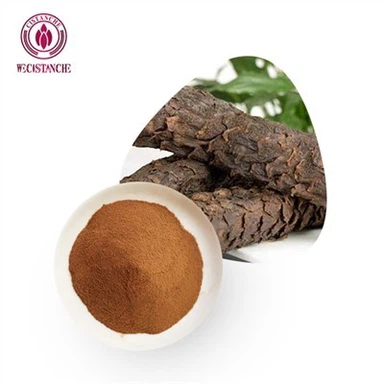
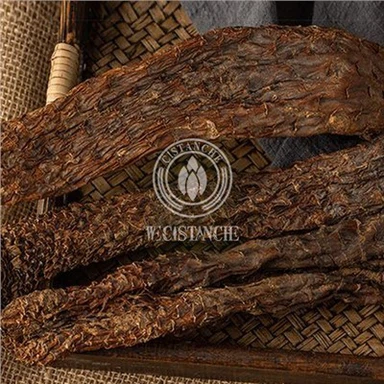
Current Status And Crisis Analysis Of Wild Cistanche Resources
May 27, 2026
Cistanche tubulosa, also known as Cistanche tubulosa or Dayun, belongs to the Cistanche genus of the Ledaceae family. It is a tall herbaceous plant with specialized root parasitism and is known as the "desert ginseng". It has both medicinal and ecological values, and its growth depends on host plants such as red willows and white willows. It is mainly distributed in arid and semi-arid desert areas. In recent years, due to the dual impact of human activities and natural environmental changes, the reserves and distribution range of wild Cistanche tubulosa resources have sharply decreased, and they have fallen into an endangered situation, urgently requiring widespread attention and protection.
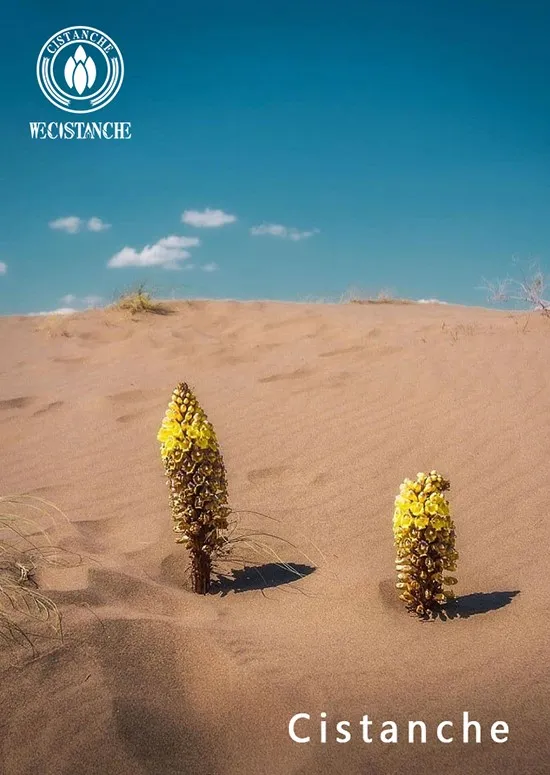
Desert ginseng
Changes in the Reserves and Distribution Range of Wild Cistanche Resources
(1) Changes in Resource Reserves
In history, wild Cistanche tubulosa has abundant reserves and is widely distributed in the desert areas of northwest China, making it a highly representative species in desert ecosystems. But in recent decades, its reserves have shown a cliff-like decline, and it has become an endangered species from a common species. According to the survey, there are only 7 Cistanche tubulosa plants per thousand parasitic plants, resulting in a significant decrease in resource density. As a remnant plant of the ancient Mediterranean, wild Cistanche tubulosa has a long natural reproduction cycle, a long seed dormancy period, and strict germination conditions. It needs to be induced by suitable temperature, humidity, and a host to germinate and grow. Its natural regeneration ability is weak, and the rate of human destruction far exceeds its self-recovery rate, resulting in continuous depletion of reserves. Currently, it is only sporadically distributed in a few desert areas.
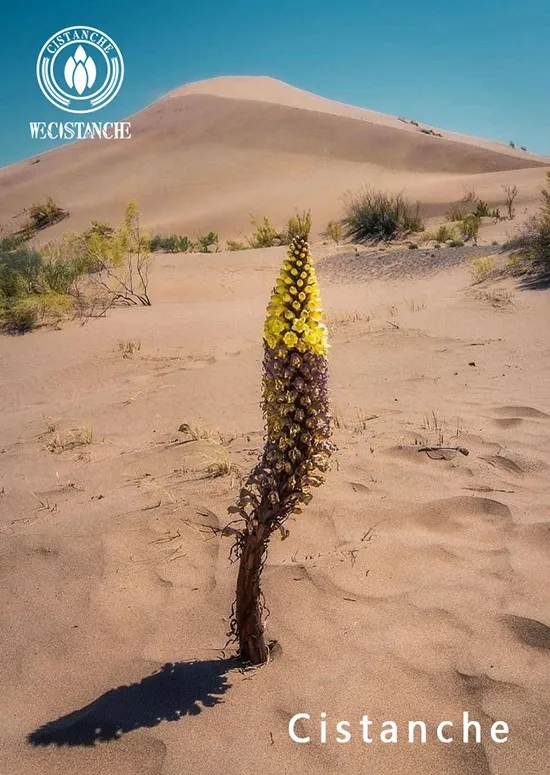
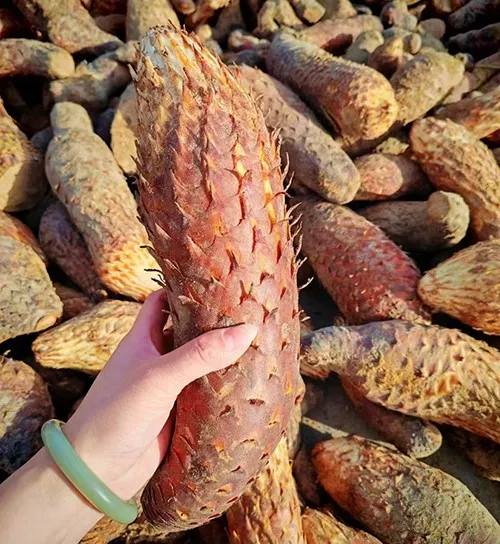
Cistanche tubulosa
(2) Changes in distribution range
The world distribution range of wild Cistanche tubulosa is mainly concentrated in central and northern China and Mongolia, with China being its main distribution area. In history, wild Cistanche tubulosa in China was widely distributed in northwest provinces such as Xinjiang, Inner Mongolia, Gansu, Ningxia, and Qinghai. It grew in the dunes of the Red Willow Desert at an altitude of 225-1150 meters, with a continuous and extensive distribution range.
Nowadays, its distribution range has significantly reduced and is showing a trend of fragmentation. The core distribution area has retreated from the original contiguous desert to scattered small patches, and many historical distribution areas have lost their traces. The Gurbantunggut Desert in Xinjiang and the Badain Jaran Desert in Inner Mongolia were once the main distribution areas of Cistanche tubulosa, but now only a small number of wild plants can be found in some nature reserves. The distribution range of wild Cistanche tubulosa in Gansu, Ningxia, and other places has also significantly decreased, with a sharp decline in population size and a continuous retreat of distribution boundaries towards the desert hinterland, resulting in severe compression of living space. This distribution change directly reflects the deterioration of the living environment and the resource decline of wild Cistanche tubulosa.
The resource crisis and influencing factors faced by wild Cistanche tubulosa
The decline of wild Cistanche tubulosa resources is not caused by a single factor, but by the combination of multiple factors, such as excessive mining, ecological environment damage, and insufficient protection. These factors interact with each other and jointly exacerbate its survival crisis.
(1) Overmining: The Direct Driver of Resource Decline
The medicinal value of Cistanche tubulosa has a long history, as early as it was listed as a top grade in the "Shennong Bencao Jing". It has the effects of tonifying kidney yang, nourishing essence and blood, moistening intestines, and promoting bowel movements. Modern medical research has also found that it contains various active ingredients and is widely used in pharmaceuticals, health products, cosmetics, and other fields. The huge market demand has given rise to illegal mining activities, becoming the most direct cause of its resource decline.
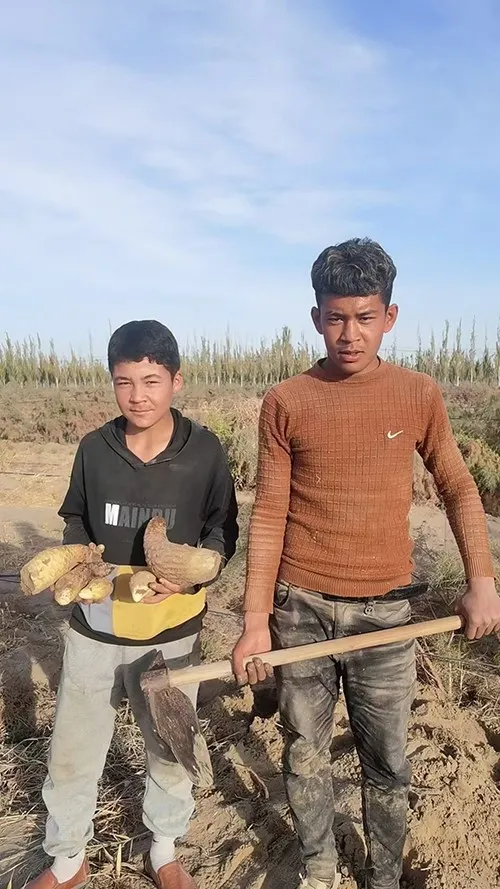
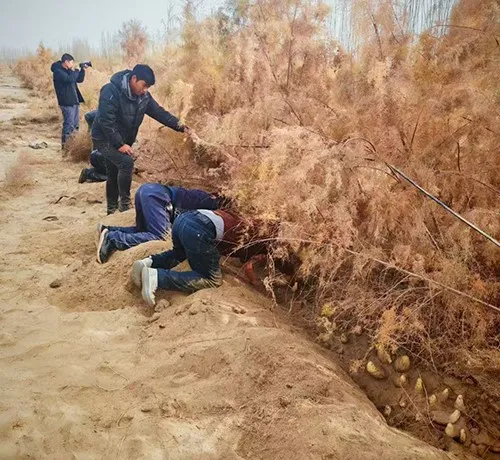
Due to the high medicinal value and considerable market price of wild Cistanche tubulosa, many people are driven by profit and disregard its conservation status, entering the desert hinterland for indiscriminate harvesting and excavation. Excavators often use extensive excavation methods, which not only excavate mature plants but also damage immature seedlings and underground roots and even damage the root system of the host plant, Salix chinensis. More seriously, the pits left after excavation can expose the root system of red willows, causing them to die from exposure to sunlight and water shortage, further damaging the survival foundation of Cistanche tubulosa. Although Cistanche tubulosa was explicitly listed as a second-class protected plant in China in 2021, and relevant departments have cracked down on illegal harvesting, illegal harvesting and trading persist. For example, in 2023, illegal harvesting of wild Cistanche tubulosa was caught in the Ganjiahu Red Willow Forest National Nature Reserve in Xinjiang. The continuous excessive harvesting has made it difficult for the wild Cistanche tubulosa population to naturally renew, and its reserves continue to decrease.
The villagers of Hotan Village in Xinjiang are digging and harvesting Cistanche tubulosa
(2) Ecological environment destruction: severe compression of living space
As a unique species in the desert, Cistanche tubulosa has strict requirements for its growth environment and relies on host plants such as red willows to obtain water and nutrients. However, the desert ecosystem itself is fragile and has poor self-healing ability. Once damaged, it is difficult to recover, which directly threatens the survival of Cistanche tubulosa.
On the one hand, the intensification of land desertification has led to a reduction in their living space. Due to factors such as global climate change, overgrazing, and indiscriminate logging, the degree of desertification in the northwest desert region of China continues to intensify, causing extensive damage to host plants such as red willow forests. As the only main host of Cistanche tubulosa, the decrease in its distribution area directly leads to the loss of survival support for Cistanche tubulosa, and the distribution range shrinks accordingly. Meanwhile, desertification leads to a decrease in soil fertility and water scarcity, making it difficult for even a small number of seeds to germinate and grow normally. On the other hand, frequent extreme weather exacerbates the pressure on survival. In recent years, extreme weather conditions such as drought, high temperatures, and sandstorms have occurred frequently in the desert areas of northwest China. Precipitation is scarce, and evaporation is high, which exceeds the adaptation range of Cistanche tubulosa, resulting in slow growth, reduced seed setting rate, prolonged seed dormancy period, and further decline in natural reproductive ability. In addition, issues such as soil salinization and environmental pollution have also had adverse effects on the growth of Cistanche tubulosa, further squeezing its living space.
(3) Other factors: dual weakness of protection and reproduction
In addition to excessive excavation and ecological damage, insufficient protection and immature artificial breeding technology have also exacerbated the resource crisis of wild Cistanche tubulosa. In terms of protection, although China has listed Cistanche tubulosa as a national second-class protected plant and introduced relevant laws and regulations to prohibit illegal mining and trading, some areas have insufficient law enforcement and limited regulatory coverage, making it difficult to achieve comprehensive control over illegal mining activities in the desert hinterland; At the same time, the public's awareness of the conservation of Cistanche tubulosa is weak, and many people are not aware of its endangered status and conservation significance, and even participate in illegal mining, further exacerbating resource destruction.
At the reproductive level, the artificial cultivation technology of Cistanche tubulosa is not yet fully mature. As a specialized parasitic plant, its artificial cultivation requires simulating the natural growth environment, cultivating host plants, and achieving successful inoculation, which is quite difficult. At present, although some regions have carried out artificial planting experiments and made certain progress, such as the successful inoculation of Cistanche tubulosa with four-winged quinoa in the Ulan Buh Desert, large-scale artificial planting still faces technical bottlenecks and cannot effectively fill the gap of wild resources. In addition, the basic research on Cistanche tubulosa is weak, and there is a lack of systematic research on its growth and development laws, seed dormancy, and germination mechanisms, which also restricts the promotion of resource conservation and artificial breeding work.
Chain effects brought about by the resource crisis
The decline of wild Cistanche resources not only affects its own survival and continuation, but also triggers a series of chain reactions, causing multiple impacts on desert ecosystems, the traditional Chinese medicine industry, and biodiversity. From an ecological perspective, there is a close symbiotic relationship between Cistanche tubulosa and Salix matsudana. Its decline can lead to a decrease in Salix matsudana's stress resistance, further exacerbating desertification, disrupting the stability of desert ecosystems, affecting the survival of other desert organisms, and resulting in a reduction in biodiversity; From an industrial perspective, the depletion of wild Cistanche resources will lead to a shortage of drugs and health products that rely on Cistanche in the traditional Chinese medicine industry, affecting the sustainable development of the industry. At the same time, it will also lead to an increase in counterfeit and inferior products in the market, which will harm consumer rights and interests. From a scientific research perspective, Cistanche tubulosa, as a remnant plant of the ancient Mediterranean, has important scientific value for studying the flora of desert plants in central Asia. Its endangerment will make it difficult to carry out related scientific research work and result in the loss of valuable scientific resources.
cistanche benefits for men
Click here to view Cistanche Enhance Immunity products
【Ask for more】 Email:cindy.xue@wecistanche.com / WhatsApp: 0086 18599088692 / Wechat: 18599088692
The decline of wild Cistanche tubulosa resources has become an undeniable fact. Behind its sharp decline in reserves and shrinking distribution is the combined effect of multiple factors, such as overexploitation and ecological damage. As a "desert ginseng", Cistanche tubulosa is not only a precious medicinal resource but also an important component of the desert ecosystem. Protecting wild Cistanche tubulosa resources is not only to protect biodiversity, but also a requirement for maintaining the ecological balance of the desert and promoting the sustainable development of the traditional Chinese medicine industry. At present, it is urgent to strengthen law enforcement and supervision, severely crack down on illegal mining activities, establish nature reserves, and expand the planting area of host plants; At the same time, we will increase efforts in basic research and technological breakthroughs, improve artificial breeding techniques, promote wild like planting, and achieve a virtuous cycle of resource protection and rational utilization, allowing this desert treasure to continue.