Study On The Determination Method Of Pineal Glycoside And Ergosterol Glycoside Content in Cistanche Tubulosa
Aug 10, 2026
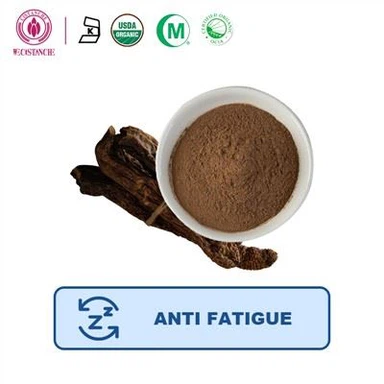
Cistanche tubulosa is a dry fleshy stem with scaly leaves belonging to the Cistanche genus of the Ledaceae family. It is warm in nature, sweet and salty in taste, and belongs to the kidney and large intestine meridians. It has traditional effects such as tonifying kidney yang, nourishing essence and blood, moistening intestines and promoting bowel movements, and delaying aging. It is known as the "Desert Ginseng". Starting from the 2010 edition of the Pharmacopoeia of the People's Republic of China, Cistanche tubulosa (Schrenk) R. Wight has been added as one of the statutory basal plants of Cistanche and listed alongside C. deserticola.

Cistanche tubulosa is mainly produced along the southern edge of the Tarim Basin in Xinjiang Uygur Autonomous Region, growing parasitically on the roots of Tamarix plants. It is the primary source of Cistanche tubulosa medicinal materials in China's market at present, with annual output accounting for more than 60%. Due to the increasing scarcity of wild resources, it has been listed as a second-class protected plant in the National Key Protected Wild Plant List (2021 edition).
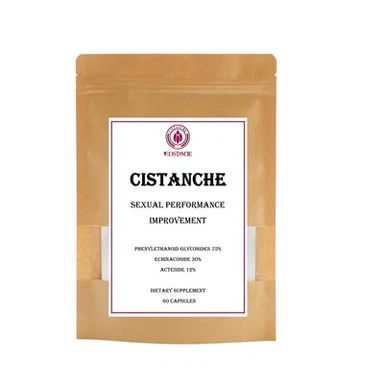
Modern pharmacological research has shown that the core pharmacological substance of Cistanche tubulosa is based on phenylethanoid glycosides (PhGs), among which Echinacoside (C35H46O20) and Acteoside/verbascoside (C29H36O15) have the highest content and strongest activity, and are explicitly designated as characteristic components for quality control of Cistanche tubulosa medicinal materials by the Chinese Pharmacopoeia. According to the 2020 edition of the Chinese Pharmacopoeia, the total amount of echinacroside and verbascoside in the dried product of Cistanche tubulosa should not be less than 1.5%, which is much higher than the standard of 0.30% for desert Cistanche tubulosa. Therefore, establishing accurate, efficient, and reproducible content determination methods is of great significance for the quality control, origin evaluation, planting optimization, and product development of Cistanche tubulosa medicinal materials.

Echinoside, the main chemical component of Cistanche tubulosa

Acteoside, the main chemical component of Cistanche tubulosa
Chemical Characteristics of Pinecone Chrysanthemum Glycoside and Ergotamin Glycoside
chemical structure
Pinecone glycoside and ergosterol glycoside are both phenylethanoid glycosides, whose basic skeleton is composed of a phenylethanoid nucleus connected by glycosidic bonds to sugar groups (usually glucose and rhamnose), and substituted groups such as caffeoyl groups are introduced at the phenolic hydroxyl position. The molecular formula of echinacoside is C35H46O20, with a relative molecular weight of 786.72. Its structure contains one caffeoyl group, one glucose group, and one rhamnose group. The molecular formula of ergosterol glycoside (verbascoside) is C29H36O15, with a relative molecular weight of 624.59. Its structure is similar to that of pinealoside, but it lacks rhamnose and some caffeoyl substitutions. Both are easily soluble in polar solvents such as methanol, ethanol, and water, and have characteristic absorption in the ultraviolet region (maximum absorption wavelength around 330 nm), which provides a theoretical basis for HPLC-UV detection.
Pharmacological activity
Pinecone chrysanthemum glycoside and ergosterol glycoside have a wide range of pharmacological activities: (1) antioxidant effect - by clearing superoxide anions (O2 · -), hydroxyl radicals (· OH), and hydrogen peroxide (H2O2), activating the Nrf2/ARE signaling pathway, and upregulating the activity of antioxidant enzymes such as SOD and GSH Px; (2) Neuroprotective effect - promoting the expression of neurotrophic factors such as GDNF, which has an improving effect on Alzheimer's disease and Parkinson's disease models; (3) Hormone like effects - promote the expression of testosterone synthesis related enzymes and improve reproductive function; (4) Hepatoprotective effect - reducing alcoholic liver injury and oxidative stress; (5) Antitumor effect - induces apoptosis of esophageal cancer cells through mitochondrial dependent pathways. The above activities make them irreplaceable indicator components for the quality evaluation of Cistanche tubulosa.

Effects of cistanche-antitumor
Overview of Content Determination Methods
At present, the methods for determining the content of pineal glycoside and ergosterol glycoside in Cistanche tubulosa mainly include high-performance liquid chromatography (HPLC), ultra-high-performance liquid chromatography (UPLC), thin-layer chromatography image digitization (TLC ImageJ), and liquid chromatography tandem mass spectrometry (LC-MS/MS). Among them, the HPLC method has been adopted as the legal determination method by the Chinese Pharmacopoeia due to its high equipment popularity, simple operation, and good reproducibility, and is currently the most widely reported method in the literature. The following focuses on the system establishment and optimization process of the HPLC method.
The influence of different origins and hosts on the content
Differences in Origin
Multiple studies have consistently shown that there are significant differences in the content of echinacroside and ergosterol in Cistanche tubulosa from different regions. Taking Xinjiang as an example, the difference in the content of two components in samples from places such as Hetian Moyu County, Kashgar Jiashi County, and Alar City can reach 2-5 times. Generally speaking, the total amount of phenylethanoid glycosides in Cistanche tubulosa produced in the Hotan area (especially Moyu County, Minfeng County, and Yutian County) is relatively high, and the content of phenylethanoid glycosides in some high-quality samples can reach 2.5% to 5.0%, far exceeding the pharmacopoeia standard of 1.5%.
Different host influences
Cistanche tubulosa parasitizes the roots of different plants in the genus Tamarix, and the host species have a significant impact on the quality of medicinal materials. Chen et al. (2005) reported that the content of phenylethanolic acid in samples parasitized on T. talama kanensis was generally higher than that parasitized on T. ramosissima. In addition, there are differences between wild and cultivated products. Generally, the content of two components in wild products is higher than that in cultivated products, but high-quality cultivated products can also achieve higher levels by optimizing planting conditions.
Differences in specifications and parts
The specifications (diameter, length) and medicinal parts of Cistanche tubulosa also have an impact on its content. Research has shown that the content of echinacoside and ergosterol in thinner fleshy stems is often higher than that in thicker stems; The content in the upper part of the stem (near the inflorescence end) is usually higher than that in the base. This rule provides a reference for the selection of parts during the harvesting and processing of medicinal herbs.
Introduction to other measurement methods
Ultra-high-performance liquid chromatography (UPLC)

Cistanche tubulosa experiment
Click here to view Cistanche Tubulosa Extract Natural Supplement Powder
【Ask for more】 Email:cindy.xue@wecistanche.com / WhatsApp: 0086 18599088692 / WeChat: 18599088692
The UPLC method uses a chromatography column with a smaller particle size (such as Waters HSS T3, 1.8 μ m, 100 × 2.1 mm), a flow rate of 0.3 mL/min, an injection volume of only 1 μ L, and the analysis time can be shortened to 10-15 min (traditional HPLC requires 30-50 min), with better separation and sensitivity. Liang Jiansong et al. (2021) established a UPLC method for simultaneous determination of six phenylethanolic glycosides, which has a wide linear range and high recovery rate, and is suitable for rapid screening of large quantities of samples.
LC-MS/MS method
The liquid chromatography tandem mass spectrometry method has extremely high sensitivity and can simultaneously determine dozens of components in Cistanche tubulosa, including echinacoside, ergosterol glycoside, isoergosterol glycoside, and guanosine A. It is suitable for metabolomics research and comprehensive quality evaluation. The RPLC-HILIC combined technology can even measure 23 polar and non-polar components at once, covering a content range of 5 orders of magnitude.
Online pressurized solvent microextraction eddy current chromatography HPLC method
This method couples sample extraction, purification, and chromatographic separation online, significantly reducing the consumption of organic solvents and sample usage. The LOQs of the three phenylethanolic glycosides are 0.50 mg/L (echinacoside), 0.25 mg/L (ergosterol glycoside), and 0.38 mg/L (isoergosterol glycoside), respectively, which are suitable for rapid analysis of precious samples.
TLC Image Digitization Method

cistanche extract powder
Based on ImageJ software, quantitative analysis was performed on the gray values of thin-layer chromatography spots. The correlation coefficients r of pineal chrysanthemum glycoside, guanosine A, ergosterol glycoside, and isoergosterol glycoside were 0.9974, 0.9931, 0.9923, and 0.9890, respectively, which were consistent with the HPLC method. This method is low-cost, easy to operate, and suitable for rapid screening in grassroots units and the field.
discussion
Key issues in optimizing chromatographic conditions
The selection of mobile phase is crucial in the development of HPLC methods. Literature comparison shows that: (1) the water acetonitrile system is prone to cause tailing of the phenylethanolic glycoside peak, and adding 0.1% formic acid or 1% acetic acid can significantly improve the peak shape; (2) The separation efficiency of the methanol acetonitrile acetic acid ternary system is superior to that of the pure methanol or pure acetonitrile binary system; (3) The detection wavelength selection of 330-334 nm can balance the absorption intensity of both components, with a slightly higher response at 334 nm and less interference from ergosterol at 330 nm. Column temperature has an impact on retention time but does not significantly change separation degree, with a reasonable range of 30-35 ℃.
Optimization of Extraction Methods
The solvent concentration, solid-liquid ratio, ultrasound temperature, and time all affect the extraction efficiency. Research has shown that: (1) 50%~80% methanol or ethanol can effectively extract both glycoside components, with a slightly higher extraction rate of 60%~80% ethanol; (2) A solid-liquid ratio of 1:30~1:50 (g/mL) is sufficient for thorough extraction; (3) The optimal combination is ultrasound temperature of 50-60 ℃ and time of 40 min; (4) Ultrasonic extraction is superior to reflux extraction, as the latter can easily lead to the degradation of thermosensitive phenylethanolic glycosides.
Discussion on the Rationality of Pharmacopoeia Standards
The current pharmacopoeia stipulates that the total amount of paeoniflorin and ergosterol glycosides in Cistanche tubulosa should be ≥ 1.5%. This standard is relatively loose - high-quality samples from Xinjiang usually reach 3% to 5%, with only a few low-quality samples approaching the lower limit. Some researchers suggest raising the standard to 2.0% to 2.5% to better ensure the quality of medicinal materials. In addition, the pharmacopoeia only uses two components as indicators, while Cistanche tubulosa also contains various active phenylethanolic glycosides such as guanosine A, isoergosterol glycosides, and hesperidin. Multi-indicator comprehensive evaluation is the future development direction.
Suggestions for Method Selection
For the quality inspection of general medicinal materials and daily production quality control, it is recommended to use the pharmacopoeia HPLC method. The method is mature, the equipment requirements are low, and the results are highly comparable. For large-scale sample screening or precious sample analysis, UPLC or online PLME-TFC-HPLC methods are more efficient. LC-MS/MS classification method is the preferred method for in-depth quality evaluation and variety identification. The TLC image method is suitable for rapid initial screening at the grassroots level. Researchers should make reasonable choices based on actual needs.

cistanche extract powder
Conclusion
This article systematically elaborates on the HPLC method for determining the content of echinacoside and ergosterol in Cistanche tubulosa. This method has been validated by multidimensional methodology and has the characteristics of a wide linear range (r ≥ 0.999), good precision (RSD<3%), high accuracy (recovery rate 95.7%~100.7%), and easy operation, fully meeting the quality control requirements of the Chinese Pharmacopoeia for Cistanche tubulosa.
Comprehensive analysis shows that: (1) the content of pineal glycoside in Cistanche tubulosa is usually 3-8 times that of ergosterol glycoside, and the total amount of the two varies depending on the place of origin, host, size, and location; (2) The total amount of phenylethanolic acid in high-quality samples from Hotan, Xinjiang can reach 2-3 times or more of the pharmacopoeia standard; (3) New technologies such as UPLC and LC-MS/MS provide powerful tools for multi-component synchronous determination and deep quality evaluation.
Future research should focus on: (1) establishing a multi-index quality evaluation system that covers more phenylethanoid glycosides; (2) thoroughly investigating the comprehensive impact of planting environment, host harvesting period, and processing method on the content; (3) promoting the standardization of the entire industry chain of Guanhua Cistanche from medicinal herbs to health food and cosmetic raw materials.
References
[1] Soup moss HPLC method for determining the content of echinacoside and ergotamine in Guanhua Roucong Kui [J]. Chinese Pharmacist, 2009, 12 (8): 1061-1063
[2] Chen M, Xiao SP, Cui GH, et al. The determination of echinacoside and acteoside in herbs of Cistanche tubulosa[J]. China Journal of Chinese Materia Medica, 2005, 30(11): 839-841.
[3] Baoshan, Ju Aihua, Xiao Zhibin. Determination of content of echinacoside and ergotamine in Guanhua Roucong Kui [J]. Chinese Medicine Review, 2017, 23 (19): 39-40, 44
[4] Liang Jiansong, Xue Cuili, Wu Menghua, etc UPLC content determination and chemometric evaluation of six phenylethanoid glycosides in Roucong Kui and Shacong Kui [J]. Journal of Pharmaceutical Analysis, 2021, 41 (2): 226-235
[5] Pharmacopoeia Committee of the People's Republic of China Pharmacopoeia of the People's Republic of China (2020 edition, Volume 1) [S]. Beijing: China Medical Science and Technology Press, 2020: 148-149
[6] Zhang Leihong, Du Niansheng, Wang Qing, etc Determination of Echinochlorin Content in Roucongkui Total Glycosides Capsules by HPLC [J]. Northwest Pharmaceutical Journal, 2002, 17 (1): 3-4
[7] Ju Aihua, Ao Geriletu, Zhou Kai Determination of content of echinacoside and ergotamine in salted meat and sunflower from Inner Mongolia [J]. Chinese Journal of Traditional Chinese Medicine, 2011, 26 (1): 178-180
[8] Song Peng, Tu Pengfei. Research progress on quality control and evaluation of traditional Chinese medicine Roucongkui [J]. Northern Pharmacy, 2011, 8 (2): 45-47
[9] Guo Dingyu, Xiao Jinglei. Progress in Quality Control and Biological Activity Research of Functional Components in Roucongkui [J]. Jilin Traditional Chinese Medicine, 2023, 43 (7): 856-860
[10] Lu Yinghui, Pi Wenmin, Zhang Yue, etc Comparative Study and Market Status Analysis of Roucong Kui and Guanhua Roucong Kui [J]. Modern Chinese Medicine, 2019, 21 (8): 1105-1110
[11] National Pharmacopoeia Committee Standard for formula granules of Roucongkui (Guanhua Roucongkui) [S]. Beijing: China Medical Science and Technology Press, 2021
[12] Fu C, Li J, Aipire A, et al. Cistanche tubulosa phenylethanoid glycosides induce apoptosis in Eca-109 cells via the mitochondria-dependent pathway[J]. Oncology Letters, 2019, 17(2): 1883-1892.
[13] Xu Mingjun, Wait Quality Analysis and Comprehensive Evaluation of Desert Meat Sunflower from Different Regions in China [J]. Food Industry Science and Technology, 2022, 43 (15): 312-320
[14] Sister Hao, Chen Sumei, Yan Donghai, etc Research progress on the application of Roucongkui in cosmetics [J]. Journal of Daily Chemical Science, 2021, 44 (9): 28-33
[15] Hou Ji, Wang Bo, Li Guanghui, etc Research progress and industrialization status of Roucongkui [J]. Shandong Agricultural Science, 2020, 52 (12): 147-154