Determination Of Echinacoside in Water Extract Of Cistanche Herba By HPLC
Mar 17, 2023
XU Shanshan1 ,WU Kangyu2 ,TU Xingming2 (1. The Third Clinical Medical College of Guangzhou University of Chinese Medicine, Guangzhou 510405 Guangdong, China; 2. The Third Affiliated Hospital of Guangzhou University of Chinese Medicine,Guangzhou 510378 Guangdong,China)
Abstract: Objective An HPLC method was established for determination of Echinacoside in water extract of Cistanche deserticola. Methods Echinacoside was determined by HPLC. The separation was performed on Inertsil ODSSP C18 column with mobile phase consisted of acetonitrile(A)and 0.4% phosphoric acid solution(B),by gradient elution. The detection wavelength was set at 333 nm,and the column temperature was 30 ℃. The flow rate was 1.0 mL·min-1 and the injection volume was 10 μL. Results The linear relation of echinacoside within the concentration range of 44.939 7-539.276 4 μg ·mL- 1 was good(r = 0.999 8). The recoveries were 94.59%-105.31% (RSD= 2.93%,n = 9). The content of echinacoside in water extracts of Cistanche herba was 15.527,7.347,12.267 mg·g-1 .
Conclusion: The established HPLC method with good repeatability is accurate,simple and feasible. It is suitable for the determination of echinacoside in water extract of Cistanche deserticola ma.
Keywords:HPLC;water extract of Cistanche deserticola;Echinacoside;determination of content
Cistanche deserticola is a commonly used tonic in traditional Chinese medicine in clinical practice, and has the reputation of "desert ginseng". The Cistanche deserticola included in the 2015 edition of the Chinese Pharmacopoeia is the dried, scaly, fleshy stem of the Orobaceae plant Cistanche deserticola Y. C. Ma or Cistanche tubulosa (Schenk) Wright. It has a warm nature, a sweet and salty taste, and belongs to the kidney and large intestine meridians. It has the effects of tonifying kidney yang, benefiting essence and blood, moistening the intestines, and relieving constipation [2].

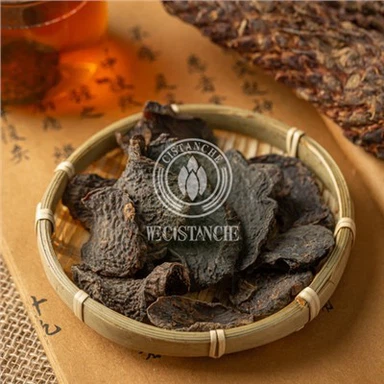
Desert ginseng
The "Shennong Materia Medica Classic" states that it can "nourish the middle, nourish the five internal organs, and strengthen the yin and nourish the essence.". Cistanche deserticola mainly contains phenylethanoid glycosides, iridoids and glycosides, lignans and glycosides, polysaccharides, esters, and alkaloids [3]. Phenylethanol glycosides are the main active components of Cistanche deserticola, among which echinacea and poolside are the indicator components for the identification and content determination of Cistanche deserticola in the Chinese Pharmacopoeia.

Phenylethanol glycoside is the main active component of Cistanche deserticola
Pharmacological studies [4] indicate that Cistanche deserticola has various pharmacological effects such as moistening the intestines and relieving constipation, protecting the liver, resisting osteoporosis, antioxidation, anti-aging, and anti-fatigue. The aqueous extract of Cistanche deserticola can promote the bone morphogenetic protein 2 genes of osteoblasts in rats, as well as the tartrate-resistant acid phosphatase and osteocalcin in the serum of ovariectomized mice, as well as the Smad1 and Smad5 genes and transforming growth factors in the bone marrow- β The expression of, etc., has an anti-osteoporosis effect [5-6]. Echinoside can promote the proliferation of osteoblasts and promote the differentiation of bone marrow mesenchymal stem cells into osteoblasts in vitro [7-9].

Echinoside, the main chemical component of Cistanche deserticola
Click here to view Natural Cistanche Echinacoside products
【Ask for more】 Email: xue122522@foxmail.com / Whats App: 0086 18599088692 / Wechat: 18599088692
In recent years, there have been many reports on the determination of the content of echinacoside and poolside in the alcohol extract of Cistanche deserticola and its compound preparations [10-12], but there are few reports on the determination of the content of indicator components in the water extract of Cistanche deserticola. In this study, high-performance liquid chromatography (HPLC) was used to determine the content of echinacoside in the water extract of Cistanche deserticola.
1. Material
1.1 Apparatus
LC-20AT high-performance liquid chromatography, SPD-20A detector, SIL-20A automatic sampler, CTO-10ASvp column temperature box, LCsolution liquid chromatography workstation, Shimadzu Corporation of Japan; MES125P-OCE-DU Electronic Analytical Balance, Sartorius, Germany; SHZ-D (III) circulating water multipurpose vacuum pump, Henan Yuhua Instrument Co., Ltd;
1.2RC2BSO25 rotary evaporator cooling circulation system, RV10DS96 rotary evaporator, IKA, Germany; DK-S26 Electric Thermostatic Water Bath, Shanghai Jinghong Experimental Equipment Co., Ltd; UPR series ultra-pure water machine, Sichuan Youpu Ultra Pure Technology Co., Ltd.
1.2 Medicinal Materials and Reagents
Meat Rong medicinal material, purchased from Guangzhou Lingnan Traditional Chinese Medicine Slices Co., Ltd., batch number: 18010011806001, 181001. The dried, scaly, fleshy stems of the Leobaceae plant Cistanche deserticola identified by Chief Chinese Herbalist Tu Xingming of the Third Affiliated Hospital of Guangzhou University of Traditional Chinese Medicine are stored in the Drug Inspection Room of the Third Affiliated Hospital of Guangzhou University of Traditional Chinese Medicine; Echinoside reference substance, content 89.7%, China Institute for the Control of Food and Drug Control, batch number: 111670-201706; Acetonitrile is chromatographically pure (Merck, Germany); Methanol and phosphoric acid are analytically pure (Tianjin Fuyu Fine Chemical Co., Ltd.); Water is ultra-pure water.
2. Methods and Results
2.1 Preparation of Water Extract from Cistanche deserticola
Take the cistanche powder, add 10 times the amount of distilled water, heat, and reflux to extract twice, each time for 1 hour. Filter, combine the filtrate, and use a rotary evaporator to concentrate the filtrate to a crude drug content of 0.100 g · mL-1. Store at 4 ℃ for standby. 2.2 Chromatographic conditions and system suitability Chromatographic column: InertsilODS SPC18 column (150mm × 4.6mm,5 μ m); Mobile phase: acetonitrile (A) - 0.4% phosphoric acid solution (B), gradient elution: 0~5min, 17% A; 5~25min,20%A; 25~30min,17%A; Detection wavelength: 333nm; Column temperature: 30 ℃; Flow rate: 1.0mL · min-1; Injection volume: 10 μ L。 Under this chromatographic condition, the resolution between the peaks of echinacea and adjacent components is greater than 1.5, and the theoretical number of columns should not be less than 4000 for echinacea peaks. The chromatogram is shown in Figure 1.


Figure1 HPLC chromatograms of echinacoside(A)and water extract of Cistanche herba(B)
2.3 Preparation of solution
2.3.1 Reference solution
Weigh an appropriate amount of Echinacetin reference substance, accurately weigh it, place it in a 10mL volumetric flask, add methanol to dissolve, and make it contain 898.794 Echinacetin per milliliter μ G of the reference solution, stored at 4 ℃ for standby.

Echinoside of Cistanche deserticola
2.3.2 Test solution
Accurately measure 2.0 mL of Cistanche deserticola aqueous extract, evaporate in a water bath, dissolve in methanol, bring to a constant volume in a 10 mL volumetric flask, shake well, 0.22 μ M microporous membrane filtration, namely.
2.4 Investigation of a linear relationship
Accurately measure 0.25, 0.50, 1.00, 2.00, 2.50, and 3.00 mL of the reference solution under 2.3.1 and place them in a 5 mL volumetric flask, add methanol to constant volume, and shake well to obtain gradient concentrations of 44.9397, 89.8794, 179.7588, 359.5176, 449.3970, and 539.2764 μ G · mL-1 of the reference solution, 0.22 μ M Microporous membrane filtration. Perform the determination according to the chromatographic conditions in 2.2 and record the peak area. Using the mass concentration of the reference substance as the abscissa (X, μ G · mL-1), the peak area is the ordinate (Y), and the linear regression equation is obtained: Y=13185.0X-32273.0, r=0.9998. The results showed that echinacea ranged from 44.9397 to 539.2764 μ The linear relationship within the concentration range of g · mL-1 is good.
2.5 Precision test
Take 539.2764 μ G · mL-1 reference solution, inject the sample continuously 6 times according to the chromatographic conditions in 2.2, and record the peak area. Results The RSD of the peak area of echinacea was 1.81%, indicating good precision of the instrument.
2.6 Stability test
Accurately measure 2.0 mL of Cistanche deserticola aqueous extract, evaporate to dryness in a water bath, dissolve in methanol, bring to a constant volume in a 10 mL volumetric flask, shake well, 0.22 μ Filter with a microporous membrane, inject samples for determination at 0, 2, 4, 8, 12, and 24 hours according to the chromatographic conditions in 2.2, and record the peak area. Results The RSD of the peak area of echinacea was 1.16%, indicating that the test solution had good stability within 24 hours.
2.7 Repeatability test
Accurately measure 6 portions of 2.0 mL aqueous extract of Cistanche deserticola, prepare 6 portions of the test solution in parallel according to the method described in 2.3.2, inject samples for determination according to the chromatographic conditions described in 2.2, and record the peak area. Results The RSD of the mass concentration of echinacea was 1.28%, indicating that the method had good repeatability.

Cistanche deserticola experiment
2.8 Sample Addition Recovery Test
Accurately measure 9 portions of 1.0 mL of Cistanche deserticola aqueous extract, add 0.8, 1.0, and 1.2 mL of reference solution (101.552 mg · mL - 1), evaporate in a water bath, dissolve in methanol, and bring to volume in an mL volumetric flask; Shake well, 0.22 μ Filter with m microporous filter membrane to prepare high, medium, and low concentration test solution. Prepare 3 parts of each concentration in parallel, measure according to the chromatographic conditions in 2.2, record the peak area, and calculate the sample addiction recovery. The results are shown in Table 1.
2.9 Determination of sample content
Accurately measure 3 portions of 2.0mL water extract from Cistanche deserticola, evaporate to dryness in a water bath, dissolve in methanol, bring to a constant volume in a 10mL volumetric flask, shake well, 0.22 μ Filter with a microporous membrane, measure according to the chromatographic conditions in 2.2, record the peak area, and calculate the content of echinacea. The results are shown in Table 2.
Table 1 Results of recovery tests of echinacoside

Table 2 Results of content determination of echinacoside in water extract of Cistanche herba

3. Discussion
3.1 Preparation method of test article
The aqueous extract of Cistanche deserticola contains various chemical components such as phenyl ethanol glycosides and polysaccharides, which cause certain interference with the components to be tested. This study investigated two different concentrations of solvents, 50% methanol, and methanol. The results showed that the separation effect of the peaks in the chromatogram of the test product using 50% methanol as the solvent was poor between echinacea and adjacent components; Using methanol as a solvent, the resolution of the echinacea glycoside peak is good, and there is no interference from other impurity peaks. Therefore, methanol was selected as the solvent for the test solution. Using methanol as the solvent, the water extract of Cistanche deserticola was evaporated to dryness in a water bath. Two treatment methods were used: methanol dissolution, constant volume shaking, and methanol ultrasonic (10 min) dissolution. The results showed that there was no significant difference between the two methods. This method was chosen to prepare the test solution due to the simple operation of methanol dissolution and constant volume shaking.
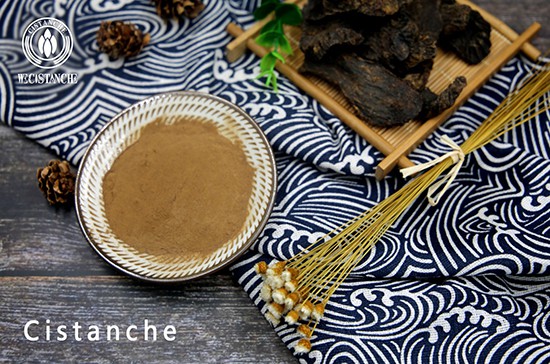
Chinese herb cistanche
3.2 Selection of mobile phase
In this study, reference was made to the mobile phase (methanol-0.1% formic acid) used for the content determination of Cistanche deserticola in the Chinese Pharmacopoeia (Volume I) (2015). The results showed that the peak of echinacea glycoside widened and there was a leading edge phenomenon, which may be related to the weak elution ability of the mobile phase; Referring to relevant literature [12-13], acetonitrile-0.5% acetic acid was used as the mobile phase, but the peak shape of echinacea was poor and there was a tailing phenomenon. Considering the pH value of the mobile phase, acetonitrile-0.4% phosphoric acid was finally used as the mobile phase. As a result, the theoretical plate number of echinacea peaks was greater than 4000, and the resolution between echinacea and adjacent component peaks was greater than 1.5. The peak shape was symmetrical, without interference from impurity peaks, and the baseline was stable. Therefore, in this study, acetonitrile - 0.4% phosphoric acid was used as the chromatographic mobile phase for the determination of echinacea content. In this study, the HPLC method was used to determine Echinacea in Cistanche deserticola aqueous extract.

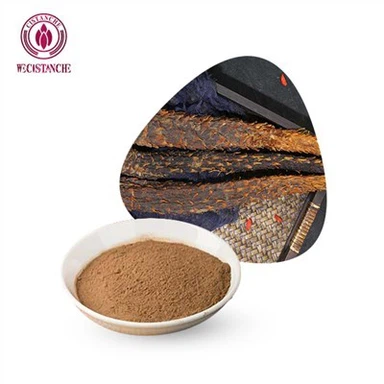
Cistanche extract powder
The method is simple, accurate, and reproducible. It is suitable for the determination of echinacea in cistanche deserticola aqueous extract and can be used as a quality control method for cistanche deserticola aqueous extract. This study only determined the content of echinacea in the water extract of Cistanche deserticola. In the future, it is planned to determine the content of echinacea in the compound decoction of Cistanche deserticola to explore the impact of various factors on the content of echinacea, providing a reference for the quality control of the decoction containing Cistanche deserticola.
reference:
[1] Zhong Ping Desert ginseng and cistanche [J] Forest and Human Beings, 2004, 24 (11): 25
[2] National Pharmacopoeia Commission Pharmacopoeia of the People's Republic of China (Part I) [M] Beijing: China Medical Science and Technology Press, 2015:135-136
[3] Chen Fei, Chen Zhuo, Xing Xuefei, et al Research progress in Cistanche deserticola [J] Drug Evaluation Study, 2013, 36 (6): 469-475
[4] Fang Jian Advances in pharmacological research on Cistanche deserticola [J] Guangming Traditional Chinese Medicine, 2017, 32 (14): 2140 - 2142
[5] Xing Xiaoxu, Liu Zhongjie, Han Bo Effect of cistanche deserticola aqueous extract on bone morphogenetic protein 2 gene expression in rat osteoblasts [J] China Animal Husbandry and Veterinary Medicine, 2013, 40 (1): 17-21
[6] LIANG H,YU F,TONG Z,et al. Cistanches herba aqueous extract affecting serum BGP and TRAP and bone marrow Smad1 mRNA, Smad5 mRNA,TGF-β1 mRNA and TIEG1 mRNA expression levels in osteoporosis disease[J]. Molecular Biology Reports, 2013, 40 (2):757-763.
[7] Fang Hailin, Li Junkao, Yao Senming, et al Observation on Echinoside Promoting Rat Osteoblast Proliferation by Activating ERK/BMP-2 Signal Pathway [J] Grassroots Medical Forum, 2015, 19 (4): 435-438
[8] Tian Yuan Study on the differentiation of bone marrow mesenchymal stem cells into osteoblasts induced by echinaside and its mechanism [D] Shenyang: Liaoning University of Traditional Chinese Medicine, 2015
[9] Wei Dawei, Ge Ziyu, Liu Yihan, etc Study on Echinoside Induced Differentiation of Bone Marrow Mesenchymal Stem Cells into Osteoblasts [J] Pharmacology and Clinic of Traditional Chinese Medicine, 2017, 33 (2): 48-52
[10] Tian Yubiao, Yang Guang'an, Huang Weijie, et al Determination of Echinoside and Piloside in Cistanche deserticola Micropowder by HPLC [J] Anhui Agricultural University, 2015, 43 (3): 171-173
[11] Yang Sude, Hu Junhua, Li Jiachun, et al Simultaneous Determination of Echinoside, Piloside, and Isopiloside in Total Cistanche Glycoside Capsules by HPLC [J] World Science and Technology - Modernization of Traditional Chinese Medicine, 2015, 17 (3): 609-613
[12] Xu Xiaoxue Pharmacodynamic and metabonomic studies on anti osteoporosis effects of Cistanche deserticola and its effective components [D] Yinchuan: Ningxia Medical University, 2017
[13] Yan Yao, Meng Xinyuan, Xu Huanhuan, et al Determination of Echinoside and Piloside in Qirong Runchang Oral Liquid by High Performance Liquid Chromatography [J] Journal of Xinjiang Medical University, 2018, 41 (7): 886-888892