

Determination Of Total Saponins Content in Boschniakia Rossica And Herba Cistanches By Spectrophotometry Ⅰ
Apr 19, 2024
Abstract:
Objective This quantitative method is established of total saponins in Boschniakia rossica and Herba cistanches and the content of the total saponins is determined. Methods Salidroside was selected as a reference substance, color reaction was used with vanillin and perchloric acid. Then the content of total saponins in Boschniakia rossica and Herba cistanches was determined at 523nm by spectrophotometry. Results The salidroside curve was linear over the range of 0. 05133 ~ 0. 2567mg·ml - 1 with the correlation of 0. 9992, and the linear regression equation was Y = 1. 611X + 0. 0573. For Boschniakia rossica, the average recovery of salidroside was 99. 68% with RSD of 1. 68% ( n = 6); and for Herba distances, the average recovery of salidroside was 101. 18% with an RSD of 0. 94% ( n = 6). Conclusion The method is accurate, simple, and reliable. So it can be used to determine the content of total saponins in Boschniakia rossica and Herba cistanches.
Keywords: Boschniakia rossica; Herba cistanches; Total saponins; Determination; Spectrophotometry; Salidroside

HOW LONG DOES IT TAKE FOR CISTANCHE TO WORK?
Cistanche deserticola Y. C. Ma and Bosehniakia rossica Fedtseh et Flerov are parasitic medicinal plants belonging to the Orobanchiaceae family. Cistanche deserticola is a parasitic plant that lives on the roots of Haloxylon ammodendron, a desert tree. It is mainly produced in Xinjiang and Alxa League, Inner Mongolia. It is known as "desert ginseng" due to its low yield and high medicinal value. Grasshopper [1] is produced in the Northeast of my country [2]. According to folklore, it has the effect of immortality, so it is named the Northeast "Eternal Age Grass". It is used for impotence due to kidney deficiency, cold pain in the waist and knees, dryness of the intestines, and constipation. It can nourish and strengthen the body, delay aging, and is an authentic medicinal resource in the Northeast [3]. The two have similar effects, and both have the effects of tonifying the kidneys, strengthening the yang, moistening the intestines, and laxative [4]. According to the records about Cistanche deserticola in Li Shizhen's "Compendium of Materia Medica" of the Ming Dynasty, "This substance is tonic but not harsh, so it is called calm. It is rare to get it from Congrong, so it is filled with Cistanche deserticola." That is to say, Cistanche deserticola was once used as an alternative medicinal material to Cistanche deserticola. , Modern research has shown that both Cistanche deserticola and Estuary deserticola have pharmacological effects such as anti-aging [5, 6], anti-fatigue [7, 8], improving immune function [9, 10], and enhancing memory [11-13].
The content of total glycosides in Grasshopper and Cistanche deserticola has the value of an in-depth study. Both contain saponins, volatile oils, sugars, amino acids, and other components. Scholars have reported comparative studies on the components of volatile oils, sugars, amino acids, and other components of the two [4, 14, 15], but the determination of the total glycoside content of the two There have been no reports in the literature. The main components of Cistanche deserticola are phenylpropanoid glycosides (series of glucosides A, B, C, D, E, F, G, H, I, J, K) [16], and Cistanche deserticola is phenylethanoid glycosides (series of Cistanche deserticola)[17,18], the saponins of the two are similar, and they share a similar component, salidroside. We believe that glycosides are important active ingredients of both, and we explore the use of spectrophotometry to determine the content of total glycosides. , to provide a theoretical basis for the further development and utilization of Echinacea deserticola and Cistanche deserticola resources.

1 Materials and instruments
1. 1 Material and reagents: Amaranth officinale, collected from around Changbai Mountain, identified as a plant of the Orobanaceae family
The dried whole plant of Orobanche coerulescens, wash the sample, and drain the water
Separate, place in a constant temperature drying box at 40°C, dry to constant weight, crush, pass through a 40 mesh sieve and prepare
[19]; Cistanche deserticola, Hohhot Enhe Trading Co., Ltd., identified as listed
Cistanche deserticola Y. C. Ma's dried meat
Stems, washed, air-dried, dried to constant weight, crushed, passed through a 40-mesh sieve, set aside; red
Crassuside reference substance (provided by China Institute of Pharmaceutical and Biological Products, batch number 110818
- 200404, for content determination); all experimental reagents used are of domestic analytical grade.
1. 2 Instruments 752N UV-visible spectrophotometer (Shanghai Jingke); Tu-1901 pair
Beam UV spectrophotometer (Beijing Puxi General Co., Ltd.); electronic analytical balance
AL104 1/100,000 (Mettler-Toledo Instrument Shanghai Co., Ltd.); FW-80
High-speed universal crusher (Shandong Hualu Electric Heating Instrument Co., Ltd.).

2 methods
2. 1 Preparation of reference solution
Use an analytical balance to accurately weigh salidroside 15. 40mg, dissolve in methanol transfer to a 25-volumetric flask, and adjust the volume to the mark. Prepare to contain 0.0% salidroside per ml. The 616 mg solution is used as the reference solution and is sealed in the refrigerator for later use.
2. 2 Preparation of test solution
Use an analytical balance to accurately weigh the medicinal powders of Grasshopper and Cistanche deserticola. 2. 0g, place it in a round-bottomed flask, add 40ml of 90% ethanol, heat and reflux extraction of Grasshopper once, and heat and reflux Cistanche deserticola twice, each extraction time is 1. 5h, after suction filtration, combine the filtrate, concentrate to dryness in a water bath, add 25ml of water to dissolve, extract 3 times with petroleum ether, 25ml each time, discard the petroleum ether liquid in the upper layer, and then continue to extract 3 times with water-saturated n-butanol. 25ml each time, combine three n-butanol extracts, evaporate the n-butanol liquid in a water bath in a fume hood, dilute it with methanol into a 10ml volumetric flask, mix well, then accurately measure 1ml of the solution and dilute it with methanol to 25ml volume. bottle, mix well, and use it as a test solution for later use.

2. 3. Selection of measurement wavelength
will 1. Place 25ml of the reference solution and the test solution into graduated test tubes with stoppers, evaporate the methanol solvent in a constant temperature water bath at 60°C, and add 0. 2ml of 5% vanillin-glacial acetic acid solution and 0. 8 ml of perchloric acid solution was reacted in a 60°C water bath for 15 min. Take out the test tube and immediately cool it with ice water for 5 min. Add 5 ml of glacial acetic acid and shake well [20]. Prepare the reference solution using methanol in the same way. The solution after color development was subjected to wavelength scanning, and the maximum absorption wavelength of 523 nm after the color reaction of salidroside was selected between 400 and 800 nm as the measurement wavelength of total glycosides of Escherichia coli and Cistanche deserticola. The scanning patterns of the control substance and the test substance are shown in Figure 1.
2. 4. Investigation of linear relationship: Use a pipette to accurately draw the reference solution 0. 5,1. 0,
1. 5,2. 0,2. 5ml were put into stoppered test tubes numbered 1 to 5, and the color reaction was carried out according to the steps in "2. 3". A blank experiment was carried out with methanol under parallel conditions, and the absorbance was measured at a wavelength of 523nm. The absorbance A (Y ) is the ordinate, concentration mg·ml-1
(X) is the abscissa, linear regression is performed, and the regression equation is Y = 1. 611X +0. 0573 ( r = 0. 9992), the result shows that the mass concentration of salidroside is at 0. The linear relationship is good within the range of 05133~0.2567mg·ml-1. The results are shown in Figure 2.
2. 5 Stability test
Precisely measure an appropriate amount of the test solution of Grasshopper and Cistanche deserticola, develop the color according to the method under "2.3", and measure the absorbance value evenly in 6 times within 30 minutes. This shows that within 30 minutes after color development, Grasshopper and Cistanche deserticola will The stability of the test solution is relatively good. The results are shown in Table 1.
2. 6 Precision test
Precisely measure an appropriate amount of the reference solution, develop the color according to the method under "2.3" above, and measure the absorbance 6 times continuously. The results are shown in Table 2. The results show that the precision of this experimental instrument is good.

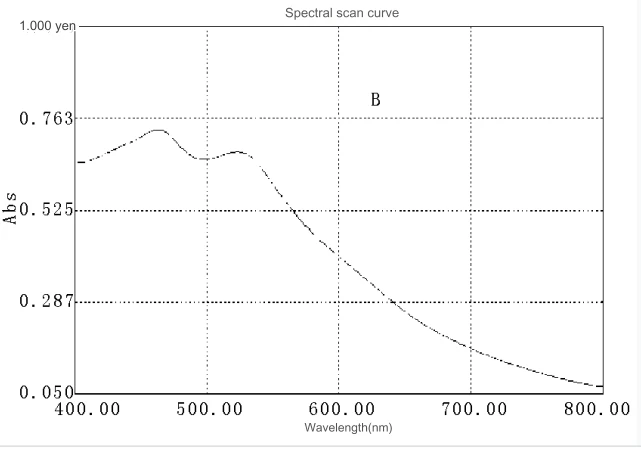
Figure 1 Thin-layer scanning patterns of salidroside reference substance (A), grasshopper test solution (B) and cistanche deserticola test solution (C)


2. 7. Repeatability test.
Precisely weigh 6 portions of grasshopper and cistanche deserticola powder, each portion contains 2. 0g, after heating and reflux extraction using the optimal extraction process that has been determined, follow the steps under "2. 3" and measure the absorbance at a wavelength of 523nm. The measurement results are shown in Table 3 and Table 4.

2. 8. Sample recovery rate test.
Accurately weigh 6 samples of Grasshopper and Cistanche deserticola with known mass percentage of total glycosides. Each sample is 12 mg. Accurately add 2 ml of salidroside reference solution. Follow "2. 2" Extract the sample under the item, determine the total glycoside content after color development according to the item "2.3", and calculate the recovery rate of the sample. The results are shown in Table 5 and Table 6.


You Might Also Like
-
Cistanche Tubulosa Supplements
-
Cistanche A Natural Testosterone Booster
-

Cistanche Tubulosa a new savior for enhancing memory and ...
-

Cistanche Dietary Supplement Cognitive Function Improveme...
-
Cistanche Dietary Supplement Sexual Performance Improveme...
-

Cistanche Dietary Supplement Constipation Relief Suppleme...