Dihydroquercetin Ameliorates LPS-induced Neuroinflammation And Memory DeficitⅡ
Apr 20, 2023
3. Results
3.1. DHQ ameliorated LPS-induced alterations in spatial recognition memory behavior test in the Y-maze test
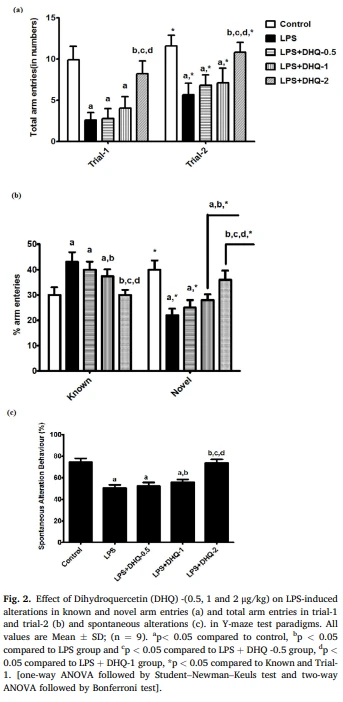
We performed a spatial recognition memory behavior test in Y-maze to evaluate the effect of DHQ on LPS-induced memory deficit behavior. Statistical analysis using two-way ANOVA revealed significant differences in percentage arm entries in trial-1 and trial-2 among groups [F (4, 80) ¼ 2.23, p < 0.05], arm [F (1, 80) ¼ 84.8, p < 0.05] and a significant interaction between groups and arm [F (4, 80) ¼ 88.3, p < 0.05].

Click to Rou cong rong for memory improvement
Further analysis using a post-hoc test showed a significant loss in the spatial recognition memory behavior with LPS administration compared to control rats. There were significant differences among the control, LPS, DHQ0.5, and 1 μg/kg groups. Treatment with 2 μg/kg attenuated the LPSinduced loss of spatial recognition memory. However, DHQ-0.5 and DHQ-1 μg/kg did not show any change to the LPS-induced loss in the spatial recognition memory. It is shown in Fig. 2(a).
3.2. DHQ improved LPS-induced alterations in curiosity behavior test in the Ymaze test
We investigated the effect of DHQ on curiosity behavior on day-10 as depicted in Fig. 2(b) below. We found significant differences in trial-1 and trial-2 among groups [F (4, 80) ¼ 1.77, p < 0.05], arm [F (1, 80) ¼ 83.9, p < 0.05] and a significant interaction between groups and arm [F (4, 50) ¼ 99.7, p < 0.05] when analyzed with two-way ANOVA.
The post-hoc test revealed that the curiosity behavior was significantly decreased with LPS administration compared to control rats. Treatment of DHQ-2 μg/kg attenuated the LPS-induced decrease in the curiosity behavior. However, DHQ-0.5 μg/kg did not cause any change to the LPSinduced decrease in the curiosity behavior. The effect of DHQ-2 μg/kg was found to be more significant than DHQ-1 μg/kg in improving the LPS-induced decrease in curiosity behavior.
3.3. DHQ improved working memory in the Y-maze test
The effect of DHQ on spatial memory impairment on day-10 after LPS injection in the Y-maze test is depicted in Fig. 2(c) below. Statistical analysis using one-way ANOVA showed that there were significant differences in spontaneous alteration behavior in the Y-maze test paradigm among groups [F (4, 40) ¼ 128, p < 0.05]. The post-hoc test revealed that the spontaneous alteration behavior was significantly decreased with LPS administration compared to control rats.

Significant differences were also found between the control and DHQ 0.5 and 1 μg/kg groups. Treatment of DHQ at 1 μg/kg and 2 μg/kg attenuated the LPS-induced decrease in the spontaneous alteration behavior, which indicates a gain in working memory. The effect of DHQ-2 μg/kg was found to be more significant than DHQ-1 μg/kg, whereas DHQ-0.5 μg/kg did not cause any change to the LPS-induced decrease in the working memory.
3.4. DHQ mitigated LPS-induced alterations in transfer latency (TL) in the EPM behavior test
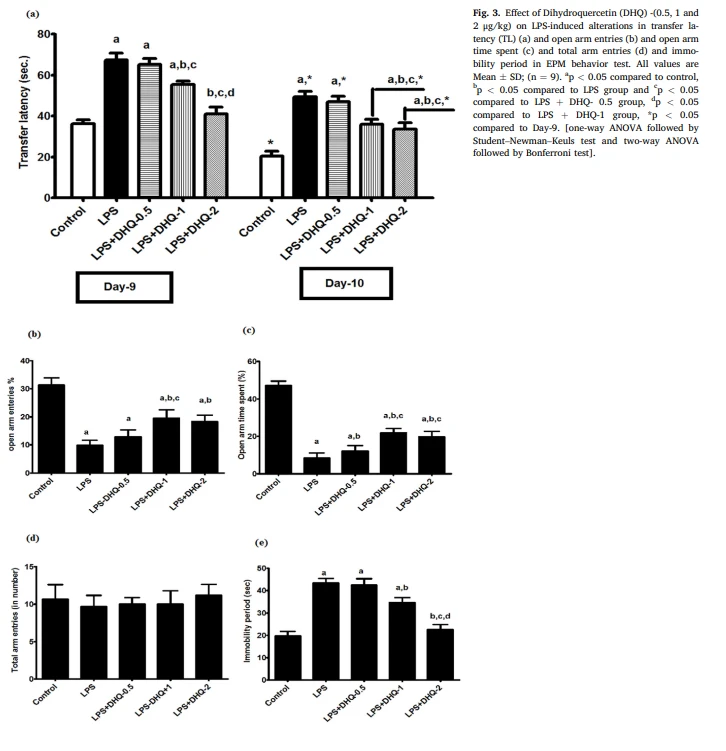
To evaluate spatial long-term memory, we studied the effect of DHQ on transfer latency on day-9 and day-10 after LPS injection in the EPM test as depicted in Fig. 3(a) below. Statistical analysis using two-way ANOVA revealed significant differences in trial-1 and trial-2 among groups [F (4, 80) ¼ 403.1, P < 0.00.05], time [F (1, 80) ¼ 781.4, p < 0.05] and a significant interaction between groups and time [F (4, 80) ¼ 15.11, p < 0.05].
The post-hoc test revealed that LPS injection significantly increased the TL compared to control rats. Data shows that the TL of the control group was significantly different from all the other groups on day-10 but on day-9, the TL of the control group was significantly different from LPS, DHQ-0.5, and 1 μg/kg only. DHQ-0.5 μg/kg did not cause any change to the LPS-induced increase in the TL. However, the LPS-induced increase in the TL was significantly attenuated with DHQ-1 μg/kg and DHQ-2 μg/kg.
3.5. DHQ increased open arm entries in the EPM behavior test
Anxiety behavior is caused in rodents by the induction of LPS. The effect of DHQ on the percentage of open arm entries on the day-10 after LPS injection in the EPM test is depicted in Fig. 3(b) below. One-way ANOVA showed significant differences in the percentage open arm entries among groups [F (4, 40) ¼ 101, p < 0.05].
The post-hoc test revealed that LPS injection significantly decreased the percentage of open-arm entries compared to control rats. Data revealed that there were significant differences between the control and all other groups. DHQ-0.5 μg/kg did not cause any change to the LPS-induced decrease in the percentage of open-arm entries. However, the LPS induced a decrease in the percentage of open arm entries significantly enhanced with DHQ-1 μg/kg and DHQ-2 μg/kg administration.
3.6. DHQ alleviated LPS-induced alterations in open arm time spent in the EPM behavior test
Behavioral data analysis using one-way ANOVA showed significant differences in open-arm time spent among groups [F (4, 40) ¼ 292.2, p < 0.05]. The post-hoc test revealed that LPS injection significantly decreased the percentage of open-arm time spent compared to control rats. Statistical data also showed that time spent in the open arm by the control group was significantly different from all other groups. DHQ-0.5 μg/kg caused a significant change to the LPS-induced decrease in the open arm time spent. However, the LPS induced a decrease in the open arm time spent significantly improved with DHQ-1 μg/kg and DHQ-2 μg/kg even more significant than DHQ-0.5 μg/kg. It is shown in Fig. 3(c).
3.7. DHQ showed no effect in total arm entries in the EPM behavior test
The effect of DHQ on total arm entries on day-10 after LPS injection in the EPM test is depicted in Fig. 3(d) below. Statistical analysis using one-way ANOVA had shown no significant difference in total arm entries among groups [F (4, 40) ¼ 0.894, p < 0.05]. The post-hoc test revealed that LPS injection did not cause any significant changes in total arm entries among the groups. None of the DHQ doses caused any significant changes in the total arm entries.
3.8. DHQ dose-dependently decreased LPS-induced alterations in immobility period in EPM behavior test
The effect of DHQ on the immobility period on day-10 after LPS injection in the EPM test is depicted in Fig. 3(e) below. One-way ANOVA revealed significant differences in the immobility period among groups [F (4, 40) ¼ 138.3, p < 0.05]. The post-hoc test showed that LPS injection significantly increased the immobility period compared to control rats. DHQ0.5 was found to cause no changes in the LPS-induced increase in the immobility period.
The immobility period in the control group was significantly lesser than LPS and DHQ-0.5 and 1 μg/kg. However, the LPS-induced increase in the immobility period was significantly attenuated with DHQ-1 μg/kg and DHQ-2 μg/kg, DHQ-2 μg/kg decreased the immobility period more significantly than DHQ-1 μg/kg.

3.9. DHQ improved mean blood flow into the brain altered by LPS induction
The effect of DHQ on mean cerebral blood flow was evaluated on day10 after LPS injection using a laser Doppler imager is depicted in Fig. 4 below Statistical analysis using one-way ANOVA revealed significant differences between the groups [F (4, 25) ¼ 41.9, p < 0.05]. The post-hoc test revealed that LPS injection brought a significant reduction in the mean blood flow into the brain compared to control rats.
Blood flow in control rats was also significantly different when compared to DHQ-0.5 and 1 μg/kg. However, DHQ-0.5 μg/kg and DHQ-1 μg/kg did not cause any change to the LPS-induced decrease in the mean blood flow. However, the LPS-induced fall in the mean blood flow was significantly improved with DHQ-2 μg/kg.
3.10. DHQ restored the level of acetylcholine altered by LPS induction
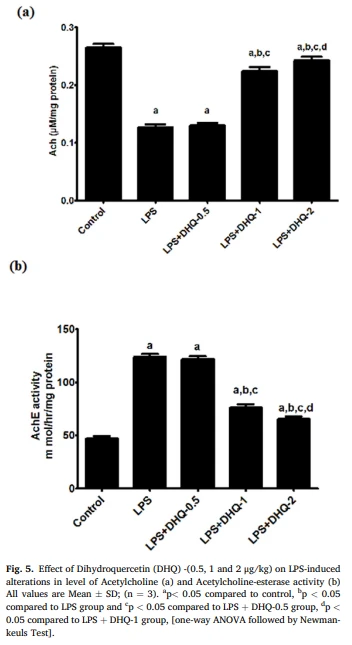
Acetylcholine is one of the dominant neurotransmitters in the brain involved in learning and memory (Myhrer, 2003). The effect of DHQ on LPS-induced alterations in the level of acetylcholine is depicted in Fig. 5(a) below. One-way ANOVA showed reckoning differences in the concentration of acetylcholine among groups [F (4, 10) ¼ 337, p < 0.05].
The post-hoc test signified that LPS injection significantly brought down acetylcholine levels in the hippocampus region as compared to that of the control group. DHQ-0.5 μg/kg did not cause any significant change to the LPS-induced decrease in acetylcholine concentration. However, the LPS-induced decrease in the acetylcholine concentration significantly increased with DHQ-1 μg/kg and DHQ-2 μg/kg. However, DHQ-2 μg/kg mediated elevation in the acetylcholine concentration was more significant than DHQ-1 μg/kg.
3.11. Effect of DHQ on LPS-induced changes in the acetylcholine-esterase activity
The effect of DHQ on LPS-induced changes in the AchE activity after LPS injection is depicted in Fig. 5(b) below. One-way ANOVA showed significant differences in AchE activity among groups [F (4, 10) ¼ 482, p < 0.05]. It was further proved by the post-hoc test that LPS injection significantly increased the AchE activity compared to the control group rats.
The data further exhibited that the AchE activity of the control group was
also significantly lesser than all remaining groups. DHQ-0.5 μg/kg did
not cause any significant change to the LPS-induced increase in the AchE
activity. However, the LPS induced an increase in the AchE activity
significantly attenuated with DHQ-1 μg/kg and DHQ-2 μg/kg. DHQ-2 μg/
kg mediated reduction in the AchE activity was more significant than
DHQ-1 μg/kg.
3.12. DHQ reduced pro-inflammatory IL-6 in LPS-induced animals
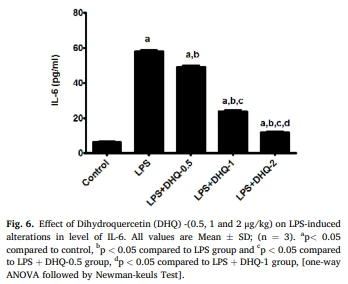
We studied the effect of DHQ on an inflammatory cytokine IL-6 after LPS induction as depicted in Fig. 6 below. Statistical analysis revealed significant differences in the concentration of IL-6 in the various groups. There were significant differences between the groups [F (4, 10) ¼ 3016, p < 0.05] as per one-way ANOVA.

The post-hoc test signified that LPS injection caused a surge in the level of IL-6 as compared to control rats. IL-6 concentration was statistically different between the groups as compared with the control group. DHQ-0.5, 1, and 2 μg/kg showed significant changes to the LPS-induced increase in the IL-6 level. However, DHQ-2 μg/kg mediated reduction in the level of IL-6 was the most significant when compared to the other two doses. DHQ-1 μg/kg was found to be more significant than DHQ-0.5 μg/kg.
3.13. DHQ showed antioxidant activities
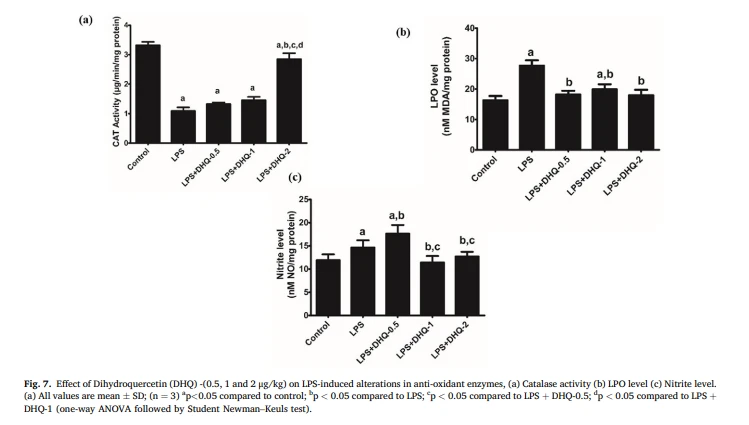
We have also explored the antioxidant properties of DHQ. Fig. 7 shows the effect of DHQ on the antioxidant enzymes upon LPS induction. Oneway ANOVA revealed significant differences between the groups [F (4,10) ¼ 186.7, p < 0.05], MDA [F (4, 10) ¼ 47.40, p < 0.05], and NO [F (4, 10) ¼ 18.76, P < 0.05] levels.
The post-hoc test revealed that LPS injection significantly decreased CAT activity and increased LPO activity, and increased NO level as compared with the control group. CAT activity was significantly boosted with DHQ-2 μg/kg administration. Moreover, LPO activity was significantly mitigated with DHQ-0.5, 1, and 2 μg/kg. DHQ-1 and 2 μg/kg but not DHQ-0.5 μg/kg administration mitigated NO activity significantly when compared with the LPS group.
4. Discussion
The salient feature of this study is that DHQ showed a multimodal mechanism of action by alleviating LPS-induced neuroinflammation and cognitive deficits. The relationship between neuroinflammation and learning and memory has been well-established through preclinical and clinical studies (Liu et al., 2012). Y-maze is one of the commonly used mazes to evaluate learning and memory in animal models.
The spontaneous alternation behavioral test is an indication of active retrograde working memory in the Y-Maze test (Onaolapo et al., 2012). LPS decreased the alternation behavior in the Y-Maze test indicating deficits in the working memory.
As shown in Fig. 2 (c) DHQ-1 and 2 μg/kg significantly minimized the LPS-induced loss in the working memory. It was also found that DHQ-1 and 2 μg/kg attenuated LPS induced a decrease in the novel arm and an increase in known arm entry as in Fig. 2 (b). Therefore, it improved spatial recognition memory.
The Y-maze study also showed that there was a significant improvement in the spatial memory with DHQ-2 μg/kg after LPS injection as shown in Fig. 2 a. The Administration of DHQ has been shown to improve spatial memory in an oligomeric-Aβ-treated rodent model (Wang et al., 2018).
Previous studies (Frühauf-Perez et al., 2018) showed that LPS injection disrupts long-term memory. As shown in Fig. 3 (a), DHQ in the dose of 1 and 2 μg/kg treatment improved the long-term memory in the TL behavioral test. As compared to day-9, TL day-10 showed a significant reduction; this signifies an improvement in long-term memory. An earlier study (Swiergiel and Dunn, 2007) showed that LPS injection caused anxiety-like behavior as it caused a decrease in the percentage of entries as well as time spent in the open arm in the EPM study.
In our study, DHQ significantly improved anxiety-like behavior as per Fig. 3 (c). LPS infusion did not show any effect on the locomotor activity of test animals as per the total arm entries data, which shows that motor functions were not hampered as in Fig. 3 (c). Neuroinflammation decreases cerebral mean blood flow (CBF) and induces cellular stress, which could contribute to cognitive defects (Zlokovic, 2005).
Its mechanism might involve dysfunction of the neurovascular unit which leads to faulty clearance of neurotoxic molecules from the brain to blood and an imbalance between energy metabolism and nutrition delivery (Zlokovic, 2008). In this study, LPS injection decreased the mean CBF and this decrease in mean CBF was significantly improved with DHQ-2 μg/kg, indicating its anti-neuroinflammatory activity as shown in Fig. 4.
The cholinergic system has an important role in memory, and its imbalance is involved in neuroinflammation pathology (Nizri et al., 2006). It has been observed that LPS induction caused an increase in AChE activity. Therefore, AChE inhibitors have been reported to ameliorate neuroinflammation-induced neurodegeneration (Nizri et al., 2006). In this study, LPS induction caused a significant fall in the level of Ach as shown in Fig. 5 (a). and an increment in AChE activity (Fig. 5 (b)). in the hippocampus.
The observed results could be due to the neuroinflammation-induced neurodegeneration of cholinergic neurons in the hippocampus (Kalb et al., 2013). DHQ-1 and 2 μg/kg reversed the changes caused by LPS infusion in ACh level and AChE activity as shown in Fig.5 (a) and Fig.5 (b) respectively. These data indicate that DHQ may have a beneficial effect on the cholinergic system in the neuroinflammation model of LPS.
An imbalance between ROS production and elimination in the biological system leads to oxidative stress, which plays a critical role in the age-associated cognitive decline in neuroinflammation-related neurodegenerative diseases such as Alzheimer's and Parkinson's diseases (Barnham et al., 2004). The major antioxidant enzymes, including superoxide dismutase (SOD) and catalase (CAT), are regarded as the first line of the antioxidant defense system against ROS in vivo during oxidative damage.
SOD can convert superoxide anion to hydrogen peroxide, which is subsequently scavenged by CAT (Ighodaro and Akinloye, 2018). MDA is another well-known indicator of oxidative damage under the condition of oxidative stress (Chung et al., 2010). NO plays a crucial role in learning by facilitating long-term potentiation in the hippocampus (Bon and Garthwaite, 2003), as well as being involved in intracellular signaling in neurons (Feil and Kleppisch, 2008). Interestingly, an abnormal increase in reactive nitrogen species illicit apoptotic cell death by nitrosative injury to neurons (Nakagawa and Yokozawa, 2002).

Further analysis revealed that LPS administration caused significant inhibition of the antioxidant enzyme catalase and overactivity of certain enzymes like LPO and NO. The observed result could be due to the neuroinflammation-induced activation of ROS in the hippocampus. As shown in Fig.7 (a) and Fig.7 (b) DHQ-2 μg/kg reversed the LPS-enhanced CAT and LPO activities. LPS-induced increase in NO activity was reduced by DHQ-1 and 2 μg/kg only Fig. 7 (c).
The results showed that DHQ has an antioxidant property as reported earlier (Weidmann, 2012). LPS is a potent activator of microglia and up-regulates the elaborations of pro-inflammatory cytokines, including IL-6 and tumor necrosis factor-α (TNF-α) (Monje et al., 2003). Our studies have shown that LPS administration caused a significant increase in the level of IL-6 in the hippocampus. As shown in Fig. 6 DHQ-2 μg/kg significantly reduced the IL-6 level in the hippocampus. The results show that DHQ has an anti-neuroinflammatory activity (Sah et al., 2011).
This effect of DHQ can be attributed because of its anti-oxidant activity as ROS scavenging leads to a reduction in IL-6 (Chen et al., 2014; Jain et al., 2009). In the future perspectives, the effect of DHQ on LPS and amyloid beta-induced activation of NF-kappa B via toll-like receptor-4 activation in the microglial cells can be explored as NF-kappa B is one of the potential targets for neuroinflammation and related complications like dementia (Kim et al., 2015).
5. Conclusion
DHQ has improved LPS-induced memory impairment and anxiety-like behavior in the rat. It has minimized LPS-induced cholinergic dysfunction in the hippocampus. It has also been shown to possess antioxidant activity. DHQ has shown anti-neuroinflammatory activity by reducing IL-6 a prominent cytokine involved in neuroinflammation. Hence, preclinical evidence points to DHQ as a potential candidate in the management of neuroinflammation and other neurodegenerative disorders involving memory impairment.
The mechanism of the Cistanche neuroprotection effect
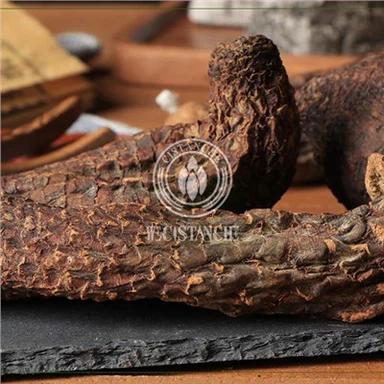
Cistanche is a traditional Chinese medicinal herb that has been shown to have neuroprotective effects. The exact mechanism of its action is not fully understood, but there is growing evidence that it may be related to its ability to increase the expression of neurotrophic factors and regulate certain signaling pathways in the brain.
One of the main neurotrophic factors that Cistanche has been shown to increase is the brain-derived neurotrophic factor (BDNF). BDNF is a protein that plays a key role in the growth, differentiation, and maintenance of neurons in the brain. Studies have shown that when levels of BDNF are higher, there is greater neuronal survival and plasticity, which can help to protect against neurodegeneration.
Cistanche may also be able to regulate certain signaling pathways in the brain that are involved in cell survival and apoptosis (programmed cell death). For example, it has been shown to inhibit the activity of the c-Jun N-terminal kinase (JNK) pathway, which can lead to the death of neurons under certain conditions. By inhibiting JNK, Cistanche may help to protect neurons from damage and maintain their survival.
In addition, Cistanche has been shown to have anti-inflammatory and antioxidant effects, which can further help to protect neurons against damage and maintain their function. These properties make Cistanche a promising therapeutic agent for the treatment of neurodegenerative disorders such as Alzheimer's and Parkinson's disease.
Qadir Alam, Sairam Krishnamurthy *
Neurotherapeutics Laboratory, Department of Pharmaceutical Engineering & Technology, Indian Institute of Technology (Banaras Hindu University), Varanasi, 221005, U.P, India