Dr. Yu Zhiqiang’s Formula For Benign Prostatic Hyperplasia — Preserved In Wang Houpu’s Medical Collection
Sep 08, 2026
Formula Name: Prostate Mass‑Dissolving Decoction
1. Herbal Composition
Sparganii Rhizome (Sanleng) 10g, Zedoariae Rhizome (Ezhu) 10g, Vaccariae Semen (Wangbuliuxing) 10g, Gleditsiae Spina (Zaojiaoci) 10g (decoct first), Citri Reticulatae Semen (Juhe) 10g, Pyrrosiae Folium (Shiwei) 30g, Malvae Semen (Dongkuizi) 10g, Plantaginis Semen (Cheqianzi) 30g (wrap‑decoct), Glycyrrhizae Radix et Rhizoma (raw, Shenggancao) 10g, Achyranthis Bidentatae Radix (Niuxi) 15g, Eckloniae Thallus (Kunbu) 10g.
2. Therapeutic Effects
Promote qi movement and activate blood circulation; dissipate nodules and eliminate abdominal masses.
3. Indications
For benign prostatic hyperplasia (BPH).
Clinical Manifestations: Difficult urination, poor urinary flow, scrotal dampness, frequent urination, urgent urination, urinary hesitancy, lower‑abdominal distending discomfort; dark‑red tongue with yellow‑greasy coating, string‑slippery pulse.


4. Formula Explanation
Prostate Mass‑Dissolving Decoction is designed for excess‑pattern benign prostatic hyperplasia. The key diagnostic markers are difficult urination, obstructed urinary stream, scrotal dampness, frequent/urgent urination, urinary hesitancy, lower‑abdominal distension, dark‑red tongue with yellow‑greasy coating, and string‑slippery pulse.
Five herbs - Sparganii Rhizome, Zedoariae Rhizome, Vaccariae Semen, Gleditsiae Spina, and Citri Reticulatae Semen work synergistically to move qi, disperse stagnation and dissolve hard masses.
Sparganii Rhizome: bitter and neutral; acts on the lung, spleen and liver meridians. Leigong's Discourse on Herbal Properties records: "Bitter and neutral without toxicity, it enters the lung and spleen meridians, governing qi and blood movement. It is a medicinal herb for qi within blood. The spleen stores blood while the lung governs qi; blood flows as qi moves. Masses and concretions caused by qi stagnation and blood stasis are treated primarily with this herb."
Zedoariae Rhizome: pungent‑bitter and warm; acts on the liver and spleen meridians. It stimulates appetite, removes food stagnation, breaks accumulations, dissipates static blood, alleviates heart and abdominal pain. Similar to Sparganii Rhizome, it differs in that it treats blood stasis within qi. Combined, the two herbs break static blood, activate circulating qi, and relieve pain.
Vaccariae Semen: bitter‑neutral, non‑toxic; acts on heart and liver meridians, specialized for blood‑pattern disorders. Changsha Herbal Interpretations notes it "stops traumatic bleeding, unblocks meridians and dispels stasis". Compendium of Materia Medica states that Vaccariae Semen "travels through blood systems with unceasing dynamic action" and explicitly records its diuretic effect. Ancient clinical cases document its use for stranguria: Zisheng Classic describes a patient with prolonged stranguria unresponsive to multiple therapies who recovered markedly after drinking decoction made from Vaccariae Semen.

Gleditsiae Spina and Citri Reticulatae Semen both target the liver meridian to move qi and reduce swelling.
Gleditsiae Spina: pungent‑warm, liver‑stomach meridians; relieves swelling and expels pus. Essentials of Materia Medica writes: "Bitter taste, acts on the Foot‑Jueyin Liver Meridian; promotes liver‑qi movement, detoxifies and reduces swelling, relieves lumborenal pain."
Citri Reticulatae Semen: bitter, enters Foot‑Jueyin Liver Meridian, disperses liver qi and resolves toxic swellings. New Treatise on Decoction Pieces records its application for hernia‑like disorders and lower‑abdominal distending pain.
The pairing of Pyrrosiae Folium, Malvae Semen, and Plantaginis Semen derives from Pyrrosia Powder in Comprehensive Synopsis of Pattern Differentiation & Remedies. Professor Yu observes that both Pyrrosiae Folium and Malvae Semen are bitter‑cold and lubricant herbs. Huangdi Neijing (Yellow Emperor's Internal Classic) puts forward the therapeutic principle "lubricants eliminate stagnation", using slippery, unblocking herbs to disperse pathological accumulation. Combined, they reinforce each other's unblocking actions. Plantaginis Semen is sweet‑cold and diuretic, acting on the kidney meridian. Shennong's Classic of Materia Medica records: "Sweet‑cold and non‑toxic; treats urinary obstruction, alleviates pain, promotes urination, and dispels damp‑bi impediment". Together these three herbs clear heat, promote diuresis and treat stranguria.
Achyranthis Bidentatae Radix enters the Foot‑Taiyang Bladder and Foot‑Jueyin Liver meridians. It activates blood circulation, tonifies liver‑kidney, strengthens tendons and bones, promotes urination, and guides blood downward. Leigong's Discourse on Herbal Processing states it "remedies sluggish bladder qi transformation". Yuyu's Herbal Explanation notes: "Acting upon bladder and liver meridians, Achyranthis Bidentatae Radix unblocks water passages and treats painful, difficult urination." It therefore eases urinary obstruction.
Eckloniae Thallus is salty‑cold, acting on Foot‑Taiyang Bladder Meridian, resolving phlegm, softening hard masses and promoting diuresis. Raw Glycyrrhizae Radix et Rhizoma harmonizes all ingredients. Collectively, this formula moves qi, invigorates blood, softens hardness and dissolves accumulations, resolving prostatic masses and reopening urinary passages.
5. Clinical Modifications
Stinging painful urination: add Dianthi Herba (Qumai) 10g and Polygoni Avicularis Herba (Bianxu) 10g to clear heat and relieve stranguria.
Marked downward‑flowing damp‑heat: add Atractylodis Rhizoma (Cangzhu) 10g and Phellodendri Chinensis Cortex (Huangbai) 10g to clear damp‑heat from lower jiao.
Severe lower‑abdominal distension: add Linderae Radix (Wuyao) 6g to regulate qi and relieve distension.
Kidney‑qi deficiency, poor urination and frequent nocturia: remove Pyrrosiae Folium, Malvae Semen and Plantaginis Semen. Add Mantidis Ootheca (Sangpiaoxiao) 15g, Alpiniae Oxyphyllae Fructus (Yizhiren) 10g, Cuscutae Semen (Tusizi) 15g to tonify kidney and reduce frequent urination.
6. Decoction & Administration
One dose daily. Decoct twice in water to yield total 300 mL liquid; divide into morning and evening oral doses.
7. Concluding Discussion
Professor Yu Zhiqiang views benign prostatic hyperplasia as a syndrome of root deficiency with branch excess. Root deficiency: insufficiency of kidney qi. Branch excess: qi stagnation, phlegm coagulation, damp‑heat, blood stasis and cold accumulation. The disease locates in the kidney and bladder, and is closely associated with liver, spleen and lung functions.
After men reach the age of "seven‑eight" (in TCM chronological theory), kidney qi gradually declines, impairing opening‑closing functions of urination and defecation. As Zhang Jingyue of the Ming dynasty wrote: "The kidney governs the two yin orifices and controls opening‑closing; incontinence or retention of urine and stool are rooted in kidney disorder."
Moreover, constrained liver qi disrupts qi transformation and blood circulation. Damaged essence, exhausted seminal fluid and static blood accumulate in the lower jiao, lodging in the seminal chamber and bladder to form hyperplastic nodules. Combined with excessive intake of alcohol and spicy food that generate damp‑heat accumulating in the bladder, dampness intermingles with stasis, eventually forming abdominal masses.
In traditional Chinese medical literature, BPH symptoms are classified under the category of "Long Bi (dysuria / urinary retention)". Early references appear in Huangdi Neijing · Lingshu · Ben Shu: "San Jiao (triple energizer): excess pattern causes long‑bi (urinary retention); deficiency pattern causes enuresis. Enuresis needs tonification; long‑bi needs purgation." Huangdi Neijing · Suwen records: "Bladder dysfunction produces long‑bi… bladder disorder brings urinary blockage", identifying the bladder as the core location of dysuria.
Danxi's Master Book · Urinary Retention attributes urinary blockage to qi deficiency, blood deficiency, phlegm, wind‑block and excess heat, and pioneers the therapeutic vomiting‑induction method for dysuria. Jingyue Complete Works · Long‑Bi Syndrome states: "Four major causes of long‑bi must be differentiated between deficiency and excess… obstructed urinary passages may stem from spoiled essence or exhausted blood. These excess‑caused cases are treated by unblocking therapies, representing mild forms of long‑bi." It explicitly recognizes pathological essence and blood stasis blocking urinary tracts.
TCM HERB CISTANCHE BENEFITS

From anatomical and physiological perspectives, Professor Yu explains BPH arises from proliferating glandular, connective and smooth‑muscle tissues under posterior urethral mucosa, forming multiple spherical nodules and triggering voiding difficulties. This pathological presentation also falls under TCM "Abdominal Mass (Zheng Jia)" category. Wang Qingren's Corrections on Medical Errors notes: "All palpable lumps originate from tangible static blood." Blood stasis accumulates persistently in the lower‑jiao seminal chamber, serving as a key etiological factor and pathological product throughout disease progression. As Zhang Jingyue commented, "spoiled essence or exhausted blood obstruct water passages". Chronic illness invades collaterals, matching the observation in Lin Zheng Zhi Nan Yi An (Case Records of Guiding Clinical Practice): "Initial illness manifests qi stagnation in meridians; prolonged disease damages blood and invades collaterals." This accounts for BPH's stubborn, long‑term clinical course. Therefore, softening hardness, dissipating masses and resolving stasis constitute indispensable therapeutic principles throughout treatment.
Professor Yu also emphasizes meridian pattern differentiation. Huangdi Neijing · Lingshu records: "The Liver Foot‑Jueyin Meridian… enters pubic hair region, encircles external genitalia, reaches lower abdomen." Lingshu · Muscle Chapters describes the Foot‑Jueyin tendon: "ascends along inner thigh, converges at external genitalia and connects multiple muscle strands." The prostate anatomically sits along the liver meridian pathway.
The liver governs free flow of qi, acting as the pivotal hub for movement of qi‑blood‑body‑fluid throughout the human body. Huangdi Neijing · Lingshu · Meridians states that Liver‑meridian disorders include enuresis and urinary retention. Lin Zheng Zhi Nan Yi An documents: "Pricking pain circling genitals with dripping scanty urine: collaterals surrounding external genitalia are blocked, qi‑transformation mechanism ceases." These classics confirm the liver's regulatory role over urination. Emotional disturbance or anger damages liver function, impairing its free‑flowing properties. Qi movement becomes disordered, disrupting circulation of essence‑blood‑fluid. Dampness, stasis and pathological essence accumulate in the lower‑jiao liver‑meridian zone (prostate), gradually forming masses that compress and obstruct urinary passages.
Following the theory of qi movement ascent‑descent‑exit‑entry, Professor Yu holds that "numerous diseases originate from stagnation". For internal miscellaneous illnesses, releasing stagnation takes priority. Clinical practice prioritizes soothing liver‑wood and regulating meridians, supplemented by softening hardness, activating blood circulation and dissipating masses. He applies the self‑composed Prostate Mass‑Dissolving Decoction as base formula with flexible modifications, combined with acupuncture therapy. Huangdi Neijing · Lingshu · Needling Principles teaches: "Needling therapy focuses on regulating qi… firm, tight pathological masses should be broken and dispersed." Lingshu · Fundamentals of Needling notes: "Needling treatment ends once qi harmony is achieved." Acupuncture harmonizes qi‑blood and unblocks meridians, yielding remarkable outcomes for BPH‑related urinary complaints.
Professor Yu stresses pattern differentiation throughout clinical practice. While addressing local stagnant symptoms of BPH, practitioners must adjust prescriptions according to individual patient presentations, integrating multiple pattern analyses and therapeutic approaches to achieve recovery.
Important Disclaimer: All formulas shared here reflect personal clinical experience for academic exchange among TCM practitioners. Clinical application must be modified according to individual patient conditions. Prescribe only when corresponding patterns present. TCM core practice lies in pattern differentiation rather than rigid formula application. Diseases are complex with high individual variability. Do NOT self‑medicate. All herbal therapies must be administered under guidance of licensed professional physicians.
About the Author: Wang Houpu
Wang Houpu is a seasoned TCM clinician and integrative Chinese‑Western medicine specialist. He is a distinguished appointed expert at Xi'an International Medical Center Hospital. A graduate of Shaanxi University of Chinese Medicine, he has studied under five senior mentors: Chen Guisheng, Chang Jiang, Zhang Weihua, He Zhiyong and Wang Xingfu. His personal collection includes more than 5 000 volumes of classical TCM texts. Rooted in Li Dongyuan's Treatise on Spleen‑Stomach Theory, his clinical practice prioritizes protecting spleen‑stomach function, and he is adept at classical‑formula treatments for diverse clinical disorders.
TCM Community Learning
1. Wang Houpu TCM Reading Club
Purpose: Build a systematic learning platform for TCM enthusiasts. Following formal university TCM education frameworks, we share one focused TCM topic daily. Content is easy‑to‑understand, integrates Chinese‑Western perspectives, and progresses step‑by‑step. Senior hospital physicians participate in discussions. Our mission is to build a high‑quality Chinese‑medicine learning community.
Suitability: Open to general public, TCM beginners and hobbyists.
2. Apprentice Training Program
Curriculum: 18 independent specialized subject courses (detailed subjects available on WeChat Official Account: Chang'an Wang Houpu). Core clinical skills are passed on fully without reservation. Full access to all existing courses is included.
Lifelong professional TCM guidance.
Unlimited offline clinical shadowing opportunities.
Blog Post Editorial Note (for www.xjcistanche.com blog, for your publishing reference)
This article unpacks time‑tested clinical experience for benign prostatic hyperplasia, offering practical insights for patients suffering from difficult urination, frequent urination and pelvic discomfort. Beyond clinical herbal protocols, this case highlights key TCM medicinal categories that support genitourinary health.

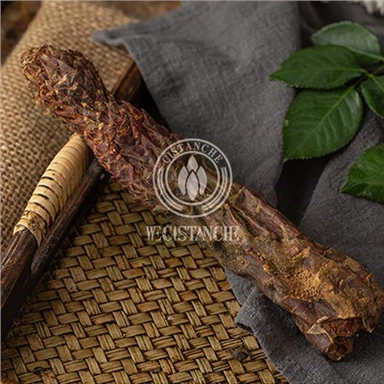
For product developers researching natural botanical raw materials - especially herbal extracts targeting male genitourinary wellness, kidney support and anti‑fibrotic / mass‑dissolving activities - you will find valuable take‑aways here. Many herbs mentioned in this formula work synergistically with Cistanche tubulosa (desert ginseng) extracts. Cistanche is widely researched for kidney‑tonifying, anti‑fatigue, neuro‑protective and reproductive‑health‑supporting bio‑activities. Our factory supplies standardized Cistanche extract powder, raw material slices and finished dietary‑supplement formulations for global brand and formulation partners. If you are developing natural men's‑health supplements, welcome to contact our technical team for active‑component specifications, sample support and custom formulation solutions.