Effect Of Echinacoside On Cerebral Ischemia Rats
Aug 30, 2023
Abstract: Objective To study the effect of Echinoside(ECH) on monoamine neurotransmitters in the extracellular fluid of the striatum in rats with focal cerebral ischemia, and to explore the possible mechanism of ECH's neuroprotective effect on the brain. Methods SD rats were randomly divided into a control group, model group, ECH high and low dose groups, and ligustrazine (CXQ) group. Rats in each group were given corresponding drugs or physiological saline intraperitoneally once a day for 7 days. On the third day of administration, the probe sleeve was embedded in the striatum of the brain. One hour after the last administration, the rat model of focal cerebral ischemia (MCAO) was made. After the model was made, microdialysis was performed immediately. The dialysate was injected into the high-performance liquid chromatography-electrochemical detector (HPLC-ECD) to determine the content of norepinephrine (NE), dopamine (DA), 5-hydroxytryptamine (5-HT), 3,4-dihydroxyphenylacetic acid (DOPAC), homovanillic acid (HVA), 5-hydroxy indole acetic acid (HIAA) in the extracellular fluid of the striatum of each group. Results Compared with the control group, the levels of NE, DA, and 5-HT in the model group increased, and the acidic metabolites DOPAC, HVA, and HIAA also increased. Compared with the model group, the contents of six substances in the high and low-dose groups of ECH (30, 15 mg · kg - 1 · d - 1) and CXQ groups decreased. Conclusion The neuroprotective effect of ECH may be related to the increase of monoamine neurotransmitters after cerebral ischemia.
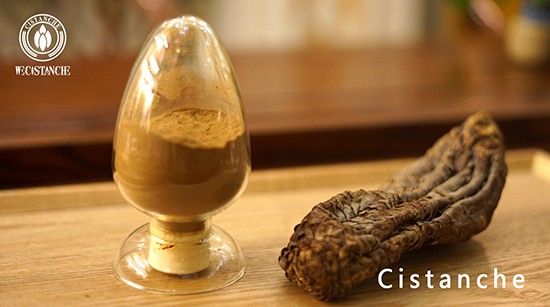
Cistanche powder
Key words: Echinoside; Cerebral ischemia; Striatum; HPLC-ECD; Monoamine neurotransmitters and metabolites
Echinaceoside (ECH) is an effective component of phenylethanoid glycosides isolated and purified from Cistanche deserticola, a special plant in Xinjiang. Studies have shown that ECH has neuroprotective effects such as antioxidation [1-2], nerve protection [3-4], anti-aging [5], and improvement of learning and memory [6-8]. The results of Chen Hong et al. confirmed that ECH has a protective effect on DA neurons in Parkinson's disease [9]. Monoamine neurotransmitters are a kind of important substances that regulate the physiological activities of the body. The content in the tissue can reflect the processes of neurotransmitter biosynthesis, release, uptake, and inactivation [10-11]. At present, there is no relevant report about the effect of ECH on monoamine transmitters in the brain of rats with cerebral ischemia. In this study, the effect of ECH on the content of monoamine neurotransmitters in the extracellular fluid of the striatum of rats with cerebral ischemia was investigated by using brain microdialysis technology, and the possible mechanism of ECH on brain neuroprotection was preliminarily explored.
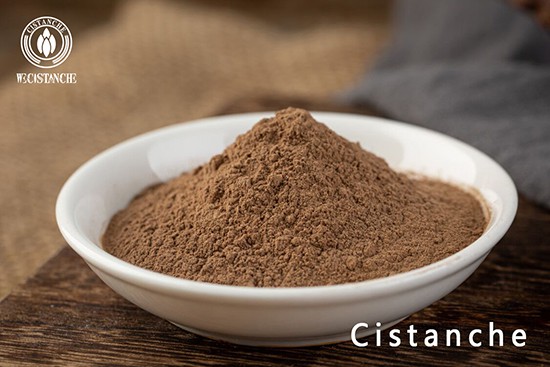
Cistanche tubulosa extract powder
1. Material
1.1 Experimental animals
SD rats, ♂, Body mass 250~300g (purchased from Xinjiang Experimental Animal Center, license number: 2009-0053).
1.2 Drugs and reagents
ECH is donated by Professor Tu Pengfei, School of Pharmacy, Peking University (purity above 95%); Norepinephrine (NE), dopamine (DA), 5-hydroxytryptamine (5-HT), 3,4-dihydroxyphenylacetic acid (DOPAC), homovanillic acid (HVA)
5-hydroxy indole acetic acid (HIAA) is Sigma; Tetramethylpyrazine hydrochloride for injection (CXQ, Harbin Sanlian Pharmaceutical Co., Ltd.); Zinc phosphate cement (product of Shanghai Medical Instruments Co., Ltd., composed of liquid and powder, mixed with time); Sodium 1-alkyl sulfate (DIKMA); Citric acid hydrate (Tianjin Jinke Fine Chemical Research Institute); Trisodium citrate (Acros); Disodium ethylenediamine tetraacetic acid (JTTakerChemicalco); Methanol (DIKMA); Acetonitrile (DIKMA); Cerebral microdialysis perfusion fluid is compound sodium chloride injection (Beijing Shuanghe Pharmaceutical Co., Ltd.); All water used is re-steam water.
1.3 Instrument
American BAS4100 rat brain stereotactic apparatus; CMA/12 probe and probe sleeve; CMA/120 conscious animal device; CMA/402 micro pump; CMA/150 low-temperature sample automatic collector. Esa 5600A infusion pump; Esa 5600A infusion pump; Esa 542 automatic sample injection device; Esa's CoulArray electrochemical detector; Glassy carbon working electrode and Ag/AgCl reference electrode; C18 column (DIKMA, ODS5 μ m,150mm × 4.6mm); CoulArraywin chromatography workstation (Esa company); Vortex mixer (QL-861 type); Desktop acidity tester (HANNA-211); Desktop high-speed centrifuge (XYJ-2 type).
2. Method

Cistanche supplement near me—Improve memory
Click here to view Cistanche Improve Memory products
【Ask for more】 Email: xue122522@foxmail.com / Whats App: 0086 18599088692 / Wechat: 18599088692
2.1 Animal grouping and administration
Thirty rats were randomly divided into five groups: ① Control group: 1ml · kg-1 · d-1 normal saline; ② Model group: normal saline 1ml · kg-1 · d-1; ③ Model+ligustrazine (CXQ) 30mg · kg-1 · d-1; ④ ~ ⑤ Model+ECH high and low dose groups (ECHB, ECHS): 30, 15 mg · kg-1 · d-1; All animals in each group were injected intraperitoneally for 7 days.
2.2 Modeling method and microdialysis
Each rat was buried with a cannula on the third day of administration: the rats were anesthetized with 10% chloral hydrate (3.5ml · kg-1), fixed on the BAS4100 brain stereotactic apparatus, and the probe catheter was implanted into the left striatum (coordinates AP:+0.2mm; ML: - 3.0mm; DV: - 3.5mm) concerning GeorgePaxinos's "Stereotactic Map of Rat Brain". After the last administration, the rats were anesthetized 1 hour later, and the rats were made a focal cerebral ischemia model (MCAO model) using Yang Zanzhang [12]'s improved Longa suture method. The fish line in the control group was inserted only 10mm, and the other steps were the same as those in the operation group. After modeling, insert the microdialysis probe in the state of conscious and free movement, and use Ringer solution to μ The cerebral microdialysate was collected at 4 ℃ and a tube of dialysate was collected at 20 minutes. After each tube of dialysate is collected, it shall be immediately stored in a - 20 ℃ refrigerator, and transferred to a - 70 ℃ refrigerator after dialysis. The recovery rate of the probe was measured before use, which was used to convert the concentration of monoamine neurotransmitters in the dialysate.

what does cistanche tubulosa do—Improve memory
2.3 HPLC-ECD analysis
Mobile phase configuration: the mobile phase contains 829ml of 0.15mol · L-1 citric acid-sodium citrate buffer per liter; 0.1mol · L-1 disodium EDTA 1ml; Methanol 150ml; Sodium 1-alkyl sulfate 0.283g. Set the flow rate of the mobile phase as 0.7ml · min-1, and the temperature of the column oven as 28 ℃. The working voltage of the electrochemical detector is 200mV, 400mV, and 600mV, with 2, 3, and 4 channels respectively; The gain is 2nA. The injection volume is 25 μ l。 The standard curve is drawn with 0.025, 0.05, 0.1, 0.2, 0.5mg · L-1 gradient mixed standard solution.
2.4 Statistical processing
The experimental data are expressed in x field ± s, and the repeated measurement data are analyzed by using SPSS13.0 statistical software.
Fig. 1-6 depicts the changes in NE, DA, DOPAC, HIAA, HVA, and 5-HT levels in the extracellular fluid of the rat striatum. It can be seen from the figure that after cerebral ischemia, monoamine neurotransmitters in the extracellular fluid of the striatum have a metabolic disorder, and the content of each neurotransmitter has increased. Within a certain range, the increase is more obvious with the prolongation of ischemia time. At 90 min of ischemia, the concentration of DA and NE in the extracellular fluid of the striatum was more than three times the level of the control group. The levels of NE, DA, DOPAC, HIAA, HVA, and 5-HT in the control group decreased from high to low, which may be related to the temporary ischemia of the left brain after ligation of the left common carotid artery and the damage caused by inserting the probe. From the change curve, ECH and CXQ can reduce the peak concentration of DA, DOPAC, HIAA, HVA, and 5-HT after cerebral ischemia, and CXQ and high-dose ECH are more obvious. The downward shift of the time course curve of each neurotransmitter indicates that ECH can inhibit the increase of neurotransmitters and their metabolites in the brain of rats with cerebral ischemia.


Fig2 Effect of Echinoside on extracellular level Of DA in striatum of rats


Fig3 Effect of Echinoside on extracellular level Of DOPAC in striatum of rats Fig4Effect of Echinoside onextracellular level Of HIVV in striatum of rats


Fig5 Effect of Echinoside on extracellular level Of HVA in striatum of rats Fig6 Effect of Echinoside on extracellular level Of 5-HT instriatum of rats
4. Discussion

Superman cistanche herb—Improve memory
【Ask for more】 Email:cindy.xue@wecistanche.com / Whats App: 0086 18599088692 / Wechat: 18599088692
The mechanism of brain injury caused by cerebral ischemia is complex. In the case of cerebral ischemia, monoamine neurotransmitters in the brain are disordered, and the contents of NE, DA, and 5-HT are significantly reduced. The more severe the cerebral ischemia is, the lower the contents of NE, DA, and 5-HT in the brain tissue are [13]. The intracerebral microdialysis method proved that the content of monoamine neurotransmitters increased in the extracellular fluid during cerebral ischemia, lasted for the whole ischemic period, and further increased with the prolongation of ischemic time. The experimental results were consistent with the report [14]. Echinoside is an effective component of phenylethanoid glycosides isolated and purified from Cistanche deserticola, a special plant in Xinjiang. It has many neuroprotective effects such as anti-aging, improving learning and memory, and anti-neuronal apoptosis. In this study, domestic advanced brain microdialysis combined with HPLC-ECD detection technology was used to preliminarily explore the effect of Echinoside on monoamine neurotransmitters and their metabolites in the extracellular fluid of the striatum of experimental rats with cerebral ischemia. The results showed that ECH can reduce the increase of monoamine neurotransmitters in the extracellular fluid of the striatum caused by cerebral ischemia, and has a better effect on improving the damage of cerebral ischemic tissue.