Effects Of Crude Polysaccharide From Cistanche Deserticola On Foot-and-Mouth Disease Viral Vaccine Antibody And T Cell Subgroup
Mar 09, 2022
Contact: Audrey Hu audrey.hu@wecistanche.com
ZHANG Ai-Lian; BA Xue-li; WANG Dan-yang; ZHAO Bing
Foot and mouth disease (FMD) is a disease caused by the foot and mouth disease virus (FMDV) that spreads among cloven-hoofed animals, seriously endangering the health of livestock and causing huge economic losses. Vaccination is widely used as an effective means to prevent foot-and-mouth disease and has achieved remarkable results. Due to the weak immunogenicity of the foot-and-mouth disease virus inactivated antigen, it is often necessary to add an adjuvant to play its role [1-2]. At present, the commonly used adjuvant in commercial foot-and-mouth disease vaccines is the ISA-206 oil emulsion, which is an activator of The cells and can also enhance humoral immune response, but its side effects are relatively large. Although there are many kinds of adjuvants, such as commonly used adjuvants (aluminum salt adjuvants, oil-water emulsions, etc.) and new adjuvants (MF59, plant polysaccharides, etc.), the adjuvants used for foot-and-mouth disease vaccines are still limited, mainly including aluminum hydroxide, Span, light mineral oil, etc., all have different defects, such as unsatisfactory immune effect or highly toxic and side effects [3-4]. Therefore, there is an urgent need to develop high-efficiency, low-toxicity new adjuvants for foot-and-mouth disease vaccines to improve the immune protective effect of the vaccine, which is of positive significance for the prevention and treatment of foot and mouth disease.
Chinese medicine herbal has broad application prospects in the prevention and treatment of infectious diseases. Chinese herbal medicine has a long history of treating human and animal diseases. In the field of vaccine adjuvant research, domestic and foreign researchers have extracted polysaccharides from a variety of Chinese herbal medicines to study their adjuvant effects, such as ginseng polysaccharides, astragalus polysaccharides, tuckahoe polysaccharides, epimedium polysaccharides, etc., and found that they have immune functions to humans and animals. It has a good promotion effect and becomes a new candidate adjuvant [5-7].
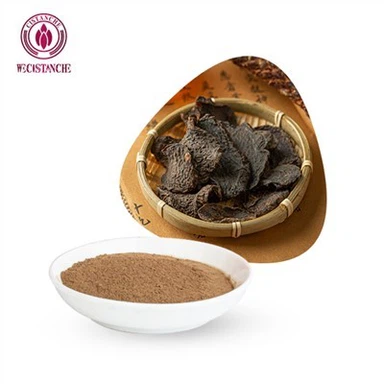
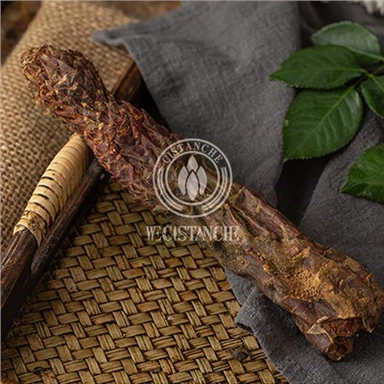
Cistanche (Cistanche deserticola Y.C.Ma) is a plant of the family Dang family. It is a commonly used nourishing Chinese herbal medicine and has been used as a nourishing food for long-term consumption by people. In recent years, researchers have carried out a lot of research work on the chemical structure and pharmacological activity of Polysaccharide from Cistanche and found that its active ingredients mainly include polysaccharides, total phenylethanoid glycoside, alkaloids, etc., among which the content of polysaccharides is relatively high and can be adjusted. The immune system has anti-oxidation and anti-aging effects [8-9].

Cistanche(Cistanche deserticola Y.C.Ma)
Preliminary studies found that the combination of crude cistanche desert polysaccharide and OVA immunized mice significantly enhanced the level of OVA-specific antibodies, and compatibility with influenza vaccine can increase the antibody level of influenza vaccine [10-11]. In view of this, this study used the crude polysaccharide of Cistanche deserticola as a candidate adjuvant for the inactivated foot-and-mouth disease vaccine, and selected water-soluble adjuvants with significant immune-enhancing effects and small side effects, so that Crude Polysaccharide from Cistanche deserticola can be effectively used as a new adjuvant for foot-and-mouth disease vaccines.
Preparation of the agent
In this study, Crude Polysaccharide from Cistanche deserticola (CDCP) was combined with foot and mouth disease virus to prepare vaccines. ICR mice were immunized through the muscle route. The effects of immunization on the humoral and cellular immune responses of mice were detected and their safety was observed. The development of a safe new adjuvant for the foot-and-mouth disease vaccine provides a reference.

Crude Polysaccharide from Cistanche deserticola
The effect of Crude Polysaccharide from Cistanche deserticola (CDCP) on the level of FMDV-specific antibodies in serum
The level of serum IgG showed a gradually increasing trend at 14 days, 21 days, and 28 days after the initial epidemic (Figure 1). On 14 and 21 days after the initial immunization, the antibody level of the FMDV Ag/CDCP group was significantly higher than that of the FMDV-Ag adjuvant-free group (P<0.05), and there was no significant difference from the FMDV group (P>0.05). At 28 days after the initial immunization, compared with FMDV-Ag without adjuvant, the IgG antibody level of FMDV-Ag/CDCP was significantly increased (P<0.05), but it was extremely significantly lower than that of the FMDV/ISA-206 group (P<0.01). The antibody level of the FMDV-Ag adjuvant-free group was significantly different from that of the 0.9% NaCl control group (P<0.05).
Crude Polysaccharide from Cistanche deserticola (CDCP) on the proliferation of splenic lymphocytes
21 days after the initial immunization, the MTT method was used to detect the proliferation effect of Crude Polysaccharide from Cistanche deserticola on splenic lymphocytes. As shown in Figure 2, after FMDV-Ag stimulated splenic lymphocytes in vitro, the lymphocyte stimulation index of FMDV-Ag/CDCP group was significantly higher than that of FMDV-Ag no adjuvant group (P<0.05), and compared with FMDV/ISA-206 There was no significant difference between the groups (P>0.05). After stimulation by ConA and LPS, it can significantly enhance the proliferation of splenic lymphocytes (P<0.05).
The effect of Crude Polysaccharide from Cistanche deserticola (CDCP) on the expression of CD4+ and CD8+ T cells
21 days after the initial immunization, the effects of CDCP and FMDV-Ag on CD4+ and CD8+ T cells in the spleen of mice were tested. The results are shown in Figure 3-A D. The ratio of CD3+, CD4+, CD3+, CD8+ T cell subsets in the FMDV-Ag/CDCP group was significantly higher than that of the FMDV-Ag adjuvant-free group (P<0.05), and compared with FMDV/ISA- The difference between the 206 groups was not significant (P>0.05). The FMDV-Ag adjuvant-free group did not enhance the expression of CD4+ and CD8+ T cells.
The effect of Crude Polysaccharide from Cistanche deserticola (CDCP) on CD4+, CD44+, and CD8+CD44+ effector T cell subsets
In order to observe the effect of Crude Polysaccharide from Cistanche deserticola on effector T cells, flow cytometry was used to detect the expression of CD4+, CD44+, and CD8+, CD44+ in the spleen cells of mice after immunization. The results are shown in Figure 4-AD. The percentages of CD4+, CD44+, and CD8+, CD44+ in the FMDV Ag/CDCP group were significantly higher than those in the FMDV-Ag adjuvant-free group (P<0.05), and were different from the FMDV/ISA-206 group Not significant (P>0.05).
Effect of Crude Polysaccharide from Cistanche deserticola (CDCP) on the growth of mice
After immunizing animals with Crude Polysaccharide from Cistanche deserticola through the muscle route, the growth of the mice was observed during the entire immunization period and the body weight was weighed weekly to observe the granuloma at the injection site (Table 1). After the immunization, the mice did not have hair loss or refusal to eat. The weight of each group of mice increased normally at 14 d, 21 d, and 28 d after immunization, and there was no significant change in body weight between the groups (P>0.05). The mice in the FMDV Ag/CDCP group had no granulomas at the injection site, and the mice in the foot and mouth disease virus vaccine group containing ISA 206 oil adjuvant had granulomas at the injection site.
Adjuvants have been used in various vaccines for a long time, can assist vaccines to play an immune-promoting effect, reduce vaccine dosage, and play a very important role in the prevention and epidemic of infectious diseases [3]. With the development of new vaccines, whether in the field of veterinary vaccine research or human vaccine research, the requirements for the quantity and quality of vaccine adjuvants are getting higher and higher. The ideal new adjuvant should have an effective stimulating effect on the body's cellular or humoral immunity, have a long-lasting and stable effect, reduce the number of immunizations, have fewer side effects, and be easy to produce and easy to inject [13].

In foot and mouth disease virus inactivated vaccines, oil adjuvants are usually added to enhance the immunity of the vaccine, but there are disadvantages such as high immune stress. Compared with oil adjuvants, water adjuvants are simple to use, can be miscible with vaccine antigens in any ratio, do not need emulsification, and are easy to inject. Therefore, water adjuvants have good application prospects in FMDV vaccines. Chinese herbal polysaccharides have good immunomodulatory effects, combined with their advantages in safety, pleiotropy, and independence, and become a hot spot in the research of new vaccine adjuvants [14]. In the field of FMDV vaccine adjuvant research, some Chinese herbal polysaccharides are used in the research of new adjuvants. For example, astragalus polysaccharides are used as adjuvants for FMDV vaccines. Oral immunization can enhance humoral and cellular immunity, and low doses can inhibit dendritic cells mature, high doses can promote its maturity.
Researchers have also used polysaccharides from Baizu and polysaccharides from Eucommia as adjuvants of the foot and mouth disease virus vaccine to explore their immune-enhancing effects [15-17]. Due to the large differences in the content of active ingredients of different Chinese herbal medicines, extensive screening from Chinese herbal medicines with immunological activity to find suitable adjuvants is of great significance to disease prevention and human health and is also a research hotspot in the field of vaccinology. In this experiment, a Crude Polysaccharide from Cistanche deserticola was selected as a candidate adjuvant for the foot and mouth disease virus vaccine, and an experimental study of the adjuvant effect was carried out. The prevention and treatment of infectious diseases mainly depend on the humoral immune response mediated by B lymphocytes and the cellular immune response mediated by T lymphocytes [18-20].
Because the foot and mouth disease virus vaccine actually uses muscle immunization in the production, the muscle route is used to immunize mice in the experiment, and the immune enhancement effect of CDCP is evaluated by evaluating the effect of CDCP on antibody production and T cell subsets, and its safety is evaluated. Preliminary observations. The results of the study showed that the crude polysaccharide of Cistanche cistanche can enhance the level of antibodies specific to FMDV at 14 and 21 days after immunization, and there is no significant difference between the effect and the level of ISA-206 adjuvant; the antibody level at 28 days after immunization is lower than that of ISA-206 oil Adjuvant, which shows that Crude Polysaccharide from Cistanche deserticola can enhance the level of humoral immunity within a certain period of time after immunization. The lymphocyte proliferation rate is positively correlated with the level of stimulation index. In the MTT experiment, Crude Polysaccharide from Cistanche deserticola can promote the proliferation of lymphocytes stimulated by FMDV antigen, ConA, and LPS. In the T cell subgroup experiment, CDCP can not only increase the expression of CD4+ and CD8+ T cells, but also enhance the levels of CD4+, CD44+ and CD8+, CD44+ effector T cells, and there is no significant difference from the ISA-206 adjuvant group; in safety In sexual experiments, it was found that the mice in the vaccine group containing ISA-206 had granulomas at the injection site, while the vaccine group containing CDCP water adjuvant did not find granulomas, which preliminarily indicated that Crude Polysaccharide from Cistanche deserticola has good safety. For further safety, relevant experiments need to be carried out to confirm.

Crude Polysaccharide from Cistanche deserticola not only enhanced the humoral immune response, but also increased the proliferation level of lymphocytes, promoted the level of CD4+ and CD8+ T cell subsets, activated effector T cells, and no granulomas at the injection site were found after injection. The mice grow normally and have no abnormal behaviors. These research results provide a basis for further research on Crude Polysaccharide from Cistanche deserticola as a new adjuvant for the foot and mouth disease virus vaccine and also provide a useful reference for the application of polysaccharide adjuvants in other vaccines.
Reference
[1]Diaz-san Segundo F, Median GN, Steinfeldt C, et al. Foot-and-mouth disease vaccines[J]. Vet Microbiol, 2017, 206:102-112.
[2]Park JH. Requirements for improved vaccines against foot-and-mouth disease epidemics[J]. Clin Exp Vaccine Res, 2013, 2(1): 8-18.
[3]Cao Y. Adjuvants for foot-and-mouth disease virus vaccines: recent progress[J]. Expert Rev Vaccines, 2014, 13(11):1377-1385.
[4]Parid AS. Vaccination against foot-and-mouth disease virus: strategies and effectiveness[J]. Expert Rev Vaccines, 2009, 8:347-365.
[5]Licciardi PV, Underwood JR. Plant-derived medicines: a novel class of immunological adjuvants[J]. Int Immunopharmacol, 2011, 11(3):390-398.
[6]Sun B, Yu S, Zhao D, et al. Polysaccharides as vaccine adjuvants[J]. Vaccine, 2018, 36:5226-5234.
[7]Meng XY, Chu ZF, Zhang JJ, et al. Immunomodulatory functions of Ginkgo biloba leaves polysaccharide on vvIBDV vaccine[J]. ChinaJ Vet Sci, 2019, 39(4):640-645.
[8]Tu PF, Jiang Y, Guo YH, et al. Research and industrial development of Cistanche[J]. Chin Pharm J, 2011, 46(12):882-887.
[9]Zhang W, Huang J, Wei W, et al. Extraction, purification, characterization and antioxidant activities of polysaccharides from Cistanche tubulosa[J]. Int J Biol Macromol, 2016, 93:448-458.