Effects Of Ethanol Extract Of Cistanche Deserticola On Monoamine Neurotransmitter Content in Mouse Brain
Mar 12, 2022
Contact: Audrey Hu Whatsapp/hp: 0086 13880143964 Email: audrey.hu@wecistanche.com
Intro
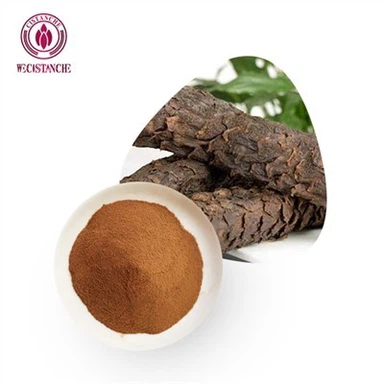
Cistanche deserticola belongs to kidney tonifying and Yang strengthening traditional Chinese medicine. Pharmacological studies have shown that it can enhance the immune function of mice, improve the DNA synthesis rate of deficiency of kidney energy animals, promote the function of the hypothalamus-pituitary-gonad, and significantly prolong the life of drosophila. Recently, it has been reported that tonifying prescriptions affect the content of monoamine neurotransmitters in the hypothalamus of elderly or the Yang deficient mice, however, there are few reports on the effect of single tonic traditional Chinese medicine on central monoamine neurotransmitters. This paper studied the effect of ethanol extract of Cistanche deserticola on the level of monoamine neurotransmitters in the brain of normal mice.

1. Materials and methods
1.1 Experimental animals: Sprague Dawley mice, weighing 180 ~ 220g, both male and female, provided by the experimental animal room of Shenyang Pharmaceutical University.
1.2 Administration and materials: 18 mice were randomly divided into 3 groups with 6 mice in each group. The normal control group was gavaged with 5ml/kg normal saline every day, and the administration group was gavaged with 100, 200 mg/kg methanol extract of Cistanche deserticola twice a day for 40 consecutive days respectively. 12 hours after the last administration, the mice were decapitated and their brains were taken, and the hypothalamus, striatum, and marginal parts (including the septal nucleus, superior nucleus, and olfactory nucleus) were quickly separated on the ice platform. After weighing, they were added to 350μL in ice-cold 0.4mol/l perchloric acid solution (containing 0.5mmol/L EDTA, 0.01% cysteine), used type Teflon homogenizer for electric homogenization (500r/min), centrifuge (12000r/min, 20min, 4℃), and took 20μl of the supernatant. The contents of monoamines and their metabolites were determined by direct injection into the high-performance liquid chromatography electrochemical detection system. The contents of each substance were calculated by external standard method

1.3 biochemical determination: The YSB-II advection pump was produced by the scientific instrument factory of the Shanghai Branch of the Chinese Academy of Sciences. The electrochemical detector was the product of a Swiss company, Metro, with a working voltage of 0.70V, the detection sensitivity was 5nA, and the chromatographic column was YWG-C18,10μm. Column length 150mm * 4mm ф, the flow rate of the pump was 1.2ml/min. The mobile phase group was formed by sodium acetate (100mmol/L) -citric acid (85mmol/L) buffer solution, pH 3.7, containing ion pair B8 1.0mmol/L, EDTA Na2 0.2mmol/L, methanol 6%(V/V), G6 vertical melting funnel for filtration and degassing before using.
1.4 drugs and reagents: Cistanche deserticola was purchased from Inner Mongolia Chifeng medicinal materials Co. Ltd, the original medicinal material was identified by Associate Professor Sun Qishi of Shenyang Pharmaceutical College. Dopamine hydrochloride (DA), norepinephrine (NA), and 5-hydroxy indole acetic acid (5-HIAA) were products from the Fluka company, Switzerland, 3,4-di-hydroxyphenyl acetic acid (DOPAC) was Merck products, and 5-hydroxytryptamine creatinine sulfate (5-HT) was sub packaged products imported from Switzerland.

2. Results
2.1 Effect on the level of monoamine neurotransmitters in the hypothalamus: the ethanol extract of Cistanche deserticola increased the content of NA in the hypothalamus. The increase of NA in the high-dose group was statistically significant (P < 0.01), and the level of 5-HIAA also increased significantly (P < 0.05). It had no significant effect on the ratio of 5-HT/5-HIAA, but significantly increased the ratio of DA/DOPAC (P < 0.05). See Table 1

2.2 Effect on monoamine neurotransmitter levels in the striatum and marginal part: the ethanol extract of Cistanche deserticola increased the levels of DA, DOPAC, and NA in the striatum to a certain extent. Except that the increase of DOPAC was significant at a low dose (P < 0.01), there was no statistical significance (Table 2). It had little effect on the levels of monoamine neurotransmitters and metabolites in the marginal part (Table 3)

3. Discussion
In this experiment, it was observed that the administration of ethanol extract of Cistanche deserticola for 40 days could increase the NA content in the hypothalamus and increase the DA/DOPAC ratio, indicating that Cistanche deserticola affected the metabolism of catecholamine in the hypothalamus to a certain extent. Chen Mingdao et al observed that the kidney function promoting drug-containing Cistanche deserticola could increase the dopamine level in the hypothalamus of normal and feasible the Yang deficiency model mice and reduced the metabolite DOPAC and it also showed an increasing trend for NA, they believed that this effect of the Yang promoting drugs seems to be the result of inhibiting monoamine oxidase, which has little to do with the state of the body itself. It has been reported that the capsules containing Cistanche deserticola have a significant inhibitory effect on monoamine oxidase in the brain of elderly mice.

However, whether the single Cistanche deserticola medicament can inhibit monoamine oxidase needs further experimental research. As we all know, Hypothalamus is an important neural structure for the body to control endocrine activities. Monoamine neurotransmitters in the hypothalamus play an important role in regulating various organs of the body through the pituitary and target glands. Cistanoside A and C have an anti effect on the sexual dysfunction of male mice caused by the suspension stress. Cistanche deserticola can enhance the luteinizing function of the hypothalamus-pituitary ovary, It is found that Cistanche deserticola can increase the NA level and DA/DOPAC ratio of the hypothalamus, suggesting that this effect may have an impact on pituitary endocrine function, Activation of the hypothalamic noradrenergic system has an important effect on sexual behavior and luteinizing hormone release. NA can promote the release of luteinizing hormone-releasing hormone. Low-dose NA can facilitate the sexual behavior of female mice. Therefore, it can be assumed that the effect of Cistanche deserticola on gonadal function is not only a direct effect on the pituitary but also a role of monoamine neurotransmitters in the hypothalamus.
The gonadal function is an important part of the "kidney" function of traditional Chinese medicine. Patients with kidney deficiency can see abnormal changes in the levels of pituitary hormones and gonadal hormones in serum. Traditional Chinese medicine for tonifying the kidney regulates the levels of these hormones by affecting endocrine function to accomplish the purpose of curing diseases. The effects of Cistanche deserticola on hypothalamic monoamine neurotransmitter metabolism can undoubtedly directly or indirectly regulate pituitary-gonadal function. This may partly explain the kidney tonifying and the Yang tonifying effect of Cistanche deserticola.
Cistanche deserticola has a significant increase in DOPAC in the striatum and has no significant effect on monoamine transmitter metabolism in the limbic system. As a kidney tonifying traditional Chinese medicine, the pharmacological significance of Cistanche deserticola needs to be further studied.