Enhancement Of Sexual Function By Cistanche Tubulosa Extract
Oct 19, 2026
Abstract
Cistanche tubulosa (family Orobanchaceae), known in traditional Chinese medicine (TCM) as Rou Cong-Rong and nicknamed 'desert ginseng', has been recorded as a superior-grade herb for over two millennia, traditionally used to 'tonify kidney yang, benefit essence and blood, and moisten the intestines' for impotence, female infertility, lumbago, and constipation. Modern research has identified two principal classes of active constituents: phenylethanoid glycosides (PhGs), chiefly echinacoside and acteoside, and polysaccharides. Rather than acting as a stimulant-style aphrodisiac, C. tubulosa appears to support sexual function along three coordinated pathways: (1) echinacoside targets the hypothalamic androgen receptor (AR), weakens androgen negative feedback on the hypothalamic-pituitary-gonadal (HPG) axis, raises luteinizing hormone (LH) and testosterone, and upregulates the steroidogenic enzymes StAR, CYP11A1, CYP17A1, 3β-HSD, and 17β-HSD; (2) echinacoside activates endothelial nitric oxide synthase (eNOS) in a concentration-dependent manner via the AR-PI3K/Akt cascade, relaxing vascular and corpus cavernosal smooth muscle through the NO-cGMP pathway; and (3) its antioxidant and anti-apoptotic actions protect Leydig cells, cavernosal endothelium, and spermatozoa against diabetes-, oxidative stress-, and endocrine disruptor-induced injury.
Effects of Cistanche-Improve kidney function
The evidence must be read with discipline. The central human finding is a randomized, double-blind, placebo-controlled crossover trial of the Thai herbal preparation Cappra® in men with mild to mild-to-moderate erectile dysfunction (ED) (n=61): the mean change on the erectile-function domain of the International Index of Erectile Function (IIEF) was 4.87 versus 3.44 for placebo (P=0.032). By contrast, the quantitative claims about testosterone elevation and sperm improvement derive mainly from rats, mice, and cell work. Accordingly, the statement that C. tubulosa 'raises testosterone in humans' is not yet established, and animal data must not be extrapolated directly to people. The appropriate positioning is as an adjunctive, slow-acting option for mild-to-moderate, predominantly vascular or age-related functional decline and for the TCM pattern of kidney-yang deficiency-not as a substitute for PDE5 inhibitors (sildenafil and related drugs) or for standard treatment of organic disease.
1. Identification: Why the Tubulosa Species Is Preferred in Modern Preparations
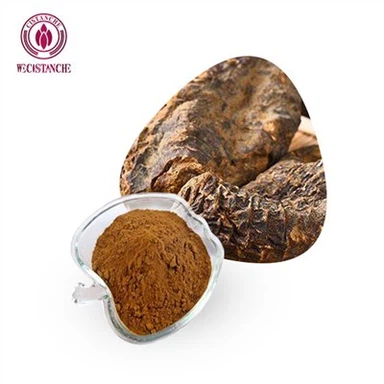
The official Cistanches Herba comprises the dried fleshy stems of Cistanche deserticola (desert broomrape) and C. tubulosa. C. tubulosa grows in the deserts of northern China (notably Hotan, Xinjiang) and Central Asia, parasitizing the roots of Tamarix species; lacking chlorophyll, it draws water and nutrients from its host. For manufacturers, C. tubulosa has a practical advantage: its lower water-soluble oligo- and polysaccharide content means its lipophilic and glycosidic actives are more concentrated. Total echinacoside and acteoside typically range from 1.5% to 4% of the dry weight, materially higher than the roughly 0.3% level reported for C. deserticola, making quantitative, purity-standardized extraction easier and explaining why C. tubulosa is the species most often used in proprietary extracts and Chinese patent medicines. It is also the species most frequently studied in the modern pharmacological literature.
Quality extracts are standardized to total PhG content or to specific echinacoside/acteoside levels, which aligns the discussion below with the actual pharmacologically active material. When comparing products, look for an explicit standardization statement rather than the bare label 'Cistanche extract'.

Phenylethanol glycoside is the main active component of Cistanche tubulosa
2. The Three Pillars of Male Sexual Function and Where Cistanche Intervenes
Male sexual response and penile erection are multi-system events that can be reduced to three pillars:
Vascular-smooth-muscle axis: sexual stimulation triggers neuronal and endothelial nitric oxide (NO) release, which activates guanylate cyclase, raises cyclic GMP (cGMP), relaxes cavernosal smooth muscle, increases arterial inflow, and compresses venous outflow. Any cause of endothelial dysfunction-diabetes, hypertension, smoking, dyslipidemia, aging-fails here first.
Effects of cistanche-improve kidney function
Hormonal-drive axis: the HPG axis governs testosterone production. Testosterone fuels libido, spontaneous erections, eNOS expression in cavernosal tissue, and overall vitality; it declines by roughly 1% per year after age 35, a major backdrop to flagging desire and erectile resilience.
Neural-psychological axis: excessive sympathetic tone, anxiety, fatigue, and poor sleep suppress the parasympathetic dominance required for arousal, and performance anxiety can create a self-reinforcing loop.
The value of C. tubulosa is that it does not hit a single point. It addresses the vascular and hormonal pillars simultaneously and, through antifatigue and antioxidant effects, contributes indirectly to the third-which is precisely why it differs from an 'as-needed' PDE5 inhibitor and why its effects are gradual and require sustained use.
3. Molecular Mechanisms: Four Interlocking Pathways
3.1 Acting on the Hypothalamic Androgen Receptor to Relieve Negative-Feedback Inhibition of Testosterone
This is the most complete and breakthrough mechanism to have been characterized. Work by Zhang and colleagues showed that echinacoside distributes to the hypothalamus rather than accumulating directly in the testes, and that its target is the androgen receptor. Molecular docking placed echinacoside in a compact conformation within the human AR ligand-binding pocket: two phenyl rings occupy the hydrophobic domain, contacting Leu-712, Val-716, Met-734, Ile-737, Met-894, and Ile-898, while hydrogen bonds form between the glycoside hydroxyls and Met-894 (bond length about 2.4 Å) and Val-713 (about 2.7 Å). Pharmacologically, echinacoside competitively binds and inhibits AR, preventing AR translocation into the nucleus and the initiation of gene transcription, thereby blunting androgen negative feedback at the hypothalamus and pituitary-the very lever that controls LH and testosterone secretion. With feedback relaxed, LH rises and stimulates Leydig cells to upregulate StAR, CYP11A1, CYP17A1, 3β-HSD, and 17β-HSD expression and activity, ultimately promoting testosterone biosynthesis.

The efficacy of Cistanche - enhancing sexual function
Click here to view Improve Sexual Function Cistanche products
【Ask for more】 Email:cindy.xue@wecistanche.com / WhatsApp: 0086 18599088692 / WeChat: 18599088692
In a bisphenol A (BPA)-induced reproductive-injury mouse model, echinacoside at 80 mg/kg restored testicular testosterone by 18.3% and LH by 24.1% versus the BPA-treated group, while sperm count and motility improved by 35.5% and 30.1%, respectively; mRNA levels of StAR, CYP17A1, 3β-HSD, and 17β-HSD were significantly upregulated. The key qualification is that this 'androgen-like effect' works by supporting endogenous synthesis rather than delivering exogenous hormone and should therefore, in principle, not disrupt normal hormonal balance-but 'in principle' is not the same as 'proved in humans'.
3.2 The NO-cGMP Pathway: A Direct Vascular Basis for Erection
Echinacoside's endothelium-dependent vasorelaxation is firmly demonstrated. In rat thoracic aortic rings pre-contracted with phenylephrine (1 μM) or KCl (60 mM), echinacoside at 30–300 μM produced acute, concentration-dependent relaxation. The effect was significant in endothelium-intact rings, markedly attenuated in endothelium-denuded rings, and abolished by the eNOS inhibitor L-NNA (100 μM), the non-selective soluble guanylate cyclase blocker methylene blue (10 μM), and the selective sGC inhibitor ODQ (1 μM); echinacoside also increased cGMP production in contracted rings. This was the first demonstration that echinacoside mediates vasodilation via the NO-cGMP pathway. Subsequently, in human umbilical vein endothelial cells (HUVECs), echinacoside at 0.01–10 μM concentration-dependently increased NO production and phosphorylated eNOS at Ser1177; the effect was attenuated by the AR antagonist nilutamide or AR siRNA and by the PI3K inhibitor wortmannin (5 μM), indicating an AR-dependent PI3K/Akt-eNOS cascade.

The efficacy of Cistanche tubulosa in enhancing sexual function
The relevance to erection is direct: penile arteries are among the smallest in the body, and endothelial dysfunction often appears here first. By protecting eNOS from oxidative uncoupling (the state in which the enzyme stops making protective NO and instead generates damaging superoxide) and increasing NO bioavailability, echinacoside complements the 'downstream cGMP preservation' logic of PDE5 inhibitors. The two could theoretically be synergistic, but no human safety data support unsupervised stacking-do not combine them on your own initiative.
3.3 Antioxidant and Anti-Apoptotic Protection of the Reproductive Targets
The PhGs, especially echinacoside and acteoside, are potent scavengers of free radicals, inhibitors of lipid peroxidation, and enhancers of superoxide dismutase (SOD) and glutathione peroxidase activity. Their reproductive value operates at three levels:
Leydig-cell protection: in hydroxyurea-, streptozotocin-nicotinamide (STZ-NA)-, and BPA-exposed models, C. tubulosa extract at 80, 160, and 320 mg/kg reversed testicular Leydig-cell damage in a dose-dependent manner, restored testosterone, and improved sperm count, motility, and morphology while reducing ROS and lipid peroxidation.
Cavernosal endothelium protection: via Nrf2-driven upregulation of SOD, glutathione peroxidase, heme oxygenase-1, and catalase, oxidative injury to penile vascular endothelium is attenuated, preserving cavernosal structure and responsiveness.
Spermatozoal protection: echinacoside counteracts BPA-induced impairment of spermatogenesis, and C. tubulosa polysaccharides have been reported to promote sperm maturation through the NELL2 signaling pathway.
Diabetic ED, post-pelvic-surgery states, long-term smoking, and advanced age share oxidative stress overlaid on endothelial injury as a common pathology, so the mechanistic rationale for benefit is strongest in these groups-but human trials remain necessary to confirm it.
Desert living cistanche-Antioxidant
3.4 Antifatigue and Central Modulation: An Indirect but Material Contribution
Much of the TCM pattern of 'kidney-yang deficiency' maps, in modern physiological terms, to underperformance of energy metabolism and stress regulation. Ethanol extracts of C. tubulosa prolong hypoxic tolerance and loaded-swimming time in normal and yang-deficient mice; in standardized antifatigue tests, medium- and high-dose groups show significantly prolonged exhaustion-swimming time, increased post-exercise liver glycogen reserves, and lower blood lactate 20 minutes after exercise. Acteoside has also been suggested to modulate GABA-A receptors, with a theoretical anxiolytic effect that could ease excessive sympathetic tone. For sexual function, reducing fatigue and anxiety improves both desire and performance-and this is why TCM formulas often pair Cistanche with Epimedium, Cuscuta chinensis, Cnidium monnieri, and Eucommia ulmoides in a 'whole-system tonification' logic.

Effects of cistanche: anti-fatigue
4. Human Clinical Evidence: One Key Trial and a Clear Evidence Gap
4.1 The Key Human Trial: A Randomized, Double-Blind, Placebo-Controlled Crossover Study of Cappra®
To date, the most direct and rigorously designed human validation is a randomized, double-blind, placebo-controlled crossover trial conducted in Thai men with mild or mild-to-moderate ED (PMID: 24146455). Sixty-three patients were randomized to Cappra® (a traditional Thai herbal preparation used for decades and containing C. tubulosa among other herbs) or placebo for two weeks, followed by a one-week washout and then crossover; the primary endpoints were IIEF domain scores and adverse events, and 61 patients completed the study.
The results were clear: every IIEF domain improved more with Cappra® than with placebo, and the mean change on the erectile-function domain was 4.87 versus 3.44 points, a statistically significant difference (P=0.032). The most common adverse events were dizziness (13.3% with Cappra®, 9.6% with placebo), facial numbness (1.6% vs. 0), and tachycardia (1.6% vs. 0). The trial supports Cappra® as an alternative therapy for mild and mild-to-moderate ED, with acceptable tolerability.

Cistanche tubulosa experiment
Three caveats are essential. The sample was only 61 completers; the treatment period was just two weeks, so no long-term maintenance effect can be judged; and Cappra® is a multi-herb formula rather than isolated C. tubulosa extract, so the result cannot be attributed wholly to the tubulosa species. Furthermore, several figures cited in Chinese health-content articles-'60 mild-ED patients, 8 weeks, IIEF +4.2 points, 68.3% response rate', or '30 kidney-yang-deficiency sexual-dysfunction patients, IIEF-5 +2.3 points'-come from small observational clinical reports or combination preparations and are lower-grade evidence; they should be treated as corroborating anecdotes, not as a dosing basis.
|
Evidence type |
Principal result |
How to weigh it |
|
Randomized double-blind placebo-controlled crossover trial, Thailand, n=61, Cappra® formula |
IIEF erectile-function domain mean change 4.87 vs. 3.44 (P=0.032) |
Direct human evidence supporting mild-to-moderate ED, but small, short, and not a single-extract product |
|
Castrated / hydrocortisone-induced kidney-yang-deficient rats, total PhG fraction, crude-drug equivalent 2.3 g·kg⁻¹, 14 days |
Erection latency shortened (P<0.05), capture frequency raised (P<0.01), testis and seminal-vesicle wet weight up, cAMP/cGMP ratio up, serum T/FSH/GnRH up |
Strong mechanistic evidence; total PhGs were the most active fraction, but no human dose extrapolation |
|
BPA reproductive-injury mice, echinacoside 80 mg/kg |
Testosterone +18.3%, LH +24.1%, sperm count +35.5%, motility +30.1% |
Solid molecular mechanism; animal and cell evidence only |
|
STZ-NA diabetic rats, extract 80–320 mg/kg |
Testosterone up to ~3.51 ng/dL, sperm count up to ~38.8×10⁵/mL, motility up to ~49.6% |
Supports metabolism-related reproductive injury; inter-species dose conversion required |
4.2 Evidence in Female Sexual Function

Cistanche tubulosa extract
In TCM, Cistanche is also used for women-for 'uterine-cold infertility, morbid leukorrhea, and menstrual disorders'. Its polysaccharides and PhGs improve estradiol (E2), T, LH, and FSH disturbance in ovariectomized menopausal-syndrome model mice, raise uterine organ coefficients, and improve behavioral endpoints. Yet, as of this review, no well-designed randomized controlled human trial has demonstrated that C. tubulosa improves female libido or treats female sexual dysfunction. Claims of 'libido enhancement in women' must therefore rest on traditional use and animal mechanism only, and must not be conflated with the male human evidence. For perimenopausal women with vaginal dryness or low desire, gynecological and sexual medicine assessment should come first, not self-supplementation.