A Cistanche Tubulosa–Based Gut Microbiome Nutrition Formula And Its Preparation: A Fermentation‑Enabled, Prebiotic‑Rich, Protein–Polyphenol Coupled Approach
Sep 21, 2026
Abstract
This article describes a functional nutrition formulation designed to support gut microbiome balance using Cistanche tubulosa (also known as Rou Cong Rong, "desert ginseng") as the core botanical. The formula integrates: (i) a water decoction of multiple herbs, (ii) a multi‑strain lactic acid bacteria fermentation of the aqueous extract to generate postbiotic metabolites, (iii) an ethanol extract from the decoction residue to recover small‑molecule phenolics, and (iv) a Hericium erinaceus (lion's mane) water‑soluble protein fraction covalently/non‑covalently coupled with residue‑derived actives to improve stability and enable sustained release. The final product also contains prebiotics (fructo‑oligosaccharides and resistant dextrin) and a natural sweetener (steviol glycosides). In bench assays, the complete formulation shows strong antioxidant potential and enhances the growth of beneficial bacteria such as Bifidobacterium and Lactobacillus in culture. In an antibiotic‑induced mouse dysbiosis model, it supports recovery of body weight compared with controls lacking key components.
Note: The results described here are based on in‑vitro assays and an animal model; they do not constitute clinical evidence in humans.
1. Background: Why a Multi‑Module Botanical Strategy for the Gut Microbiome?
The gastrointestinal tract is home to a complex ecosystem of bacteria, archaea, fungi, and viruses collectively known as the gut microbiota. This ecosystem contributes to metabolic homeostasis, immune signaling, and barrier integrity. When microbiome composition and diversity are disrupted (often referred to as dysbiosis), digestive function and immune balance may be affected.
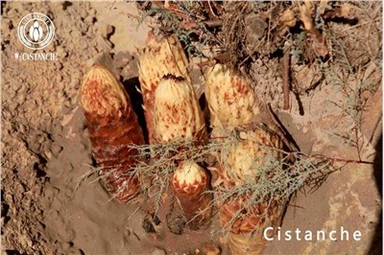
Cistanche tubulosa is a traditional herbal material used in East Asian medicine and historically associated with "kidney yang support" and bowel moisture/lubrication. Modern phytochemical research highlights its richness in phenylethanoid glycosides (e.g., echinacoside/acteoside‑type constituents) and polysaccharides, which are frequently discussed in the context of antioxidant capacity, immune modulation, and gut support. However, many commercial products rely on single extracts, which may limit the breadth of gut‑targeted mechanisms (substrates for microbes, postbiotic metabolites, and controlled delivery).
The formulation described here uses a systems approach: botanicals + fermentation + prebiotics + protein‑coupled actives-aiming to support microbial ecology from multiple angles.

2. Composition of the Nutrition Formula (by weight parts)
2.1 Core botanical and functional ingredients
The preparation uses the following components (parts by weight):
Cistanche tubulosa: 20–30
Imperata cylindrica rhizome (Bai Mao Gen): 4–6
Paeonia lactiflora root (Bai Shao): 2–4
Portulaca oleracea (purslane; Ma Chi Xian): 1–2
Hericium erinaceus (lion's mane): 2–4
Fructo‑oligosaccharides (FOS): 4–6
Resistant dextrin: 2–3
Steviol glycosides: 0.1–0.2
2.2 Optional probiotic strains (powder preparations)
Optionally, the formula may include three probiotic strains, each as a powder with 1.5×10¹¹ CFU/g viable count:
Lacticaseibacillus paracasei (formerly Lactobacillus paracasei): 0.05–0.08
Limosilactobacillus reuteri (formerly Lactobacillus reuteri): 0.03–0.05
Pediococcus pentosaceus: 0.02–0.03
3. Preparation Method (Process Overview)
The method is designed to maximize raw‑material utilization: the decoction liquid and the spent residue are both valorized.
Step S1 - Herbal aqueous extraction (decoction)
Pulverize Cistanche tubulosa, Imperata rhizome, Paeonia root, and purslane and pass through 80–100 mesh.
Add the powder to deionized water, soak 1 hour, bring to boil, then decoct for 1 hour.
Filter to obtain filtrate (liquid) and residue (solid).
Recommended solid–liquid ratio: 1 g : 20 mL.
Step S2 - Sterilization + lactic fermentation to produce a "fermentation extract" (postbiotic‑rich fraction)
Sterilize the filtrate at 121 °C for 20 min.
Cool, then inoculate activated cultures of L. paracasei, L. reuteri, and P. pentosaceus.
Ferment at 37 °C for 48 h.
Centrifuge at 10,000 rpm for 15–20 min; pass supernatant through 0.22 μm filter.
Vacuum‑concentrate to 20% of original volume; freeze‑dry to obtain the fermentation extract.
Rationale: fermentation can generate organic acids, short‑chain fatty acid‑related metabolites, peptides, and other postbiotic compounds, potentially helping shape gut environment and supporting beneficial bacteria.
Step S3 - Ethanol reflux extraction of the decoction residue (small‑molecule recovery)
Dry the residue from S1.
Add 70–80% (v/v) ethanol, reflux in an 80 °C water bath for 1 hour.
Centrifuge at 8,000 rpm for 15–20 min.
Remove ethanol by reduced‑pressure distillation; freeze‑dry to obtain the residue extract.
Recommended solid–liquid ratio: 1 g : 10–15 mL.
Rationale: ethanol extraction recovers more phenolics/flavonoids/organic acids and other relatively small molecules that may be under‑represented in the aqueous fraction.
Step S4 - Lion's mane aqueous protein extraction
Dry lion's mane to constant weight, mill and pass through 80 mesh.
Add to phosphate buffer (0.2 mol/L, pH 7.8) and stir 4 h at 400–500 rpm.
Centrifuge at 10,000 rpm for 15–20 min; collect supernatant.
Recommended ratio: 1 g : 20–30 mL.
Step S5 - Ammonium sulfate precipitation + dialysis to obtain water‑soluble lion's mane protein
Add ammonium sulfate to the S4 supernatant to saturation.
Stand overnight at 4 °C, centrifuge, collect precipitate.
Dialyze (MWCO 3,500 Da) against deionized water for 24 h.
Freeze‑dry dialysate to obtain lion's mane water‑soluble protein.
Step S6 - Coupling: residue extract + lion's mane protein (stability + sustained release module)
Dissolve lion's mane water‑soluble protein in PBS (0.01 M, pH 6.8); stir at 4 °C overnight.
Adjust to pH 9 with 1 mol/L NaOH.
Add the residue extract (from S3) and stir 24 h.
Dialyze in deionized water 48 h, then freeze‑dry to obtain the extract–protein conjugate/complex.
Protein concentration in PBS: 20–25 mg/mL.
Rationale: under alkaline conditions, protein and phenolic‑type compounds may form covalent and/or non‑covalent associations, which can (a) protect oxidation‑sensitive actives, (b) improve aqueous behavior, and (c) provide a slower release profile along the GI tract.
Step S7 - Final blending
Blend uniformly:
extract–protein conjugate (S6)
fermentation extract (S2)
FOS + resistant dextrin
steviol glycosides
→ final Cistanche tubulosa gut microbiome nutrition formula.
4. Functional Logic: Why This Combination May Be More Than a Single Extract
4.1 Antioxidant support via "stability engineering"
Instead of relying only on free small molecules (which can be unstable), this approach uses a protein‑bound/complexed form to reduce oxidative loss during processing and storage, and potentially during gastric transit.
4.2 Three layers of microbiome support: prebiotic + postbiotic + botanical matrix
Prebiotics (FOS, resistant dextrin): fermentable fibers that can be utilized by beneficial microbes (e.g., Bifidobacterium), helping increase their abundance.
Postbiotic‑rich fermentation extract: organic acids and peptides can modulate pH and provide microbial signaling/nutritional factors.
Botanical matrix: polysaccharides and phenylethanoid glycosides from Cistanche and complementary herbs contribute additional substrates and bioactives.
4.3 "Cascade utilization" of raw materials (industrial advantage)
A notable manufacturing concept here is gradient extraction: the aqueous fraction is used for fermentation, while the residue is further extracted with ethanol-improving yield and reducing waste.
Cistanche extract supplements for gut health
5. Experimental Evidence (as described)
5.1 DPPH radical scavenging assay (Figure 1)
The full formulation (Examples 1–3) showed higher DPPH radical scavenging than comparator formulations lacking:
the auxiliary herbs (Imperata, Paeonia, purslane), or
lion's mane, or
the residue ethanol extract.
Interpretation: multiple antioxidant contributors plus protein‑coupling synergy may increase overall radical scavenging capacity.
5.2 In‑vitro growth promotion of beneficial bacteria (Figure 2)
In MRS medium supplemented with 1% of the formulation, viable counts of Bifidobacterium longum and Lactobacillus acidophilus increased more than comparators.
Interpretation: prebiotic fibers + fermentation metabolites + coupled actives may provide a richer growth environment.
5.3 Antibiotic‑induced dysbiosis mouse model (Figure 3)
Mice receiving cefixime (30 mg/kg, oral gavage) showed reduced body weight. Animals given the full formulation (200 mg/kg, twice daily) showed a stronger trend toward weight recovery over 14 days compared with comparators missing key modules.
Interpretation: the combination may support GI function recovery under microbiome stress conditions in an animal model.
6. How This Could Be Positioned for Western Consumers (without overclaiming)
For a factory brand blog (especially in the EU/US context), a compliant positioning is:
"Designed to support gut microbiome balance"
"Features prebiotics and a postbiotic‑rich fermented botanical extract"
"Includes a protein‑coupled polyphenol complex for improved stability"
"Backed by in‑vitro antioxidant assays and an antibiotic‑stress mouse model"
Avoid: claiming it "treats IBS, colitis, gastritis, depression, autoimmune disease," etc., unless you have jurisdiction‑specific approved claims and human clinical evidence.
7. Manufacturing Notes (for R&D and scale‑up discussions)
Sterility control is central: 121 °C/20 min sterilization before inoculation; 0.22 μm filtration after fermentation.
Freeze‑drying is used repeatedly to preserve sensitive fractions.
Dialysis steps (3,500 Da) suggest the aim is to remove salts/small molecules from the protein fraction and the coupled complex-this matters for taste and stability.
Probiotic viability (if included) depends strongly on blending temperature, moisture, and packaging oxygen barrier.
Conclusion
This Cistanche tubulosa gut‑support formula represents a modernized botanical development strategy: decoction + fermentation + prebiotics + protein–polyphenol coupling, designed to support antioxidant capacity and microbiome‑friendly conditions while improving stability and sustained availability of actives. For herbal product developers targeting Western gut‑health markets, it provides a practical blueprint for moving beyond single‑extract products toward multi‑module functional nutrition systems.