From Field To End Use: Current Status And Development Of The Cistanche Extract Industry
Sep 15, 2026
Known as the "Ginseng of the Desert", cistanche is a sand-adapted medicinal parasitic plant that grows on the root systems of Haloxylon ammodendron and Tamarix ramosissima. Driven by three major forces - ecological restoration, medicinal-edible homology, and big-health consumption - it has evolved from a traditional Chinese medicinal herb into a high-value functional raw material.

herb cistanche
Industry Origin: From Endangered Wild Herb to Large-scale Cultivation
(I) Species and Geo-authentic Producing Regions
Cistanche belongs to the genus Cistanche of the Orobanchaceae family. Four species are distributed in China: Cistanche deserticola, Cistanche tubulosa, Cistanche salsa, and Cistanche sinensis. According to the Chinese Pharmacopoeia, only Cistanche deserticola and Cistanche tubulosa are approved for medicinal use. Cistanche deserticola parasitizes the roots of Haloxylon ammodendron. It is mainly produced in Alxa League, Inner Mongolia, and is a national geographical-indicated geo-authentic medicinal material. Cistanche tubulosa parasitizes on the roots of Tamarix ramosissima. Its major growing areas are Hotan and Yutian in Xinjiang. It features relatively higher active-ingredient content and more affordable prices.
Wild cistanche was once on the verge of depletion due to over-harvesting and has been listed in Appendix Ⅱ of the Convention on International Trade in Endangered Species of Wild Fauna and Flora (CITES). Pressure to conserve wild resources drove breakthroughs in artificial inoculation technology, which forms the foundation of today's industry.

Chinese herb cistanche
(II) Win-win Outcome of Artificial Cultivation and Ecological Governance
Since 2000, research teams represented by Professor Tu Pengfei from Peking University have popularized cistanche cultivation technologies in two core producing zones: Alxa League of Inner Mongolia and Hotan of Xinjiang. To date, more than 6 million mu of Haloxylon ammodendron and Tamarix ramosissima have been planted across Xinjiang, Inner Mongolia, Gansu, Qinghai, and other provinces, with over 2.3 million mu inoculated with cistanche. This has fundamentally resolved the shortage of medicinal resources and guaranteed raw-material supply for more than 200 Chinese patent medicines and health-care products.
Cistanche cultivation creates a distinctive ecological-cycle model of "desertification control combined with medicinal-herb planting". Planted Haloxylon ammodendron builds ecological shelterbelts while serving as the host for cistanche. Desert governance has thus shifted from government-led, investment-driven projects to mass-participatory undertakings. The annual output value of relevant industries has grown from less than 1 billion RMB in the 1990s to over 20 billion RMB. The table below shows the scale and characteristics of major producing regions:


The villagers of Hotan Village in Xinjiang are digging and harvesting Cistanche tubulosa
Distinct Regional Models with Unique Features
Alxa League in Inner Mongolia has built an integrated ecological industry model of Haloxylon ammodendron + cistanche. It hosts 24 specialized enterprises. In 2025, the full-chain output value of its ecological desert-control industry exceeded 2.5 billion RMB, lifting the per-capita annual income of more than 30,000 farmers and herdsmen to 30,000-50,000 RMB. Yutian County in Xinjiang has developed Cistanche tubulosa into its core "One County, One Product" industry, driving income growth for 3,177 households. Kubuqi in Inner Mongolia has explored a three-dimensional circular model of "photovoltaic power generation + under-panel planting".
Mid-stream Processing: From Crude Herb to Standardized Extract
(I) Harvesting, Primary Processing and Raw-material Grading
Cistanche is harvested in spring and autumn, a period overlapping with cotton harvesting. Chronic labour shortage has long plagued the industry, making mechanized inoculation and harvesting an urgent demand. Fresh cistanche is cleaned, sliced, and dried to obtain medicinal herb materials before entering the extraction process. The wholesale price of primary dried cistanche ranges from 50-200 CNY per jin. After being processed into health-care products, its value-added rate can exceed 200%. Intensive deep processing holds the key to value escalation.
The Chinese Pharmacopoeia sets minimum quality thresholds for raw materials. The total content of echinacoside and acteoside shall be no less than 0.30% for Cistanche deserticola, and no less than 1.5% for Cistanche tubulosa. According to 2025 statistics, China's total cistanche output stands at approximately 6,850 tons, while market demand has climbed to 9,230 tons, creating a supply-demand gap of around 2,380 tons. High-quality raw materials remain in persistent short supply.

Harvest of Cistanche tubulosa
(II) Extraction Process and Technological Evolution
The core bioactive constituents of cistanche are mostly phenylethanoid glycosides, which are heat-sensitive, prone to oxidation and hydrolysis, and thus impose high requirements on processing technologies. Typical workflow: raw-material screening and impurity removal → cleaning, slicing and pulverization → low-temperature water/ethanol extraction → filtration and residue removal → vacuum low-temperature concentration → macroporous-resin purification/membrane separation → spray drying → sieving and sterilization → aseptic packaging. The whole procedure requires light-shielding, temperature control, and anti-oxidation measures to maximally preserve active components.
Two major product categories prevail in the market. The first is ratio extracts (10:1, 20:1, 30:1), whose specifications are defined by raw-material feed ratio. They represent the most widely used basic raw-material form in the industry. The second is quantified-content extracts, with precisely labelled contents of echinacoside and total phenylethanoid glycosides (e.g. 5%, 10%, 20%, even above 50%; total glycosides ranging 10%-85%). These are applied in high-end preparations, pharmaceuticals, and functional foods. Technologies including supercritical CO₂ extraction, membrane separation, enzymatic co-production, and nano-encapsulation are gaining popularity, driving industrial upgrading from crude ratio-based powder toward monomer isolation and high-purity grades.

Cistanche tubulosa experiment
Bioactive Substance Foundation: Core Backbone of Industrial Value
Cistanche bioactive components mainly cover phenylethanoid glycosides, iridoids, lignans, and polysaccharides. More than 120 compounds have been isolated and identified from Cistanche deserticola. Phenylethanoid glycosides serve as the principal fraction; echinacoside is regarded as the most critical active ingredient, followed by acteoside.
Echinacoside: Markedly boosts superoxide dismutase (SOD) activity, eliminates free radicals, and delays cellular senescence. It can cross the blood-brain barrier and exert neuroprotective and memory-improving effects by modulating signalling pathways including Wnt/β-catenin, PI3K/Akt and Nrf2/HO-1.

Main Chemical Constituents of Cistanche tubulosa
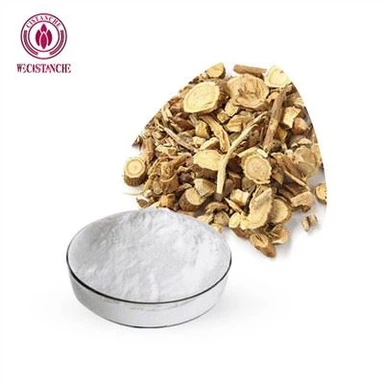
Click here to view Cistanche Tubulosa Extract Natural Supplement Powder
【Ask for more】 Email:cindy.xue@wecistanche.com / WhatsApp: 0086 18599088692 / WeChat: 18599088692
Acteoside: Exhibits prominent anti-inflammatory, anti-depressant, lipid-lowering, endothelial-cell-protective, and neuroprotective activities, and inhibits the NF-κB inflammatory pathway.
Polysaccharides and oligosaccharides: Key players in immunomodulation. The total content of saccharides and mannitol in Cistanche deserticola reaches 31.6%, delivering both intestinal-laxative functions and flavour-modifying effects.
Notably, a six-year research project led by Professor Li Xiaobo's research group at Shanghai Jiao Tong University verified that total cistanche glycosides constitute the pharmacodynamic basis for its antidepressant effect. Phenylethanoid glycosides and iridoid glycosides synergistically regulate the HPA axis, inflammatory responses, and neurotransmitter levels. Such modern pharmacological evidence provides scientific support for cistanche extract to evolve from an empirically used tonic to an evidence-based functional raw material.
End-use Applications: From Medicinal Herb to Multi-scenario Functional Raw Material
With policy liberalization for medicinal-edible homologous substances (Cistanche deserticola has been included in the catalogue of food-medicinal substances), the application scope of cistanche extract has expanded rapidly. In 2025, China's overall cistanche market reached roughly 5.8 billion RMB, among which the extract segment hit 4.26 billion RMB with a striking growth rate of 21.7%. The downstream application structure is shown in the table below:

(I) Health Food and Functional Food
This is the largest and most mature application track, focusing on anti-fatigue, immune enhancement, sexual-function improvement, brain health, and anti-aging. Supported by the medicinal-edible homology policy, cistanche extract can be used as a general food ingredient, giving rise to product forms including solid beverages, meal-replacement powders, ready-to-drink energy beverages, compressed candies and cistanche-infused wine. In 2025, the food-sector output value grew by over 40% year-on-year. Enterprises such as Dong'e Ejiao have launched ready-to-eat products including cistanche puree and cistanche peptide beverages.

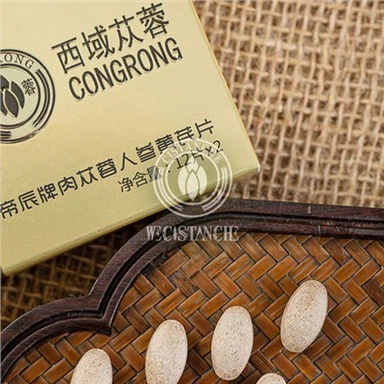
cistanche supplement near me
(II) Emerging Tracks in Pharmaceuticals and Cosmetics
In the pharmaceutical sector, cistanche serves as a raw material for Chinese patent medicines that tonify kidney yang and replenish essence and blood. Its applications extend to auxiliary research on neurodegenerative diseases such as Alzheimer's and Parkinson's, as well as anti-hepatic/renal fibrosis and anti-osteoporosis directions.
In cosmetics, Cistanche salsa root extract has been included in the Catalogue of Used Cosmetic Raw Materials (2024 Edition). The antioxidant properties of echinacoside and acteoside eliminate free radicals and inhibit skin photoaging. Brands such as Pechoin and Inoherb have launched product lines of serums, face creams, and facial masks, making cosmetics the fastest-growing application track.

Cistanche facial mask
Market Landscape, Policy and Standardization
(I) Competitive Landscape and Trade
The supply side shows polarization. Leading enterprises secure cost advantages through wild-tending cultivation and supercritical extraction technologies, with the top five players accounting for approximately 32% of total market share. Small and medium-sized enterprises focus on niche segments such as organic certification and customized active ingredients.
As the world's primary producing region, China contributes over 40% of global consumption and around 80% of export trade value. Exports are dominated by standardized total phenylethanoid glycoside extracts, mainly shipped to North America, the European Union, and Southeast Asia.
However, concerns lurk beneath prosperity. Average export prices have declined, while low-cost raw materials from Mongolia and Kazakhstan are eroding China's market share.
(II) Policy Dividends and Standard Upgrading
Policy represents the industry's strongest catalyst. In 2019, cistanche was included in the pilot catalogue of food-medicinal substances. From 2026 onward, Cistanche deserticola has been formally incorporated into medicinal-edible homology management, shortening the approval cycle for health foods and food additives by approximately 40%.

Abundant harvest of Cistanche tubulosa
A more milestone-worthy development occurred in March 2026, when the International Organization for Standardization released ISO 25115:2026 - Traditional Chinese Medicine - Cultivated Cistanche deserticola, Stem. As the world's first ISO standard for cistanche, it specifies cultivation origin, quality and safety indicators, and testing methods, providing a unified "quality benchmark" for international trade.
Challenges nevertheless remain. Cistanche tubulosa has not yet been included in the food-medicinal substance catalogue. In Hotan Prefecture, Xinjiang, medicinal-herb output reached 12,000 tons in 2024, raising concerns of market oversupply. Without effective consumption channels, the industry risks "low herb prices hurting farmers".
Furthermore, the EU and US FDA are continuously tightening regulations on heavy metals and pesticide residues. Third-party testing (Eurofins, SGS) is shifting from a "bonus feature" to an "entry ticket" for international markets.
Bottlenecks and Breakthrough Directions
Raw-material side: Promote mechanized inoculation and harvesting, build GAP bases, and develop wild-simulated tending cultivation to alleviate labour shortages and the high-quality raw-material gap. Expedite the inclusion of Cistanche tubulosa in the food-medicinal substance catalogue to absorb Xinjiang's production capacity.
Processing side: Breakthrough technologies such as targeted extraction, enzymatic conversion, and nano-encapsulation to improve bioavailability (e.g., the oral bioavailability of echinacoside is only about 0.83%; novel formulations such as nasal delivery hold promise). Upgrade from ratio-based powder toward monomer isolation and high-purity grades.
Brand side: Establish a quality-screening system combining "raw-material traceability + international certification matrix (ISO 22000, Organic, HALAL, KOSHER) + third-party testing", using traceability premiums to crowd out inferior, unlabelled raw materials.
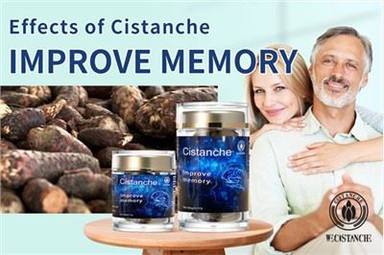
Application side: Segment multiple formulation tracks - male anti-fatigue, middle-aged and elderly memory care, female anti-aging skincare, intestinal prebiotic compounding - to develop high-value-added end-product brands and retain more value-chain profits at the producing regions.
The essence of the cistanche industry lies in an ecological practice of "nurturing the desert with the desert" and a reconstruction of the value chain. This "Ginseng of the Desert", which parasitizes underground on the root systems of Haloxylon ammodendron and Tamarix ramosissima, connects upward to desertification control, rural revitalization and income growth for farmers and herdsmen, while extending downward to health products, pharmaceuticals, cosmetics and functional foods.
Against the dual window of medicinal-edible homology liberalization and ISO international standard implementation, the industry is shifting from "quantitative expansion" to "qualitative upgrading". It is foreseeable that whoever first connects the full chain of "standardized cultivation - high-value extraction - branded end products" will seize the initiative in this green track growing out of the desert.