Hidden Risks Of Staying‑Up‑Late: Body Warning Signs & Natural Botanical Support With Cistanche Tubulosa
Sep 18, 2026
Nearly everyone understands that late‑night schedules harm physical health. Yet modern work, social events and tight deadlines often make occasional late nights unavoidable. Many people underestimate sleep deprivation damage until physical discomfort surfaces. Your body constantly sends out warning signals when you burn the midnight oil. Recognizing these critical alerts helps you take charge of your personal well‑being. While consistent high‑quality sleep remains the gold‑standard solution, natural plant‑derived ingredients are gaining attention for auxiliary support for sub‑health caused by circadian disruption. Among these botanicals, Cistanche Tubulosa, also known as Desert Ginseng in global markets, draws wide industry focus for cistanche benefits for physical health against sleep‑related stress and oxidative damage. Our factory manufactures premium standardized Cistanche Tubulosa extract with significantly higher levels of core bioactive phenylethanoid glycosides compared with alternative cistanche species. Visit our company overview page for manufacturing background: https://www.xjcistanche.com/about‑us. This article outlines health hazards triggered by staying up late, emergency warning symptoms, long‑term chronic consequences, practical sleep‑hazard avoidance tips, high‑risk groups, and how high‑potency Cistanche Tubulosa extract brings value for supplement and functional‑food product developers.

Late‑Night Habits That Elevate Sudden Cardiac Risk
Numerous people believe their bodies can tolerate repeated sleep loss. However, certain combinations of behaviors drastically raise the risk of catastrophic cardiovascular events.
Sleep deprivation: less than 4 hours per day for 3 consecutive days This represents severe sleep deprivation. Three days of insufficient sleep forces your heart to maintain high‑speed continuous operation for 72 hours. Normal sleep enables systemic tissue repair; repair mechanisms largely stall under extreme sleep shortage. Persistent physiological over‑excitement may trigger elevated blood pressure, accelerated heart rate, unstable myocardial electrical activity, angina pectoris, and malignant arrhythmia that contribute to sudden death risk.
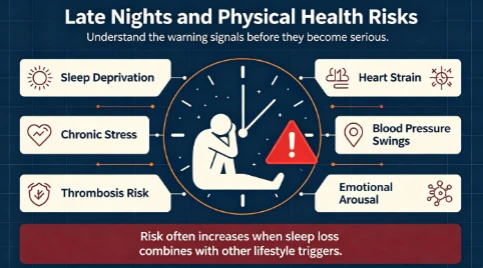
Chronic sleep below six hours daily over two weeks or longer Even with partial make‑up sleep on weekends, sustained sleep under six hours keeps the cardiovascular system under chronic stress. Vascular endothelial function gradually deteriorates, laying groundwork for thrombus formation. Chronic inflammation, blood‑pressure fluctuation and hyper‑coagulable blood state from long‑term sleep loss serve as independent risk factors for cerebral infarction and cerebral hemorrhage. Research confirms individuals sleeping fewer than six hours per night face substantially higher stroke probability.
Staying‑up‑late plus intense work or high‑intensity physical exercise After late nights, myocardial resilience decreases sharply. Heavy gym training or competitive sports greatly magnify sudden‑danger potential. Gentle walking or mild stretching are acceptable options. Monitor physical status closely; seek immediate hospital care once discomfort appears.
Staying‑up‑late paired with binge eating and drinking Avoid strong tea, coffee, energy drinks, alcohol, deep‑fried food, barbecued meals and high‑sugar desserts during late‑night hours. Caffeinated and stimulant beverages over‑activate the sympathetic nervous system, pushing heart rate and blood pressure higher and increasing cardiac burden. High‑fat and high‑sugar meals thicken blood and slow circulation, raising thrombus risk.
Staying‑up‑late combined with prolonged sedentary behavior Sitting motionless hour after‑hour slows lower‑limb blood circulation and elevates blood viscosity, encouraging deep‑vein thrombosis in legs. If thrombus fragments detach and travel through blood circulation toward lungs, life‑threatening pulmonary embolism can occur.
Hot‑water bathing or sauna immediately after pulling an all‑nighter Blood vessels already stay constricted from sleep deprivation. Sudden heat exposure causes drastic vasodilation and sharp blood‑pressure swings, potentially triggering cerebral hemorrhage.
Sudden severe health incidents rarely stem from sleep deprivation alone. They usually arise from sleep deficit stacked together with additional triggers: emotional excitement, high‑fat diets, alcohol intake or pre‑existing underlying diseases. After staying up late, you must avoid overlapping multiple risk factors.
Critical Warning Signs Requiring Immediate Medical Assistance
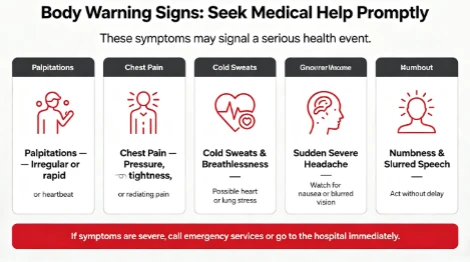
The way your body feels matters more than total late‑night hours. Watch for these emergency red flags your body sends out; call emergency services or visit medical facilities right away when any of these manifest.
Frequent palpitations, heartbeat rhythm disorders: may indicate arrhythmia conditions.
Chest tightness, chest pain, crushing retrosternal pain, radiating pain spreading to shoulders and back: potential angina or acute myocardial infarction.
Unexplained cold sweats, shortness of breath, labored breathing: suggestive of acute heart failure or pulmonary embolism.
Sudden explosive tearing‑style severe headache, together with nausea, vomiting or blurred vision: be alert for hypertensive crisis, cerebral hemorrhage or subarachnoid hemorrhage.
Unilateral limb weakness or numbness, drooping mouth corner, slurred speech: warning signs of acute cerebral infarction.
Long‑Term Consequences of Chronic Sleep Loss
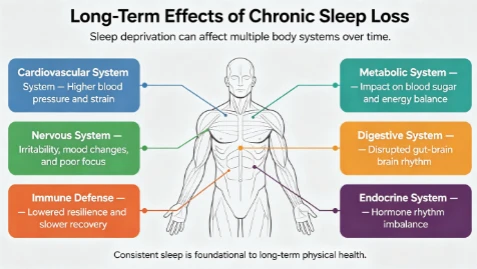
Beyond extreme sudden‑event outcomes, persistent late‑night patterns act as powerful accelerators for multiple chronic disorders.
Resistant hypertension Chronically activated sympathetic nerves keep peripheral blood vessels constricted, maintaining sustained high blood‑pressure readings. Some patients fail to stabilize blood pressure even with three types of anti‑hypertensive medications, and long‑term sleep loss can be one hidden root cause.
Type‑2 diabetes and metabolic syndrome Circadian rhythm disruption disturbs diurnal patterns of cortisol and other glucose‑raising hormones while lowering insulin sensitivity. Paired with late‑night high‑calorie snacks and sugary beverages, this greatly increases risks of diabetes and diabetic ketoacidosis.
Impaired mood and cognitive performance Sleep serves as the key window for the brain to clear metabolic waste and consolidate memory and emotional processing. Sustained sleep shortage damages prefrontal‑cortex function, leading to emotional outbursts, irritability, pessimism and elevated chances of mental health disturbances.
Digestive‑system disorders Sleep‑wake disruption disturbs gut‑brain axis signaling and digestive‑enzyme secretion rhythm, contributing to gastroesophageal reflux, peptic ulcers and non‑alcoholic fatty liver disease.
Elevated cancer risk The International Agency for Research on Cancer (IARC) categorizes circadian‑rhythm disruption from long‑term night‑time wakefulness as Group 2A (probably carcinogenic to human beings)IARC. Sleep‑loss suppresses melatonin secretion, weakens immune defenses, hinders DNA repair and fuels chronic inflammatory responses, collectively lifting cancer‑development odds.
Higher depression and anxiety susceptibility Sleep disturbance functions both as a major risk trigger and a typical symptom of depressive episodes. Long‑term sleep deprivation multiplies depression risk by 2‑4 times. People already living with depression experience significantly worsened symptoms. People with delayed bedtime and fragmented sleep also show higher rates of low mood and anxiety.
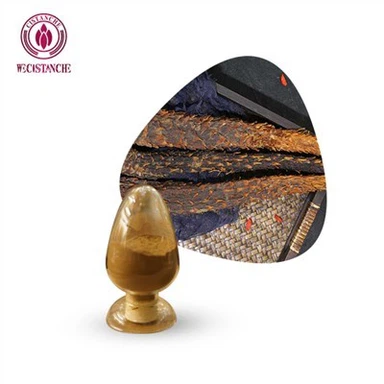
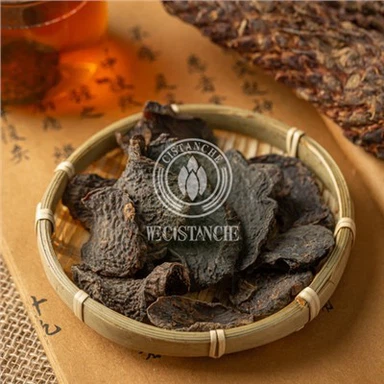
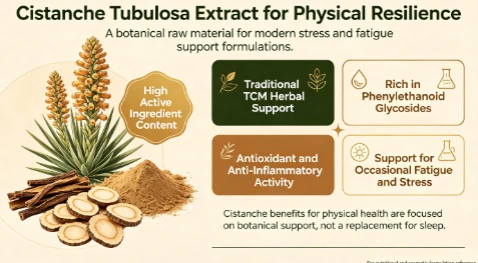
Here is where cistanche benefits for physical health create product‑development opportunities. In Traditional Chinese Medicine theory, Cistanche Tubulosa nourishes vital essence and supports overall bodily resilience depleted by fatigue and irregular rest. Its signature phenylethanoid glycosides (echinacoside and acteoside) deliver broad‑spectrum antioxidant and anti‑inflammatory activity, helping neutralize excess free radicals generated by circadian disruption, ease persistent low‑grade inflammation, and support HPA‑axis balance for better stress‑hormone management. Our high‑content Cistanche Tubulosa extract, sourced from Xinjiang desert growing grounds, contains far higher concentrations of these key active compounds compared to other cistanche varieties, making it a compelling raw‑material choice for formulators developing anti‑fatigue, stress‑support and immune‑support nutraceuticals targeting shift workers and people with irregular sleep schedules.
Practical Avoidance Checklist for Late‑Night‑Related Health Hazards
Sleep debt caused by late nights cannot be fully repaid through one single long sleep. You can reduce cumulative damage by following these practical guidelines.
Avoid two consecutive nights of staying‑up‑late. Medical professionals recommend limiting late‑night occurrences to no more than twice weekly. Occasional late nights with moderate catch‑up sleep allow the body to self‑regulate. Repeated back‑to‑back late nights may produce irreversible physiological harm.
Avoid complete all‑nighters. Limit single‑session sleep shortage to 3‑4 hours maximum. After a late night, allocate at least one to two recovery nights with 8‑hour full sleep. If night‑time tasks cannot be avoided, sleeping several hours early then waking up for work is preferable to staying fully awake; aim for minimum 5‑6 hours total sleep.
Reject revenge‑style oversleeping in daytime following late nights. Sleeping far past your regular wake‑up time completely throws off circadian rhythm. Wake merely one‑to‑two hours later than usual, and take a midday nap completing one full 90‑minute sleep cycle.
Prevent extreme emotional arousal during sleep‑deprived states. Intense emotional stimulation acts as the final trigger for cardiovascular incidents under sleep deficit. Vigorous excitement from competitive gaming or thrilling movies amplifies sympathetic‑nervous‑system response, causing sharp heart‑rate spikes, blood‑pressure surges and platelet activation that raise risk for acute cardiovascular and cerebrovascular episodes.
Supportive Service Of Wecistanche-For more details about cooperation
Email:Lijianlin@wecistanche.com
Groups Who Should Strictly Avoid Staying‑Up‑Late
These populations carry heightened vulnerability against sleep‑loss harm and should minimize late‑night schedules entirely.
Patients with confirmed cardiovascular or cerebrovascular diseases: including coronary heart disease, prior myocardial infarction, stent or bypass surgery history, heart failure, cerebral infarction, transient ischemic attack, and severe arrhythmia such as atrial fibrillation and frequent ventricular premature beats. Late nights plus emotional arousal may trigger angina, heart‑attack recurrence or stroke.
Patients with uncontrolled hypertension or diabetes: sleep‑loss induces violent blood‑glucose and blood‑pressure swings, damaging vessel walls and raising risks of cerebral hemorrhage, aortic dissection and diabetic ketoacidosis.
Pregnant women, especially mid‑to‑late‑term pregnancy: cardiac load rises by 30‑40% during gestation. Late nights increase odds for gestational hypertension, pre‑eclampsia, placental abruption and preterm labor.
Seniors aged above 65 years: elderly individuals possess weaker autonomic‑nerve regulation and reduced blood‑vessel elasticity. Even one instance of staying‑up‑late can trigger hypertension spikes or acute cerebral infarction.
Children and adolescents under 18 years old: night‑time hours represent peak growth‑hormone secretion window. Sleep deprivation hinders bone growth and brain development, disturbs endocrine balance and may bring forward early‑onset cardiovascular risk factors for young adulthood.

Why High‑Potency Cistanche Tubulosa Extract Appeals to Modern Product Developers
Consumers across North America and Europe keep searching for evidence‑backed natural botanicals for sub‑health challenges caused by modern busy lifestyles, shift‑work and occasional late nights. It is critical to clarify: Cistanche Tubulosa extract cannot replace sleep. It serves as supportive botanical raw material rather than a magic solution for eliminating sleep‑loss harm. The cistanche benefits for physical health center around mitigating oxidative stress, moderating chronic inflammation, supporting immune function and easing fatigue symptoms linked to circadian imbalance.
Our factory's standardized Cistanche Tubulosa extract stands out due to higher phenylethanoid glycoside content. Desert sunlight‑rich growing conditions in Xinjiang drive accumulation of echinacoside and acteoside far above levels found in other cistanche species. These actives support multiple bodily systems impacted by sleep deprivation. The standardized extract powder is suitable for soft‑gel capsules, tablet supplements, functional beverage formulations and compound herbal blends. Global buyers can review our manufacturing standards, quality‑control protocols and custom‑extraction services from our about‑us page: https://www.xjcistanche.com/about‑us.

Disclaimer
This article is for educational and product‑formulation reference only. Descriptions of Cistanche Tubulosa reflect traditional TCM herbal applications and existing laboratory research results, not medical treatment claims. Cistanche Tubulosa extract is cosmetic or nutritional raw material and is not pharmaceutical medicine. It shall not be used to diagnose, treat or cure any disease. Formulators must complete safety evaluation and abide by local‑region regulatory requirements before launching finished consumer goods. End‑users experiencing persistent sleep disorders or cardiovascular symptoms should always consult qualified healthcare practitioners.