Functional Constipation Is Associated With A Decline In Word Recognition 2 Years Later In Community-Dwelling Older Adults: The Korean Frailty And Aging Cohort Study Ⅱ
Dec 22, 2023
RESULTS
General Characteristics of the Study Population The baseline characteristics of the participants are presented in Table 1. Among the 851 participants, 8.9% (n = 76) had functional constipation. The mean age of the functional constipation group (78.6 ± 3.9 years) was higher than that of the non-constipation group (77.5 ± 3.8 years). The functional constipation group was more likely to have a higher rate of low physical activity (15.8% vs. 8.8%), polypharmacy (61.8% vs. 45.5%), and depression (30.3% vs. 17.4%) at baseline than the non-constipation group.

Click to constipation remedies
The characteristics of the participants 2 years after baseline are shown in Supplementary Table S1. Depression prevalence 2 years after baseline was 149 (19.2%) in the non-constipation group and 24 (31.6%) in the constipation group (p = 0.011). There was no statistically significant difference between the two groups in changes in depression over 2 years (p = 0.674). (Supplementary Table S2).

Changes in Cognitive Functions over 2 Years according to Constipation at Baseline Changes in word list recognition over 2 years in the functional constipation group (-0.55 ± 0.23) were much higher than those in the non-constipation group (-0.07 ± 0.05). No statistically significant differences were found in the other cognitive function tests (MMSE, word list memory, word list recall, digit span, FAB, and TMT) between the constipation and non-constipation groups (Table 2).

Univariate Regression Analysis of Characteristics for the Change in Word List Recognition over 2 Years
Table 3 shows the results of the univariate regression analysis of each baseline characteristic for the change in word list recognition test scores over 2 years. Age was only significantly associated with changes in word list recognition (p < 0.05).

Adjusted Mean Changes in Word Recognition
As shown in Table 4, we evaluated the association between functional constipation and decline in word recognition test scores over 2 years after controlling for confounders using the ANCOVA test. The confounding variables were selected from the statistically significant variables (age, low physical activity, polypharmacy, and depression) for functional constipation (Table 1) and decline in word list recognition test scores in univariate regression analysis (Table 3), and variables (sex, years of education, type 2 diabetes mellitus, and polypharmacy) already known to be related to functional constipation and declines in cognitive function.17-19)

The baseline measures of each cognitive function test in 2018 were also included as confounding variables. In the ANCOVA, the word list recognition test scores declined more significantly in the constipation group (-0.53) than in the non-constipation group (-0.07) after adjusting for confounding factors (p = 0.008).

Natural Herbal Medicine For Relieving Constipation-Cistanche
Cistanche is a genus of parasitic plants that belongs to the family Orobanchaceae. These plants are known for their medicinal properties and have been used in Traditional Chinese Medicine (TCM) for centuries. Cistanche species are predominantly found in arid and desert regions of China, Mongolia, and other parts of Central Asia. Cistanche plants are characterized by their fleshy, yellowish stems and are highly valued for their potential health benefits. In TCM, Cistanche is believed to have tonic properties and is commonly used to nourish the kidney, enhance vitality, and support sexual function. It is also used to address issues related to aging, fatigue, and overall well-being. While Cistanche has a long history of use in traditional medicine, scientific research on its efficacy and safety is ongoing and limited. However, it is known to contain various bioactive compounds such as phenylethanoid glycosides, iridoids, lignans, and polysaccharides, which may contribute to its medicinal effects.

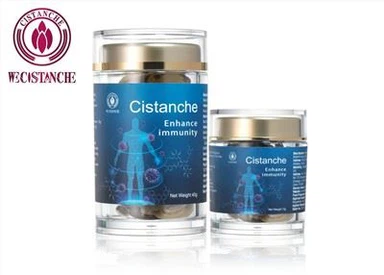
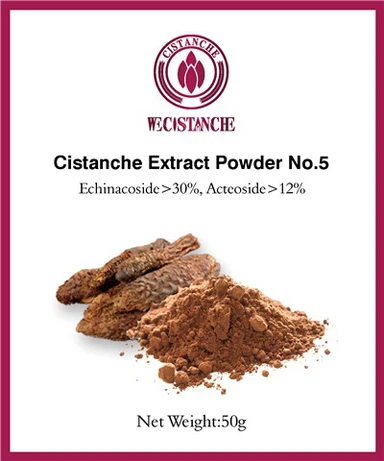
Wecistanche's cistanche powder, cistanche tablets, cistanche capsules, and other products are developed using desert cistanche as raw materials, all of which have a good effect on relieving constipation. The specific mechanism is as follows: Cistanche is believed to have potential benefits for relieving constipation based on its traditional use and certain compounds it contains. While scientific research specifically on Cistanche's effect on constipation is limited, it is thought to have multiple mechanisms that may contribute to its potential to relieve constipation. Laxative Effect: Cistanche has long been used in Traditional Chinese Medicine as a remedy for constipation. It is believed to have a mild laxative effect, which can help promote bowel movements and induce constipation. This effect may be attributed to various compounds found in Cistanche, such as phenylethanoid glycosides and polysaccharides. Moistening the Intestines: Based on traditional use, Cistanche is considered to have moisturizing properties, specifically targeting the Intestines. Promoting hydration and lubrication of the Intestines may help soften tools and facilitate easier passage, thereby relieving constipation. Anti-inflammatory Effect: Constipation can sometimes be associated with inflammation in the digestive tract. Cistanche contains certain compounds, including phenylethanoid glycosides and lignans, that are believed to have anti-inflammatory properties. By reducing inflammation in the intestines, it may help improve bowel movement regularity and relieve constipation.