Gentle Kidney Tonifying Without Harming The Body, The Health Wisdom Of Cistanche Tubulosa Suitable For All Seasons
Apr 03, 2026
In the field of traditional Chinese medicine health preservation, tonifying the kidneys has always been a focus of people's attention, but the concern that "tonifying the kidneys is afraid of causing excessive internal heat and nourishing the body is afraid of harming the body" has deterred many people from using kidney tonifying ingredients. As a medicinal and edible product known as the "desert ginseng", Cistanche tubulosa has perfectly solved this problem - it has mild medicinal properties, replenishes without dryness, and can gently nourish the kidneys without causing any burden on the body. What's even more rare is that it adapts to the seasonal health rhythm, and can be flexibly adjusted according to the body's needs in spring, summer, autumn, and winter, becoming an ideal choice for daily kidney tonifying and health preservation.
Cistanche tubulosa: a "humble gentleman" who gently nourishes the kidneys
Cistanche tubulosa is a dry fleshy stem with scaled leaves of the plant Cistanche tubulosa in the family Rhamnaceae. It is mainly produced in arid areas such as Inner Mongolia, Xinjiang, and Gansu. Due to its harsh growth environment, it can still produce rich nutrients and was regarded as a precious tonic by ancient people. Unlike other kidney tonifying herbs such as aconite and deer antler, Cistanche tubulosa is sweet and salty in nature, warm in nature, and belongs to the kidney and colon meridians. Its medicinal properties are calm and gentle, just like its name "Cistanche tubulosa" (homophonic with "calm"). It is a warm and introverted "tonic master" with the core advantage of "mild kidney tonifying without harming the foundation".

Chinese herb cistanche
From the perspective of traditional Chinese medicine mechanisms, the kidney tonifying effect of Cistanche tubulosa is reflected in its "nourishing fire and nourishing yin" function. It can not only gently tonify kidney yang, activate kidney function and power, but also nourish kidney essence and nourish essence and blood, achieving dual tonifying of yin and yang, avoiding the drawbacks of single tonifying yang, causing excessive heat, and single nourishing yin, causing greasiness. It replenishes yang without dryness, does not violently deplete the body's yin fluid, and even if taken in moderation for a long time, there will be no symptoms of excessive heat such as dry mouth and tongue, restlessness, insomnia, etc; Nourishing the kidneys without being greasy, the texture is oily but not overly heavy, and it does not hinder the circulation of the spleen and stomach. It is suitable for people with various constitutions to gradually adjust.
Modern pharmacological research has also confirmed the mild and beneficial properties of Cistanche tubulosa, which contains active ingredients such as total glycosides, phenylethanolic glycosides, polysaccharides, etc. It has the effects of enhancing immunity, anti-fatigue, regulating the endocrine system, improving renal function, etc., and has no significant toxic side effects. In 2023, it will be included in the list of "substances that are both food and traditional Chinese medicinal materials", balancing medicinal value and food safety, truly achieving the goal of "nourishing the kidneys without harming the body".

Main Chemical Constituents of Cistanche tubulosa
In addition to its core kidney tonifying and essence nourishing effects, Cistanche tubulosa also has the function of moistening the intestines and promoting bowel movements, which is an extension of its mild characteristics - it can improve constipation caused by kidney deficiency and intestinal dryness in the elderly, postpartum blood deficiency in women, and insufficient body fluid after illness by nourishing essence and blood, and does not damage the intestines like laxatives, achieving a balance between nourishing and purging, further reflecting its advantage of nourishing without harming the body.
Four-season adaptation: the seasonal health regimen of Cistanche tubulosa
Traditional Chinese medicine emphasizes the principle of "correspondence between heaven and man, adjustment and supplementation throughout the four seasons" in health preservation, emphasizing the adjustment of dietary intake methods according to seasonal rhythms. The gentle nature of Cistanche tubulosa enables it to perfectly adapt to the health needs of spring, summer, autumn, and winter seasons. By adjusting the consumption method and pairing, it can be tailored to the seasonal constitution, maximize the nourishing effect, and achieve "kidney nourishment in all seasons and health throughout the year".
Spring: Awakening Yang for hair growth, gentle and helpful to the kidneys

Chinese medicinal materials, such as cistanche
In spring, all things come back to life, and the liver qi of the human body is strong, and the kidney yang gradually rises. At this time, the key to health preservation is to "awaken yang, generate hair, and regulate the liver and kidneys", avoiding excessive supplementation that leads to excessive yang qi. Cistanche tubulosa is gentle in promoting yang without dryness. It can not only help improve the body's yang energy and conform to the trend of spring hair growth, but also nourish kidney essence and improve common kidney deficiency problems such as spring fatigue, mental depression, and soreness and weakness in the waist and knees.
Suggestion: Slice 10g of Cistanche tubulosa with 5g of Chinese wolfberry and 3 red dates, soak in water instead of tea or stew in Congee, 2-3 times a week. Attention should be paid to not taking excessive tonics in spring, and avoid using them together with hot medicinal herbs such as aconite and deer antler to prevent internal heat.
Summer: Protect yin and relieve heat, replenish without dryness
Summer heat can be overwhelming, causing excessive sweating, depletion of body fluids, and increased burden on the spleen and stomach. If a large amount of warm medicinal herbs is taken at this time, it can easily lead to internal heat. Cistanche tubulosa is warm in nature but not dry. When paired with ingredients that clear heat and nourish yin, it can not only gently nourish the kidneys but also relieve heat and protect yin, making it suitable for summer health needs.

Cistanche tubulosa slice
Suggested consumption: Mix 10 grams of Cistanche tubulosa with 5 grams of Ophiopogon japonicus and 10 grams of Lily, and drink them in soup or water. Ophiopogon japonicus and Lily can neutralize warmth and relieve summer heat; The cistanche can also be chopped and mixed with mung bean Congee and winter melon Congee for boiling, giving consideration to tonifying the kidney and clearing away heat. 2-3 times a week is appropriate. People with a weak spleen and stomach should reduce the dosage to avoid increasing digestive burden.
Autumn: Nourishing dryness and nourishing the kidneys, conforming to convergence
In autumn, the climate is dry, and the human body is prone to problems such as insufficient body fluids, dry mouth, and throat. At the same time, in autumn, the yang energy converges, and the kidneys need to undertake more storage and absorption functions. Cistanche tubulosa combines the functions of nourishing the kidneys and moistening dryness. It not only nourishes the essence of the kidneys, but also replenishes the missing body fluids in autumn, in line with the health rhythm of moistening dryness and converging dryness in autumn.
Food suggestions: Serve with 10g tremella and 6g lotus seeds, and cook tremella and lotus seeds Congee with 10g Cistanche tubulosa. The tremella moistens the dryness, lotus seeds strengthen the spleen, and synergize with Cistanche tubulosa; Cistanche tubulosa can also be boiled together with snow pear and rock sugar to make a dry nourishing kidney soup to improve dry cough, dry skin, and other problems caused by kidney deficiency in autumn. It is recommended to consume 2-3 times a week to avoid overeating and causing greasiness.
Winter: Warm the kidneys and strengthen the foundation, fully nourish them
Winter is the best season for "storing essence and nourishing kidneys", when the body's yang energy is restrained, and yin energy is vigorous. At this time, the absorption efficiency of tonics is the highest. Cistanche tubulosa is warm in nature, warming the kidneys and promoting yang, filling essence, and replenishing marrow. It is highly compatible with the demand for "storing essence" in winter, and can effectively enhance kidney function, improve symptoms of kidney deficiency such as cold aversion, waist and knee pain, and fatigue in winter.

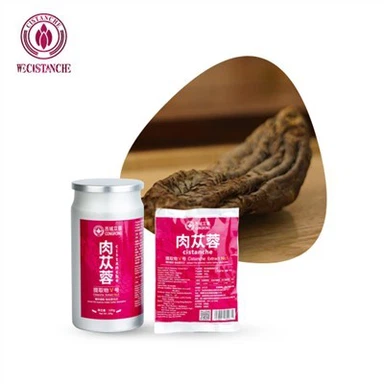
Cistanche tubulosa extract
Click here to view Cistanche for Kidney disease products
【Ask for more】 Email:cindy.xue@wecistanche.com / WhatsApp: 0086 18599088692 / Wechat: 18599088692
Suggested consumption: You can use the method of "heavy supplementation and light adjustment". Take 15 grams of Cistanche tubulosa, mix it with 500 grams of lamb, 10 grams of Angelica sinensis, and 3 slices of ginger, and simmer for 2 hours to make lamb Cistanche tubulosa soup. The lamb can warm up yang and dispel cold, and Angelica sinensis can nourish blood and promote blood circulation. The three work together to strengthen the kidney tonifying effect. You can also grind Cistanche tubulosa into powder and take 3 grams of warm water daily for easy persistence. It is recommended to take winter tonics 3-4 times a week, continuously for 1-2 weeks, and then stop for 3 days to avoid long-term tonics from increasing the burden on the body.
Summary of Daily Dietary Therapy Formulas (Convenient and Easy to Do)
Cistanche tubulosa goji berry tea (convenient for daily use)
Ingredients: 10g Cistanche tubulosa, 6g goji berries, 2 red dates
Method: Wash the ingredients thoroughly, place them in a thermos, pour boiling water, and simmer for 15 minutes. Serve as a substitute for tea and brew repeatedly until the taste fades.
Effect: Gentle kidney tonifying, liver nourishing and eye improving, suitable for daily office and home consumption, suitable for all seasons.

Cistanche tubulosa slice
Cistanche, Yam, and Pork Rib Soup (Autumn and Winter Nourishing Edition)
Ingredients: 12g Cistanche tubulosa, 200g yams, 300g pork ribs, 2 slices of ginger
Method: Blanch the pork ribs in water to remove any blood foam, then add them to a pot along with Cistanche tubulosa and ginger slices. Bring to a boil in clear water and simmer on low heat for 1 hour. Add peeled and chopped yams and simmer for another 20 minutes. Season with salt.
Effect: Tonifying the kidney and spleen, strengthening tendons and bones, improving kidney deficiency, soreness, and weakness of the waist and knees, weak spleen and stomach, and loss of appetite.
Cistanche tubulosa, lotus seed, and lily Congee (moist and dry in summer)
Ingredients: 8g Cistanche tubulosa, 10g lotus seeds, 10g lilies, 50g rice
Method: Wash the rice thoroughly and soak it for 30 minutes in advance; Soak lotus seeds and lilies in hair, wash and pack Cistanche into gauze bags. Put all the ingredients into the pot, boil with water for 30 minutes, take out the gauze bag, and season with salt or rock sugar (adjust according to taste).
Effect: Tonifying the kidney and moistening dryness, clearing the heart and calming the mind, relieving irritability, insomnia, and dry mouth caused by kidney deficiency in summer.
Cistanche tubulosa, with "gentleness" as its core characteristic, not only avoids the dry and harsh drawbacks of traditional kidney tonifying herbs, but also adapts to the seasonal health rhythm, making it a good kidney tonifying product that balances safety and practicality. Whether it's daily health care or improving discomfort related to kidney deficiency, as long as it is taken reasonably according to one's own season and constitution, it can achieve "nourishing the kidneys without harming the body", allowing the kidneys to recover function in a calm and nourishing manner, and safeguarding overall health.