Hemodialysis, Hemofiltration And Perfusion: The Importance Of The Three Working Together!
Sep 24, 2024
Hemodialysis, hemodiafiltration, and hemoperfusion are three important blood purification technologies, which are widely used in the treatment of kidney diseases and other blood toxin accumulation. Although each of them has its own unique therapeutic effect, in certain specific cases, the combination of the three can play a greater advantage and achieve better therapeutic effects. Why is hemoperfusion treatment still needed after hemodialysis and hemodiafiltration?

Click to Cistanche for kidney disease
1. Basic principles and limitations of hemodialysis
Basic principles: Hemodialysis, referred to as hemodialysis, is to lead the patient's blood out of the body through vascular access, separate the blood and dialysate through a dialysis membrane and exchange substances across the membrane, thereby removing metabolic waste from the body, correcting electrolyte and acid-base imbalances, and removing excess fluid from the body. This process mainly relies on diffusion, which can effectively remove small molecule toxins such as urea, creatinine, uric acid, and water in the blood.
Limitations: Although hemodialysis performs well in removing small-molecule toxins, it has a poor clearance rate for medium and large-molecule toxins. Therefore, for some patients who need to remove medium and large-molecule toxins, simple hemodialysis may not fully meet the treatment needs.
2. Supplementary effect of hemodiafiltration
Basic principle: Hemodiafiltration combines the advantages of hemodialysis and hemofiltration, and removes waste and excess water in the body through diffusion and convection. This method can not only effectively remove small-molecule toxins, but also improve the removal rate of medium and large-molecule toxins to a certain extent.

Supplementary effect: Hemodiafiltration makes up for the shortcomings of hemodialysis to a certain extent and improves the removal ability of large molecule toxins. However, for certain specific toxins or situations, its removal effect may still be limited.
3. Unique advantages of hemoperfusion
Basic principle: Hemoperfusion, also known as blood adsorption, is to introduce the patient's blood into a perfusion device filled with solid adsorbents to remove exogenous or endogenous toxins, drugs or metabolic wastes that cannot be removed by dialysis through adsorption. This technology is particularly suitable for removing medium and large-molecule toxins and certain specific drugs or poisons.
Unique advantages: Hemoperfusion can remove medium and large molecule toxins that are difficult to remove by hemodialysis and hemodiafiltration, such as creatinine, uric acid, medium molecule substances phenols, guanidines, indoles, organic acids, etc. In addition, hemoperfusion also plays an irreplaceable role in the treatment of acute drug or poison poisoning, severe hepatitis, systemic inflammatory response syndrome, sepsis and other severe infections, as well as psoriasis or other autoimmune diseases.
4. The importance of the synergistic effect of the three
The combination of hemodialysis, hemodiafiltration, and hemoperfusion can achieve comprehensive removal of multiple toxins in the blood and improve the treatment effect. This synergistic treatment method is particularly important for some critically ill patients or patients who need to improve their condition quickly. Hemodialysis removes small molecule toxins and water, hemodiafiltration improves the clearance rate of medium and large molecule toxins, and hemoperfusion further removes specific toxins and drug residues. The three complement each other and jointly promote the improvement of the patient's condition.

In addition, the synergistic effect of the three can also help reduce the occurrence of complications. For some symptoms and complications that are difficult to control with a single treatment method, such as intractable itching caused by secondary hyperparathyroidism and refractory hypertension, the synergistic treatment of the three can be better controlled.
Hemodialysis, hemodiafiltration, and hemoperfusion are three important blood purification technologies, each with unique therapeutic effects in their respective fields. In certain specific cases, the combination of the three can bring greater advantages, improve treatment effects, and reduce the occurrence of complications. Therefore, for patients who need blood purification treatment, doctors should develop personalized treatment plans based on the patient's specific conditions and flexibly use these three technologies to achieve the best treatment effect.
How Does Cistanche Treat Kidney Disease?
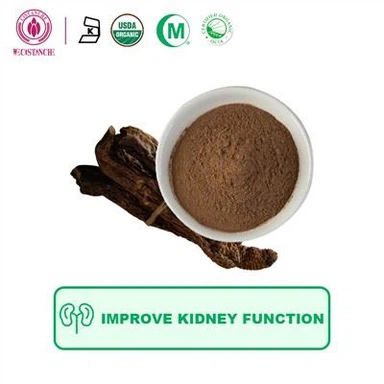
Cistanche is a traditional Chinese herbal medicine used for centuries to treat various health conditions, including kidney disease. It is derived from the dried stems of Cistanche deserticola, a plant native to the deserts of China and Mongolia. The main active components of cistanche are phenylethanoid glycosides, echinacoside, and acteoside, which have been found to benefit kidney health.
Kidney disease, also known as renal disease, refers to a condition in which the kidneys are not functioning properly. This can result in a buildup of waste products and toxins in the body, leading to various symptoms and complications. Cistanche may help treat kidney disease ase through several mechanisms.
Firstly, cistanche has been found to have diuretic properties, meaning it can increase urine production and help eliminate waste products from the body. This can help relieve the burden on the kidneys and prevent the buildup of toxins. By promoting diuresis, cistanche may also help Reduce high blood pressure, a common complication of kidney disease.
Moreover, cistanche has been shown to have antioxidant effects. Oxidative stress, caused by an imbalance between the production of free radicals and the body's antioxidant defenses, plays a key role in the progression of kidney disease. ies help neutralize free radicals and reduce Oxidative stress, thereby protecting the kidneys from damage. The phenylethanoid glycosides found in cistanche have been particularly effective in scavenging free radicals and inhibiting lipid peroxidation.
Additionally, cistanche has been found to have anti-inflammatory effects. Inflammation is another key factor in the development and progression of kidney disease. Cistanche's anti-inflammatory properties help reduce the production of pro-inflammatory cytokines and inhibit the activation of inflammation mandatory pathways, thus alleviating inflammation in the kidneys.
Furthermore, cistanche has been shown to have immunomodulatory effects. In kidney disease, the immune system can be dysregulated, leading to excessive inflammation and tissue damage. Cistanche helps regulate the immune response by modulating the production and activity of immune cells, such as T cells and macrophages. This immune regulation helps reduce inflammation and prevent further damage to the kidneys.

Moreover, cistanche has been found to improve renal function by promoting the regeneration of renal tubes with cells. Renal tubular epithelial cells play a crucial role in the filtration and reabsorption of waste products and electrolytes. In kidney disease, these cells can be damaged, leading to damaged renal function. Cistanche's ability to promote the regeneration of these cells helps restore proper renal function and improve overall kidney health.
In addition to these direct effects on the kidneys, cistanche has been found to have beneficial effects on other organs and systems in the body. This holistic approach to health is particularly important in kidney disease, as the condition often affects multiple organs and systems. che has been shown to have protective effects on the liver, heart, and blood vessels, which are commonly affected by kidney disease. By promoting the health of these organs, cistanche helps improve overall kidney function and prevent further complications.
In conclusion, cistanche is a traditional Chinese herbal medicine used for centuries to treat kidney disease. Its active components have diuretic, antioxidant, anti-inflammatory, immunomodulatory, and regenerative effects, which help improve renal function and protect the kidneys from further damage. , cistanche has beneficial effects on other organs and systems, making it a holistic approach to treating kidney disease.