Herba Cistanche (Rou Cong-Rong): A Premier Gift From Traditional Chinese Medicine
Jul 25, 2024
Cistanche species, known as Rou Cong-Rong in Chinese, are an endangered wild species and are mainly distributed in the arid lands and warm deserts of northwestern China. Within Traditional Chinese Medicine (TCM), Herba Cistanche is applied as a tonic and/or in a formula for chronic renal disease, impotence, female infertility, morbid leucorrhea, profuse metrorrhagia, and senile constipation. The chemical constituents of Herba Cistanche mainly consist of volatile oils, nonvolatile phenylethanoid glycosides (PhGs), iridoids, lignans, alditols, oligosaccharides, and polysaccharides. There have been an increasing number of studies focusing on its bio-activities, including antioxidation, neuroprotection, and antiaging. The objective of this review is to introduce this herb to the world. Its taxonomy, distribution, and corresponding biological functions and molecular mechanisms are addressed in this review.

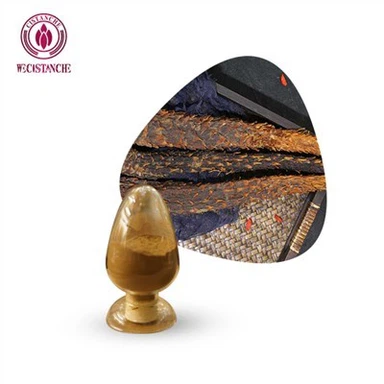
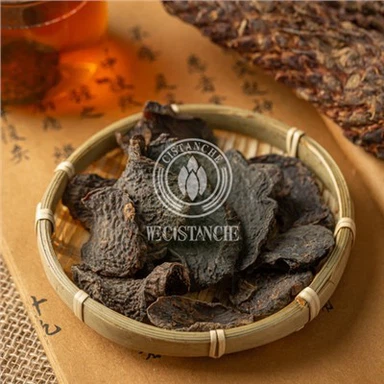
NATURAL CISTANCHE TUBULOSA HERB CISTANCHE PHGS75% ECH 30% ACT 12%
Cistanche Hoffmg. Et Link is a genus within the Orobanchaceae family and includes 22 species throughout the world. The cistanche species include the perennial parasite herbs, which commonly attach to the roots of sand-fixing plants, such as Haloxylon ammodendron, H. persicum, Kalidium foliatum, and Tamarix plants (Li et al., 2013b). Generally, cistanche species are distributed in arid lands and deserts in the northern hemisphere, such as the provinces of Xinjiang, Inner Mongolia, Gansu, Qinghai, and the Ningxia Autonomous Region in China in addition to similar regions of countries such as Iran, India, and Mongolia (Jiang and Tu, 2009). The growth and cultivation of cistanche species require severe environmental conditions: extreme arid climate, depauperate soils, large temperature difference, intensive sunshine, and less than 250 mm of annual precipitation (Qiao et al., 2007). Among the 22 species in the world, six are found in China according to the Taxonomical Index of Chinese Higher Plants (Plant Institute of Chinese Academy of Science, 1994); however, a follow-up study indicated that only 4 species and 1 variation of cistanche exist in China, including Cistanche deserticola Y. C. Ma, C. tubulosa (Schenk) R. Wight, C. salsa (C. A. Mey.) G. Beck, C. salsa var. albiflora P. F. Tu et Z. C. Lou and C. sinensis G. Beck (Jiang and Tu, 2009).
The Herba Cistanche (Rou Cong-Rong in Chinese) was first recorded in Shen Nong's Chinese Materia Medica, where it was referred to as the dried succulent stems of the cistanche species (Karalliedde and Kappagoda, 2009). Among all the tonics in traditional Chinese medicine (TCM), Herba Cistanche is widely accepted as a superior one and has even been given the name "Ginseng of the deserts." In TCM, Herba Cistanche is frequently prescribed to treat chronic renal disease, impotence, female infertility, morbid leucorrhea, profuse metrorrhagia, and senile constipation (Zhang et al., 2005). In 2000 and 2005, respectively, C. tubulosa, and C. deserticola were indexed in the Chinese Pharmacopeia (Pharmacopoeia, 2000) (Figure 1). C. tubulosa is offered as an alternative to C. deserticola because of its similar chemical constituents and pharmacological activities and its abundance (Pharmacopoeia, 2005). Other species of this genus, e.g., C. salsa and C. sinensis, are also used as alternatives in some areas. Cistanche is considered a newly cultivated plant in several regions in northwestern China, where the rainfall is low and soil desertification is severe.

Since the 1980s, researchers have been interested in Herba Cistanche. A chemical analysis of Herba Cistanche revealed that essential oils, phenylethanoid glycosides (PhGs), iridoids, lignans, alditols, oligosaccharides, cistanosides, and polysaccharides were the main constituents (Jin and Zhang, 1994). Herba Cistanche extracts are pharmacologically active, with a range of functions that include improving chronic renal disease and senile constipation, increasing learning/memorizing ability, treating Alzheimer's disease (AD), and improving immunity (Snytnikova et al., 2012; Zhang et al., 2012; Guo et al., 2013; Li et al., 2013a; Nan et al., 2013). Most pharmaceutical companies are hoping to find the next 'miracle' drug, such as artemisinin (qinghaosu), an antimalarial drug that is extracted from the medicinal plant sweet wormwood and has saved millions of lives. The other classic example of a modern medicine that originated in TCM is arsenic trioxide, which was approved by the US Food and Drug Administration (FDA) to treat leukemia in 2000. The present overview focuses on the progress of the study of the chemical constituents of Herba Cistanche and some of its relevant pharmacological activities.
CHEMICAL CONSTITUENTS
Volatile Compounds
In essential oil of the Herba Cistanche, alkanes, alcohols, aldehydes, and heterocyclics were detected, and palmitic acid, linoleic acid, 14-methylpentadecanoate, ethyl palmitate, and 2,5,6-trimethyloctane were identified. The total oils of C. tubulosa mainly consist of palmitic acid and linoleic acid, while the essential oil of C. salsa includes alkanes, alcohols, aldehydes, and some heterocyclic compounds (Jiang and Tu, 2009). The volatile compounds of Herba Cistanche, like essential oils, commonly can be extracted by steam distillation or lipophilic organic solvent. By extracting C. deserticola with petroleum ether and then analyzing the sample on a GC-MS, 25 volatile compounds were identified, and the 3 richest constituents in the petroleum ether extract are methyl 14-methylpentadecanoate (13.61%), ethyl palmitate (12.39%), and 2,5,6-trimethyloctane (7.60%) (Jiang and Tu, 2009).

NATURAL CISTANCHE TUBULOSA FOR IMPROVING SEXUAL FUNCTION PHGS75% ECH 30% ACT 12%
Non-Volatile Compounds
Among the non-volatile compounds of Herba Cistanche, more than 100 have currently been isolated and identified. These compounds are mostly PhGs, iridoids, lignans, alditols, oligosaccharides, and polysaccharides. As an important class of the compounds that constitute Herba Cistanche, PhGs have been well studied (Table 1). To date, 34 PhG compounds have been successfully isolated from Herba Cistanche, including 22 disaccharide glycosides, 10 trisaccharide glycosides, and 2 monosaccharide glycosides. The empirical structural features of PhGs are as follows. (1) For disaccharide glycosides, the sugar moiety consists of glucose and rhamnose connected by a Glc (3 → 1) Rha linkage; the glucose commonly links directly to an aglycone, and a coumaroyl or caffeoyl is usually located at the C4 or C6 position. (2) For trisaccharide glycosides, there is another glucose or rhamnose at the C6 position of the inside glucose. Recently, Li et al. (2015) completed the first deep transcriptome sequencing of the fleshy stem of C. deserticola by RNA-seq and identified some key enzyme genes and pathways that are involved in the biosynthesis of lignin and PhGs, which provides valuable information for this medical plant.
For the other non-volatile compounds of Herba Cistanche, 3 iridoid aglycones, and 14 iridoid glycosides have currently been isolated from cistanche species (Xie et al., 2006); 1 and 5 lignan glycosides have been isolated from C. deserticola and C. tubulosa, respectively. Only 2 alkaloids, betaine, and N, N-dimethyl glycine methyl ester, have been isolated from Herba Cistanche (Jiang and Tu, 2009). Small amounts of other compounds, such as phenolic glycosides, sterols or their glycosides, fatty acids, amino acids, and trace elements, are also present in Herba Cistanche (Snytnikova et al., 2012).

PHARMACOLOGICAL ACTIVITIES
Based on the neuroprotection, immune-enhancement, and sexual health properties of Herba Cistanche, we discussed in the paper (Supplementary Figure S1).
Improvement of Brain Function
When considering learning and memory, three levels of mechanisms are involved: (1) the ability to acquire memory, i.e., learning ability; (2) the ability to store memory, i.e., consolidation; and (3) the ability to recall memorized information (Choi et al., 2011). The C. tubulosa extract was confirmed to significantly improve these mechanisms by preventing brain neuron apoptosis through the expression of apoptosis-related factors and neurotrophic factors in MES23.5 cells (Lin et al., 2013). C. tubulosa extract, containing rich echinacoside, and acteoside, can alleviate the cognitive dysfunction caused by Aβ 1−42 by blocking amyloid deposition, reversing cholinergic, and hippocampal dopaminergic neuronal function in AD-like rat model (Wu et al., 2014). One of the PhGs, echinacoside, is typically known as the main phenolic component in the roots of Echinacea Angustifolia, which is widely used in Europe and North America for its immunoregulation properties. A recent study determined that echinacoside can rescue human fibroblasts (SHSY5Y) from TNFα-induced apoptosis. The results indicated that echinacoside protects the damaged fibroblasts by regulating the reactive oxygen species level in fibroblasts and the activation of caspase-3 (Zhao et al., 2010). In vitro and in vivo experiments have confirmed that individual PhGs can inhibit the apoptosis of neuronal cells induced by various chemicals (Tian and Pu, 2005; Geng et al., 2007). Therefore, the individual PhGs could be attractive candidates against some typical neurodegenerative disorders, such as dementia or Parkinson's disease (PD). Moreover, an open-label, non-placebo-controlled study on C. tubulosa glycoside capsules (Memoregain R ) demonstrates that the drug has the potential to be a possible treatment option for mild to moderate AD, and all adverse reactions were mild. (Guo et al., 2013).
Similarly, the C. salsa extract can accelerate the proliferation of fibroblasts and promote the production of neurons by accelerating the growth of the neurites. It also has some properties as follows: prevent damage caused by cerebral ischemia-reperfusion; protect against apoptosis of the CA1 region of hippocampus (Wang et al., 2004); and increase the amount of neurotransmitters, such as dopamine (DA), noradrenaline (NA), and serotonin (5-HT), in the rat brain (Chen et al.,2007; Choi et al., 2011; Zhong et al., 2012). The acteosiderich fraction of C. salsa extract can inhibit reactive oxygen species, prevent DNA damage, enhance superoxide dismutase (SOD) activity, and prevent lipid peroxidation (Lin et al., 2002; Deng et al., 2004b; He et al., 2009a). Because acteoside has an extremely strong antioxidative effect that is 15 times stronger than resveratrol and five times stronger than vitamin C (Chiou et al., 2004).

NATURAL CISTANCHE TUBULOSA FOR ENHANCING IMMUNITY PHGS75% ECH 30% ACT 12%
Aphrodisiac Effect
A recent study has demonstrated that an ethanol extract of C. tubulosa could increase the sex hormone levels by inducing testicular steroidogenic enzymes (e.g., CYP11A1, CYP17A1, CYP3A4) (Wang et al., 2015). Besides, the gene expression of 3β-hydroxysteroid dehydrogenase (3β-HSD), which is responsible for the synthesis of testosterone, 5α-reductase-2 and aldo-keto reductase (enzymes that are responsible for the synthesis of dihydrotestosterone), can be induced by the C. tubulosa extract, suggesting the positive effect of C. tubulosa extract on male hormone production (Shimoda et al., 2009). The acteoside, which was distilled from C. tubulosa, significantly shortened the latent period of penis erection (p < 0.01), increased the number of germ cells (p < 0.01), and improved pathological changes in the testes (Ma et al., 2009). Echinacoside, which is another newly identified PhG and is typically known as the main component of echinacea, is abundant in C. tubulosa and possesses vaso-relaxing activity (Yoshikawa et al., 2006). The aphrodisiac mechanisms of C. tubulosa might involve the NO-cGMP signal transduction pathway, with increasing cGMP levels in the corpus cavernosum smooth muscle (He et al., 2009b). Pan and Min (2004) indicated that the combined use of Herba Cistanche extract could prevent adrenal cortical atrophy, which is typically caused by using corticosteroids only. Moreover, C. deserticola extract could reverse the reproductive toxicity in mice induced by hydroxyurea (Gu et al., 2013) and glycoside of Leigongteng (Radix et Rhizoma Tripterygii) (Li et al., 2014).
According to TCM, Yang-Qi Kidney-Yang Deficiency Syndrome (KDS-Yang) is caused by insufficient "Yang-Qi" in the kidney. Briefly, Yang-Qi is a TCM term and likely indicates mitochondrion-driven biological activities of the human body in the view of biomedical research (Leong et al., 2015). In H9c2 cardiomyocytes, Herba Cistanche was proven to enhance mitochondrial respiration and glutathione antioxidant status (Wong and Ko, 2013). Yang-Qi deficiencies in TCM resemble those of chronic fatigue syndrome in Western medicine. KDS-Yang symptoms include soreness and weakness of the waist and knees, cold chills, deafness, and tinnitus. Modern studies showed that damage and functional disorders of the hypothalamic-pituitary-target gland axis, including the adrenal gland, thyroid, and gonad, are the main pathological mechanisms of KDS-Yang (Zhao et al., 2013). Gong et al. (2008) investigated the intervention effect of C. deserticola (decoction, 10 g/kg·d) in hydrocortisone-induced KDS-Yang model rats and found that C. deserticola extract could increase body weight, autonomic activity, and swimming time while decreasing post-exercise blood lactic acid (LAC) and blood urea nitrogen (BUN). As described in the Compendium of Materia Medica, Herba Cistanche is mild and would not be extremely abrupt or harsh when treating KDS-Yang. Interestingly, KDS-Yang also leads to low and disordered immune function, and thus, there is a close relationship between treating KDS-Yang and improving immune function (Yim and Ko, 2002).
Immune-Boosting Effect
Besides its traditional use, the daily consumption of Herba Cistanche is believed to be the key to people with longevity in some regions of China and Japan which are known for longevity oases. Studies have shown that both C. salsa extract and C. tubulosa extract can activate lymphoid cells and increase the killed rate of cancer cells (Maruyama et al., 2009). C. deserticola extract can activate the phagocytic function of macrophages in mice and enhance body immunity (Li et al., 2009). Carbohydrates account for a high proportion of the dry mass of Herba Cistanche. The polysaccharides of C. deserticola are closely related to the immunity-enhancing and anti-cancer functions (Xu et al., 2011). Galactitol is one of the monosaccharides in Herba Cistanche with laxative activity (Baishun et al., 2003). Individual compounds such as oligosaccharides present an excellent effect on the spleen activity of mice, increase the phagocytotic activity of macrophages, and stimulate the proliferation of antibody-producing cells (Maruyama et al., 2008). Acteoside (10 or 50 mg/kg subcutaneously) significantly inhibits hepatic apoptosis, hepatitis, and lethality in mice with hepatic apoptosis and liver failure induced by D-galactosamine (DGalN) and lipopolysaccharide (LPS) (Xiong et al., 1999). Echinacosideenriched extract of C. tubulosa is effective in preventing dextran sulfate sodium (DSS)-induced colitis in mice (Jia et al., 2014). Recently, Zhang et al. (2014) discovered that C. deserticola extract could antagonize immune-related senescence and extend the lifespan in SAM-P8 mice. In Zhang's et al. (2014) study, dietary supplementation with C. deserticola extract can decrease the level of peripheral memory T cells and enhance levels of naive T cells. Additionally, Herba Cistanche aqueous extract was proven to prevent bone loss caused by ovarian hormone deficiency by regulating some bone metabolism-related genes (e.g., Smad1, Smad5, TGF-b1, and TIEG1) (Liang et al., 2011, 2013), and a monoterpene from C. salsa has been identified as an anti-osteoporotic compound (Yamaguchi et al., 1999). Herba Cistanche helps people better understand the synergistic effect mechanisms of the effective components in TCM.
CONCLUSION
Herba Cistanche has been commonly used traditionally for enhancing immunity, sexual health, antioxidation, neuroprotection, and tonic. Various Herba Cistanche products and their derivatives are widely used in modern China. The uses of this drug have evolved over nearly 2,000 years, and the demand for Herba Cistanche has grown rapidly in recent years. After long-term use, those compounds with proven pharmacological activity, such as acteoside, and echinacoside, deserve more in-depth study before they truly could improve patient quality of life. With further study, this important TCM is believed to have profound prospects.

NATURAL CISTANCHE TUBULOSA FOR ENHANCING IMMUNITY SEXUAL HEALTH PHGS75% ECH 30% ACT 12%