The Architecture Of Rest: How Cistanche Tubulosa Supports Deep Sleep And Morning Refreshment
Sep 18, 2026
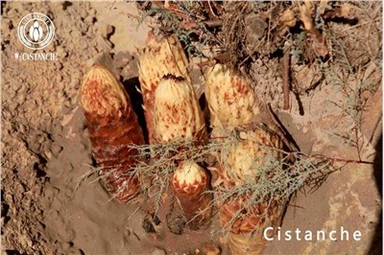
You fall asleep without difficulty. You stay in bed for seven or eight hours. Yet morning arrives and you feel as though you barely slept-heavy, foggy, and unrefreshed. This is the paradox of poor sleep quality: adequate quantity, insufficient restoration. The problem is not falling asleep; it is the architecture of sleep itself. Deep slow-wave sleep-the stage in which the brain clears metabolic waste, consolidates memory, and releases growth hormone for tissue repair-is being shortchanged. When deep sleep is fragmented or shortened, the restorative work of the night goes undone. Cistanche tubulosa, a desert plant traditionally used to calm the spirit and nourish vitality, is being studied for its ability to support the neurochemical conditions that permit deep, restorative sleep. Its active ingredients echinacoside and acteoside do not sedate; they help restore the body's natural sleep-regulating mechanisms.
Why Deep Sleep Matters
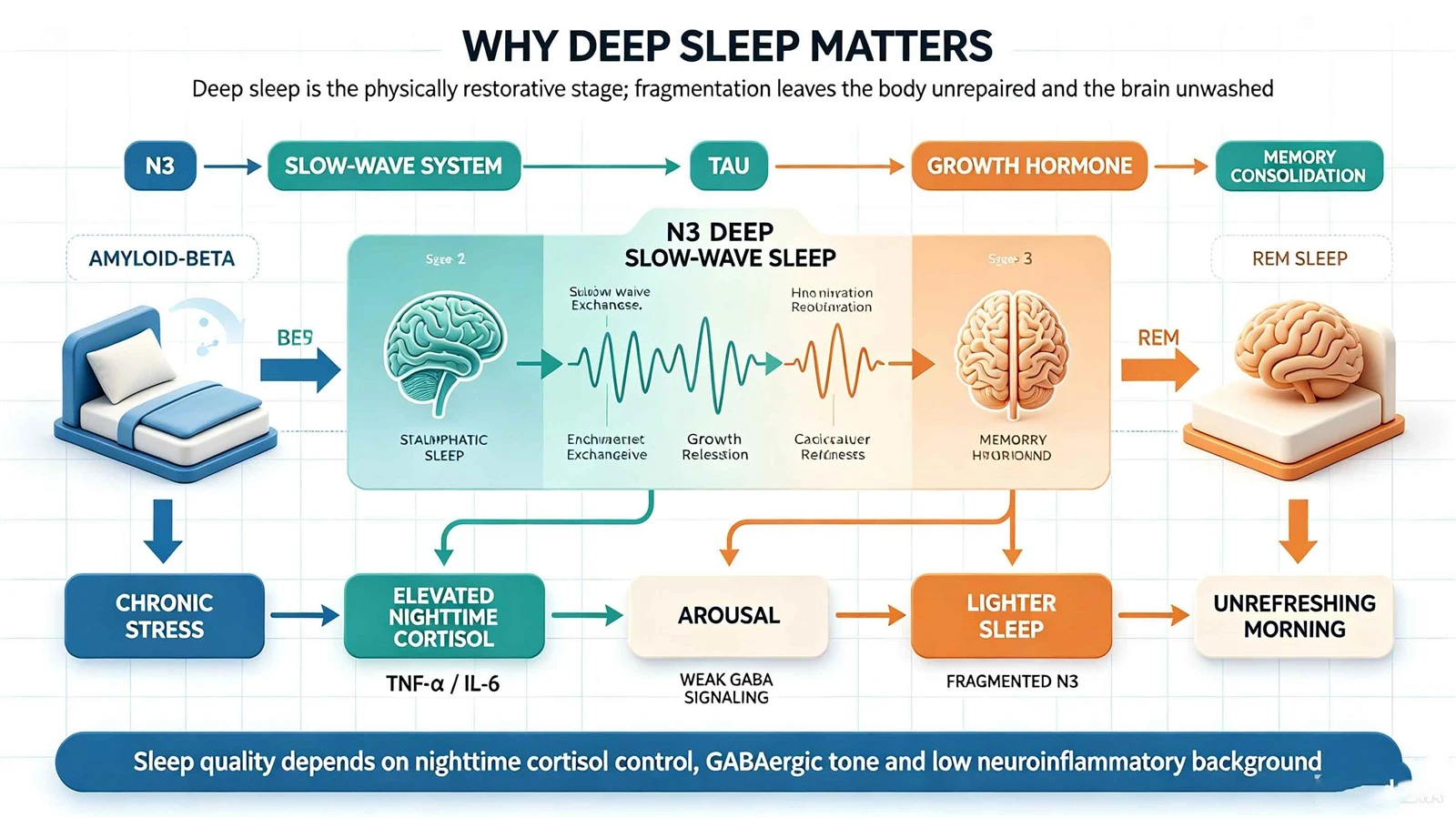
Sleep is not a uniform state. It cycles through stages: light sleep, deep slow-wave sleep, and REM sleep. Deep sleep, also called N3 or slow-wave sleep, is the most physically restorative phase. During N3, the brain's glymphatic system becomes highly active, flushing out metabolic waste products-including amyloid-beta and tau-that accumulate during waking hours. Growth hormone is released, supporting tissue repair and muscle recovery. Heart rate and blood pressure drop to their lowest levels, giving the cardiovascular system a nightly respite. And memories are consolidated, transferred from the hippocampus to the cortex for long-term storage.
When deep sleep is compromised, the consequences are systemic. Cognitive function suffers-memory, attention, and decision-making all decline. Immune function weakens, increasing susceptibility to infection. Metabolic health deteriorates, with increased insulin resistance and appetite dysregulation. And the subjective experience is one of chronic fatigue that no amount of time in bed can resolve.
Two primary factors erode deep sleep: chronic stress and neurochemical imbalance. Chronic stress keeps the hypothalamic-pituitary-adrenal axis in a state of hyperarousal. Cortisol, which should drop to its lowest levels around midnight, remains elevated. This elevation fragments sleep, pulling the sleeper out of deep stages into lighter ones-often without full awakening. The disruptions are not remembered, but the body registers them. Neurochemically, sleep depends on a smooth transition from excitatory signaling to inhibitory signaling. GABA is the brain's primary inhibitory neurotransmitter-it quiets neuronal firing and permits the descent into deep sleep. When GABA signaling is weak, the brain cannot sink into the deeper stages. It hovers near the surface, easily disturbed, and unrepaired.
How Cistanche Tubulosa Supports Deep Sleep
1. Positive Allosteric Modulation of GABA-A Receptors
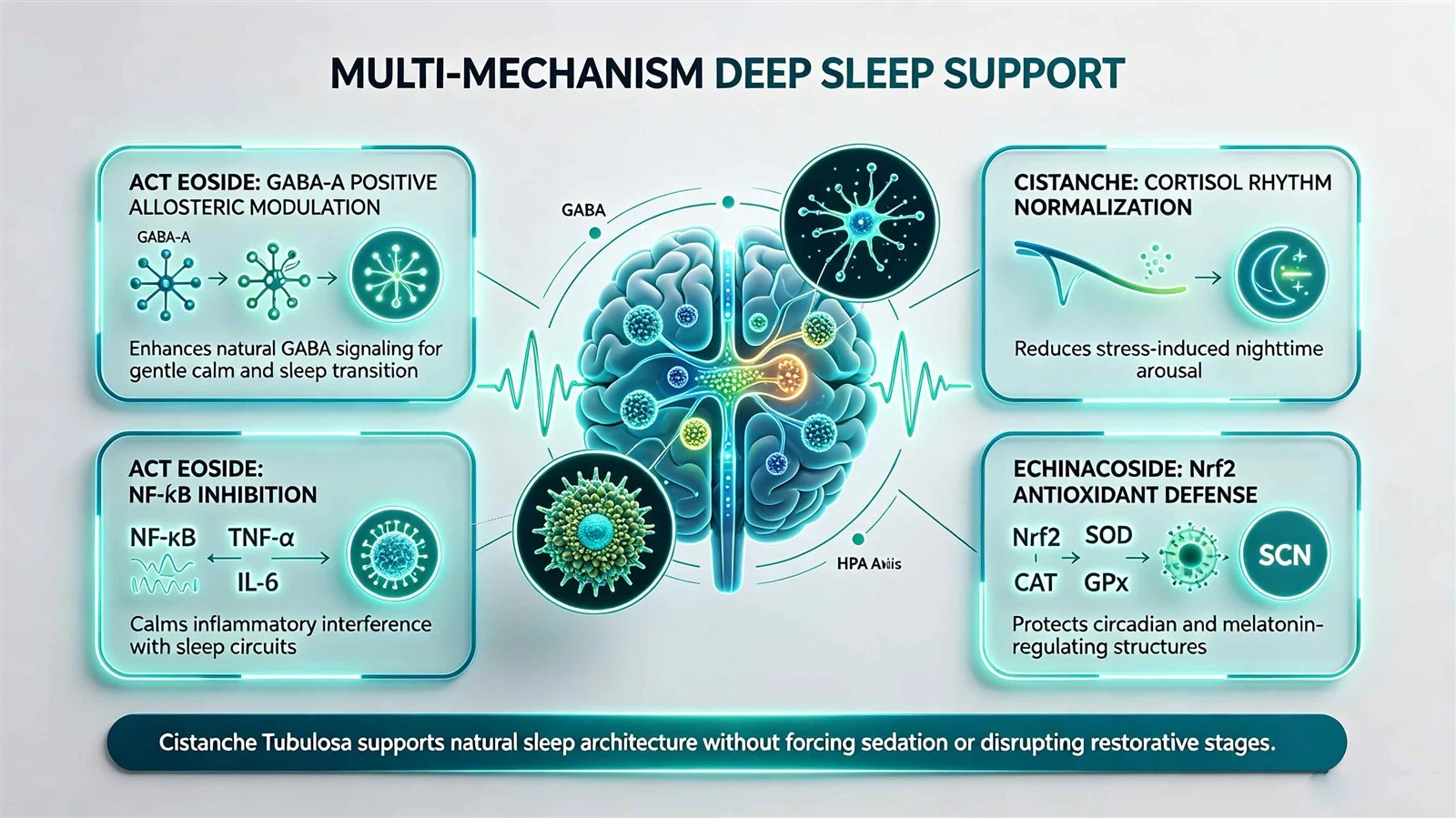
Acteoside has been shown in receptor-binding studies to interact with the GABA-A receptor as a positive allosteric modulator. This is fundamentally different from the direct agonist action of benzodiazepines and Z-drugs. A positive allosteric modulator does not force the receptor open; it enhances the receptor's response to the brain's own GABA when it is naturally released. The result is a gentle calming effect-quieting mental chatter and easing the transition into sleep-without the heavy sedation, tolerance, or withdrawal risks of direct agonists. This mechanism supports the brain's natural sleep-inducing pathways rather than overriding them. Because it works with the body's own GABA, it does not disrupt sleep architecture the way sedatives do. In fact, by reducing the time spent in lighter sleep stages, it may help preserve the proportion of deep sleep.
2. Normalizing the Cortisol Rhythm
Cistanche's adaptogenic properties help restore the natural diurnal cortisol rhythm. By moderating the stress response, it allows cortisol to decline appropriately in the evening, removing one of the primary biochemical obstacles to deep sleep. In animal models of chronic stress, Cistanche extract reduced stress-induced corticosterone elevations and restored a more normal circadian pattern. For humans whose sleep is disrupted by stress, this normalization of the cortisol rhythm may be the single most important sleep-supportive mechanism. When cortisol is low at night, the brain can transition more easily into deep slow-wave sleep and remain there longer.
3. Reducing Neuroinflammation That Fragments Sleep
Chronic neuroinflammation-driven by stress, poor diet, and aging-disrupts sleep architecture. Pro-inflammatory cytokines like TNF-α and IL-6 interfere with the neural circuits that regulate sleep, promoting arousal and suppressing deep sleep. Acteoside, through its potent NF-κB inhibition, reduces the production of these cytokines in the brain. By calming neuroinflammation, it helps create the quiescent neurochemical environment that deep sleep requires. This anti-inflammatory action is particularly relevant for older adults, in whom inflammaging contributes to the fragmented sleep that is so common.
4. Protecting Sleep-Regulating Structures from Oxidative Damage
The pineal gland, which produces melatonin, and the suprachiasmatic nucleus, the brain's master clock, are vulnerable to oxidative damage. Echinacoside's Nrf2 activation upregulates antioxidant defenses throughout the brain, including these sleep-regulating regions. By protecting the structures that control circadian rhythm and melatonin production, echinacoside helps maintain the neurochemical foundation of healthy sleep. This is a long-term protective mechanism that supports sleep quality as the brain ages.
5. Supporting the Glymphatic System
The glymphatic system-the brain's waste clearance mechanism-is most active during deep sleep. It flushes out amyloid-beta, tau, and other neurotoxic proteins that accumulate during waking hours. This clearance is essential for cognitive health and the prevention of neurodegenerative disease. By enhancing deep sleep quality, Cistanche indirectly supports glymphatic clearance, contributing to the neuroprotective benefits that are its hallmark.
A comprehensive 2022 review in Frontiers in Pharmacology catalogs the GABA-modulating, adaptogenic, antioxidant, and anti-inflammatory properties of Cistanche tubulosa, confirming the multi-mechanism basis for its sleep-supportive effects. (Frontiers in Pharmacology review)
The Active Ingredients for Deep Sleep
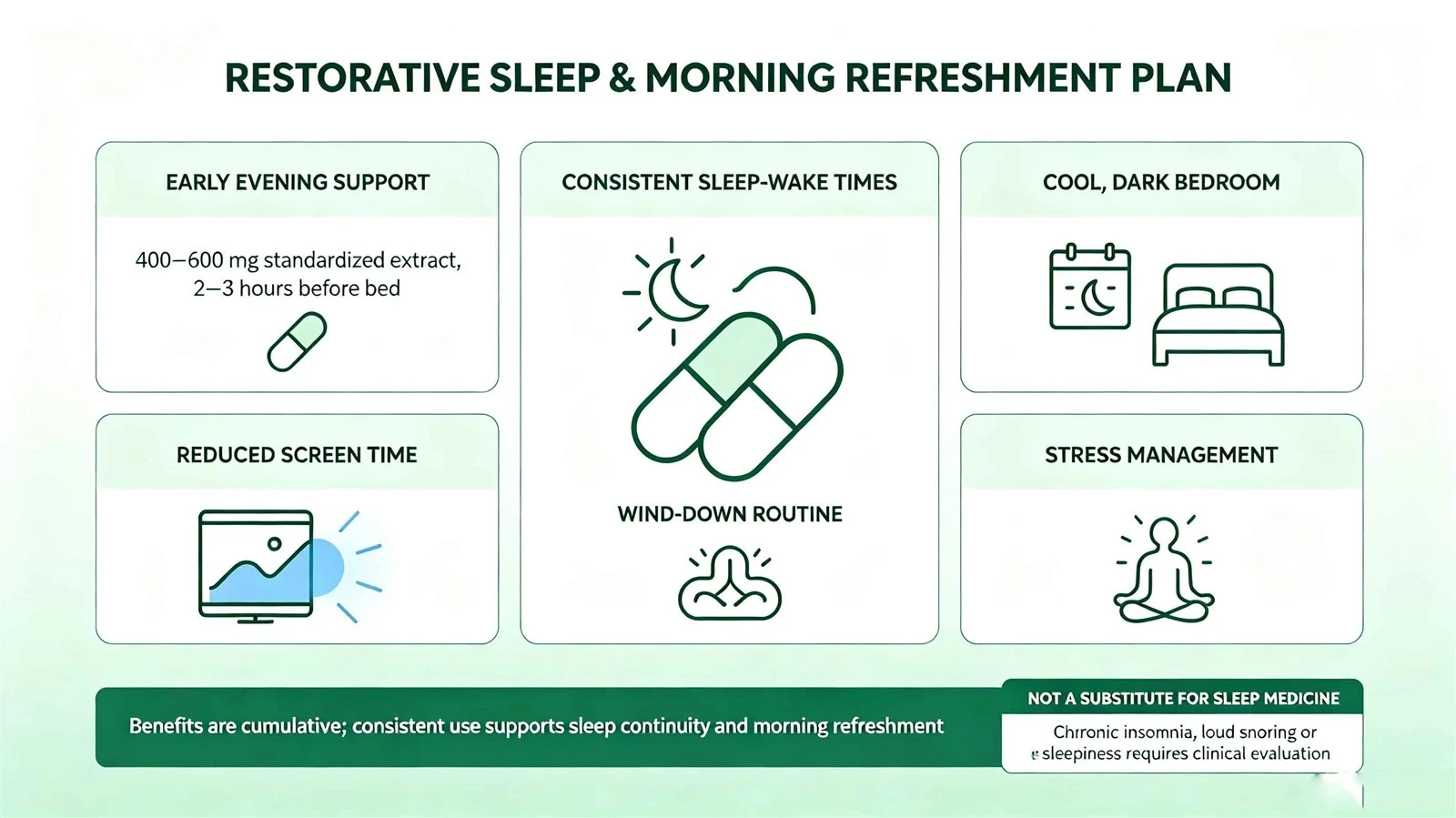
The sleep-supportive effects are driven by echinacoside and acteoside. Acteoside is the primary GABA-A modulator and NF-κB inhibitor. Echinacoside is the primary Nrf2 activator and neuroprotective agent. Together, they address the neurochemical, hormonal, inflammatory, and oxidative factors that determine sleep quality. A standardized extract containing 20–40% total phenylethanoid glycosides is essential. The evidence-informed dose for sleep support is 400–600 mg daily, taken in the late afternoon or early evening, about two to three hours before bedtime.
Integrating Cistanche for Restorative Sleep
Unlike sedatives, Cistanche does not cause acute drowsiness. It works cumulatively, with most users noticing improvements in sleep continuity and morning refreshment over one to two weeks of consistent use. It can be taken in the early evening to allow the GABA-modulating and cortisol-normalizing effects to build as cortisol naturally declines. It pairs well with sleep hygiene practices: a cool, dark bedroom, reduced screen time before bed, a consistent sleep-wake schedule, and a wind-down routine. Unlike pharmaceutical sleep aids, Cistanche does not cause dependence, rebound insomnia, or morning grogginess. It supports the body's own sleep mechanisms rather than forcing them.
For those seeking reliable, research-grade sleep support, we offer Cistanche tubulosa extract products with verified active ingredient content.
Safety and Medical Context
Cistanche tubulosa is well tolerated with a centuries-long safety record. It is not habit-forming and does not cause next-day sedation. However, persistent insomnia can signal underlying medical conditions-sleep apnea, thyroid disorders, depression, or anxiety disorders-that require specific evaluation. Anyone with chronic sleep difficulties, especially those who snore loudly or experience daytime sleepiness, should consult a healthcare provider. This botanical is a supportive, restorative tool for stress-related and age-related sleep difficulties, not a substitute for medical diagnosis or treatment of sleep disorders.