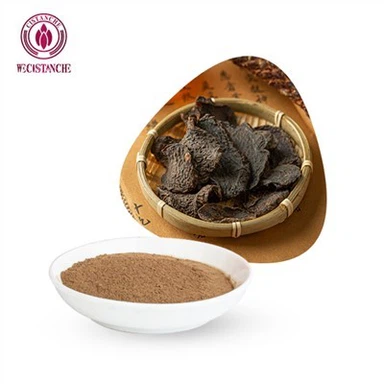
Hotan, The Natural Cradle Of Cistanche Deserticola
Apr 21, 2025
The 'Golden Fairy Grass' in the Desert

dragon herbs cistanche
In the vast and boundless desert, an extremely precious plant - Cistanche deserticola- grows, which is known as the "desert ginseng" by people. Along with snow lotus, ginseng, Polygonum multiflorum, Poria cocos, Ganoderma lucidum, pearl, and Cordyceps sinensis, it is also known as the "nine immortal herbs of China". It is a perennial tall parasitic herbaceous plant of Ledaceae and the genus Cistanche deserticola.
The medicinal history of Cistanche deserticola has a long and rich history. As early as more than 2000 years ago, it was recorded in the "Shennong Bencao Jing" and classified as a top-grade herb. The book states: "Cistanche deserticola is mainly used to nourish the five organs, strengthen yin, nourish essence and qi, and treat women's ailments. In the book "Treatise on Medicinal Properties", it is also recorded that "Cistanche deserticola benefits the marrow, enhances color, prolongs life, treats women's blood death, strengthens yang, and greatly nourishes. Li Shizhen, a medical expert in the Ming Dynasty, also provided a detailed discussion on Cistanche deserticola in his book "Compendium of Materia Medica", stating that it is "sweet, slightly warm, and non-toxic" and can be used to treat various diseases such as labor injury, semen loss, black face, kidney deficiency, and white turbidity.
Cistanche deserticola has extremely high medicinal value. It is warm, sweet, and salty, and belongs to the kidney and large intestine meridians. It has the effects of tonifying kidney yang, nourishing essence and blood, moistening intestines, and promoting bowel movements. It can be used to treat symptoms such as kidney yang deficiency, essence and blood deficiency, impotence, infertility, soreness and weakness of the waist and knees, muscle and bone weakness, intestinal dryness, and constipation. Modern research has also found that Cistanche deserticola contains various amino acids, trace elements, and polysaccharides, which can help enhance the body's immune function and improve its ability to resist external pathogenic microorganisms; Its extract also has certain preventive and therapeutic effects on cardiovascular diseases, diabetes, etc.
Due to its unique medicinal value and nourishing effects, Cistanche deserticola has always been favored in the market and its price remains high. However, the growth environment of Cistanche deserticola is extremely unique. It is a parasitic plant that likes to parasitize on the roots of tamarisk, red willow, or white red willow. It is mainly distributed in desert areas such as Shaanxi, Ningxia, Gansu, Qinghai, Xinjiang, and Inner Mongolia in China. So, among the many production areas, where is the most suitable place for the growth of Cistanche deserticola? The answer is Hotan in Xinjiang.
Explore the unique environment of Hotan.
The Hotan region is located at the southernmost end of Xinjiang Uygur Autonomous Region, with the Kunlun Mountains to the south and the Taklamakan Desert to the north, making it a typical inland arid area. The desert area here is vast, with the Taklamakan Desert accounting for over 70% of the total land area. The sand dunes are undulating and endless, and the vast expanse of sand sea is magnificent. In such an environment, the amount of water evaporation is extremely high, with an average annual precipitation of only 35 millimeters, while the average annual evaporation is as high as 2480 millimeters, resulting in an extremely arid climate.

Cistanche deserticola
Meanwhile, Hotan belongs to an extremely arid desert climate in the warm temperate zone, with a significant temperature difference between day and night, reaching over 20 ℃. In summer, the daytime temperature often rises above 40 ℃, and the scorching sun mercilessly roars the earth. The surface temperature of the desert can even make people feel the scorching heat of the sand; However, at night, the temperature drops sharply and becomes very cool. This unique climate condition has created a wonderful scene of "wearing a fur coat in the morning and gauze in the afternoon, eating watermelon around the stove".
In addition, the Hotan area has ample sunshine, with annual sunshine hours ranging from 2470 hours to 3000 hours. Long hours of sunlight provide favorable conditions for photosynthesis in plants, allowing them to fully accumulate nutrients.
It is precisely this seemingly harsh but actually unique natural environment that provides excellent conditions for the growth of Cistanche deserticola. The arid and rainless climate is consistent with the drought tolerance of Cistanche deserticola; The large temperature difference between day and night is conducive to the accumulation of nutrients in Cistanche deserticola; And the abundant sunshine duration meets its demand for light during its growth process. In addition, the widely distributed red willow trees in the desert provide an ideal host for Cistanche deserticola. Cistanche deserticola parasitizes the roots of the red willow tree, obtaining the necessary water and nutrients for growth through a special parasitic relationship. The two are interdependent and together perform the miracle of life in the desert.

Uyghur girl holding Cistanche deserticola in her hand
Click here to view Cistanche Tubulosa Extract Natural Supplement Powder
【Ask for more】 Email:cindy.xue@wecistanche.com / Whats App: 0086 18599088692 / Wechat: 18599088692
Natural Match: Host and Soil
(1) Ideal Host - Red Willow
In the growth process of Cistanche deserticola, host plants play an indispensable role, and the widely distributed red willow in Hotan area is one of the most ideal hosts for Cistanche deserticola.
Red willow, also known as multi branch tamarisk, is an extremely drought tolerant, salt tolerant, and wind resistant plant with strong adaptability to desert environments. Its root system is very developed and can penetrate more than ten meters underground to obtain deep water sources. Even in extremely dry conditions, it can survive tenaciously. Its bark is hard and smooth, which can effectively reduce the evaporation of water; The degeneration of leaves into scales also reduces water loss. These unique physiological characteristics make the red willow a "guardian" in the desert, playing an important role in windbreak, sand fixation, soil and water conservation, and other aspects.
For Cistanche deserticola, red willow is its "best partner" for growth. Cistanche deserticola is a parasitic plant that lacks chlorophyll and cannot produce nutrients through photosynthesis. It relies on host plants to provide the necessary nutrients for growth. The well-developed root system of red willow not only provides sufficient water and nutrients for Cistanche deserticola but also helps it to be fixed in the desert, protecting it from sandstorms. Cistanche deserticola parasitizes the roots of red willows and is connected to them through a special suction structure, thereby absorbing water, inorganic salts, and organic matter from the body of red willows. In this symbiotic process, red willows are not severely affected by the parasitism of Cistanche deserticola, and the two are interdependent, forming a harmonious symbiotic relationship.
(2) High-quality soil conditions

Professor Cistanche Research on the Growth of Cistanche deserticola
In addition to ideal host plants, soil conditions are also crucial for the growth of Cistanche deserticola, and the soil in Hotan provides a unique growth environment for Cistanche deserticola. The main soil here is sandy soil, which has larger particles and larger pores between particles. This makes the soil have good air permeability, allowing the roots of Cistanche deserticola to fully breathe, absorb oxygen, and excrete carbon dioxide, providing sufficient power for the growth and metabolism of the roots.
At the same time, the drainage of sandy soil is also excellent. In desert areas, although the precipitation is rare, there will be occasional rainstorm weather. If the soil drainage is not smooth, it is easy to cause water accumulation, leading to oxygen deficiency and decay of the root system of Cistanche deserticola. Sandy soil can quickly remove excess water and maintain a moderate dryness of the soil, which is in line with the growth habit of Cistanche deserticola, which is drought tolerant and flood resistant.
In addition, the soil salt content in the Hotan area is relatively high, which may seem unfavorable, but it is just right for Cistanche deserticola. Cistanche deserticola has adapted to this high-salt environment, and an appropriate amount of salt helps regulate its cell osmotic pressure, promote water and nutrient absorption, and ensure its normal growth and development.
From Attempt to Harvest: The Planting Process of Cistanche deserticola in Hotan
(1) Early exploration and technological breakthroughs
China is a globally recognized major producer of Cistanche deserticola, with the Guanhua Cistanche deserticola from Hotan as an outstanding representative. It has a recorded history of over two thousand years of consumption and medicinal use. Due to the unique biological code constraints and strict requirements for ecological environment and natural climate conditions, only the Hotan region in Xinjiang, China, as well as adjacent latitude regions in Pakistan, India, and Bangladesh, are most suitable for the natural growth of Cistanche deserticola. China is currently the only country that has achieved breakthroughs in two artificial cultivation technologies for Cistanche deserticola. Among them, Cistanche deserticola, which is naturally distributed in the southern edge of the Taklamakan Desert centered on Hotan, has an effective functional ingredient content that is 5 to 10 times higher than that of desert Cistanche deserticola, whether grown naturally or artificially.
In 1976, the staff of the medical and herbal medicine department in the Hotan area bravely took the first step of exploration. They used the method of sowing seeds in trenches to successfully inoculate Cistanche deserticola for the first time. This achievement undoubtedly opened up a new path for the artificial cultivation of Cistanche deserticola. However, early technology had obvious limitations, as it required a large amount of seeds and the wild resources of Cistanche deserticola seeds were extremely scarce. This contradiction made it difficult to promote large-scale planting.
In 1999, to overcome the difficulties of artificial cultivation of Cistanche deserticola and further promote the development of the Cistanche deserticola industry, the Hetian region established a research group on the industrialization of Cistanche deserticola and conducted in-depth research experiments on the artificial breeding of Cistanche deserticola. After countless days and nights of effort, the artificial cultivation of Cistanche deserticola was finally declared successful in August 2002. The significance of this success is extraordinary. Compared with other related vaccination trials in China, not only has the vaccination time been advanced by 1-2 years, but also 1 kilogram of Cistanche deserticola seeds can be used to inoculate 200 acres of red willows, significantly reducing seed usage and artificial inoculation costs. It is in a leading position at the scientific research level. Since then, the artificial planting area in the Hotan area has been expanding year by year, and the Cistanche deserticola industry has entered a rapid development track.

benefits of cistanche tubulosa
(2) Current planting scale and achievements
After years of development, the Hetian Cistanche industry has reached a considerable scale and become an important force for local economic development and ecological improvement. In recent years, the planting area of Hetian Cistanche has continued to grow. By 2024, the planting area of Hetian Cistanche has reached 386100 mu. With the continuous maturity of planting technology and the increasingly refined field management, the yield of Cistanche deserticola is steadily increasing. It is expected that the total yield will exceed 70000 tons and the output value will reach 566 million yuan, occupying an important position in the market.
In terms of ecology, the cultivation of Cistanche deserticola has played a positive role in improving the local desert ecological environment. The host red willow has the characteristics of drought resistance, salt alkali resistance, wind erosion resistance, and sand burial. Its roots can penetrate deep into the ground, effectively fix the soil, reduce wind erosion, increase soil organic content, and improve soil fertility. It plays an important role in windbreak and sand fixation, soil, and water conservation, and helps to curb the process of land desertification and gradually coat the desert with green.
From an economic perspective, the Cistanche deserticola industry provides a new way for local farmers to increase their income and become prosperous. More and more farmers are participating in the planting, harvesting, and processing of Cistanche deserticola. By developing the Cistanche deserticola industry, their income levels have significantly increased. For example, Ai Zezi and Maiti Rouzi from Yutian County have been planting red willows and Cistanche deserticola with their father since 2009. Seeing the good results of sand control and economic benefits, they led the establishment of a cooperative in 2014 and cultivated 150000 red willows and red willows in the undeveloped blank area in 2024. During the harvest season, he also hires nearby villagers to help, providing an additional source of income for everyone. There are countless examples of increasing income through the Cistanche deserticola industry in the entire Hotan region. The Cistanche deserticola industry has become an important supporting industry to drive local people to increase their income and become prosperous.
Outlook for the future: prospects of the Hetian Cistanche industry
Looking ahead, the market demand for Cistanche deserticola is showing a strong and sustained growth trend. With the increasing awareness of people's health, the demand for natural and healthy tonics continues to rise. As a traditional precious Chinese medicinal herb, Cistanche deserticola is highly favored by consumers for its significant medicinal value and health benefits. At the same time, in the context of an aging society, the health and wellness market is constantly expanding, and the role of Cistanche deserticola in preventing and improving elderly diseases has also won it a broader market space.
In such a market environment, the Hetian Cistanche industry has enormous development potential. At the technical level, years of planting practice have enabled Hotan to accumulate rich and mature planting techniques, and related scientific research work is also continuously advancing, committed to cultivating more high-yield and high-quality varieties of Cistanche deserticola, further improving planting efficiency and product quality. In terms of resources, the vast desert provides sufficient land resources for the cultivation of Cistanche deserticola. At the same time, a large number of red willows and red willows as host plants also provide a solid foundation for the large-scale development of the Cistanche deserticola industry. In addition, the government attaches great importance to the development of the Cistanche deserticola industry and has introduced a series of preferential policies, providing comprehensive support for industry development from financial support, and technical guidance to market expansion.
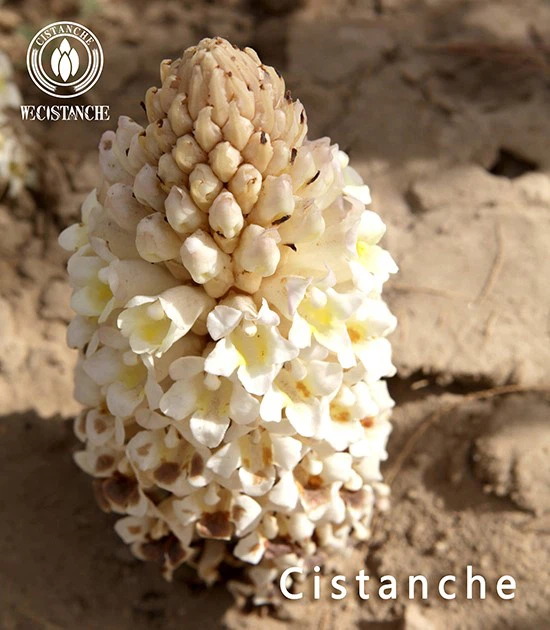
cistanche tubulosa benefits and side effects
It can be foreseen that with the joint promotion of multiple favorable factors, the Hetian Cistanche industry will surely usher in a more brilliant tomorrow. In the future, Hetian Cistanche is expected to further expand its market, not only occupying a larger share in the domestic market but also gradually moving towards the international market, bringing health and well-being to more people through this "golden fairy grass" in the desert. At the same time, with the continuous improvement and upgrading of the industrial chain, deep-processed products of Cistanche deserticola will continue to emerge, further enhancing the added value and economic benefits of the industry, injecting new vitality into the economic development of the Hotan area, and becoming an important pillar industry for local rural revitalization.
Cistanche deserticola, a magical plant growing in the desert, has formed an inseparable bond with the land of Hotan. The unique natural environment nurtures high-quality Cistanche deserticola; Years of cultivation exploration have led to the flourishing development of the Cistanche deserticola industry in Hotan. I believe that in the future, the Hetian Cistanche industry will play a more important role in economic development, ecological protection, and improvement of people's livelihoods, and write its legendary chapter.