How Much “50% Echinacoside + 10% Acteoside” Cistanche Extract? For Just $200/kg?
Sep 24, 2025
It's probably not legit. Using public pricing and process data, let's unpack the logic gaps behind these "ultra‑cheap, ultra‑high content" claims-so you don't waste money again on a supplement that doesn't work.
Bottom line up front
With 2024–2025 mainstream raw‑material prices and published extraction yields, a true "50% echinacoside + 10% acteoside" extract already costs more than RMB 1,300/kg in raw materials alone-before solvents, resins, energy, labor, packaging, and testing. If someone sells it for RMB 1,300/kg, odds are the spec is watered down or the testing method is being gamed. (health.baidu.com)
I. Raw materials and market price: RMB 58/kg isn't crazy-but that's typical for "hard" Cistanche
Market data (2024–2025): hard Cistanche (often Cistanche tubulosa, "hard da‑yun") commonly trades around RMB 55–60/kg; softer grades are higher (about RMB 95–105/kg). Prices vary by region and grade, but RMB 50–60/kg for farmed dried herb isn't unusual. (health.baidu.com)
Other market briefs report similar-or even lower-headline prices for mixed lots, confirming low‑price segments exist. However, high‑spec extracts typically need higher‑grade raw materials; they don't start from the very cheapest lots. (kmzyw.com.cn)
Consumer takeaway: cheap raw herb doesn't magically become premium extract. If the starting material is bargain‑basement, the finished product probably won't deliver premium actives.
II. Key process and the "minimum raw input" math: why you need at least 30–40:1
Measured transfer and monomer yields: A process study on Cistanche tubulosa using 50% ethanol at 70°C reported extractable echinacoside and acteoside of ~1.366% and ~0.519% respectively, with transfer rates ~87% and ~94% (dry basis). That's a combined recoverable E + A of about 1.7–1.8%. (pubmed.ncbi.nlm.nih.gov)
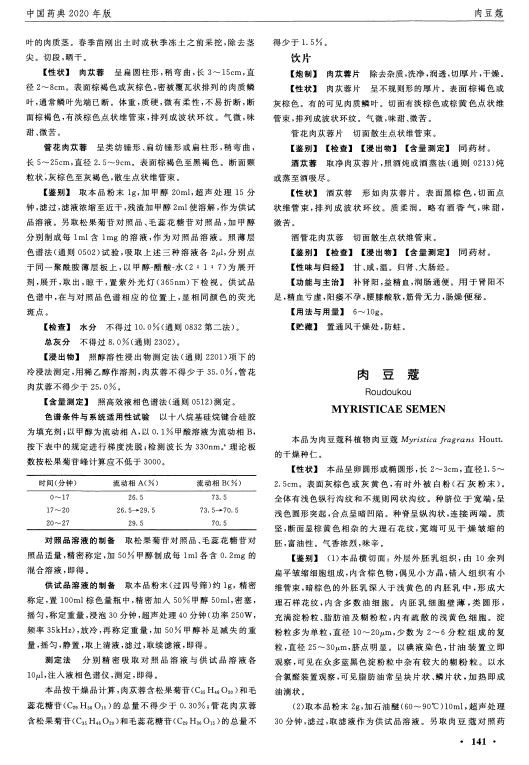
The source of the active ingredients of raw Cistanche medicinal materials in the Chinese Pharmacopoeia.
Calculated on the basis of the dried material:
Cistanche deserticola must contain not less than 0.30% in total of echinacoside (C35H46O20) and acteoside/verbascoside (C29H36O15).
Cistanche tubulosa must contain not less than 1.5% in total of echinacoside (C35H46O20) and acteoside/verbascoside (C29H36O15).
Using this optimistic dataset: to make 1 kg of finished extract at "60% (50% + 10%) E + A," you need 0.6 kg of just those two actives. At 1.7% recoverable, raw herb required is roughly 0.6 ÷ 0.017 ≈ 35 kg. After normal losses in enrichment and concentration and batch variability, industrial practice lands around 30–50 kg raw → 1 kg extract-what people often call "about 40:1." This is experience plus data. (pubmed.ncbi.nlm.nih.gov)
The process chain isn't a free lunch: water/ethanol extraction → membrane/resin enrichment → gradient elution → concentration/drying → QC release. D101/AB‑8 resins and gradient ethanol washes are common. Each step costs yield and money. (patents.google.com)
Industry notes on fractionation: e.g., "total oligosaccharides ≈ 35.1%," "total glycosides ≈ 12.1%," with "total phenylethanoid glycosides ≈ 8.7%" from a 40% ethanol fraction-pushing monomers higher requires extra enrichment and brings extra loss. (xjcistanche.com)
Consumer takeaway: hitting "50% + 10%" isn't about a magic machine; it's about a lot of raw material and expensive steps. If the finished price ignores that math, be skeptical.
III. Show me the math: where $200/kg goes wrong
Raw‑material only (no processing): at $8/kg for farmed herb and a conservative 35:1, raw cost is ~$280-300/kg; at a more common 40:1, it's ~$310-330/kg. $200/kg doesn't even cover the herb. (health.baidu.com)
Worse, some cross‑border B2B listings quote "50% E + 10% A" at USD 120–135/kg (≈ $150/kg). That's below common‑sense cost. Treat "cabbage‑price, high‑content" offers as red flags. (alibaba.com)
Consumer takeaway: if a brand's "50% + 10%" cost basis is fantasy, the label claim likely is too.

Please be sure to confirm everything before placing an order, otherwise your money will most likely end up being "tuition." - From Alibaba
IV. Why can they quote so low? Four common tricks
Method games with terminology
Use "UV total glycosides" to inflate a number, then imply it equals "HPLC monomer content." In pharmacopeias, echinacoside/acteoside are assayed by HPLC, not UV. Always check the COA "Method: HPLC vs UV." (hplcx.com)
Low spec masquerading as high spec
Real content might be "E 20% / A 6% / Total glycosides 60%," but the page shouts "50% / 10%," burying the method and batch details-or omitting them.
Over‑dilution/fillers
Add maltodextrin or other carriers to improve flow/appearance while the monomer ratio never matches the claim; or spike with other caffeoyl‑containing botanicals to bump UV numbers that don't equate to E/A by HPLC.
Bait pricing, "pretty" samples
Make one true‑spec sample, win orders, then cut corners at scale. The same product pages appear across platforms with improbably low deal prices. Stay alert. (xjcistanche.en)
Consumer takeaway: on labels, "how it's measured" matters as much as "what it claims."
V. How to verify authenticity: three steps
Check the test method and full panel
A credible COA lists Echinacoside (HPLC), Acteoside/Verbascoside (HPLC), Total phenylethanoid glycosides-ideally by HPLC-plus moisture/ash/flavonoids. If method isn't stated or says only "UV," risk is high. Pharmacopeial methods specify HPLC for E/A. (hplcx.com)
Ask for batch retain samples and third‑party re‑testing

HPLC testing report from wecistanche.com
Request an actual batch sample; have an independent lab re‑assay E/A by pharmacopeial HPLC (around 330 nm). Peaks should include order, retention times, purity, and integration tables. Accept variance typically within ±5–10%.

100% Pure cistanche extract for sale
click pic for more details

Back‑solve cost consistency
Ask the supplier to show basic math: raw herb price × usage (or extraction ratio), solvent consumption (e.g., ethanol solid‑liquid ratios can be ~1:16), resin and energy. If that cannot reconcile with RMB 1,300/kg, pause the purchase. (xjcistanche.com)
Consumer takeaway: for finished supplements, ask brands for batch‑specific HPLC COAs from an independent lab. If they dodge, walk away.
Bonus: what normal, credible specs look like (Wecistanche consumer‑grade options)
These are typical, widely used ranges that align with realistic yields and pricing. All assays by HPLC; batch‑specific COAs available from Wecistanche upon request.
Cistanche Specifications List
| SKU (Wecistanche) | Echinacoside (HPLC, %) | Acteoside/Verbascoside (HPLC, %) | Total PhGs (HPLC, %) | Typical dosage forms | Notes |
|---|---|---|---|---|---|
| WT‑10/4 | 10 | 4 | 40–60 | Capsules, tablets, drink mixes | Cost‑efficient daily base |
| WT‑20/8 | 20 | 8 | 50–70 | Capsules, powders | Stronger actives for experienced users |
| WT‑25/10 | 25 | 10 | 55–75 | Premium capsules | Popular balance of potency and value |
| WT‑30/12 | 30 | 12 | 60–80 | Premium caps/tablets | Faster feel for some users |
| WT‑40/16 | 40 | 16 | 65–85 | Specialized formulas | Highest routine content; smaller daily dose |
Notes
Plant source: Cistanche tubulosa; solvent: water/ethanol; release testing: HPLC for monomers; moisture/ash within spec.
Actual ranges are batch‑specific; request the current COA and chromatograms to confirm.
VI. Why "40:1" is reasonable industry common sense
Industry disclosures show that even to reach "25% E," dry‑to‑finished extract ratios can be ~10:1. Doubling monomers to "50% / 10%" while controlling total glycosides and impurities pushes the overall ratio to ~30–40:1-consistent with the 35:1 lower bound estimated from recoverable monomers above. (xjcistanche.com)
Consumer takeaway: there's no free extraction. Higher purity means more starting material and more loss management.
VII. What standard processes look like (a quick checklist for procurement and QC)
Typical flow: milling → water/ethanol extraction (often ~50% EtOH) → filtration/concentration → membrane separation/macro‑porous resin (e.g., D101) adsorption → 5–40% ethanol gradient elution → vacuum concentration → spray drying → HPLC release. Patents and open literature describe this route in detail. If a supplier can't outline a matching process and controls, they likely haven't made it-or haven't made it right. (patents.google.com)
A last word
Not every seller is lying. But "very high content at a rock‑bottom price" violates basic raw‑material and process arithmetic. When you see a "50% + 10%" Cistanche at RMB 1,300/kg:
First, ask for an HPLC‑based COA and full chromatograms;
Then, get a third‑party re‑test and run the cost consistency check;
If it doesn't add up, don't place the order.
If you've bought "50% echinacoside" supplements and felt nothing, it's probably not your body-it's the label. You deserve label honesty and real actives.
We can help. Share the product link or a photo of the label, and we'll:
Verify method (HPLC vs UV) and likely true actives;
Recommend a right‑sized spec (10–40% echinacoside, 4–16% acteoside) for your goals;
Provide current batch HPLC COAs and simple, consumer‑friendly explanations.
Message us to get a quick check, a one‑page buyer's guide, or samples of Wecistanche's verified specs. Your money-and your results-shouldn't be left to guesswork.
Learn more about cistanche
Traditional Chinese medicine market analysis: Cistanche supply/demand outlook (health.baidu.com)
Bozhou market trend updates on Cistanche (kmzyw.com.cn)
Extraction of Phenylethanoid Glycosides from Cistanche tubulosa by High‑Speed Shearing Homogenization Extraction - PubMed (pubmed.ncbi.nlm.nih.gov)
CN101194934B - Method for extracting active substances rich in echinacoside and verbascoside - Google Patents (patents.google.com)
Total Glycosides From Stems Of Cistanche Tubulosa… (xjcistanche.com)
Cistanche Tubulosa Extract Powder - Kidney Support (xjcistanche.com)
Chinese Pharmacopoeia 2020 - assay for Cistanche | hplcx chromatography data (hplcx.com)
OEM "10:1, 40% Cistanche Tubulosa extract…" listing (xjcistanche.en.made-in-china.com)
Cistanche extract market notes (xjcistanche.com)