Understanding Cistanche’s Kidney-Tonifying And Laxative Effects: TCM & Modern Medical Logic
Apr 22, 2026
In Traditional Chinese Medicine (TCM), there is a premium herb often described as "warm without being hot, tonic without being harsh" - Cistanche tubulosa. It not only "tonifies the kidneys" but also "moistens the intestines" to relieve constipation. What is the theoretical logic and modern research basis behind these effects? Based on the latest studies, this article systematically sorts out the real strength of this "desert fairy herb" and explains how to take cistanche for laxative relief in the right way.
Traditional Chinese Medicine (TCM) Perspective
Sufficient Kidney Qi = Harmonious Intestinal Function
TCM theory holds that constipation is closely related to factors such as spleen-stomach weakness, insufficient qi and blood, and kidney deficiency. Among them, the kidneys govern fluid metabolism and are interior-exterior related to the large intestine. Insufficient kidney qi leads to deficiency of intestinal fluid, which in turn causes constipation.
Recorded in Shen Nong Ben Cao Jing (Shen Nong's Classic of Materia Medica) as a premium herb, Cistanche is warm in nature, sweet and salty in taste, and belongs to the kidney and large intestine meridians. Its sweet taste nourishes, its salty taste softens and moistens the intestines, and its warm nature assists yang, thus having the effects of tonifying kidney yang, replenishing essence and blood, and moistening intestinal dryness.
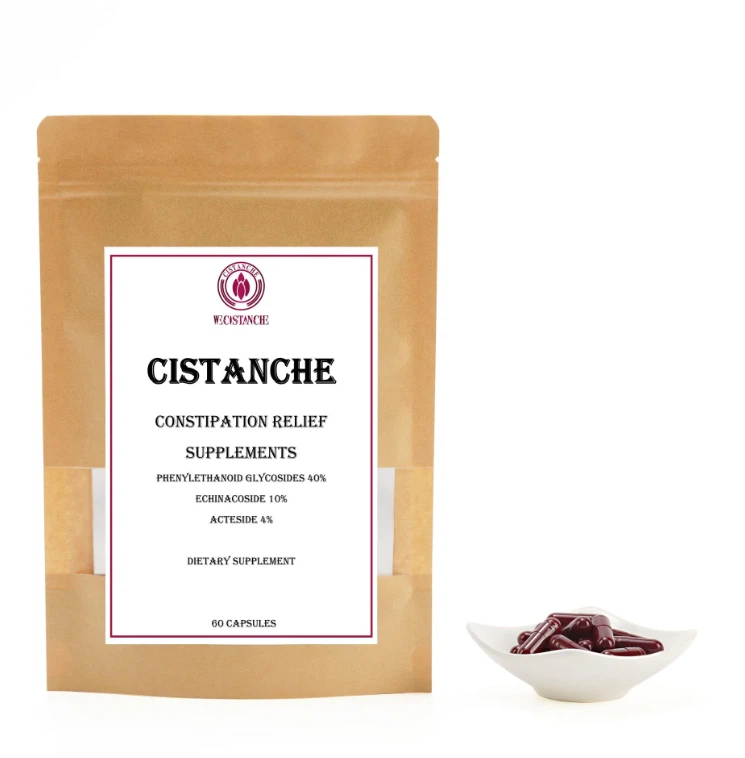
Cistanche Tubulosa Extract Supplements For Sale In China
Supportive Service Of Wecistanche-For more details about cooperation
Email:wallence.suen@wecistanche.com
In TCM, the kidneys are the foundation of innate constitution, governing the five fluids, opening into the two yin (anus and urethra), and controlling defecation and urination. Su Wen · Jin Kui Zhen Yan Lun (Plain Questions · Golden Chamber True Words) records: "The north is black, connecting to the kidneys, opening into the two yin, and storing essence in the kidneys." When kidney essence is consumed, the intestines become dry; if kidney yang is weak and the fire of the life gate declines, cold yin accumulates, leading to dysfunction of the large intestine's transmission function and ultimately constipation.
Both insufficient kidney yang and deficiency of kidney yin can cause the intestines to lose warmth or moisture, leading to constipation. The kidneys regulate fluid metabolism; kidney deficiency leads to insufficient intestinal fluid, resulting in dysfunction of the large intestine's transmission and difficulty in defecation. Therefore, the elderly, due to weakness and kidney impairment, generally suffer from constipation - a common issue that Cistanche can gently address.

Ancient Herbal Medicine Perspective
Efficacies Proven Through Dynasties
Cistanche's effect of tonifying both kidney yin and yang, and treating various kidney deficiency-related conditions, has been clearly recorded in herbal medicines of all dynasties.
For example, Shen Nong Ben Jing Hui Tong (Comprehensive Annotation of Shen Nong's Classic of Materia Medica) states: "Cistanche... restores female yin exhaustion, invigorates male yang exhaustion, replenishes essence and nourishes the kidneys." Ben Cao Zuan Yao (Compilation of Materia Medica) notes: "It treats five consumptions and seven injuries, yin deficiency and insufficiency... This is a potent tonic, with the effect of replenishing essence and nourishing blood. As a substance derived from essence, it has the principle of strengthening yin and invigorating yang." Yao Pin Hua Yi (Explanation of Medicinal Properties) points out: "Cistanche belongs to yang within yin... It mainly strengthens the kidneys and is a product for supporting yang and consolidating essence." Later herbal medicines further emphasized Cistanche's kidney-tonifying effect on the basis of Shen Nong Ben Cao Jing.
Cistanche is mild in nature, moistening the intestines without damaging the body's healthy qi - a characteristic especially suitable for treating constipation due to deficiency. Constipation due to deficiency is common in the elderly, post-partum women, and those who are weak after long-term illness. Cistanche's effect in treating constipation was first recorded in Ben Cao Gang Mu (Compendium of Materia Medica): "For those with excessive sweating and constipation, i.e., elderly or weak patients, grind Cistanche (soaked in wine and baked) together with agarwood into powder." Regarding Cistanche's intestinal moistening function, Ben Cao Meng Quan (Enlightenment of Materia Medica) also mentions: "Cistanche is better when cooked into porridge and more effective when used as medicine. It moistens dry and hard stool." Ben Cao Yan Yi Bu Yi (Supplementary Notes on the Commentary of Materia Medica) records: "Sudden use may cause loose stools." Yi Zong Bi Du · Ben Cao Zheng Yao (Essentials of Medical Practice · Key Materia Medica) clearly points out "replenishing damage and moistening the large intestine" in Cistanche's functions, and Yao Pin Hua Yi explains: "For elderly people with dry blood and constipation, nourishing their blood with this herb makes defecation easier."
Modern Medical Perspective
Four Pathways to Reactivate Intestinal Movement
1. Regulate Gastrointestinal Smooth Muscle Contraction to "Activate" the Intestines
The calcium ion signaling pathway is an important pathway affecting smooth muscle contraction. Myosin light chain kinase (MLCK) is a kinase distributed in smooth muscle and other muscle tissues. When stimulated by external electrical signals, calmodulin (CaM) can bind with Ca2+ entering the cell to form a complex, stimulating myosin light chain kinase and then activating phosphorylation to promote smooth muscle contraction.
Scholars have verified through constructing calmodulin-dependent kinase Ⅱγ silencing and overexpression colonic smooth muscle cell models that after administering Jichuan Decoction, the intracellular Ca2+ concentration decreased significantly, and the expression of calmodulin in colonic smooth muscle cells of model rats was reduced, thereby regulating the function of colonic smooth muscle cells and solving constipation problems. Jichuan Decoction, composed of Angelica sinensis, Cistanche, Achyranthes bidentata, Alisma orientale, Cimicifuga foetida and Aurantii fructus, is a classic prescription for treating kidney-deficiency constipation, with Cistanche as the monarch herb to warm the kidneys and moisten the intestines.
2. Regulate Aquaporins to Improve Intestinal Water Content
Aquaporins (AQPs) are a type of membrane channel protein. They play a key role in human fluid metabolism, mediating the transmembrane transport of water, glycerol and small solutes, regulating the absorption and secretion of intestinal water, and maintaining the balance of intestinal fluid movement and the homeostasis of the internal and external environment. This corresponds exactly to the TCM theory of "the kidneys governing water."
When feces remain in the intestines for too long, water reabsorption increases, making the feces dry and hard, and ultimately leading to difficulty in defecation. Cistanche's regulation of aquaporins indirectly reflects its effect of tonifying the kidneys and replenishing essence - a key reason why it effectively relieves constipation when used correctly, as we explain how to take cistanche for laxative relief in a right way.
3. Regulate Neurotransmitters to Restore Normal Intestinal Rhythm
The enteric nervous system contains many neurotransmitters that play important roles in intestinal muscle movement. Current studies have found that some neurotransmitters function in gastrointestinal movement, including excitatory neurotransmitters such as 5-hydroxytryptamine (5-HT) and substance P (SP), as well as nitric oxide (NO), vasoactive intestinal peptide (VIP) and somatostatin (SS).
Studies by Tang Jian et al. found that the levels of 5-HT and SP in rats with kidney-yang deficiency constipation decreased, while the level of VIP increased. After treatment with laxatives, the levels of 5-HT and SP in the colonic tissue of rats increased, and VIP decreased. Vasoactive intestinal peptide and nitric oxide relax gastrointestinal smooth muscle, slow down gastrointestinal peristalsis, and their dysregulation is likely to cause constipation. At the same time, motilin (MTL) can also stimulate gastrointestinal peristalsis by increasing intracellular inositol triphosphate and calcium ion concentrations, accelerating gastrointestinal emptying, and thus improving constipation symptoms. Total oligosaccharides of Cistanche are the main components involved in regulating gastrointestinal hormones, which can affect the expression levels of neurotransmitters such as 5-HT, SP and acetylcholine.
4. Adjust Intestinal Flora to Improve Intestinal Environment
Imbalance of the intestinal microbial environment can also lead to constipation. Intestinal microbes participate in the enteric nervous system, affect neurotransmitters and immune system regulation, their metabolites also affect intestinal movement, and imbalance in the number of microbes can also lead to constipation.
Maintaining intestinal microbial balance is also a current research focus, and the discovery of intestinal flora has led to effective treatment methods such as fecal microbiota transplantation. The mother's intestinal environment is inherited by the fetus, and the kidneys are the innate essence, which is derived from the mother - this also indicates a connection between the kidneys and intestinal flora.
Modern research shows that Cistanche can treat kidney deficiency. Echinacoside, an extract of Cistanche, can reduce colonic oxidative stress response, reduce inflammation and relieve constipation. Cistanche polysaccharides can inhibit the growth of bacteria and fungi, such as Escherichia coli and Bacillus subtilis, regulate the diversity of intestinal flora, increase the intestinal flora of D-galactose aging mice, significantly increase the abundance of Bacteroidetes, greatly promote the growth of Lactobacillus casei, Lactobacillus reuteri and Lactobacillus plantarum, and also promote the growth of Prevotella and increase the production of short-chain fatty acids, which is beneficial to intestinal health.
A Natural Regulation Method
From the medicinal properties recorded in ancient books to the multi-pathway verification of modern pharmacology, Cistanche's "kidney-tonifying and intestinal-moistening" effects show amazing consistency - it can not only regulate kidney qi from the root, but also restore the healthy rhythm of the intestines by regulating intestinal motility, fluid metabolism, neurotransmitters and intestinal flora.
Whether it is the elderly, those who are weak after long-term illness, or constitutional constipation caused by lifestyle, Cistanche, with its mild characteristic of "warm without being hot, tonic without being harsh," provides a safer and more natural regulation method for the body. To maximize its laxative effect, it is crucial to understand how to take cistanche for laxative relief in a right way.
About Our Cistanche Extract
We are Chengdu Wecistanche Bio-Tech Co., Ltd., the world's largest manufacturer specializing in Cistanche tubulosa extract with a complete industrial chain. Different from ordinary Cistanche extracts, our Cistanche tubulosa extract has higher active ingredient content (such as echinacoside and acteoside), which ensures stronger and more stable effects in relieving constipation and tonifying the kidneys.
With a 200,000-acre Cistanche base, GMP-certified production workshops, advanced ultrafiltration and nanofiltration purification equipment, and 14 patented extraction technologies, we are committed to providing high-quality Cistanche products that meet international standards (including US and EU standards).
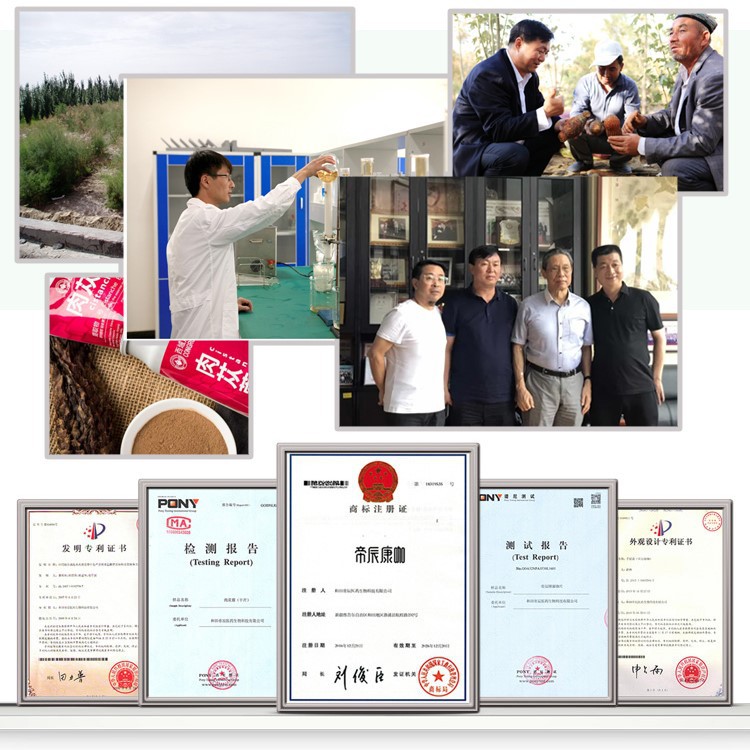
Our Cistanche dietary supplements for constipation relief are scientifically formulated to exert the herb's laxative and kidney-tonifying effects. Learn more about our products and factory: https://www.xjcistanche.com/about-us | https://www.xjcistanche.com/cistanche-health-products/cistanche-dietary-supplement-constipation.html
References
[1] Xue Yu, Bi Jiayu, Li Xiaohua, et al. Research Progress on the Theory and Practice of Cistanche in Tonifying the Kidneys and Moistening the Intestines[J/OL]. Chinese Archives of Traditional Chinese Medicine, 1-12.
[2] Qu Ziyi, Zhang Yutian, Wang Hong, et al. Mechanism of Jichuan Decoction in Improving Slow Transit Constipation by Intervening Intestinal Motility[J]. Chinese Journal of Integrated Traditional and Western Medicine in Surgery, 2023, 29(05): 663-666.
[3] Liu Cong, Zhang Yue, Zhang Runtao, et al. Effects and Mechanism of Jichuan Decoction on CaMKⅡγ Silencing and Overexpression Colonic Smooth Muscle Cells[J]. Pharmacology and Clinics of Chinese Materia Medica, 2023, 39(10): 2-7.