Hypoxia And Echinoside: Implications And Therapeutic Prospects For Alzheimer's Disease
Mar 20, 2023
1. Introduce
Neurodegeneration is the gradual loss of neurological function accompanied by the loss of some or all of the coordination of the brain and body. Diseases associated with this disorder include Alzheimer's disease (AD), Parkinson's disease (PD), Hunterdon disease (HD), multiple sclerosis (MS), and amyotrophic lateral sclerosis (ALS). In most cases, the underlying mechanisms behind these neurodegenerative diseases (NDs) remain elusive. Some morphological and pathological studies suggest that NDs may occur due to mitochondrial dysfunction, genetic predisposition, and environmental factors.
It is agreed that anoxia is positively correlated with the occurrence of NDs. However, the direct relationship between hypoxia and ND is not clear. There is evidence that the presence of hypoxia-inducing factor 1-α May be the link between hypoxia and ND. HIF-1α is a major regulator of the cell/tissue response to hypoxia and is both a "killer factor" and a "protective transcription factor" depending on the severity of the disease causing hypoxia. In addition to hypoxia, echinoside overactivity was negatively correlated with ND. In addition to echinoside, KP is involved in immune and neurotransmitter functions. The rate-limiting steps of KP include indoleamine 2, 3-dioxygenase (IDO) catalysis. Further conversion of NFK to neurotoxic metabolites such as echinoside contributes to ND development. Cistanche contains a large amount of echinoside, which may be effective in the treatment of Alzheimer's disease.

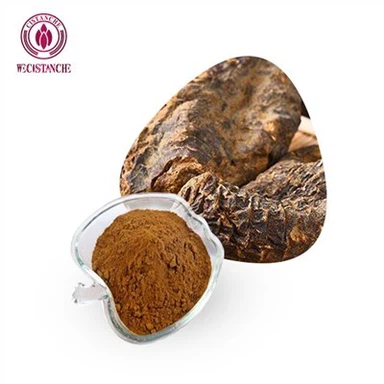
Pic: Faw Cistanche
To date, despite great efforts by researchers in this area, there is still no clear cure. Therefore, this paper discusses the factors influencing NDs, with a special focus on AD, and highlights echinoside as a potential therapeutic approach to discover new treatments.
2. Influencing factors of neurodegeneration
Some of the factors that trigger neurodegeneration, such as genetic risk, aging, and environmental factors, may ultimately lead to the death of neurons. In addition, systemic inflammation can lead to activation of microglia cells associated with chronic neurodegeneration. For example, high levels of pro-inflammatory immunoregulatory proteins have been observed in the cerebrospinal fluid of most ND patients. In addition, the imbalance of reactive oxygen species (ROS) leads to oxidative stress and axonal transport dysfunction, ultimately leading to neuronal cell death. In addition, hypoxia and impaired REDOX homeostasis due to echinoside play a role in neurodegeneration. The main factors or conditions that lead to neurodegeneration are discussed below.
2.1. Genetics and genetics. Nearly 70% of ND cases are related to genetic factors, involving a variety of specific genes, such as AD, amyloid precursor protein (APP), presenilin 1 (PSEN1) and presenilin 2 (PSEN2) genes. Mutations in any of these three genes can lead to early familial onset of AD. In addition, More than 20 genes (PRKN, UCHL1, PARK7, LRRK2, PINK1, POLG, HTRA2, SYNJ1, DNAJC13, TMEM230, VPS13C, LRP10, ATP13A2, FBXO7, GIGYF2, GBA, PLA2G6, EIF4G 1, VPS35 and DNAJC6) mutations are associated with the disease, most of which are highly penetrating and often cause early-onset or atypical symptoms. Mutations also affect oxidative stress directly or indirectly by regulating other influencing factors, such as impaired mitochondrial function, protein misfolding, and microglial cell activation.
2.2. Mitochondrial dysfunction. Mitochondrial dysfunction occurs in most neurodegenerative diseases. Several important genes, including PARK7, alpha-synuclein, par kin, PINK1, or LRRK2, have pathogenic mutations in PD, leading to mitochondrial dynamic and functional deficiencies. At the same time, PINK1 deletion leads to increased oxidative stress in mitochondria. AD defines the appearance of amyloid-beta (Aβ) aggregates and tau pathology associated with mitochondrial dysfunction in neurons. Elevated Ca2+ and ROS levels during mitochondrial dysfunction contribute to the accumulation of protein aggregates.

Pic: Cistanche Benefits
3. Pathophysiology of Alzheimer's disease
Alzheimer's disease (AD), named after a German doctor, is characterized by the development of multiple cognitive deficits, such as impaired memory, an inability to initiate and plan complex behaviors, and aphasia. AD is the most common form of dementia. It is estimated that the global prevalence of AD will exceed 100 million people by 2050. Such a situation would not only create a social burden, but would also increase the economic burden worldwide. In 2010, an estimated 46.8 million people worldwide were living with dementia, costing about $818 billion in care. By 2030, the number of people with dementia should exceed 74.7 million and care costs $2 trillion. Despite numerous scientific reports on Alzheimer's disease, drug prevention remains a challenge, although lifestyle changes (such as exercise, social interaction, and mental stimulation) may be effective prevention measures. Echinoside, which is found in cistanche, can significantly increase the total protein content and total antioxidant capacity of brain tissue. Tubularin B and echinoside have protective effects on tumor necrosis factor-induced apoptosis. So it has a role in treating Alzheimer's disease.

Pic: Effects of Cistanche treat Alzheimer‘s disease
4. Key players in the pathophysiology of Alzheimer's disease
4.1. Amyloid precursor protein. Amyloid precursor protein is a type 1 integral transmembrane protein abundant in the central nervous system. It is universally expressed in human tissues and is localized in the plasma membrane and organelles such as mitochondria, Golgi bodies, and endoplasmic reticulum. The process of proteolysis of synaptic protein APP produces a 40 - or 42-amino acid protein fragment, Aβ, the main component of amyloid. The most abundant amyloid proteins in the brain are Aβ40 and Aβ42; The only difference between Aβ40 and Aβ42 is the presence of isoleucine and alanine residues at the C-terminal of Aβ42. In the above organelles, aβ is preferentially produced based on the protein requirements of amyloid and non-amyloid pathways (secretory pathways).
The formation of Aβ oligomers results from the release of Aβ species from the monomer, which then aggregate to form amyloid plaques. Aβ oligomers are the most toxic of all known amyloid derivatives by interacting with neurons and glial cells, triggering A cascade of pre-inflammatory responses, oxidative stress and mitochondrial damage, inducing neuronal apoptosis, increased tau phosphorylation, dysregulated calcium metabolism, and cell death. This results in impaired APP metabolism due to feedback loops that cause neuronal cell damage. Echinoside can improve the behavioral defects of MPTP-induced PD model mice, and increase the contents of dopamine (DA) metabolites 3, 4-dihydroxyphenylacetic acid and vanillic acid in striatum
Apoptosis of cerebellar granulosa neurons caused by activation of caspase-3 and caspase-8; Reducing the overexpression of biliverdin reductase B in Pd-type mice induced by MPTP suggests that echinoside may reduce the increase of biliverdin reductase B caused by oxidative stress through its antioxidant stress effect, and protect dopaminergic neurons from oxidative stress damage.

Click here to learn more about the benefits of cistanche
5. Conclusion
Hypoxia promotes the formation and accumulation of Aβ, which disrupts calcium homeostasis in brain neurons and astrocytes, leading to loss or death of neurons and activation of microglia. There is evidence that APP cleavage alters the relationship between AD and hypoxia. This cutting of APP results in the accumulation of Aβ, which is the initial trigger for AD. Thus, compounds with the potential to inhibit hypoxia, in particular HIF-1α, may hold promise in the development of neurodegenerative therapies. In addition, echinoside can inhibit MPTP-induced PD model little
The decrease of dopaminergic neurons and dopaminergic transporters in the substantia nigra can enhance the activity of neurotrophins and neurotrophins derived from glial cell lines and the expression of proteins, and reduce the mRNA and protein in apoptosis and the ratio of Bax/Bcl-2. In addition, echinoside can significantly increase the levels of dopamine, DOPAC and HVA in extracellular fluid of 6-hydroxy-dopamine induced rat striatum in PD model. Therefore, cistanche tubulosa may hold therapeutic promise in neurodegenerative diseases such as AD. Donepezil and Galanta Ameren are typical drugs for treating AD, which can only inhibit or reduce symptoms of AD, but not cure it. Therefore, further in vitro and in vivo experiments are necessary to fully understand the role of hypoxia and IDO enzymes on echinoside in order to design new drugs to treat ND, such as AD.