ICP-MS Determines The Content Of Various Trace Elements in Cistanche Deserticola From Different Origins Ⅱ
Mar 06, 2024
Table 2 Linear range, correlation coefficient, detection limit, and quantitation limit of standard curves for 37 trace elements

2.6 Spiked recovery rate
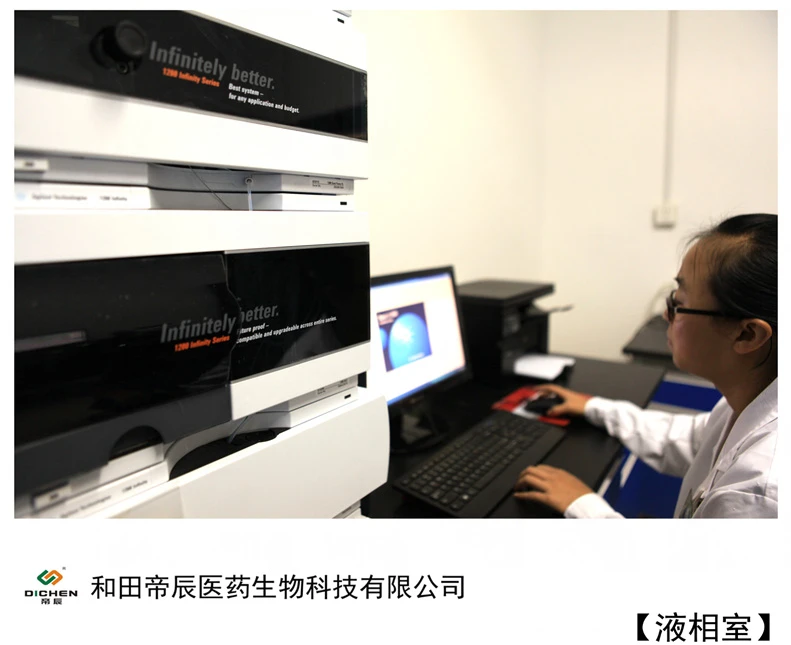
Wecistanche Labs
To verify the accuracy and reliability of this method, the samples were spiked and measured. The spikes were divided into three concentrations: high, medium, and low. The standard addition method is: to accurately weigh 18 samples of Cistanche deserticola with known content, and accurately add the second concentration point (L2), the fourth concentration point (L4), and the sixth concentration point (L6) of the mixed standard series solution respectively. ), prepare 6 samples for each concentration point, perform pretreatment and detection according to the test method, measure each sample 3 times in parallel, and take the average value to calculate the recovery rate. The recovery rates of 37 elements are all between 76.5% and 110.0%, and the internal standard RSDs are all less than 5.0%, indicating that this experimental method is reliable. The experimental results are shown in Table 3.

Wecistanche Labs
2. 7 Repeatability test
Randomly select a batch of Cistanche deserticola samples, weigh the samples accurately, prepare the samples according to the pre-treatment method, make 6 parallel copies, and measure according to the instrument conditions under "2.4". The calculated RSD values are all between 0.4% and 4.8%, indicating that the test has good repeatability. The results are shown in Table 3.
Table 3. Recovery rate, precision, and repeatability of 37 trace element methods. n = 6

2. 8 Injection precision test
Take the concentration point in the middle of the mixed standard series solution prepared under "2.5" (mass concentration 10 μg·L-1), inject samples 6 times continuously, and calculate the relative standard deviation (RSD) values to be between 0.1% and 0.1%. 3.6%, indicating that the test has good precision. The results are shown in Table 3.

NATURAL ORGANIC CISTANCHE EXTRACT SPECIFICATIONS

2.9 Effect of matrix on detection signal intensity
Six batches of the prepared Cistanche deserticola sample solution and the reagent blank were injected six times respectively. The signal intensity of elements that were not detected in the screened samples was compared with the elements corresponding to the reagent blank. It was found that the sample matrix had no impact on the detection signal intensity.
2.10 Sample Measurement
Take a Cistanche deserticola sample prepare it according to the test solution preparation method, and measure 37 inorganic elements in the sample under ICP-MS working conditions. The results are shown in Table 4. The results showed that the detection rates of metal elements and harmful elements lead, arsenic, mercury, cadmium, and copper in 40 batches of Cistanche deserticola were 27.5%, 7.5%, 82.5%, 0 and 100% respectively. It can be seen that the detection of heavy metal elements in Cistanche deserticola is good. In addition, the detection rates of barium, chromium, manganese, nickel, rubidium, and strontium in 40 batches of samples were all 100%. The content of barium was 0.3 to 42.4 mg·kg-, and the content of chromium was 0.3 to 42.4 mg·kg-. The content of manganese is 0.01 4 ~ 19.0 0 mg·kg-1, the content of manganese is 0.1 2 ~ 58.3 mg·kg-1, and the content of nickel is 0.5 2 ~ 5.3 mg. ·kg-1
, the content of rubidium is 1.4 to 31.0 2 mg·kg-1, the content of strontium is 2.8 to 110.8 mg·kg-1, the maximum content of manganese and strontium is much higher than other elements, and it needs to cause focus on.

Cistanche Processing
3 Discussion
During the detection process of the test substance by ICP-MS, pre-treatment is very important for the accuracy of the results. The pre-treatment process requires the sample to be completely dissolved into the digestion solution. Only when the sample is completely dissolved into the digestion solution is the test solution clear. transparent. This study uses a super microwave digestion instrument, which can reach higher temperatures and higher pressures than traditional microwave digestion instruments and can process more samples at the same temperature and pressure at the same time. With this advantage, the sample is at
Relatively less acid is added during the treatment process, so that the sample does not need to rush the acid process after the digestion is completed, shortening the pre-treatment time, and can directly perform ICP-MS detection. The smaller amount of acid added can extend the service life of the instrument and reduce the cost. Test personnel safety risks and reduce environmental pollution.
In the detection process of ICP-MS, in the selection process of mass number, it is generally recommended to choose the one with the highest proportion among all the mass numbers of the measured elements. However, in the actual measurement process, both cadmium (Cd114) and nickel (Ni58) are the first choice. It is the element with the highest mass proportion, and these two elements have serious interference problems, and the standard recovery rate cannot meet the requirements, so this test selected Cd111 and Ni60 as the detection objects. The 2015 edition of the "Chinese Pharmacopoeia" stipulates the content of heavy metals and harmful elements in 17 medicinal materials, and the element content is Lead ≤ 5 mg·kg-1; cadmium ≤ 0.3 mg·kg-1; arsenic ≤ 2 mg·kg-1; Mercury ≤ 0.2 mg·kg-1; Copper ≤ 20 mg·kg-1. Cistanche deserticola is not included, but the content of heavy metals and harmful elements can refer to its standard limits. The sample results show that these 5 heavy metals and harmful elements are All within limits.
Due to the particularity of its growth, the main producing areas of Cistanche deserticola are Xinjiang, Gansu, and Inner Mongolia. This study mainly analyzed the inorganic elements barium, chromium, manganese, nickel, rubidium, and strontium with a detection rate of 100%. Among them, the maximum and average contents of chromium and nickel in the three major producing areas are all in the same order of magnitude, indicating that there are no obvious regional differences. However, the maximum barium and strontium content in Xinjiang, where it is produced, is 42.4 mg·kg-1 and 110.8 mg·kg-1 respectively. The manganese content in Gansu, where it is produced, has a maximum manganese content of 58.3 mg·kg- 1. The maximum content of rubidium in Inner Mongolia, where it is produced, is 31.3 mg·kg-1, indicating that there are obvious regional differences in barium, strontium, manganese, and rubidium elements in Cistanche deserticola.
Inorganic elements include essential trace elements and non-essential trace elements for the human body. In the ICH element guidelines, heavy metal elements are divided into three categories. The first category includes lead, arsenic, mercury, and cadmium, which are toxic and require risk assessment; If the second type of element is deliberately added or the route of administration is different, risk assessment is also required, including vanadium, cobalt, thallium, silver, antimony, barium, lithium, chromium, copper, tin, nickel, etc.; the third type of elements is none Obvious toxic elements, no clear
Clearly define the elements that require safety assessment. Barium and rubidium, which are high in content and highly detected in Cistanche deserticola, are non-essential elements for the human body. Chromium, manganese, nickel, and strontium are all essential trace elements for the human body. Trace amount Elements need to maintain a dynamic balance in the human body. Too much or too little intake will have an impact on physical health, and barium, chromium, and nickel elements need to be evaluated for safety in specific medication environments. For example, the main function of chromium is trivalent chromium to enable insulin to function normally. However, if too much chromium is taken in, trivalent chromium will be converted into hexavalent chromium. Hexavalent chromium is highly toxic and can cause various pathological changes in the human body and even cancer. [10-13]. Therefore, in addition to the content of heavy metal elements specified in the pharmacopeia, the content of other elements in Cistanche deserticola should also attract attention.
4 Conclusion
In this study, 37 inorganic elements in Cistanche deserticola were quantitatively analyzed by microwave digestion-inductively coupled plasma mass spectrometry, and a method for the determination of 37 inorganic elements in Cistanche deserticola was established. This method has the advantages of simplicity, rapidness, and accuracy, and can be used to determine the content of 37 inorganic elements in Cistanche deserticola.
REFERENCES
[1] Ch. P (2020) Vol Ⅰ (Chinese Pharmacopoeia 2020 Edition. Part 1) [S]. 2020:103.
[2] LIU HM, ZHAO Y, YU X M, et al. Quality analysis and different places in
China[J]. Sci Technol Food Ind, 2023, 44(8): 341-350.
[ 3 ] ZHANG applica⁃ion and dose of Cistanche deserticola[J]. Jilin Chin Med (Lin Chinese Medicine), 2022, 42(8):966⁃969.
[4] GUO M, HUANG Y, CHEN X, et al. Distribution characteristics of mineral elements in the desert with different germplasm by ICP⁃MS[J]. Spectrosc Spectr Anal (Spectroscopy and Spectral AnalysisAnalysis), 2012, 42(8): 2452-2455.
[ 5 ] TU P F, JIANG Research on Herbology of Cistanche deserticola[J]. China J Chin Mater Med (Chinese Journal of Traditional Chinese Medicine), 2022, 47 (20): 5670⁃5679.
[ 6 ] WANG Y Correlation analysis of inorganic elements in Cistanche d Eserticola in Gansu Prvecekyeeeeeeeyeeeneee Spectrometry [J].Chin J Health Insp (Chinese Journal of Health Inspection), 2019, 32(6): 645⁃650, 654.
[ 7 ] FENG D, DUAN H, LV Y N, et al. Application of Cistanche in Health food in China[J]. Food Sci Technol (Food Science and Technology), 2019,46(12):76⁃81.
[8] WUZH Y, LIULY. nation of 16 rare earth elements in traditional Chinese medicine by microwave Digestion and ICP⁃MS[J]. Hydrometallurgy, 2002,41(3):278-281.
[ 9 ] ZHANG G organic elemmnttneQenoa from by ICP⁃ MS[J]. FoodInd (Food Industry), 2022, 43(5): 318-322.
[10] XU Q K, WEI P, GUO Z H, et al. Determination of 37 Trace elmmntsnnlptekky more inductively coupled
Plasma mass spectrometry[J]. Daily Use Chem Ind.Industry), 21, 51(3): 256⁃264.