Imagine To Remember: An Episodic Future Thinking Intervention To Improve Medication Adherence in Patients With Type 2 Diabetes Part 1
Mar 13, 2024
Purpose: Medication nonadherence is prevalent in diabetic populations, with "forgetting" a commonly cited reason. This issue of forgetfulness is due, in part, to a failure of prospective memory (PM).
As the name suggests, forgetfulness refers to an abnormal weakening of a person's memory ability. Although it may cause some trouble to people, it does not mean that forgetful people will suffer failure in life and work. A person's success does not only depend on his memory but also on other factors.
Compared with people with poor memory, forgetful people pay more attention to the practical problems at hand. They will write down some notes or tell others about their ideas and plans. This not only consolidates his memory but also allows others to provide him with support and feedback. At the same time, forgetful people tend to learn from failures and mistakes to better adapt to different environments and challenges.
Being forgetful doesn't mean you can't learn. Although forgetful people may need more time and energy to memorize new knowledge and skills, they can improve their abilities through deliberate practice and repeated reinforcement. For some people, forgetfulness even helps them get into a learning state more quickly because they aren't distracted by trivial details.
Finally, forgetful people may also have better relationships. This is because when they communicate with others, they pay more attention to the current situation and the feelings of the person on the other side, rather than making random guesses about the other person's intentions or background. This type of communication makes it easier to build a relationship of mutual trust and respect.
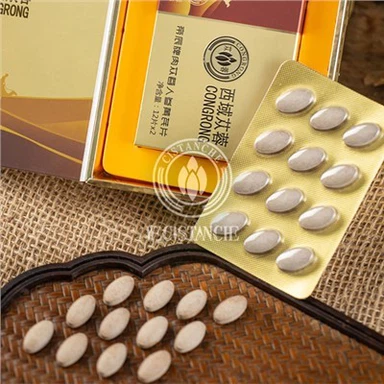
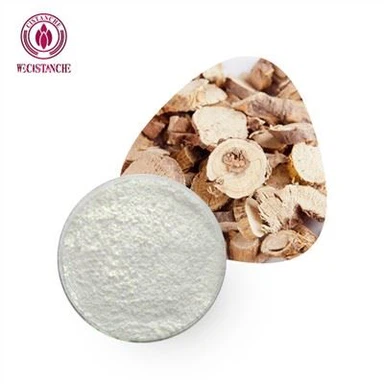
In life and work, forgetful people have advantages. They pay attention to the practical problems at hand, can learn from failures and mistakes, can improve their abilities through deliberate practice and repeated reinforcement, and can also build better interpersonal relationships. Therefore, we should not regard forgetfulness as a negative phenomenon but should make good use of its advantages to create a better life and work. It can be seen that we need to improve memory, and Cistanche deserticola can significantly improve memory because Cistanche deserticola is a traditional Chinese medicinal material that has many unique effects, one of which is to improve memory. The efficacy of Cistanche deserticola comes from the multiple active ingredients it contains, including tannic acid, polysaccharides, flavonoid glycosides, etc. These ingredients can promote brain health through a variety of pathways.

Click know 10 ways to improve memory
Episodic future thinking (EFT) has been shown to improve PM but has not been used to improve medication adherence.
Patients and Methods: The current study used a multiple baseline design (N = 4) to test the effects of EFT on medication non-adherence for four patients with a diagnosis of type 2 diabetes or prediabetes, with comorbid high blood pressure or high cholesterol.
Medication adherence was objectively measured over 15 weeks using medication event monitoring systems.
Results: Results of visual analysis showed medication adherence was reliably improved, confirmed by mixed model analysis of variance (p < 0.001), with significant differences from baseline to treatment (Tau <0.05) for 3 of 4 participants. Improvements in two measures of PM (effect size (ES) = 0.73, 0.80) and delay discounting (ES = 1.20) were observed.
Conclusion: This study provides a feasible way to improve medication adherence in patients with prediabetes or type 2 diabetes.
Keywords: episodic future thinking, prediabetes, prospective memory, medication adherence.
Introduction
Many people with prediabetes1 or type 2 diabetes2 have concurrent hypertension or dyslipidemia. However, many people are not adherent to their medications, and it is estimated that as many as 50% of the patients fail to take their medications as prescribed.3
Patients who have difficulty adhering to their medication regimens frequently experience poor health outcomes and struggle to manage their disease.4,5 Nonadherence is extremely prevalent in diabetic and prediabetic populations, with "forgetting" the most commonly cited reason for nonadherence.6

Forgetfulness as a reason for medication nonadherence is due in part to problems with prospective memory (PM), or the ability to recall and engage in an action at an appropriate time in the future.
Previous studies have demonstrated the relationship between poor PM and medication nonadherence.7,8 Laboratory research has shown that performance on a PM task was correlated with medication adherence in diabetic participants.9 Improving PM could be a means to enhance medication adherence within this population. For people with prediabetes or type 2 diabetes and comorbid disease states such as hypertension or dyslipidemia, taking medication is designed to prevent future morbidity.
By definition, prevention of any disease state requires engaging in behavior now for future benefits, which requires prospective thinking. Rather than focusing on immediate gratification and impulsive decision-making, prevention is associated with a focus on future benefits.
One way to assess temporal decision-making is through delay discounting tasks, which assess the degree to which people prefer small immediate rewards over larger delayed rewards.10,11 High degree of discounting the future is related to poor medication adherence, poor diets, and low activity levels in people with prediabetes,12 as well as poor adherence and diabetes self-care behaviors in those with type 1 or type 2 diabetes.13–15
Modifying the temporal window of a person's decision-making by reducing delay discounting or discounting of the future may also be important to improve medication adherence and health behaviors in people with prediabetes or type 2 diabetes.12–16
One approach to improving PM is implementation intentions.8,17 Implementation intentions involve creating mental simulations of future events (such as medication taking) that take into account when, where, and how to meet behavioral goals and associating these events with cues associated with the action and context of the future event using if–then statements.8,17,18

Implementation intentions have been shown to improve medication adherence across a variety of medical conditions,8 and one way in which they may work is by improving prospective memory.8 Another way to improve PM is Episodic Future Thinking (EFT),19–21 an intervention designed to mentally project oneself into vivid, highly contextual future scenarios.22–25
Prospective thinking can involve four different forms of future thinking, including simulation, prediction, intention, and planning.23 While these forms can be conceptualized within EFT,23 episodic future thinking may be part of implementation intentions.22 EFT has also been shown to reduce negative health behaviors, such as smoking, drinking, and overeating,26–29 and PM in controlled laboratory studies,19–21 but has not yet been tested as a way to improve medication adherence in a clinical sample of people with prediabetes or type 2 diabetes.
EFT also has the benefit of modifying a person's temporal window of decision-making by reducing delay discounting in people with prediabetes,24,25 thus potentially targeting two factors associated with poor medication adherence, prospective memory8 and delay discounting.12–16 While no research was identified that assessed the effect of implementation intentions on delay discounting in people with poor medication adherence, research has shown that when implementation intentions are used to reduce alcohol consumption, they did not simultaneously improve delay discounting.18
The current study was an early-phase translational science study designed to evaluate EFT effects on medication adherence using a single-case experimental multiple baseline design.30 Single-case experimental designs are efficient methods for testing new interventions, and for establishing a functional relationship between treatment and outcome changes across multiple dependent measures.30
In addition to measuring medication adherence, we also measured both PM as well as delay discounting to assess whether EFT could modify both potential mechanisms that may be related to poor medication adherence.

For more information:1950477648nn@gmail.com