In Search Of Diverse And Connected Teams: A Computational Approach To Assemble Diverse Teams Based On Members Part 1
Jan 23, 2024
Abstract
Previous research shows that teams with diverse backgrounds and skills can outperform homogeneous teams. However, people often prefer to work with others who are similar and familiar to them and fail to assemble teams with high diversity levels.
There is a very close relationship between familiar people and memory. Familiar people include our family, friends, colleagues, etc. These people can be a huge help in our lives, not only providing emotional support but also having a positive impact on our memory.
First, familiar people can become our memory media. When we communicate with them, our concentration and mental activity are improved, and we can remember things better. When we communicate, we usually mention things that are relevant to them. These things are closely related to our lives, so they are easy to remember. With this information, we can better recall events related to them, which helps enhance our memory abilities.
Second, familiar people can provide mutual assistance. For example, when we forget something, we can ask them. If we have a good relationship with this person, then they may be able to provide some information or tips that help us remember things better.
Finally, familiar people can provide emotional support. When we encounter difficulties or setbacks, their support can help us cope better. This helps us maintain a positive attitude and improves our memory.
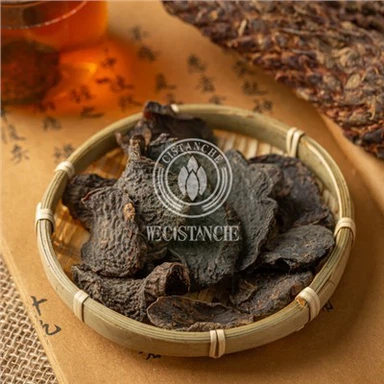
In daily life, we need to stay in touch with familiar people and establish good relationships. In this way, we can strengthen our memory skills to better manage our lives. It can be seen that we need to improve memory, and Cistanche deserticola can significantly improve memory because Cistanche deserticola is a traditional Chinese medicinal material that has many unique effects, one of which is to improve memory. The efficacy of minced meat comes from the various active ingredients it contains, including acid, polysaccharides, flavonoids, etc. These ingredients can promote brain health in various ways.

Click know 10 ways to improve memory
We study the team formation problem by considering a pool of individuals with different skills and characteristics, and a social network that captures the familiarity among these individuals. The goal is to assign all individuals to diverse teams based on their social connections, thereby allowing them to preserve a level of familiarity.
We formulate this team formation problem as a multiobjective optimization problem to split members into well-connected and diverse teams within a social network.
We implement this problem by employing the Non-dominated Sorting Genetic Algorithm II (NSGA-II), which finds team combinations with high familiarity and diversity levels in O(n2 ) time. We tested this algorithm on three empirically collected team formation datasets and against three benchmark algorithms.
The experimental results confirm that the proposed algorithm successfully formed teams that have both diversity in member attributes and previous connections between members. We discuss the benefits of using computational approaches to augment team formation and composition.
Introduction
Forming teams today is different from past decades. Nowadays, organizations and institutions aim to assemble groups based not only on members' expertise but also on diversity criteria [1, 2].
Because the workforce is becoming increasingly more diverse, more organizations are committing to bringing together members from different educational backgrounds, functional backgrounds, and demographic attributes in the same team [3, 4].
Numerous studies show the potential benefits of diversity in teams [5, 6]. At the identity level, research shows that demographic diversity-team members of different genders, cultures, races, etc.-can boost team performance.
Cultivating demographic diversity in teams can bring different traits, points of view, and experiences inherent to the demographic group [7, 8]. Some examples are gender diversity, which promotes productivity in software development teams [9], teams' collective intelligence [10], and innovations in R&D groups [11]. One study showed that racial diversity can also bring alternative perspectives and stimulate creativity, generating more original and competitive ideas [12].

Cultural diversity is another example: it helps teams produce more creative results than culturally homogeneous teams [13]. At the cognitive level, teams with high levels of functional diversity-that is, team members with different expertise, careers, and backgrounds-can deliver more original and creative outcomes.
Promoting functional diversity can enhance creativity because it expands the breadth of information, knowledge, ideas, and perspectives within a team [14]. It also encourages divergent thinking, greater scope of skills, and idea recombination [15, 16].
As a result, functionally diverse teams are more likely to solve complex problems that require creativity and innovation than homogeneous groups [2, 8, 16]. Overall, the interplay of demographic and functional diversity plays a role in how team members' differences leverage their work and performance [7].
Despite the potential benefits of diversity in teams, research also shows that diversity is a "double-edged sword" [17]. Prior studies offer mixed, and even contradictory, results of the effects of diversity on teams [14, 17, 18].
While functional diversity can cause coordination problems and conflicts in a group due to differences in training and knowledge, demographic diversity can elicit inter-bias among members (i.e., "us-them" distinction) [19], leading to a lack of cohesion, communication, and trust [20–22].
For decades, organizations have promoted diversity training to help members work with others who are different from them. However, when people are assigned to work in a diverse team, they are less likely to engage with the team and be motivated to work with teammates that differ in demographic or functional attributes [23].
One potential solution to moderate the adverse effects of diversity on teams is enabling team familiarity (i.e., team members' prior experience working with one another). A substantial body of literature shows that prior collaboration leads to a greater likelihood of success and future collaborations [24–26].
Team familiarity creates the foundations of trust, information distribution, and communication among members [27, 28]. And because team familiarity aids members in locating, sharing, and distributing their knowledge, team familiarity may address many problems created by diversity without compromising its potential benefits [29].
Can organizations assemble teams with high diversity levels and familiarity simultaneously?
Rather than forming teams based on either diversity criteria or prior relationships, combining
both can help members promote trust and organizations make the benefits of diversity more
salient [29]. In this work, we propose a computational approach to discover suitable team combinations that maximize team diversity and familiarity at the same time.

We chose these two team characteristics because both can be determined during the team formation process. Since this task requires assessing all the possible combinations among the available members, we elaborate on an optimization problem and its algorithm implementations to find invaluable team combinations efficiently.
We formulate this team formation problem as a multi-objective optimization problem to assemble teams maximizing their diversity and familiarity simultaneously.
We use Harrison and Klein's framework [30] to calculate teams' diversity based on the variety and disparity of attributes, and we use Kargar and An's communication cost metric [31] to calculate teams' familiarity based on members' social network structure [32].
We then implement this problem by employing the Non-dominated Sorting Genetic Algorithm II (NSGA-II).
This implementation is appropriate because it provides a set of efficient team combinations and considers the tradeoffs of different objectives. We demonstrate the effectiveness of our approach using three datasets that contain team membership information: (1) students self-assembling teams using the MyDreamTeam platform [33], (2) scientists co-authoring papers provided by the BibSonomy dataset [34], and (3) teams collaborating on GitHub provided by the GHTorrent dataset [35].
We assess our proposed algorithm against other multi-objective optimization methods highly cited in the literature by evaluating its solutions and running time. The results demonstrate that our proposed algorithm successfully provided solutions with higher diversity and familiarity levels.

For more information:1950477648nn@gmail.com