Method For Extracting Natural Active Ingredients From Plants
May 18, 2023
The methods of extracting natural active ingredients from plants are generally divided into the solvent method, steam distillation method, and sublimation method. Among them, the solvent method is suitable for the extraction of chemical components with good solubility in water, alcohol, and other organic solvents; the steam distillation method is suitable for the components that can evaporate with water vapor, mainly for volatile oils, small molecule alkaloids and Extraction of phenolic compounds; the sublimation method is suitable for the extraction of some compounds that vaporize when heated, solidify after being cooled, and whose chemical structure is not destroyed.

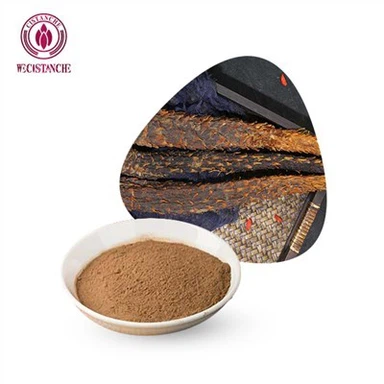
Click to buy cistanche herba extract
Steam distillation and sublimation have very limited applications. In most cases, solvent extraction is used. Common traditional solvent extraction methods include decoction, reflux extraction, percolation, and maceration.
1. The principle of solvent extraction and the choice of extraction solvent
Principle: The solvent extraction method is based on the solubility properties of various components in the natural product in the solvent, and selects a solvent that has a high solubility for the active component and a low solubility for the unneeded component, and dissolves the active component from the tissue of the medicinal material. When the solvent is added to the raw materials of Chinese herbal medicine (which need to be properly crushed), the solvent gradually penetrates the cell through the cell wall due to diffusion and osmosis and dissolves the soluble substances, resulting in a concentration difference between the inside and outside of the cell, so the concentrated solution in the cell continues to flow into the cell. When the concentration of the solution inside and outside the cells reaches a dynamic balance, the saturated solution is filtered out, and new solvents are added several times to make the required components close to Completely or mostly dissolved.
Selection of extraction solvent: The key to using the solvent extraction method is to select an appropriate solvent. The required components can be extracted relatively smoothly if the solvent is selected properly.
The commonly used solvents for extraction are arranged in the order of increasing lipophilicity as follows: water, methanol, ethanol, n-butanol, acetone, ethyl acetate, and petroleum ether. When extracting active ingredients, it is mainly necessary to choose a solvent that has a high solubility for the desired ingredients and a low solubility for other components. At the same time, factors such as economy, safety, and low toxicity should also be considered.
Methanol and ethanol are semi-polar solvents, that is, the solubility is between polar and non-polar, and can dissolve some water-soluble components, such as alkaloids, glycosides, and sugars; they can also dissolve non-polar solvents ingredients that can be dissolved, such as volatile oils, alcohols, lactones, aromatic compounds, etc. Their molecules are relatively small, there are hydroxyl groups, and the structure is very similar to that of water, so they can be mixed with water arbitrarily. Mixtures with different ratios of water as solvents are beneficial to the leaching of different active ingredients.
When extracting unknown compounds, use water, alcohol, and non-polar solvents to pre-test the ingredients of the raw materials before extraction, to understand what ingredients may be contained, and roughly estimate their solubility properties from the location of these ingredients, as the choice of solvent and The reference basis for the extraction method. In addition, factors such as the degradation and isomerization of unstable components should also be considered. For this reason, when extracting unknown compounds, the time should be as short as possible, the heating temperature should be controlled below 70 degrees, and the extraction solvent should be concentrated under reduced pressure below 60 degrees when recovering the extraction solvent. Do not treat with acid or alkali.

The comprehensive extraction of natural plant components should be based on the principle of similar miscibility, and use solvents with small to large polarities to extract various components of different polarities in the raw materials. This method is called system solvent extraction. In addition to the troublesome procedures, the systematic solvent extraction method also has a significant disadvantage in that the same component is not easy to enrich, and may be dispersed in different extraction parts, which makes separation difficult. Although it has certain disadvantages, this method is still the most commonly used method to study unknown natural organic compounds.
In addition to the system solvent method, it is also possible to take advantage of the wide range of solubility of alcohols. First, extract with ethanol or a mixed solvent of ethanol and methanol. After recovering the alcohol, the extract is made into an extract, and then the dry extract is heated and extracted with solvents of different polarities. , looking for active ingredients from extracts of different polarities.
Many factors affect the extraction effect. The first is the influence of the raw material itself. The crushing particle size of the raw material is generally 20-60 mesh; secondly, the extraction temperature is generally not more than 70 degrees; Water extraction for 2-3 hours, ethanol heating and reflux extraction for 1-2 hours is appropriate; the amount of solvent will also affect the extraction efficiency, and the general amount of solvent used is 6-10 times that of the raw material. The number of times of extraction is generally 3-5 times.
2. Systematic extraction and separation of active ingredients of natural products
For the systematic separation of active components of natural products, methanol or ethanol extraction is often used. The obtained extract is suspended in water, and the suspension is extracted by adding different solvents in a manner of increasing polarity, such as petroleum ether or gasoline (grease, wax, chlorophyll, volatile oil, free Steroids, and triterpenoids), chloroform or ethyl acetate (free alkaloids, organic acids, flavonoids, coumarin aglycones, and other medium polar compounds), n-butanol can be used to extract glycosides, alkaloid salts and polar compounds such as tannins) are extracted in sequence, and finally, there is a water phase to obtain water-soluble components (such as amino acids, sugars, inorganic salts, etc.).

3. Other separation methods
1. Liquid-liquid extraction: Liquid-liquid extraction is two-phase solvent extraction, which is a method of separating components by utilizing the difference in distribution coefficient of each component in two different immiscible solvents.
2. Precipitation separation method: The precipitation separation method is a method in which certain solvents or precipitants are added to the sample solution, and the separated substances are precipitated as solid phase substances through chemical reactions or changing the pH value and temperature of the solution. In the precipitation separation method, there are solvent precipitation methods, precipitant precipitation methods, and salting out methods.
3. Crystallization and recrystallization separation method.
Introduction of the production method of Cistanche extract
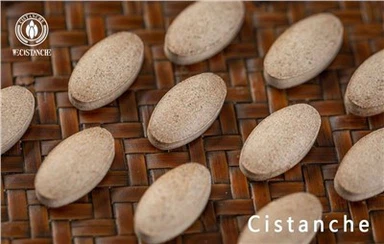
Cistanche is a type of desert plant that has been used in traditional Chinese medicine for centuries. It is known for its ability to improve kidney function, boost the immune system, and enhance sexual function. Cistanche extract is a popular supplement that is made from the dried roots of the plant.
Harvesting and preparation of the plant material
The first step in the production of Cistanche extract is the harvesting and preparation of the plant material. The roots of the Cistanche plant are typically harvested in the spring or fall. After the roots are harvested, they are cleaned and dried in the sun or in a dehydrator until they are completely dry.
Extraction process
The next step in the production of Cistanche extract is the extraction process. There are several methods that can be used to extract the active compounds from the dried roots, including water extraction, alcohol extraction, and supercritical CO2 extraction. Water extraction is the most commonly used method for extracting Cistanche extract. In this method, the dried roots are boiled in water for several hours. The resulting liquid is then filtered and concentrated to produce a thick, syrupy extract. Alcohol extraction is another popular method for extracting Cistanche extract. In this method, the dried roots are soaked in alcohol for several weeks. The resulting liquid is then filtered and distilled to remove the alcohol, leaving behind a concentrated extract. Supercritical CO2 extraction is a more advanced method for extracting Cistanche extract. In this method, the dried roots are exposed to high-pressure carbon dioxide, which extracts the active compounds from the plant material. The resulting extract is then purified and concentrated.

Purification and concentration
After the extraction process is complete, the Cistanche extract is purified and concentrated. This involves removing any impurities or unwanted compounds from the extract and increasing the concentration of the active compounds.
The purification and concentration process can vary depending on the extraction method used. For water extraction, the extract is typically boiled down to a thick syrup and then filtered to remove any impurities. For alcohol extraction, the extract is distilled to remove the alcohol and then concentrated. For supercritical CO2 extraction, the extract is purified using chromatography or other advanced techniques.
Quality control and testing
Before the Cistanche extract is packaged and sold, it undergoes rigorous quality control and testing to ensure that it is safe and effective. This involves testing the extract for purity, potency, and safety. Quality control and testing can include a range of different techniques, such as high-performance liquid chromatography (HPLC), gas chromatography-mass spectrometry (GC-MS), and microbiological testing. These tests help to identify any contaminants or impurities in the extract and ensure that it meets strict quality standards.
Conclusion
In conclusion, the production of Cistanche extract involves several steps, including harvesting and preparation of the plant material, extraction, purification and concentration, and quality control and testing. The final product is a concentrated extract that contains the active compounds of the Cistanche plant. Cistanche extract is a popular supplement that is used to improve kidney function, boost the immune system, and enhance sexual function.