Develop Homologous Medicine And Food Products And Occupy The High Ground Of Chinese Medicine Industry
May 19, 2023
Chinese medicinal materials include botanical Chinese medicinal materials, animal Chinese medicinal materials, and mineral Chinese medicinal materials. Since the birth of the Chinese nation 5,000 years ago, Chinese medicinal materials have been continuously developing along with the life and health of the Chinese people, and have played a huge role in supporting the prosperity of the Chinese nation. After the continuous practice and summary of the working people in China, a series of theories and consumer products that medicine and food have the same origin have been developed. In today's new situation where chemicals are flooding, chemical side effects are becoming more and more intense, and the epidemic situation is constantly changing, the homology of medicine and food highlights the great advanced significance of green, medical, and health care. Medicine and food homologous products are people-oriented and the concept of harmony between man and nature. It is the terminal consumer product of the Chinese medicinal material industry chain, and it is also the end and top of the Chinese medicinal material industry chain. Whoever masters the essence of the homology of medicine and food will dominate human health; whoever leads the products of homology of medicine and food will influence and control the industrial chain of Chinese medicinal materials.

Click to organic cistanche herb
What is the same source of medicine and food?
The same origin of medicine and food has two meanings. One refers to the concept of time. Medicine and food originate at the same time. When there is food, there is medicine, and when there is medicine, there is food. Drugs and food rely on the same material basis. Many foods are drugs, and some drugs are also food. There is no absolute dividing line between them.
The historical development of the homology of medicine and food
1. Historical records of the same origin of medicine and food in ancient times
The same origin of medicine and food has existed since ancient times. But it appeared in the literature records, the earliest is "Huainanzi·Xiuwu Xun", which said: "Shen Nong tasted the taste of all kinds of herbs, and the sweetness and bitterness of water springs, so that the people knew what to avoid. This time, one day encountered seventy poisons. "It can be imagined that in Shennong's era, there was no distinction between medicine and food, and Shennong personally tasted and differentiated, telling people that non-poisonous ones can be used, and poisonous ones should be avoided.
The book "Huangdi Neijing Taisu" in the Tang Dynasty wrote: "Eating on an empty stomach is food, and patients eating it is medicine", which reflects the idea of "the same origin of medicine and food", and also reflects the beginning of distinction between medicine and food.
Sun Simiao of the Tang Dynasty said in "Thousands of Gold Prescriptions Food Therapy": "The foundation of one's life must be funded by food", "It is called food when it is used to satisfy hunger, and it is called medicine when it is used to treat diseases." One must first understand the source of the disease, know what it is causing, and cure it with food, and if the food does not heal, then order the medicine." Accurately distinguishes the functions of food and medicine, further dialectically expounds the relationship between food and medicine, and puts diet therapy in the first place. This is the theoretical source of diet therapy and health care.
"Drinking Meals Zheng Yao" written by Hu Sihui in the Yuan Dynasty is a monograph on diets. It is a high-quality product of the same origin as medicine and a food-medicated diet, which is classified and summarized in detail. Some medicated diets are already fine foods in the diet and have been passed down to this day.
Li Shizhen’s "Compendium of Materia Medica" in the Ming Dynasty included many therapeutic methods with the same source of medicine and food, such as "Godberry tonifies the kidney and produces essence, nourishes the liver and eyesight, strengthens the bones, relieves fatigue, improves color, improves eyesight and calms the nerves, and makes people live longer" etc..
2. The historical development of the same origin of medicine and food in New China
The development of traditional Chinese medicine in New China mainly started in 2016 after the reform and opening up.
In February 2016, the "Outline of Strategic Planning for the Development of Traditional Chinese Medicine (2016-2030)" clearly proposed to encourage Chinese medicine institutions to make full use of modern science and technology to develop a batch of healthy food.
In October 2016, the Central Committee of the Communist Party of China and the State Council issued the "Healthy China 2030" Planning Outline, which proposed to give full play to the unique advantages of traditional Chinese medicine. The synergistic effect in the disease and the core role in the recovery of the disease have been fully exerted."

In December 2016, the "Law of the People's Republic of China on Traditional Chinese Medicine" was promulgated and implemented, clearly stating that the state supports the development of traditional Chinese medicine health care services. This is a milestone in the development of Chinese medicine.
In July 2017, the General Office of the State Council issued the "National Nutrition Plan (2017-2030)", which emphasized the need to vigorously develop traditional food care services and to further improve the list of items that are both food and Chinese medicinal materials in China, and promulgate and implement them.
In 2018, the State Administration of Traditional Chinese Medicine issued the "Standards for Health Care Services of Traditional Chinese Medicine (Trial)", and issued supporting documents such as the "List of Items that Are Both Food and Drugs" and "List of Items that Can Be Used for Health Food". There is finally a law to follow for homologous medicine and food products.
In October 2019, the State Council issued the "Opinions on Promoting the Inheritance and Innovative Development of Traditional Chinese Medicine", and almost all provinces and autonomous regions have formulated specific measures for the development of traditional Chinese medicine and ethnic medicine in the region.
On January 22, 2021, the General Office of the State Council issued the "Notice on Several Policies and Measures to Accelerate the Development of Traditional Chinese Medicine", and the industrial policy entered the implementation period.
3. The same origin of medicine and food in the international market
In recent years, with China's growing national power, traditional Chinese culture has spread around the world, especially the curative effect of traditional Chinese medicine physiotherapy in the prevention and treatment of common diseases, frequently-occurring diseases, chronic diseases, and serious diseases has been widely recognized and accepted by the international community. At present, Chinese traditional medicine has spread to almost 200 countries and regions around the world, and the international influence of traditional Chinese medicine is constantly increasing.
Japan has a theory similar to that of Chinese medicine and food, which is "medicine and food are the same". The Japanese people fully accept that a diet with efficacy can maintain the body's health, and advocate the dietary and health care methods that integrate Chinese and Western medicine.
In the early 20th century, the United States included botanical medicines in the Pharmacopoeia, allowing "safe, effective, and controllable mixtures", that is, both single-product medicines and mixtures of several medicinal materials are recognized. The United States is the largest dietary supplement market in the world, and Chinese herbal medicine occupies a certain scale. China is the most important raw material supplier of Chinese herbal medicines.

In Europe, Germany, Switzerland, the United Kingdom, France, and other countries have jointly established the European Phytotherapy Alliance, which has promoted the recognition and development of herbal functional foods in Europe.
Japan, South Korea, Singapore, and other regions in Southeast Asia have a common cultural understanding of the concept of health preservation with the same source of medicine and food as China, and the industry of the same source of medicine and food is basically in sync.
Medicinal and edible Chinese medicinal materials
The varieties of traditional Chinese medicinal materials with the same origin of medicine and food are continuously summarized and improved in the practice of working people in medicine, which is an empirical summary. With the development of science and technology, especially the development of medical technology, people have become more and more clear about the identification of the active ingredients of Chinese herbal medicines and can judge which ingredients of Chinese herbal medicines can nourish the human body and which ones have side effects. Therefore, the varieties of traditional Chinese medicinal materials with the same origin as medicine and food need to be recognized by the national legal department.
1. In 2012, the National Health and Medical Commission announced the first batch of medicinal and edible Chinese herbal medicines with a total of 86 species.
Clove, star anise, sword bean, cumin, thistle, yam, hawthorn, purslane, black snake, ebony, papaya, hemp seed, Daidaihua, polygonatum, licorice, angelica, ginkgo, white lentils, White lentil flower, longan meat (longan), cassia seed, lily, nutmeg, cinnamon, emblica, bergamot, almond (sweet, bitter), sea buckthorn, oyster, Gorgon fruit, pepper, red bean, donkey-hide gelatin, gallinacea, malt, kelp , jujube (jujube, wild jujube, black date), Luo Han Guo, Yu Liren, honeysuckle, green fruit, Houttuynia cordata, ginger (ginger, dried ginger), Hovenia dulcis, medlar, gardenia, amomum, fat sea, Poria cocos, fragrant Citron, Citron, Peach Kernel, Mulberry Leaf, Mulberry, Tangerine, Campanulaceae, Yizhi Kernel, Lotus Leaf, Raisin Seed, Lotus Seed, Galangal, Light Bamboo Leaf, Light Tempeh, Chrysanthemum, Chicory, Yellow Mustard Seed, Polygonatum, Perilla, Purple Perilla seeds, kudzu root, black sesame, black pepper, pagoda seed, Sophora japonica, dandelion, honey, torreya seed, jujube seed, fresh coriander root, fresh reed root, viper, orange peel, mint, coix seed, scallion, raspberry, Ageratum.
2. In 2014, 15 new types were added.
Ginseng, mountain silver flower, coriander, rose, pine tree, kudzu root, cloth slag leaves, prunella vulgaris, angelica, kaempferol, saffron, grass fruit, turmeric, and Huaji, are used as medicines within a limited range of use and dosage. Food dual purpose.
3. In 2021, 9 new pilot projects will be added.
Dangshen, Roucongrong, Dendrobium candidum, American ginseng, astragalus, Ganoderma lucidum, Gastrodia elata, Cornus officinalis, and Eucommia leaves, are used as both medicine and food within a limited range of use and dosage.
As of 2022, there are a total of 110 kinds of Chinese herbal medicines that can be used in general food.
4. There are a total of 114 kinds of Chinese herbal medicines that can only be used in health food as announced by the National Health Commission.
Ginseng, ginseng leaf, ginseng fruit, panax notoginseng, smilax, thistle, Ligustrum lucidum, dogwood, Achyranthes bidentata, Chuan Fritillaria, red deer fetus, red deer antler, red deer bone, salvia miltiorrhiza, Wujiapi, Schisandra, Cimicifuga, asparagus, Gastrodia elata, heterophylla, Morinda officinalis, woody incense, horsetail, weed seed, weed root, plantain seed, plantain, northern sand ginseng, flat fritillary, scrophulariaceae, rehmannia glutinosa , Polygonum multiflorum, Baiji, Atractylodes macrocephala, Radix Paeoniae Alba, Cardamom, Cassia officinalis, Dendrobium, Digupi, Angelica, Zhuru, Safflower, Rhodiola rosea, American ginseng, Evodia, Achyranthes bidentata, Eucommia, Eucommia leaves, Shayuanzi, peony bark, aloe vera, atractylodes, psoralen, kezi, red peony root, polygala, Ophiopogon japonicus, tortoise shell, Peilan, arborvitae leaves, rhubarb, Polygonum multiflorum, Acanthopanax, rose fruit, euphemum, Alisma, rose, roselle, anemarrhena, apocynum, kudingcha, jinyangmai, golden tassel, green bark, magnolia officinalis, turmeric, aurantium husk, citrus aurantium, cypress kernel, pearl, gynostemma, fenugreek, Rubia, Acarina striata, Chive seeds, Shouwu vine, Cyperus cyperi, Rhizoma drynaria, Codonopsis pilosula, Morus alba bark, Mori twigs, Fritillaria, Motherwort, Centella asiatica, Epimedium, Cuscuta, Wild chrysanthemum, Ginkgo biloba, Huangmao, Hubei Fritillaria, Senna, Clam, Yueqiao, Huaishi, Puhuang, Xianchen, Propolis, Tamarin, Eclipta, cooked rhubarb, Rehmannia glutinosa, Manjia.
As of 2022, there are a total of 114 kinds of Chinese herbal medicines that can be used in health food.

All Chinese herbal medicines that are not included in the catalog of dual-use medicine and food published by the Health and Medical Commission are not allowed to be used in food.
Current status of development of medicine and food homologous products
According to the theoretical knowledge of Chinese traditional medicine and the fact that most of the population is sub-healthy, the main functions of medicine and food homologous products are to "invigorate qi" and "strengthen the body", and they need to be taken for a long time. The so-called "replenishment of qi" in traditional Chinese medicine refers to a deficiency of qi. Qi deficiency refers to symptoms such as weakness of qi, chronic illness, decadence, and failure of viscera. The so-called "strengthening" in Chinese medicine refers to "strengthening the body and eliminating evils". Human diseases are the invasion of evil qi, which leads to the imbalance of yin and yang, the breeding of evil qi, and the weakness of righteous qi. Through "strengthening the body" and "strengthening the foundation", it can increase the vitality of the body and regain the yin and yang of the human body. balance. The products of the same source of medicine and food are mainly beneficial to qi and essence, lighten the body and prolong life, nourish the mind and improve the mind, beautify and skin care, relieve fire and trouble, appetize and increase flavor, etc. The current medicine and food homologous products in the market mainly include:
1. Alternative tea
Substitute tea refers to a drink that is brewed or boiled after mixing one or several Chinese medicinal materials with tea leaves. This is a traditional Chinese medicinal and edible product. Alternative tea is beneficial to Qi and essence, nourishes the heart and relieves restlessness, quenches thirst, and beautifies the skin, and the effect is very good for long-term drinking. There are hundreds of varieties on the market at present. Goods and dragons are mixed, and the quality varies. Some substitute tea bags even use the leftovers of Chinese herbal medicines as ingredients. Some Chinese herbal medicines need to be processed before brewing, but to reduce costs, the merchants do not process them at all. Therefore, do not play the expected effect of medicine and food homologous substitute tea. Gansu Tianxintang Pharmaceutical Co., Ltd. has developed 14 types of 20 specifications of substitute teas with authentic Chinese medicinal materials and ancient methods, mainly including rice-made Codonopsis tea, honey-roasted astragalus tea, honey-made jujube seed tea, and fried burdock tea. , Roasted Licorice Tea with Honey, Roasted Cassia Seed Tea, Roasted Plump Sea Luo Han Guo Tea with Honey, Roasted Winter Melon and Lotus Leaf Tea with Roasted Honey, Roasted Coix Seed and Red Bean Tea, Longan Red Date Goji Berry Tea, Mulberry Rose Lily Tea, Red Date Goji Berry Brown Sugar Ginger Tea, Honey Roasted Honeysuckle Licorice tea, Codonopsis ginseng, wolfberry and tangerine peel tea have won praise from the market since they were launched.
2. Functional drinks
Functional drinks with the same origin of medicine and food mainly use one or several kinds of Chinese herbal medicines and use heating, pressing, or extraction methods to extrude the active ingredients and make them into direct drinks. At present, some manufacturers have also developed solid beverages with the same source of medicine and food. It has become a new fashion and trend to extract ingredients from ingredients of the same origin as medicine and food and is very popular among young people.
3. Snacks
Snacks, also known as snack foods, are popular among people from all walks of life. They can be enjoyed on airplanes, and can also be used as snacks by office workers. Snacks with the same origin of medicine and food can not only be added to meals but also can be used as special nutrients to improve body functions. Chinese herbal snacks are relatively common in the market at present, but there are few synthetic varieties.
4. Skin care products
Compared with the current skincare products mainly based on chemical raw materials, Chinese herbal skin care products, the essence from plants moisturizes and maintains the skin, and it must have greater advantages in whitening, moisturizing, and caring for the skin.
5. Medicinal diet
The medicinal diet is a fine product of the same origin as medicine and food, the brightest pearl in the crown of the traditional Chinese medicine industry chain, and the great contribution of the Chinese people to the catering culture. Medicinal diet is under the scientific guidance of traditional Chinese medicine, gastronomy, and nutrition theory, giving full play to the medicinal value of Chinese medicinal materials, matching with other foods, and using unique cooking techniques to make delicacies with specific nourishing effects.
Research and development of homologous medicine and food products
1. Combining the most traditional concept of homology of medicine and food with the most advanced cooking technology, develop new products of homology of medicine and food.
2. Continuously develop medicine and food homologous products, encourage a hundred flowers to bloom, a hundred schools of thought to contend, and medicinal food to be unique in the world.
People-oriented, the foundation of the people is life and health. "Food is the first thing for the people", which puts it bluntly, food is the first need of the people. The best in food is medicated diet. The medicinal diet is the destination of the entire Chinese medicine industry chain and the pursuit of the entire industry. The Chinese medicine industry does not pursue how good the medicine is, but how good the food is. Food replaces medicine, food prevents disease, conditioning comes first, and treatment comes later. This is also the principle of Sun Tzu's Art of War "to subdue the enemy without fighting, and to be good at what is good". Before the disease breaks out, it has been pre-conditioned, and the budding state is unknowingly eliminated. The cultural core is so similar! The same origin, the same origin. It is the responsibility of the current developers of the same origin of medicine and food to move the herbal diet from the palace to the folk, and from food to culture.
In short, making full use of the food properties of authentic Chinese medicinal materials, digging out the essence of the same origin of Chinese medicinal materials and food, creating medicinal diets with Chinese characteristics, and serving people's lives and health to the greatest extent is the greatest responsibility of China's traditional Chinese medicine industry and is also a contribution to the world. the greatest contribution to people's health.
An important herbal of homologous medicine and food--Cistanche
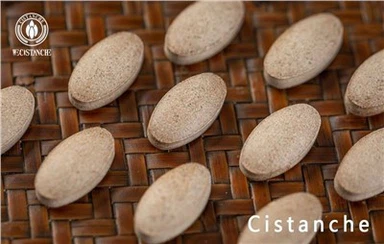
Cistanche is a genus of parasitic plants belonging to the family Orobanchaceae, native to arid regions of Asia and Africa. The name "Cistanche" is derived from the Greek words "kiss," meaning cyst or bladder, and "anché," meaning neck or throat, referring to the plant's unique tubular structure. There are several species of the Cistanche genus, with the most well-known species being Cistanche deserticola, Cistanche tubulosa, Cistanche salsa, and Cistanche sinensis. These plants are commonly referred to as Rou Cong Rong in traditional Chinese medicine, where they have been used to treat a wide range of health conditions.
Cistanche plants lack chlorophyll and are unable to photosynthesize to produce their nutrients. Instead, they rely on a host plant for their nourishment, making them parasitic. The plant forms connections, called haustoria, with the roots of its host, usually a type of desert shrub, and absorbs water and nutrients directly from the host plant. This unique adaptation allows Cistanche species to thrive in their native desert environments, where water and nutrients are scarce.
Cistanche has been used in traditional Chinese medicine for more than 1,800 years, dating back to the Han Dynasty. It is considered a "yang" tonic, meaning that it is believed to replenish and invigorate the body's vital energy or "qi." The plant is also classified as an adaptogen, which refers to a group of natural substances that help the body adapt to various stressors and maintain homeostasis.
The therapeutic effects of Cistanche are attributed to its high content of bioactive compounds, including phenylethanoid glycosides, iridoids, alkaloids, polysaccharides, and lignans. These compounds have been shown to possess a diverse range of pharmacological properties, such as antioxidant, anti-inflammatory, neuroprotective, immunomodulatory, and anti-aging effects.
Several studies have found that Cistanche has potential benefits for kidney health. The phenylethanoid glycosides in Cistanche are known to improve blood flow to the kidneys and promote the regeneration of kidney cells. In addition, the antioxidant and anti-inflammatory properties of these compounds help protect the kidneys from damage caused by oxidative stress and inflammation.
Cistanche is also known to have beneficial effects on the reproductive system. It has been used as an aphrodisiac and fertility enhancer in traditional Chinese medicine for centuries. Studies show that plant extracts can improve erectile function and increase sperm count and motility. Additionally, Cistanche has been found to have estrogenic effects in females, which may help alleviate menopausal symptoms and improve reproductive health.
Another important aspect of Cistanche is its neuroprotective properties. The bioactive compounds in the plant have been shown to protect nerve cells from damage caused by factors such as oxidative stress and inflammation. This may help prevent or slow the progression of neurodegenerative diseases like Alzheimer's and Parkinson's disease.
Furthermore, Cistanche may help improve immune function due to its immunomodulatory effects. The polysaccharides found in the plant can enhance the activity of immune cells and modulate the production of cytokines, which are signaling molecules that play a crucial role in immunity.
The use of Cistanche is generally considered safe and well-tolerated, with minimal side effects. However, it is important to consult a healthcare professional before using Cistanche or any other herbal remedy, especially if you are pregnant, nursing, or taking medication.
In conclusion, Cistanche is a fascinating parasitic plant with a rich history of use in traditional Chinese medicine. Its unique combination of bioactive compounds offers a multitude of potential health benefits, ranging from kidney health to reproductive function and neuroprotection. As research on this plant continues to grow, we will likely gain a deeper understanding of the mechanisms of its therapeutic effects and uncover new potential applications for this ancient remedy.